
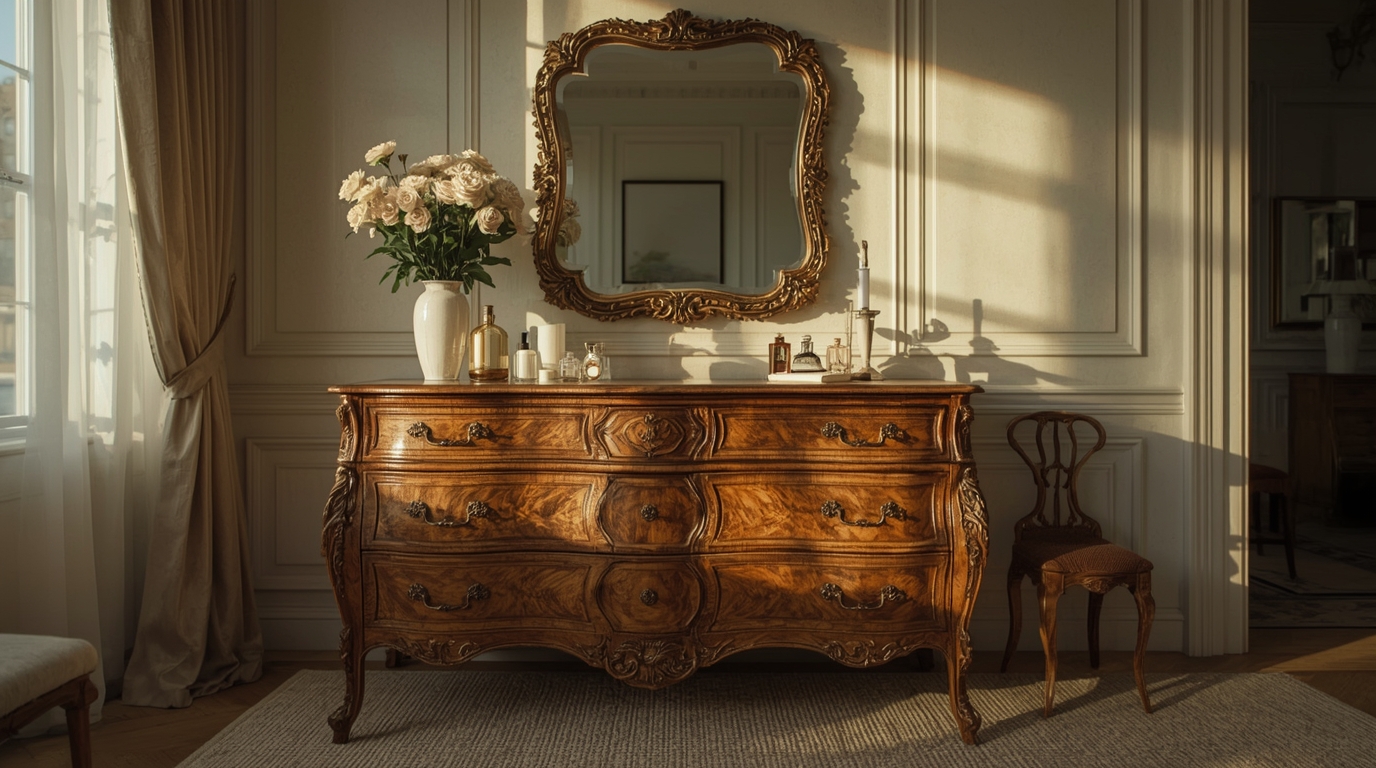
This Antique Dresser Table Detail Can Instantly Date Yours—Check Now
Antique furniture has a way of turning a room into a story—one told in wood grain, worn drawer pulls, and the quiet confidence of craftsmanship that outlasts fashions. An antique dresser table (often overlapping with terms like dressing table, vanity, or commode depending on region and era) is more than a storage piece: it reflects changing ideas about privacy, domestic life, and design—from the formal court cultures of 18th-century Europe to the practical elegance of early 20th-century homes. For collectors, decorators, and historians alike, the dresser table is a uniquely revealing object: it sits at the intersection of function, artistry, and social history.
What Is an Antique Dresser Table? Definition, Forms, and Regional Terms
An antique dresser table generally refers to a piece of furniture designed for personal grooming and storage, typically featuring drawers (for linens, grooming tools, or clothing accessories) and a flat surface that may be paired with a mirror. In the British tradition, “dressing table” is common; in American usage, “dresser” can mean a chest with a mirror, while “dresser table” bridges both concepts. In French decorative arts, related forms include the commode and, in more intimate settings, dressing-related tables used in bedchambers.
Can You Name the Masterpiece?
Ten masterpieces. Ten questions. How well do you know the history of art?
But this kind of dresser is not that old. It was derived from earlier ‘dressing tables’ and a host of chest like pieces of furniture. Most of these pieces are found in museum collections and described under such categories as furniture, furniture of France, furniture of the European court and as such may be found alongside more grand pieces of seating and display.
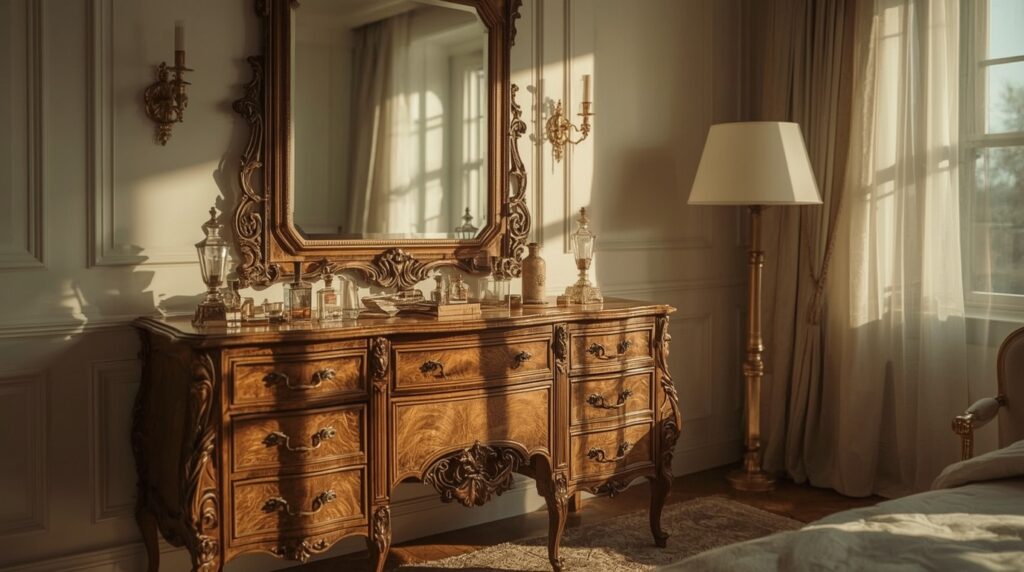
In most major museum collections of this kind (The Metropolitan Museum of Art, Victoria & Albert, Louvre, for example), furniture is not just classified by design, by the region in which it was made, or the period in which it was created, but as evidence of social practice for instance, with the French eighteenth-century example which demonstrates the joining of the decorative and functional, or the dress/writing table.
Historical Periods and Styles: From Baroque to Art Deco
The Baroque (17th century) and early Rococo (early–mid 18th century) periods favored dramatic form, rich carving, and status materials. In France, the Louis XIV and Louis XV eras encouraged highly refined furniture production centered in Parisian workshops, where artisans created elaborate pieces for aristocratic interiors. Dresser tables from this lineage often show curved lines, gilt-bronze mounts (ormolu), and veneers that highlight rare woods—features closely associated with French royal and elite patronage.
Can You Guess the Artist?
Three clues. One artist. How quickly can you identify the painter?
During the Neoclassical and Louis XVI style in France (late 18th century) dresser tables generally returned to a more rectilinear form and architectural style and motifs became more classical and less Rococo. In Britain the “Georgian” tradition also shows dresser tables taking inspiration from the revival of antiquity, a theme that is found repeatedly within the Museum‘s decorative arts collections.
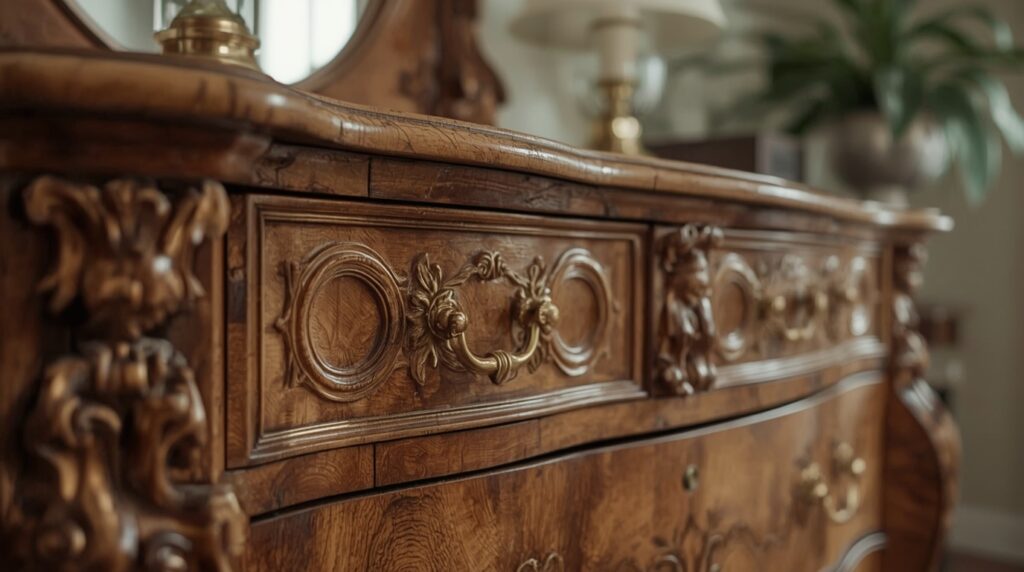
There would be lots of revival styles in the 19th century, and the industrial revolution had been revolutionizing the way furniture was made. In the early 20th century we saw Art Nouveau, with its swooping curves and organic elements, before Art Deco really took the scene. The dresser tables of the twenties and thirties were not only beautiful, but modern and highly useful, keeping pace with a changing world.
Materials, Craftsmanship, and Construction Clues Collectors Trust
Experienced evaluators look first at materials and construction. Common woods include walnut, mahogany, oak, maple, and pine (often used as secondary wood). Fine antiques may feature veneers—particularly in 18th-century French and British work—used to create bookmatched patterns or highlight exotic timber. Hardware also matters: original brass pulls, escutcheons, and locks can support authenticity, while mismatched replacements may indicate later alterations.
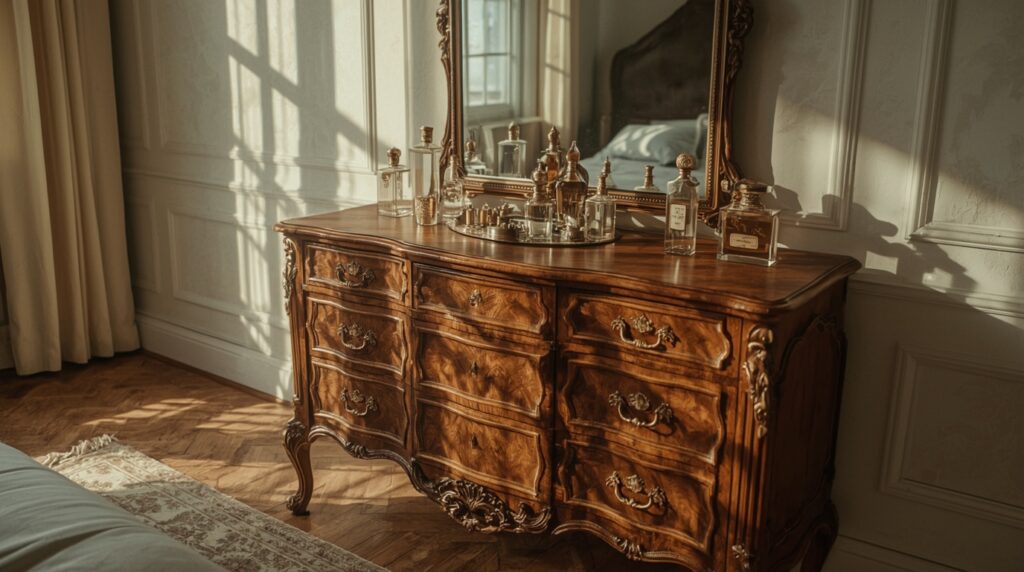
In an antiques roadshow, a furniture construction detail such as how the back leg is attached to the skirt of the table is a common clue of when the piece was made. For instance, a hand-cut dovetail to join the drawer in a cabinet is usually an early sign of age. But not always.
However, a museum standard way of research into objects, as put forth by the Smithsonian, states that “researchers should be able to get much of the information they need just from looking carefully at the object. This means the Smithsonian looks very closely at all of its objects to ascertain what they are made of, and how they are made. A dresser table is the same story.”
Key Characteristics at a Glance
| Feature | What to Look For | What It Suggests |
|---|---|---|
| Joinery | Hand-cut dovetails, pegged joints | Earlier manufacture or higher craftsmanship |
| Wood & veneer | Walnut/mahogany; bookmatched veneer | Quality work; often 18th–19th century |
| Hardware | Original brass pulls, period locks | Greater integrity and value |
| Feet & legs | Cabriole (Rococo), tapered (Neoclassical), blocky (Art Deco) | Style-period alignment |
| Finish | Shellac, wax, aged patina | Possible authenticity; avoid over-refinishing |
| Provenance | Bills of sale, estate records, labels | Strongest support for dating and attribution |
Identifying Authenticity and Value: Provenance, Condition, and Documentation
Authenticity is best established through a combination of provenance, stylistic coherence, and physical evidence. A dresser table with a documented chain of ownership—estate inventories, auction records, or family papers—will generally command more confidence and value. Labels or stamps can help, but they can also be misleading if added later; reputable appraisers corroborate markings with construction and design analysis.
The condition of the item you are looking for can affect how you go about refishing. While some people like original surfaces (patinas and wear marks) so they may seek something without obvious damage or they might refinish the entire piece themselves, others are going for a completely new look. Another thing is stability.
Here is a good guiding principle to help you: museum conservation ethics. The Met Museum has set down the general guidelines that conservation aims to “preserve an artwork‘s meaning, as well as its original fabric and material history.” In plain English: do no harm, and always restore. If you don‘t agree that the antique dresser is something special, then the following tips are not for you.
Caring for and Displaying an Antique Dresser Table (Without Damaging It)
Placement is preservation. Keep an antique dresser table away from direct sunlight, radiators, and damp basements—extremes of heat, humidity, and UV light accelerate veneer failure, warping, and finish degradation. A stable environment is ideal, which is why museums closely control temperature and relative humidity. Even in a home, simple steps—curtains, felt pads, and moderate indoor humidity—make a significant difference.
Cleaning should be gentle and minimal. Dust with a soft microfiber cloth; avoid silicone-based polishes, which can contaminate surfaces and complicate future conservation. If waxing is appropriate for the existing finish, use a conservation-friendly paste wax sparingly and buff lightly. For significant grime, lifting veneer, or active woodworm evidence, consult a professional conservator rather than experimenting with household chemicals.
Thoughtful display can honor both beauty and function. Use a protective tray for perfumes or metal objects that might stain wood. If the piece includes a mirror, ensure it’s securely mounted and not stressing old joints. Many owners choose to use antiques daily—perfectly reasonable—so long as the piece is treated as a historic object rather than disposable furniture.
Frequently Asked Questions (FAQ)
Are antique dresser tables and vanities the same thing?
They overlap. “Vanity” is a common modern term (especially in North America) for a grooming table, often with a mirror. “Dressing table” is widely used in Britain. “Antique dresser table” can refer to either, but always confirm the form: chest-with-mirror, table with drawers, or commode-like storage.
How old must a dresser table be to be considered antique?
In many markets, “antique” typically implies 100+ years old, though usage varies by dealer, country, and legal context. Pieces from the early 20th century may be marketed as antique if they meet that threshold.
What periods are most collectible?
Collectibility depends on taste and budget. 18th-century French (Louis XV/Louis XVI) pieces can be highly valuable, as can fine Georgian and Federal examples. Art Deco dresser tables are also sought after for their design clarity and compatibility with modern interiors.
Does refinishing ruin value?
It can. Heavy refinishing often reduces value by removing original surface and patina. Sensitive conservation or a light, appropriate finish refresh may be acceptable, but major stripping should be approached cautiously—ideally with professional advice.
Where can I research styles and compare museum examples?
Start with museum collection databases and essays from the Metropolitan Museum of Art, the Victoria and Albert Museum, the Louvre Museum, and the Smithsonian Institution. These institutions provide high-quality images and scholarly context for dating and stylistic comparison.
An antique dresser table is a functional heirloom: it holds the marks of everyday life while showcasing the design languages of Baroque grandeur, Neoclassical restraint, or Art Deco modernity. By grounding evaluation in craftsmanship, provenance, and conservation-minded care—guided by the standards modeled by institutions like the Met, the V&A, the Louvre, and the Smithsonian—you can choose and preserve a piece that remains historically truthful, visually compelling, and genuinely useful for generations to come.
AI Notice: Some visual content in this article may have been created or enhanced using artificial intelligence (AI) for artistic, editorial or illustrative purposes. Learn more about our approach in our AI & Editorial Principles.