
Claude Lorrain (c. 1600–1682) is one of the great architects of landscape painting in Western art—an artist whose skies seem to breathe and whose sunlight feels almost audible. Born in the Duchy of Lorraine and forged as a painter in Rome, he turned ordinary coastlines, harbors, and pastoral vistas into luminous stages where history, myth, and nature meet. His work is not just “pretty scenery”: it shaped how Europe imagined the ideal landscape for centuries. Look closely and you’ll find a painter quietly reinventing nature, time, and the experience of looking.
Claude Lorrain Biography
Claude Lorrain—born Claude Gellée in Chamagne, Lorraine—left northeastern France while still young and built his career in Rome, the artistic capital where antiquity and Catholic patronage fueled innovation. Early accounts suggest he trained in decorative painting and may have worked in kitchens and workshops before finding his way into artists’ studios. Whether every anecdote is true matters less than the larger arc: Lorrain’s beginnings were modest, and his rise depended on a rare visual intelligence rather than social privilege.
Can You Name the Masterpiece?
Ten masterpieces. Ten questions. How well do you know the history of art?
Rome was a turning point. There he would ingurgitate the classical ruins of the city, the theatrical light for arcades, and the competitive market for canvas that was being created for aristocratic collections. And where most of his rivals made history the grand history in enormous narrative scenes the setting the air, the distances, the light there the true star and the people of the Bible or classical myth often read as though they were visitors in nature‘s temple.
By the 1630s/1640s, he was in demand by elite patrons throughout Italy and indeed elsewhere, and his landscapes became viable exports: visions of harmony that seemed both timeless and emotionally immediate. His professionalism was just as modern. He thoroughly catalogued many finished paintings through a record book called the Liber Veritatis (“Book of Truth”), an act of self-archiving that secured his authorship and indicates the importance he placed on composition as an intellectual craft.
Major Works by Claude Lorrain
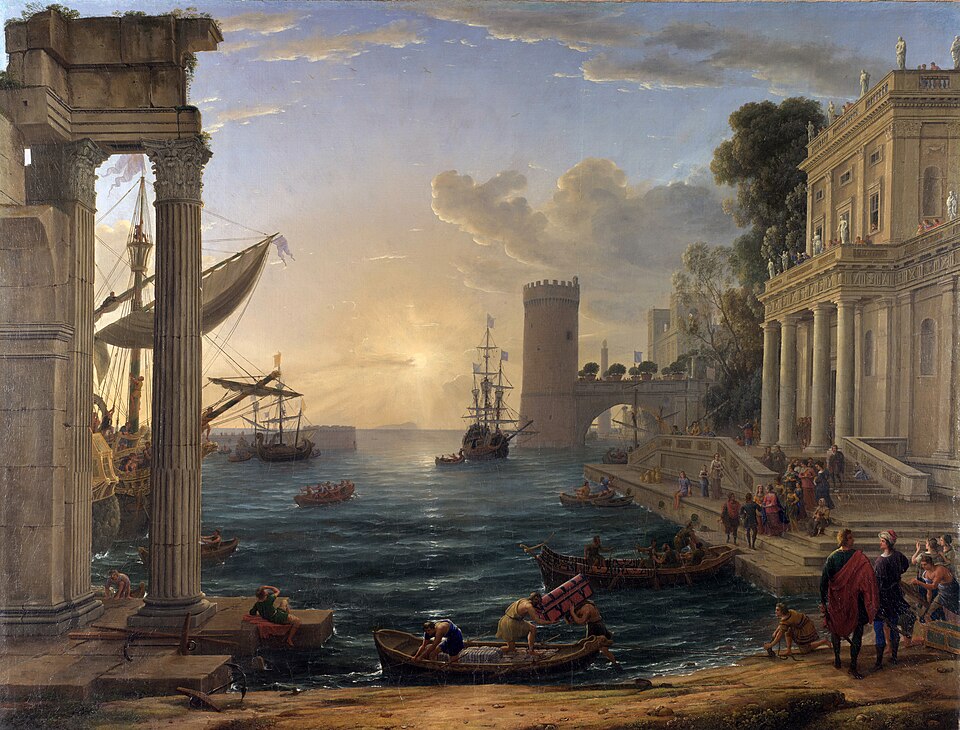
Among Lorrain’s most celebrated paintings are his harbor scenes at sunrise or sunset—works such as “Seaport with the Embarkation of the Queen of Sheba” (1648) and “Seaport with the Embarkation of Saint Ursula” (1641). These paintings don’t merely depict ships and architecture; they choreograph light. The low sun acts like a conductor, organizing reflections on water, silhouettes of masts, and the viewer’s gaze into a calm, ceremonial rhythm.
Can You Guess the Artist?
Three clues. One artist. How quickly can you identify the painter?
His remote and classical landscapes such as Landscape with the Marriage of Isaac and Rebekah (The Mill) (1648) and Landscape with Ascanius Shooting the Stag of Sylvia (1682) register on a different register: softer, more inland, trees and ruins providing a steady truce of dark and light. Lorrain combines a carefully wrought foreground with a luminous distance, and the terrain seems to unfold in a way that‘s tangible and mind-expanding, as if the eye is journeying to some impossible place that keeps retreating.
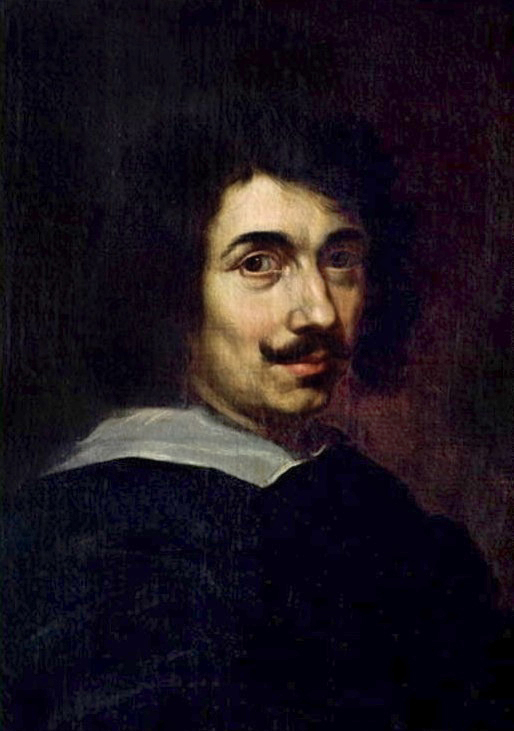
Lorrain was an excellent draftsman, too. His sketches done often in the field seize fleeting weather, mobile cloud shapes and the delicate “hinge” moments of the day. Those sketches provided material for works that appear spontaneous even as they are painstakingly assembled. What appears to be real observations of nature is often nature in the editor‘s hand edited down to a plausible fiction of concord.
Meaning Behind His Work
The deepest meaning in Lorrain’s art lies in his treatment of light as more than illumination—it becomes a metaphor for time, memory, and order. His sunlit haze doesn’t simply describe atmosphere; it suggests a world gently governed by cosmic rhythm. Dawn and dusk, his favorite thresholds, imply transition: departures, returns, beginnings, endings. Even when a narrative title is present, the emotional story often happens in the sky.
The importance of Lorrain‘s slight humans is that they are essential to the symbol. Their modest size shifts the moral axis of the picture from an emphasis on heroic action to one of reflection. The viewer is encouraged to feel human life as part of a greater benevolent order. Ruins and classical architecture added to this: they do not necessarily adorn, but they suggest.
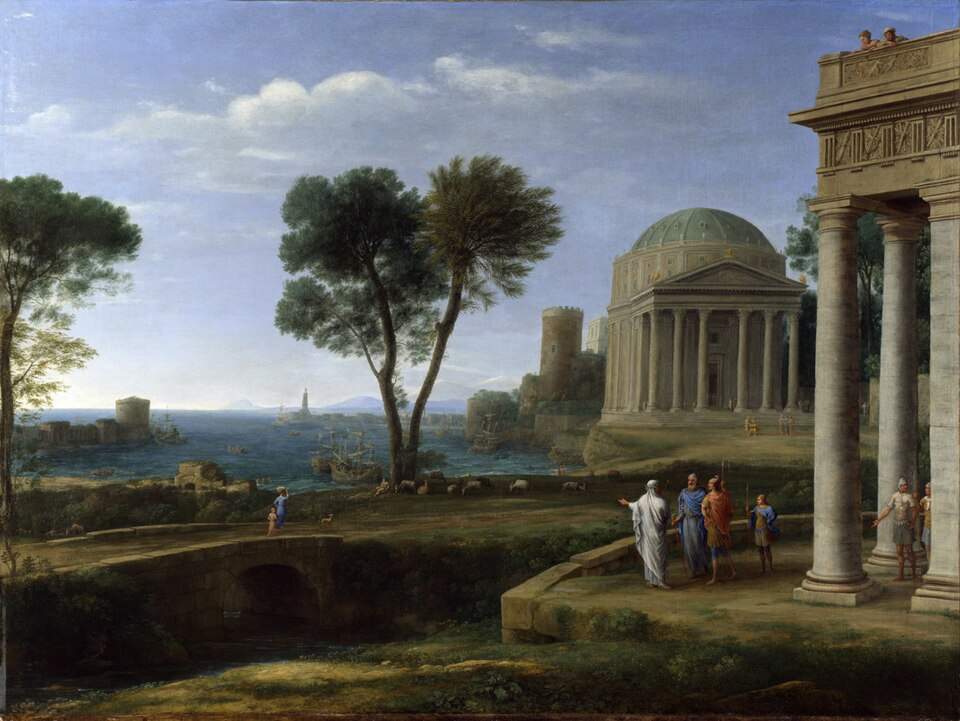
Another, more subtle politics of idealization is at play. Lorrain‘s landscapes are not literal maps they are artfully composed worlds, where nature and civilization seem to coexist comfortably harbors are tidy, branches serve as natural picture frames, the distances glow softly. In violent times of religious conflict and unstable power, they provided consumers of the art market with an image of a nice place to be. The ‘meaning’ is therefore double: elsewhere is calm and lovely and backwards there is an elegant notion of the world as feeling; warm and smooth and welcoming.
Why Is Claude Lorrain Famous?
Lorrain is famous because he effectively redefined what landscape painting could do. Before him, landscape often served as background; after him, it became a primary vehicle for mood, philosophy, and poetic experience. He made viewers care about air—that almost unpaintable substance between objects—using tonal gradations and radiant horizons to create a convincing sense of distance. This was not a technical trick alone; it changed the emotional scale of painting.
Can be immensely felt by anyone who came after him: the English tradition of landscapeparticularly in the 18 thcenturyglories in him: collectors wanted “Claude-like” views, painters raied themselves by humblig against his glow, even J. M. W. Turner learned from it, in the delicate way light became an object. First and less vocally, Lorrain had a hand even in garden and architectural design: the very concept of the picturesque view as a painting surreptitiously draws on his compositional balancing.
He is also renowned for the weight of his visual fantasies. Lorrain‘s landscapes provided a pattern for the dreams of the classical world discursive, subtle, alien: not as archaeological fact, but as mood. That pattern determined taste across the continent: how the “beautiful” landscape appeared, the way the horizon bleeds away, the placement of trees, the potential for illumination to transform space into desire.
Artistic Style and Techniques
Lorrain’s style is built on structure disguised as ease. He often constructs compositions with framing devices—trees, architectural elements, or shadowed banks—that guide the eye toward a radiant central distance. This creates a theatrical effect: the viewer feels positioned at the edge of a stage where the main actor is light itself. The arrangement is rarely accidental; it’s calibrated to produce calm and inevitability.
De facto this practice of atmospheric perspective is the core of his execution; faraway figures recede, cool, merge into mist, whereas close details are crisped up and darkened. What imparts its genius to this device, however, is the luminosity a perception that light is passing down through the whole coating of the paint, rather than sitting upon it. Water surfaces, particularly in his ports, are aesthetic links between the ‘world here’ and the ‘world off there,” unifying sky and land.
And he balances realism with imagination. His outdoor studies created convincing trees and clouds, but most of the paintings’ last scenes result in worlds that are collage-like. It‘s this amalgamation that gives them that feeling of the real and surreal at the same time. This is a way of convincing. He‘s trying to persuade you that a made-up place is more “truthful” than the actual view, as it embodies how the natural world appears when filtered through memory and longing.
Interesting Facts About Claude Lorrain
- He kept the Liber Veritatis, a remarkable album of drawings recording many finished paintings to deter forgeries and confirm authorship.
- Though associated with “classical” serenity, his work is often about movement and transition—departures, arrivals, and the shifting light of day.
- Many of his most famous scenes are invented landscapes, not specific locations, assembled from observation and imagination.
- He became a touchstone for British collectors; “a Claude” was once considered an essential mark of refined taste.
- His small figures are usually narrative anchors, but he treated them as secondary to atmosphere, a radical prioritization for his time.
Claude Lorrain still matters because he taught painting—and its viewers—to think of landscape as an emotional and intellectual space, not just a view. His light-filled harbors and pastoral distances continue to shape how we picture “the ideal” in nature: balanced, spacious, and quietly monumental. Beyond beauty, his work proposes a philosophy of looking—patient, reflective, attuned to time. That lasting influence runs from museum walls to the very way modern eyes seek meaning in horizon, weather, and fading sun.
AI Notice: Some visual content in this article may have been created or enhanced using artificial intelligence (AI) for artistic, editorial or illustrative purposes. Learn more about our approach in our AI & Editorial Principles.