
Chinoiserie Wallpaper and the Art of the Grand Boudoir
Affiliate Disclosure: This article contains affiliate links. As an Amazon Associate I earn from qualifying purchases.
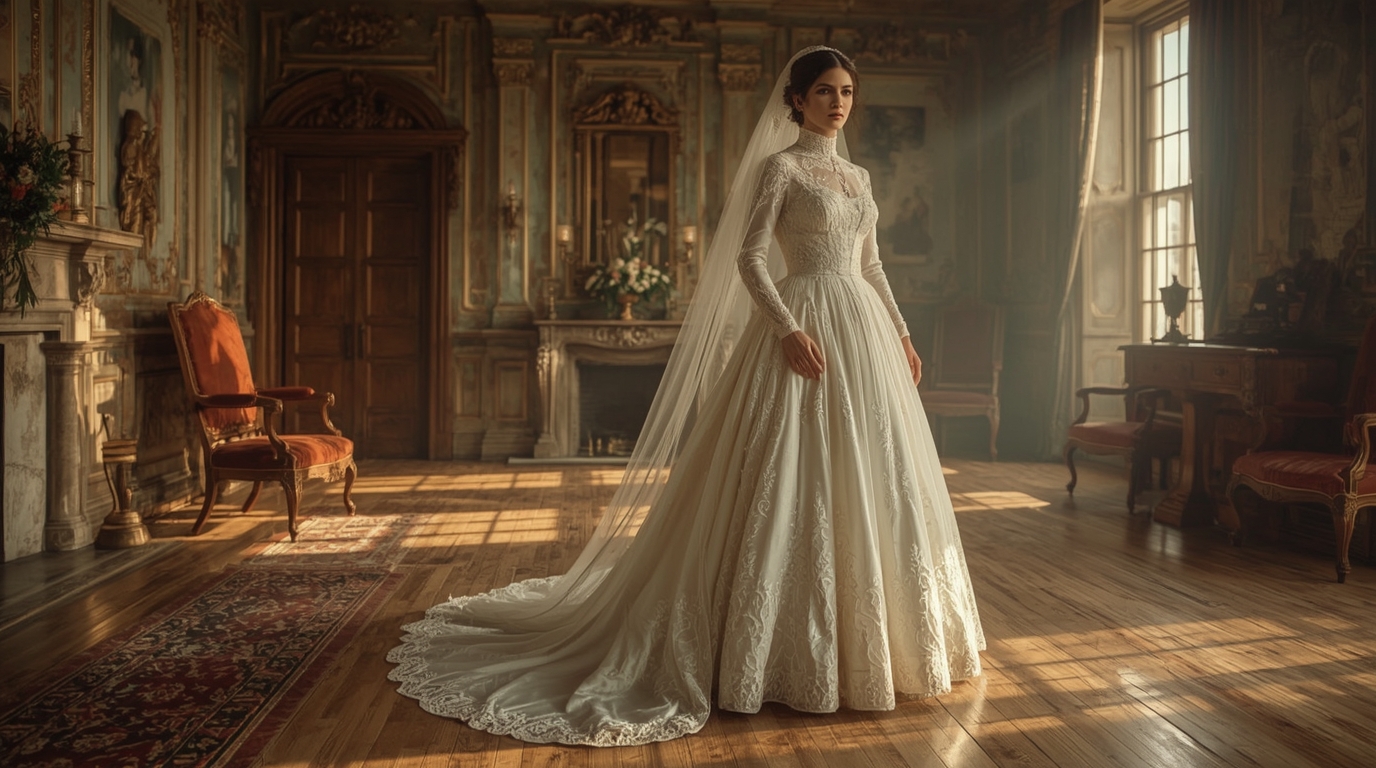
One can never quite rest in a boudoir decorated with chinoiserie paper. Birds fly across the walls, lifting off, mid-flight. Lacquer pavilions loom at various tilts. Porcelain-faced women bend over mahogany balustrades that seem to lead into nowhere. The space is a less a room than a stage dressing room for an intimate fantasy of“elsewhere”. It is the silent theatre of the grand boudoir: a space designed for closeness, but full of the world‘s imagery silks painted with fantasy, a surface of pattern foregrounding the absence of power, leisure and adventure. Panoramatic chinoiserie is not, at its best, decoration in the way we are meant to think of decoration. It is stories, projections, and gentle diplomacy applied with brush to paper. To decode the art of the grand boudoir we would do well to perform a layered reading of these coverings, as we would a narrative: as a work of psychology, culture, and exquisite craftsmanship.

From Courtly Fantasy to Salon Walls: Chinoiserie’s Rise
Can You Name the Masterpiece?
Ten masterpieces. Ten questions. How well do you know the history of art?
The chinoiserie wallpaper originated in a Europe which was fascinated by the East but at the same time had become reliant on middlemen and the primacy of the imagination. Voyages of the East India companies in the 17th and 18th centuries brought to the court porcelain, lacquer, silk and screens which took hold of the very taste of the court. Authentic Chinese painted papers arrived in Europe in miniscule quantities – only to be used in the most royal apartments and in the grandest city mansions. Versaille, Hampton Court and other courts installed these delicate panoramas as an indication of high sophistication and influence.
However, scarcity was to the European studios a spur for creation. They started to imitate, adapt and recombine “Chinese”, “Japanese” and even “Persian” models of design, combining rococo style with imagined scenes of “orient.“Chinoiserie acquired as a consequence the look of a reflection of European desire rather than of a documentary reflection of China: desire for distant routes of trade; for ordered gardens; for a world manageable thanks to aesthetic knowledge instead of political.

They thus migrated smoothly into the boudoirs: semi-private spaces where protocols softened. Within these were women and clientele who held court to intimate acquaintances, read letters from far away, or received a preferred lover. The theatrical unreality of the chinoiserie calico was entirely appropriate for such in-between spaces, neither wholly domestic nor altogether grand; the ‘cultivated’ escape of the boudoir against a backdrop of faraway scenery.
Can You Guess the Artist?
Three clues. One artist. How quickly can you identify the painter?
For historical examples of surviving 18th‑century Chinese wallpapers installed in European interiors, the Victoria and Albert Museum’s overview of Chinese export wallpapers provides invaluable context and imagery: V&A – Chinese Export Wallpaper.
Decoding the Motifs: Pagodas, Peonies, and Power
Nothing on a chinoiserie wall is neutral. Every pagoda, every parrot, every pierced rock is a site of cultural translation. A number of motifs can be traced, albeit variously, to Chinese visual vocabulary: scholar’s rocks, flowering prunus, bamboo thicket, garden pavilion recalling Jiangnan. But their application in European art usually employs them slightly differently.
Pagodas, by way of comparison, may seem to be more pleasant castles in the air, decorated with bells and finials, inhabiting a place closer to storybook observatory than Old World temple. They evoke distance, and other-ness, rather than any sort of Buddhist doctrine. Peonies and chrysanthemums iconic species of East Asian painting are recast as flower arrangements that translate along the principles of French Rococo asymmetry. The resulting lush, aerial flora drapes windows and chimneypieces like a never-ending fête champêtre.

Figure types receive the most telling transformations. Court officials become languid courtiers, gardeners morph into decorative staffage, their gestures choreographed to echo European fêtes galantes. These imagined “Oriental” figures reassure the viewer that elsewhere can be beautiful, orderly, and available as ornament.
In the boudoir context, this coded language of luxury and distance is crucial. The patron could inhabit a world of trade and empire without confronting its harsher realities. A panel filled with birds on flowering branches suggests a cosmopolitan serenity: nature tamed, time suspended, the outside world kept safely picturesque.
Panels as Architecture: How Wallpaper Shapes Space
In a sumptuous boudoir, chinoiserie wallpaper is less stable. It is more like a different kind of building wall. Conventional rooms were hung in framed panels, each separated by gilt mouldings or painted reserves. The division of the wall consisted of a column of “scroll” or garden views separated by doorways, mirros, and pier glasses.
Scale is everything. Life-size trees, stretching up to a cornice, extend a low room; tiny pavilions hovering above dado height prod the gaze horizontally instead of vertically. Horizons, borrowed from Asian painting traditions, obscure perspective, narrowing the distance, drawing the scene in, and creating a boudoir cocooned in a faux painted grove.

The effect is intensified by light. In the morning sun sliding along the surface of silk or hand painted paper one can make out tiny brushstrokes, gold and the ridged bulges of opaque pigment. Looking back in the trumeau mirror the scene repeats again and again: parrots pick at each other, the bridges are there again, and a crane prowls the room for evermore between mirror and wall.
This spatial manipulation is not accidental. The boudoir is a room about control—of light, of access, of narrative. Chinoiserie panels create a controllable outdoors, a domesticated landscape arranged around the sitter at the centre of the composition. It is a stage on which conversations, secrets, and seductions unfold against an endlessly composed horizon.
For a detailed examination of how such wallpapers were integrated architecturally in European interiors, the Metropolitan Museum of Art’s essay on Chinese export and European adaptation of wallpapers offers rich, illustrated analysis: The Met – Chinese Export and European Adaptation.
Craft, Color, and Surface: Reading the Painted Layer
True historical chinoiserie wallpapers represent a refined material knowledge: much of the Chinese export samples – even when they are papier-mâché papers or silk on some of the more refined wallpapers – are painted in two or more joined sheets of handmade paper, or silk, sized and sometimes double backed. Brushes loaded with mineral and vegetable pigments create opaque greens and azurite blues, behind those elegant ink-lines that define the bamboo stems or pavilion eaves with disciplined calligraphic accuracy.
European were, however, repeatedly, reinterpreted forms and colour schemes for the the palette. Gentle eau‑de‑Nil, faded flourished rose and milky cream backgrounds complimented glazed boiseries, and soft sometimesweighed berg éres. Metal powders or shell gold would be applied to highlight stamens and roofs ridges and reflect candle rays as if dust of jewellery were spread across the wall. Surface, in these rooms, was by no means accidental; it was choreography.
Under close inspection, the layers tell a story of labour and global exchange: paper mills, pigment merchants, ship routes, and specialist painters—sometimes entire family workshops—dedicated to a single suite of rooms. The irregularities are part of the seduction. A bird’s slightly off‑centre gaze, a branch that adjusts mid-panel to accommodate a doorframe: these deviations remind the viewer that every leaf and tile passed through a human hand.
For the modern connoisseur, understanding these techniques clarifies the difference between printed pastiche and genuine artistry. The latter breathes. It has pentimenti, adjustments, and visible decisions that connect the boudoir’s hushed interior to the broader history of craftsmanship.
Curating a Modern Room with an Old-World Dream
Translating chinoiserie wallpaper into contemporary interiors is less about period re‑enactment than about attitude. Historically, the grand boudoir was a controlled, curated fantasy; the same principle holds today. The key is to treat the walls as the primary narrative and everything else as supporting cast.
In a modern apartment, a single wall of hand-painted chinoiserie can behave like an immense painting, offset by restrained furniture: a 20th‑century brass floor lamp, a clean-lined daybed, a solitary antique commode. Too many historical references and the room tips into costume drama; too few, and the paper feels unmoored. The most successful spaces maintain a tension between eras—a lacquered console under a spray of painted wisteria, a contemporary photograph discreetly framed within a panel.
Color discipline is crucial. Picking out two or three tones from the wallpaper—say, celadon, deep coral, and a smoky ink—and echoing them in textiles and trims allows the room to feel composed rather than overwritten. Above all, scale and emptiness matter. Grand boudoirs were never storage spaces; they were mises‑en‑scène. Leaving negative space—an uncluttered path of floorboards, a calm ceiling—lets the chinoiserie breathe and restores its original purpose: to transform solitude into a refined kind of reverie.
Chinoiserie wallpaper endures because it crystallises a paradox that still animates luxury interiors: the desire to feel cocooned yet connected to a larger, more imaginative world. In the grand boudoir, those painted branches and invented pagodas become a private cosmology, ordered to the scale of a single room and a single gaze. We may read them now with a more critical awareness of trade, empire, and projection, but their power lies precisely in this complexity. They are beautiful and compromised, escapist and revealing. To live with such walls is to acknowledge that interiors are never purely neutral—they are stories we choose to inhabit. Chinoiserie, at its best, reminds us to make those stories intricate, self-aware, and exquisitely drawn.
Bibliography
Victoria and Albert Museum. “Chinese Export Wallpapers.”
https://www.vam.ac.uk/articles/chinese-export-wallpapersThe Metropolitan Museum of Art. “Chinese Export and European Adaptation of Wallpapers.”
https://www.metmuseum.org/toah/hd/ewwp/hd_ewwp.htm
AI Notice: Some visual content in this article may have been created or enhanced using artificial intelligence (AI) for artistic, editorial or illustrative purposes. Learn more about our approach in our AI & Editorial Principles.