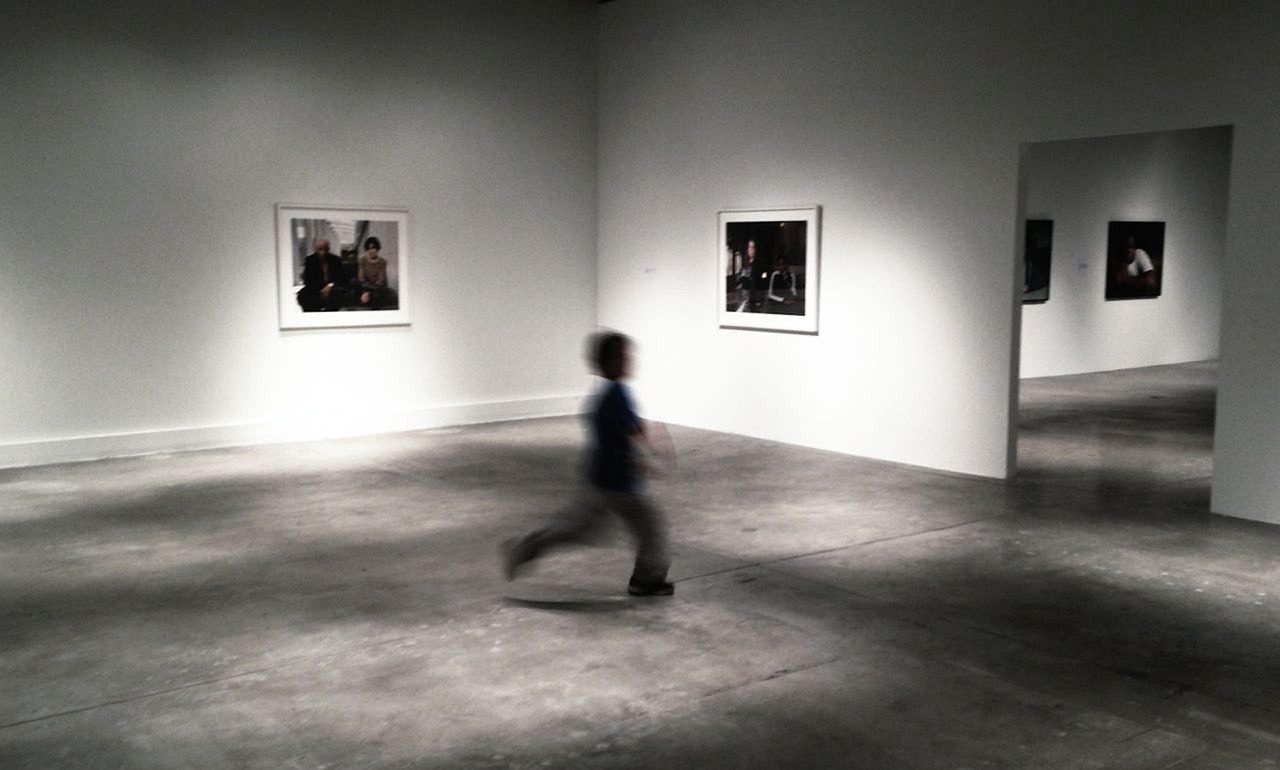
The Musée des beaux-arts de La Chaux-de-Fonds in Switzerland has received the entire art collection of Swiss collector Philippe Bodenmann, a donation that includes more than 200 paintings, sculptures and prints. The collection spans Swiss art from the early 20th century, Zurich Concrete Art of the 1950s, and international Minimalist and Conceptual art of the 1960s and 1970s. A recent report in The Art Newspaper adds an unusual detail to the story: some works were discovered in portfolios that had not previously been opened, revealing that the museum’s acquisition was larger than initially understood.
A Major Collection Arrives in Switzerland
Museums regularly receive donations from collectors, but few acquisitions offer such a direct portrait of one person’s relationship with art.
That is what makes Philippe Bodenmann’s collection particularly interesting.
The Musée des beaux-arts de La Chaux-de-Fonds has received Bodenmann’s entire collection, which contains more than 200 works spanning paintings, sculptures and prints.
The museum is now presenting the collection in an exhibition titled Voyages en zigzag. La collection de Philippe Bodenmann.
The exhibition opened on September 5, 2026, and will remain on view until January 3, 2027.
According to the museum, Bodenmann decided in 2025 to entrust his entire collection to the institution, reflecting a relationship with the museum that had developed over many years.
This was not simply a financial donation.
It was the transfer of a personal history of collecting.
Who Is Philippe Bodenmann?
Bodenmann trained as an engraver at the École d’art in La Chaux-de-Fonds.
He also produced paintings early in his career and exhibited at two of the museum’s contemporary art biennials.
Those experiences influenced the way he later collected art.
The museum says they contributed to his strong interest in geometric abstraction and to the development of demanding standards as a collector.

Beginning in the 1980s, Bodenmann assembled works by artists from Switzerland and elsewhere.
His collection gradually became a record of his interests, friendships and intellectual relationships with artists.
That makes the collection different from one assembled primarily for investment.
It reflects the choices of someone who lived with the works and developed a personal understanding of them over decades.
More Than 200 Works Tell a Story
The collection covers a surprisingly broad period.
It includes artists connected with the Neuchâtel region during the early 20th century.
It then moves into Concrete Art from Zurich in the 1950s, followed by international Minimalist and Conceptual art of the 1960s and 1970s.
The collection also contains works by Swiss artists who became friends with Bodenmann during later decades.
The museum describes the collection as reflecting both an artistic journey and a personal journey.
That distinction is important.
A museum collection is normally organized around institutional priorities.
A private collection often develops differently.
A collector can follow an intuition.
One artist can lead to another.
A friendship can influence an acquisition.
A particular exhibition can completely change a collector’s interests.
Over several decades, those individual decisions can produce a collection that tells a story no museum curator could have planned in advance.
The Unexpected Discovery in the Portfolios
The most unusual element of the recent story concerns the condition in which part of the collection arrived.

According to The Art Newspaper, the museum discovered additional works in portfolios that had not previously been opened.
The discovery meant that the scale of the acquisition was greater than museum staff had initially understood.
It is a striking reminder that private collections can contain surprises even after they have formally entered an institution.
A portfolio can look like storage.
Inside, however, it can contain an artwork that has not been publicly exhibited for years.
For a museum, opening such material can be both a practical and intellectual process.
The institution has to identify the work, document it, establish its condition and determine its place within the collection.
Only then can the object become part of the museum’s public history.
A Collection That Mirrors the Museum Itself
The Musée des beaux-arts de La Chaux-de-Fonds sees another important connection.
The museum says Bodenmann’s collection reflects the exhibitions that shaped the institution during the past four decades.
In other words, the collection does not exist independently of the museum.
It has developed within the same cultural environment.
Bodenmann visited exhibitions.
He encountered artists.
He developed relationships.
He followed artistic debates.
And he acquired works.
The collection therefore becomes a kind of parallel history of the museum itself.
This is one of the reasons the museum considers the donation historically significant.
It is not simply receiving 200 additional objects.
It is receiving a record of how an engaged collector experienced the artistic life surrounding the institution.
Concrete Art and the Swiss Tradition
One of the strongest threads in the collection is geometric abstraction.
This connects Bodenmann’s interests with an important tradition in Swiss art.
Concrete Art developed strongly in Switzerland during the 1930s and became particularly influential in Zurich after the Second World War.
Artists associated with the movement emphasized geometric forms, precise structures and relationships between colour, line and space.
The movement rejected the idea that abstract art necessarily had to represent something from the visible world.
Instead, geometry itself could become the subject.
This approach remained influential for generations.
Bodenmann’s interest in geometric abstraction helps explain why his collection could move naturally from Swiss Concrete Art toward Minimalism and Conceptual Art.
These movements share an interest in reduction, structure and the fundamental elements of artistic language.
From Geometry to Minimalism
The collection’s trajectory into international Minimalist art is equally significant.
Minimalist artists in the 1960s challenged conventional ideas about sculpture and painting.
They often reduced works to simple geometric forms and industrial materials.
Instead of asking viewers to interpret an image or narrative, Minimalist art could focus attention on physical presence, space and the relationship between the artwork and the viewer.
That approach has a natural connection with the geometric interests already visible in Bodenmann’s collecting.
The transition from Swiss Concrete Art to American and international Minimalism therefore makes historical sense.
It shows how one artistic language can develop into another across national boundaries.
Conceptual Art Changes the Question
The collection also reaches into Conceptual Art of the 1960s and 1970s.
Conceptual artists challenged the traditional idea that the physical object was necessarily the most important part of an artwork.
Ideas, instructions, language and systems could become central to artistic practice.
That represented a major change in the history of modern art.
For collectors, it also created new problems.
How do you collect an idea?
What does it mean to own an artwork when the concept may be more important than the physical object?
Bodenmann’s collection includes artists working within this broader international shift.
As a result, the donation is not simply a survey of attractive objects.
It follows major changes in the definition of art itself.
The Importance of a Collector’s Eye
The museum makes an interesting distinction between Bodenmann’s donation and another important collection it holds, the Olivier Mosset donation.
The museum describes Mosset’s collection as reflecting the perspective of an artist.
Bodenmann’s collection reflects the perspective of an amateur and collector — someone who loves art, searches for it, develops a taste for it and lives alongside it.
That distinction gives the exhibition its particular character.
A museum curator has professional responsibilities.
A collector has a different kind of freedom.
Collectors can develop obsessions.
They can follow artists before they become famous.
They can purchase works because something personally resonates with them.
Over decades, those decisions can become surprisingly revealing.
What Happens When a Private Collection Becomes Public?
The transfer of a private collection to a museum changes the meaning of the works.
Inside a private home, the collector sees the works every day.
They may be surrounded by furniture, books and other objects.
The collection forms part of a personal environment.
Inside a museum, the same works become historical documents.
Visitors can study them.
Researchers can catalogue them.
Curators can place them into new contexts.
The works become available to a much larger public.
That transformation is one of the most important functions of museum donations.
A private passion becomes public heritage.
The Museum’s Own History Is Part of the Story
The Musée des beaux-arts de La Chaux-de-Fonds itself has a long history.
The institution traces its origins to the Société des amis des arts, established more than 150 years ago.
The museum’s current building was inaugurated in 1926 and was designed by Charles L’Eplattenier and René Chapallaz.
Its architecture combines modernity and classicism, with Art Nouveau and Art Deco influences.
The museum later received an underground extension designed by Georges-Jacques Haefeli in 1993.
Today, its collection includes works by artists such as François Morellet, Günther Förg, Olivier Mosset and Lawrence Weiner.
Bodenmann’s collection therefore enters an institution that already has a strong connection to geometric, conceptual and postwar art.
A Donation Becomes an Exhibition
Rather than placing the new acquisition quietly into storage, the museum has immediately made the collection visible through Voyages en zigzag.
The exhibition is curated by David Lemaire and Kahina Hamlaoui.
Its title — “Zigzag Journeys” — reflects the fact that the collection is not presented simply as a chronological history of art.
It is a journey through Bodenmann’s interests.
Swiss art.
Geometric abstraction.
Concrete Art.
Minimalism.
Conceptual Art.
Friendships with artists.
And decades of collecting.
The result is closer to a portrait of a collector than a conventional survey exhibition.
Why the Unopened Portfolios Matter
The story of the unopened portfolios adds an especially human element.
Museums are usually associated with certainty.
Objects are catalogued.
Numbers are assigned.
Provenance is researched.
Works are photographed.
Everything is organized.
Private collections can be messier.
An artist’s work may sit in a folder.
A print can remain in a portfolio.
A piece can be stored for years without public attention.
Then the collection changes hands.
A museum opens the material.
And suddenly something that has been largely invisible becomes part of the public record.
That process is one of the less visible but fascinating aspects of museum work.
Before an artwork can become part of an exhibition, someone has to discover, identify and document it.
A Different Kind of Art Discovery
The Bodenmann story is not an archaeological discovery.
No one uncovered an ancient sculpture beneath the ground.
No lost masterpiece was found inside a forgotten castle.
Instead, this is a quieter kind of discovery.
Art was already there.
It simply had not yet been fully seen.
That makes the story particularly relevant to museums.
Collections contain countless works that are not currently on display.
Some have never been exhibited.
Others may have been overlooked for decades.
The arrival of a major private collection can therefore create opportunities for discoveries even when the objects themselves are not newly created.
Why This Collection Matters
The significance of Bodenmann’s donation lies in the combination of scale, coherence and personal history.
More than 200 works have entered the museum.
The collection covers important developments in Swiss and international art.
And the choices reveal the intellectual interests of one collector over several decades.
The newly revealed works in unopened portfolios add another dimension.
They show that the process of building a museum collection does not always end when the donation is signed.
Sometimes the collection continues to reveal itself.
From Private Passion to Public History
Philippe Bodenmann spent decades building his collection.
The museum will now preserve it as part of its institutional history.
That transition changes the audience.
What once belonged to one collector can now be studied by researchers, seen by visitors and interpreted by future generations.
It also demonstrates why private collectors can play such an important role in museums.
Their collections can preserve artistic connections that might otherwise disappear.
They can support artists who were important to a particular generation.
And they can reveal personal networks that conventional art history may overlook.
The Story Is Not Finished
Voyages en zigzag. La collection de Philippe Bodenmann is on view at the Musée des beaux-arts de La Chaux-de-Fonds until January 3, 2027.
The museum describes the collection as containing more than 200 works, but the recent discovery of additional material shows how difficult it can be to understand the full extent of a private collection immediately.
That may be the most intriguing part of this story.
A museum has received an entire collection.
The collection is now public.
But even after arriving at the museum, it still has things left to reveal.
For visitors, that makes the exhibition more than a presentation of a collector’s taste.
It is a reminder that the history of art is sometimes waiting quietly inside a portfolio, a drawer or a box — until someone finally opens it.
Sources:
- The Art Newspaper – Swiss museum acquisition and unopened portfolios
- Musée des beaux-arts de La Chaux-de-Fonds – Philippe Bodenmann Collection
- Musée des beaux-arts – Museum history and collections
AI Notice: Some visual content in this article may have been created or enhanced using artificial intelligence (AI) for artistic, editorial or illustrative purposes. Learn more about our approach in our AI & Editorial Principles.