There is a peculiar hush in a Claude-Joseph Vernet seascape: not silence, but a carefully composed expectancy. A gull hangs in a brushed square of sky; a rigging line becomes a delicate punctuation against a distant lighthouse; light threads through cloud and smoke like a director’s cue. Vernet mastered the theatrical calm before and after storms, turning coastal life—boats, nets, vendors, waves—into a collected choreography of gesture and light. His canvases do more than depict the sea; they invent atmospheres that register both natural forces and human endeavor, offering a refined poetics of seascapes that still resonates in rooms, museums, and private collections today.
Claude-Joseph Vernet’s Coastal Worlds and Light
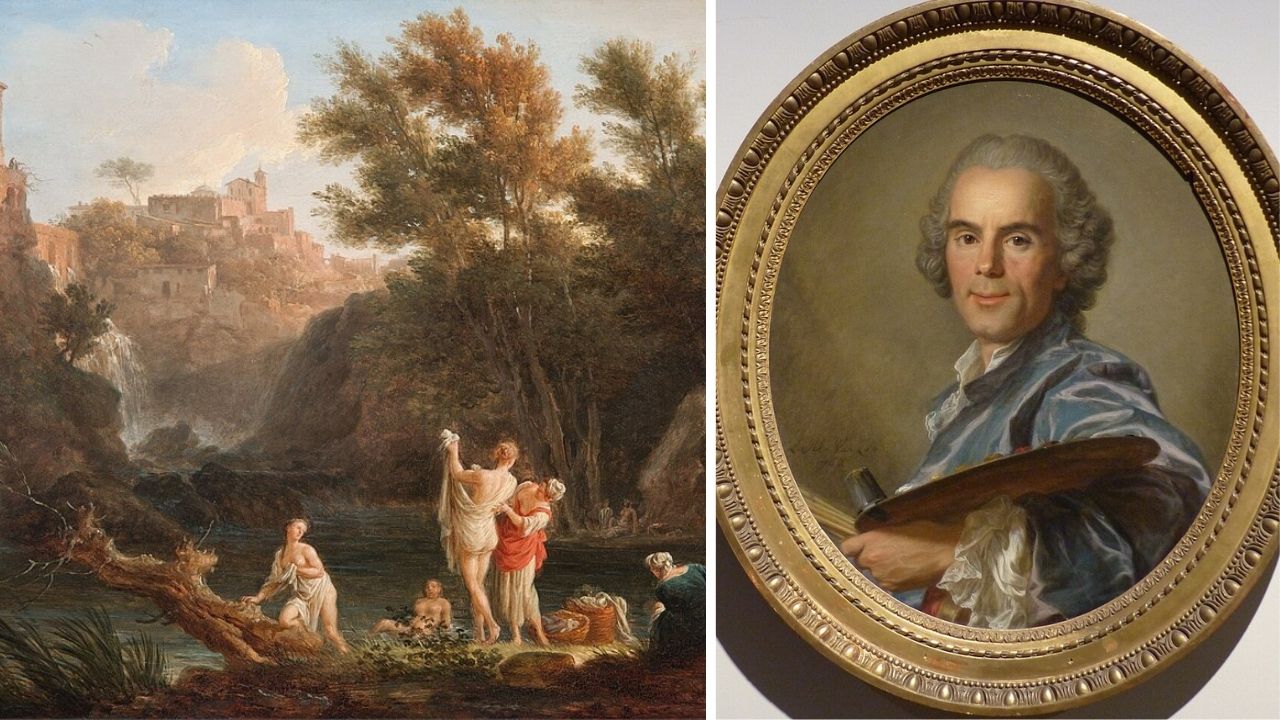
Vernet‘s coastal views are how-to lessons on scale and proportion: a flat horizon line suggests infinite space and depth; earthbound figures, accurately scaled, volunteer to inform the story and shape the picture without dominating it. Vernet‘s seascapes frequently juxtapose demarcated plains of sky and sea with localized action on the beach itself, fishermen preparing their gear, merchants loading ships, children running among stranded craft, these signs or cues serve as a set of instructions, a roadmap for the eye across the surface of the picture, providing equivalent moments of removal and proximity for the viewer.

In a technical sense Vernet did prefer ultra thin oil washes to build up a series of luminous skies and mirror-like water. Cobalt blues and greenish greys rest, on vegetated land, upon yellows and burnt sienna, creating a contrast of temperature as distinct as that of an overcast globe from a blue summer sky. What Vernet produces is not the objective truth of physical-naturalistic representation, but a well balanced pictorial drum, upon which the compelling force is to be found in the manipulation of light: it sets figures to their rightful place, informs the time and sets the emotional temperature between the tranquility of a summer day and the panic of an approaching storm.
The Roman Sojourn: Vernet’s Classical Imprints
Vernet‘s early years in Rome as for most of his age-group, on the standard French Grand Tour that prompted him to encounter Italianate classicism, the vast landscapes of Claude Lorrain, learn the vocabulary of wide-screen composition, with its framing device, its gentle gradations of aerial perspective and its classical view of the natural world as architecture; but Vernet took this into shipboard, the port and the headland.
During this period he would also have encountered at first hand the theatricality of Italian Baroque painters and their turbulent clouds, theatricality which would play a part in his handling of weather and is exemplified in the synthesis achieved here: the classical statics, though, are combined with the sense of immense activity a rolling cloud bank like unravelling drapes, ships positioned to maximize wind and figures frozen mid-action. His union of experience and the classical resulted in a genre appropriate both for taste and for a lucrative commerce eager for striking views of the sea.
Atmosphere and Technique: Vernet’s Brush of Weather
Vernet begins to use weather as an expressive tool. He plays with clouds’ mass, winds’ direction and the reflected light to set emotional tone calmness, melancholy, peril without spectacle. The gradual polished thin works in the sky contrast with the denser, freer touches in surf and foam, where thick paint thickening the visual texture echo the ruffled gesture of the surf. Warm highlights and cool shadow balance to produce a palpable thickening in water, the hulls of ships appearing in the dents between tone.

Vernet‘s compositional devices diagonals of sails and coastlines, the counterpoint of vertically arrayed masts against the horizontal sea generate a rhythmic pulsing of images. His devices, which serve to organize the pictorial space, also evoke the experience of being at sea: tilt of the mast acutely indicates wind; the casting of a line represents the human response. In other words, technique and atmospherics are fused: the way he renders the weather is the way he conveys feeling.
Patronage, Commerce and Vernet’s Marketable Vision
Vernet‘s success was intricately tied to the eighteenth-century market place for images. His seascapes attracted aristocrats enamored of cultivated visions of nature, naval and commercial investors eager to glorify ports and ships, and a burgeoning bourgeois taste for the adventurousness associated with sea travel and business. Engravings after his works proliferated, turning individual images into currencies of visual preference throughout the continent.

One of the highlights of the painter‘s career was the commission to depict ports throughout France. This was a government project that brought the nation‘s pride into the realm of images. These images reflect the talent while satisfying both the aesthetic and political needs that Vernet‘s compositions could meet. Vernet‘s beaches simultaneously noted the importance of trade and sovereignty to French identity and served as elegant works of display in salons and palace receptions. These dual expectations made his work marketable and provided standards by which France‘s coast could be seen.
Vernet Today: Collecting, Conservation and Legacy
Today Vernet‘s marine paintings find a unique place in the decorative arts and collecting: for they are foci within interiors engaging in a balance of classical refinement with natural, theatrical animation. The original canvases are valued for their range of a delicate palette and atmospheric composition; period frames gilt, carved, often infused with marine themes re-establish the theatrical painting. Conservation issues include the yellowing of varnish layers (which dull the cool palette) and the need to limit over-cleaning that could efface the virtuoso imprints of subtle glazes that lend the atmospherics.
Beyond the market, Vernet’s influence is aesthetic and conceptual. His method rendering weather legibly poetic, balancing control and chaos is a response to a centuries-old cultural impulse: to bring the sea onto land, without losing its splendor. Artists, architects and designers who evoke the maritime (past or present) linger on Vernet’s lessons: ceaseless harmony, calculated theatricality, and most notably the role of Light as an interpreter of emotion. That legacy, then, continues its lesson.
Vernet’s paintings persist because they speak to a very human and contemporary longing to believe that nature is both spectacle and stage. Our civilization has produced a particularly authored experience: seascapes as compositions in which light, craft, human figures and elements come together in subtle environments. For collectors, for curators and amateurs, Vernet provides a vocabulary for bringing the sea into the cultivated space: not as anatomical subject, but as authored meeting point between eye and element. His coastlines remain ‘carriers of behaviour’, visual poetry that still informs the ways we observe and inhabit the maritime world.
AI Notice: Some visual content in this article may have been created or enhanced using artificial intelligence (AI) for artistic, editorial or illustrative purposes. Learn more about our approach in our AI & Editorial Principles.