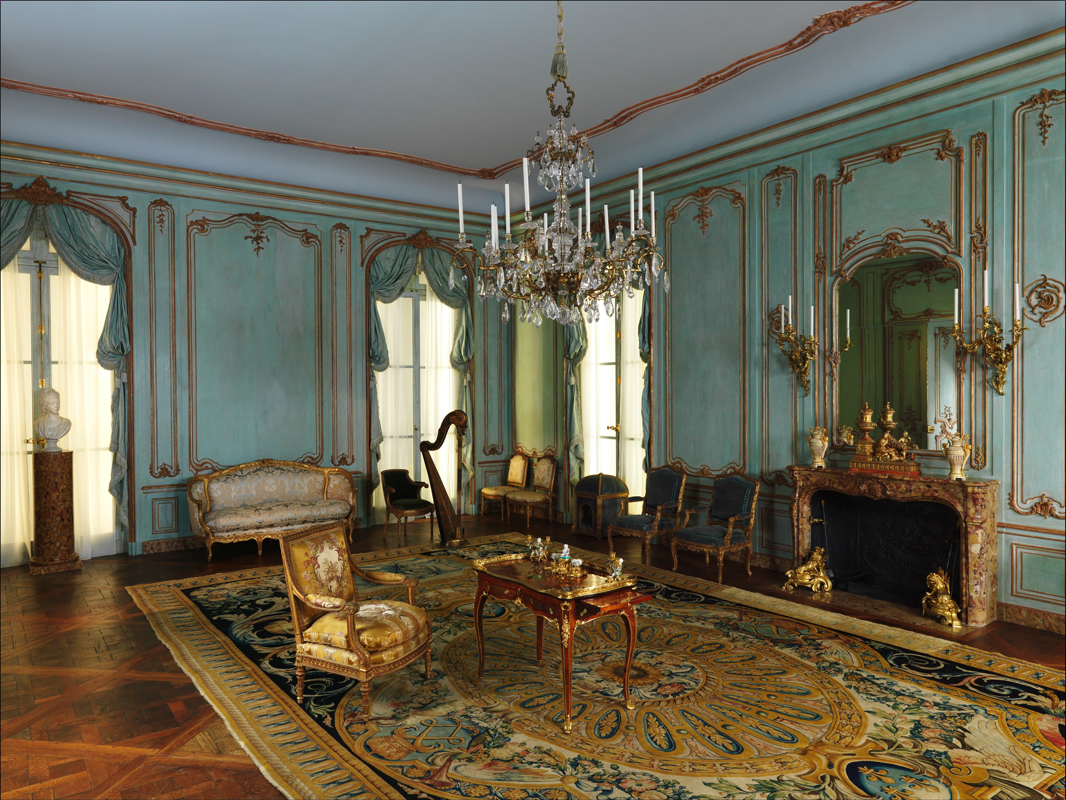
Few objects capture the spirit of 18th‑century luxury as vividly as the Rococo mirrors. More than a practical tool, these lavish looking glasses became theatrical stages of curling gilded foliage, coquettish putti, and shimmering glass that reflected not just faces, but an entire worldview of pleasure, movement, and artful excess. Today, Rococo mirrors are treasured in museum galleries and private interiors alike, prized for their technical brilliance, historical resonance, and unmistakable visual drama. Understanding them means understanding the social aspirations, craftsmanship, and aesthetics of one of Europe’s most distinctive artistic movements.
Origins of the Rococo Mirrors in 18th‑Century Europe
An more playful, flirtatious style (Rococo) rose in France in the early 1700s. The formal, strategic symmetry of the Baroque fell from fashion, giving way to moral cheerfulness and aristocratic intimacy. Mirrors played a key role in this shift. Large pier glasses and overmantel mirrors, located in Parisian hôtels particuliers (urban mansions) along the Faubourg Saint G ermain, increased candle lighting and amplified dimensions of finished spaces that served as social space salon and card room ‘both as physical mirror and as symbol of a society more aware of itself and more devoted to the pleasures of display.’
Prior breakthroughs in glassmaking made the technical feasibility of large Rococo mirrors possible. The construction of the Manufacture Royale de Glaces de Miroirs at SaintGobain in France in the late 17th century made larger, more reflective and higher quality plate glass possible. This meant designers could envisage large sections of mirror face with extensively carved surrounds, particularly in grand design schemes such as Versaille’s Hall of Mirrors. The Metropolitan Museum of Art states that by the 1730s, mirrors that “had moved from being more or less incidental objects to becoming an integral element in interior schemes”.

France may have pioneered the style, but the Rococo mirror was soon proliferating throughout the European continent. Variations existed to suit each country‘s particular preferences: in Britain, Germany, Italy and Central Europe, for example. London‘s cabinet-makers, including names like Thomas Chippendale, published pattern books providing broad access to the Rococo mirror to a clientele that stretched from Britain and the American colonies to the far reaches of Eastern Europe. In German epicentres of the period such as Munich and Dresden, frescos and carving at the courts absorbed the mirror into fantastically elaborate, cohesive architectural walls. As the collections of the Victoria and Albert museum demonstrate (and as the mirror itself demonstrates), the Rococo was a truly international language of decoration of which the mirror remained one of the most eloquent dialects.
Defining Features: What Makes a Mirror “Rococo”?
Rococo mirrors are immediately recognizable by their energetic asymmetry and lush ornament. Frames swirl with C‑scrolls, S‑curves, and shell motifs (rocaille, from which “Rococo” partly derives), interlaced with foliage, flowers, and sometimes birds or playful cherubs. Unlike the strict bilateral symmetry of high Baroque design, Rococo frames often appear to be growing organically, as if carved foliage had suddenly frozen in a moment of motion. The Louvre Museum describes Rococo decoration as “characterized by lightness, elegance and an exuberant use of curving natural forms,” and Rococo mirrors epitomize these qualities.

Surface and material treatment are equally important. For example numerous mirrors of the 18 th Century Rococo period consisted of a boarded wooden frame often of limewood, beech ( 8 ), in France and Germany and mahogany or other softwoods in Britain, carved in high relief with additional gilding. The different layers of gesso enabled them to be made into crisply undercut carving, which was further picked out in burnished gold leaf which would catch the candle light. In a wealthier room (or in the Parisians or Viennese) a mirror would be built into a large carved wood wall paneling called boiserie whose frame was flowing and bocher. Sometimes the glass itself was patterned into scalloping, bevelled, or cartouchies shapes in order to increase the feeling of movement.
Iconography also reflects the Rococo interest in leisure, the natural, and the fantastic. Hunting trophies and musical instruments are juxtaposed with cartouches and shells; a maritime motif combined with dolphins and coral appears on the frame with chinoiserie mirrors, which enjoyed popularity in England and France. The Smithsonian Institution, along with research into the decorative arts, pointed out that “Rococo ornament often enshrined the pursuits and fantasies of the elite,” and the mirror frame was no exception, acting as a spiral menu of aristocratic entertainments love, music, play, and the pastoral centered on the viewer‘s reflection.
Rococo Mirrors Across Europe: French, British, and German Variations
French Rococo mirrors are often considered the stylistic benchmark. Under designers like Juste‑Aurèle Meissonnier and later Nicolas Pineau, Parisian workshops perfected sinuous, asymmetrical frames with intricate carving and gilding. Overmantel mirrors (trumeaux) frequently combined painted panels or stucco reliefs above a reflective surface, integrated into entire decorative programs for reception rooms. The Metropolitan Museum of Art’s examples from mid‑18th‑century Paris show frames so unified with surrounding boiseries that the mirror becomes architecture rather than furniture. The overall effect is one of luxurious fluidity, with the mirror expanding the apparent volume of richly decorated rooms.

In Britain, Rococo mirrors developed their own distinctly English hues. Parisians such as William Kent and Thomas Chippendale borrowed heavily from their more native port, but they also adapted the French ideas by incorporating additional British internal structure along with a often more toned down color scheme. Chippendale‘s publication, the “Director” (1754) presented many plates of “French,” or even in some cases, the more white toned “Rococo,” mirror designs scrolls, cartouches and gads of foliage – that in many cases had stronger vertical axes than Parisian mirrors. The English designs from the Victoria and Albert Museum displays possess heavier frames, more giltwood treatments, and in some instances, neoGothic or chinoiserie inclusions.
Germanspeaking areas, notably Bavaria, Saxony, and Austria, also saw a booming market for highly and elaborately sculpted mirror glass. Here court workshops in Munich, Dresden, and Vienna often worked with plaster-moulding ateliers to produce mirror suites where the objects slipped away into cascades of plaster shellwork and foliage. Within these suites, the glass could be simply itselfcut into a number of luxurious shell-like or bib-shaped comb-like formsand joined to painted allegories, or thrushes and naked children in stucco. By contrast, the Amalienburg pavilion at Nymphenburg Palace, Munich, would be penetrated by mirrors in such a way as to make the walls almost disapear entirely. These Bavarian examples, along with others (see for example, the Germanisches Nationalmuseum, Germany), all show how they played a keen part in creating the illusionism of the Eighteenth Century and the light-filled interiors of the Bavarian Rococo.
Craftsmanship and Technology: How Rococo Mirrors Were Made
Producing a high‑quality Rococo mirror in the 18th century required expertise from several trades: glassmakers, carvers, gilders, and sometimes painters and stucco workers. Glass production was especially critical. Following earlier Venetian innovations, French and later English plate glass manufacturers developed methods to cast or blow larger sheets, which were then ground and polished to a high sheen. The Manufacture de Saint‑Gobain in France and later English glasshouses enabled the production of tall, nearly flawless plates, a technical feat that directly influenced mirror scale and design. Historical records noted by the Musée des Arts Décoratifs in Paris show significant royal investment in these manufactories, underscoring the strategic importance of glass.

With the introduction of glass, the construction of a frame was evolved from a wooden core. Carvers traced a fullsize drawing, or a pattern, onto softwood panels, and then cut away the excess timber with gouges and chisels before carving out selected details. Deep undercutting that many Rococo frames are renowned for, was sometimes challenging technically and would require a having an understanding of the working of wood so as not to split it. Following the completion of the carving process, the carver would then tack on multiple layers of gesso, (a mixture of chalk and glue) and then his sculptures would be smoothed down with water, and in certain cases the addition of modeled ornament in composition (a malleable mixture) to allow for the detailing. Gilt gold, modified by the addition of a toning glaze if necessary, was then applied by water or oil gilding methods, often with a 22–23 carats gold.
The mirror glass was silvered on the back with mercury amalgam, a process described in contemporary treatises and referenced by conservation books from places such as the Louvre and the Victoria and Albert Museum. The results may have had aesthetic appeal but they present a significant health hazard to the workers who produced them. Today, a conservator must stabilize the remaining mercurysilvered plates. Conservation reports from the Metropolitan Museum of Art note that the initial silvering on 18th-century mirrors can often be identified by its telltale spots and discoloration and have become accepted features contributing to the history and Charactertucand the beauty of historic mirrors.
Rococo Mirrors in Courtly and Domestic Interiors
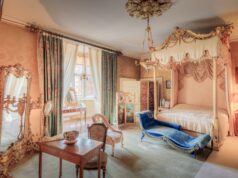
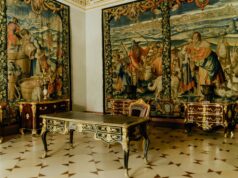
Within aristocratic and royal residences, Rococo mirrors were not isolated objects, but components of broader decorative schemes. In Paris, designers created “mirrored salons” where panels of glass alternated with painted overdoors, carved boiseries, and gilded stucco, producing a dynamic interplay of reflection and ornament. The Hôtel de Soubise and Hôtel de Rohan in Paris, preserved by the French National Archives, are celebrated examples: their salons feature overmantel and pier mirrors that elongate wall surfaces and multiply floral carvings and gilt accents. As The Louvre Museum has observed in its Rococo room installations, this use of mirrors transformed interiors into luminous, visually complex environments.

The mirror had political significance in a royal residence as well. The perfectly Baroque style of the Versailles Hall of Mirrors set the pattern for the political and ceremonial function of reflecting space, as “playful, modest versions of it appeared in subsequent Rococo rooms, such as those of the Residenz at Wurzburg or Schonbrunn in Vienna…where visitors could see themselves as part of an artificial kingdom of allegories, trophies, and gilded greenery.”
Even outside the court, look alike Rococo products could be found in the homes of the merchants, professionals, and colonial elite. During the mid-18 th century, “pier glasses” and “chimney glasses” could be found in the cherished inventory items of service providers of the upper middle class. In colonial North America expensive imported English giltwood mirrors were common in the homes of the upper classes around Boston to Charleston and have been identified in the collections of the Smithsonian and the Winterthur Museum. Though these mid18 th century mirrors were powered by the Chippendale pattern, they were much smaller and more restrained but they nevertheless testify to the global sales of Rococo ‘poussiere’ and the mirror‘s indication of a renaissance self.
Legacy, Collecting, and Contemporary Appeal
By the 1770s the fad for rococo was waning. Critics and designers turned instead to the Propaganda Style or Neoclassicism, which promoted ‘moral seriousness…a straightforwardness of line, and classical reserve.‘87 even the popularity of the mirror waned and frames became more rectilinear; ornament was pared down and shells and scrolls were replaced with laurel wreaths and the Greek key. However, Rococo-style mirrors were never exactly replaced: revivalist styles appeared through the 19th century and in the 20th the 18th century was rediscovered as a signifier of high-end sophisticated decadence. Mirrored interior designs during the Art Deco and Hollywood Regency eras play on products of a 18th century historicizing market gilt scrolls, ornate cartouches, bevelled glass.88
Museum collections have been important in reconsidering Rococo mirrors as serious art and craft objects. Major holdings, conservation records, and documentation by The Metropolitan Museum of Art, The Victoria and Albert Museum, The Louvre Museum and the Smithsonian Institution among others have all provided access for the academic community. As succinctly expressed by the Victoria and Albert Museum, ‘Furniture and interiors of the Rococo period reflect a new interest in comfort and informality’ this realization has allowed those researching to interpret mirrors within the context of contemporary social attitudes to privacy, self fashioning and domesticity.
Today though, a few styles can be so as varied as the Rococo and exist today in a sameness of interiors that is entirely appropriate to a footnoted modernism to the area of an imagined and re-imagined old world. As more decisive and broadly visaged then successful as a period style,‘sad to say’ sought after by collectors, decorators and homeowners alike, they have an undercoating of period realism to extensive options of expensive gas and also one of high period quality reproductions.‘if there was [a Rococo mirror] by Fragonard‘s great grandson on the back shelf of Selfridges, so much the better’. Or just a big splash mirror carving as the ideal couple day reminder in a fresh, clutter free, modern or even minimalist room, styling on the exuberances of time, as a contrast to something more recent and fresh.
Key Characteristics of Rococo Mirrors
| Feature | Typical Rococo Expression | Notes / Sources |
|---|---|---|
| Overall Form | Asymmetrical, curvilinear silhouettes | Louvre: “Exuberant use of curving natural forms” |
| Iconography | Shells, scrolls, foliage, putti, musical and hunting motifs | Met & V&A Rococo collections |
| Materials | Carved wood (often lime, beech, softwoods), gesso, gilding | V&A: Giltwood mirrors from France, Britain, Germany |
| Surface Finish | Water‑gilded or oil‑gilded gold leaf, burnished highlights | Conservation reports, Metropolitan Museum of Art |
| Glass Technology | Mercury‑silvered plate glass, sometimes beveled or shaped plates | Saint‑Gobain records; Louvre and Met conservation literature |
| Scale and Placement | Overmantel, pier, and integrated wall mirrors in salons and halls | Historic interiors in Paris, Munich, Vienna, London |
| Geographic Variations | French fluidity, English structural clarity, German exuberant stucco | Comparative displays at Met, V&A, and European palace museums |
| Social Function | Status symbol, light amplifier, tool of self‑fashioning | Interpretive texts, Smithsonian and major European museums |
Authoritative Perspectives and Sources
Art historians and curators consistently stress the centrality of mirrors to Rococo interiors. The Metropolitan Museum of Art notes that mid‑18th‑century French design “brought together architecture, decoration, furniture, and objects in a unified aesthetic,” with mirrors crucial to this unity. The Victoria and Albert Museum, discussing its 18th‑century collections, observes that Rococo “favoured asymmetry, lightness and playful use of natural motifs,” especially evident in decorative arts like mirror frames. These institutional perspectives underscore that Rococo mirrors are not mere accessories, but core documents of 18th‑century artistic and social history.
By viewing the Museum of the Louvre, the mirrors are not only a symbol of “the lightness and intimacy of the rococo style”, but also for the surfaces reflects and transforms the scale of space and changes the relationship of the human beings and the environment. Moreover, based on the collection of the American furniture and imported decorative arts, the Smithsonian Institution shows the transatlantic spreading of rococo mirror and the role of it in setting up the research of the elite identity in colonies and early period of United States. It also reflects on the role of the rococo mirror in the history once the two prestigious institutions sharing the same opinion.
Research in the above museums’ scholarly catalogues and exhibition catalogues can be undertaken as several exacting case studies: provenance, workshop attributions, technical studies into gilding and glass, and contextual essays into interiors. Such publications along with conservation reports constitute the basic knowledge base of contemporary expert knowledge of Rococo mirrors. To explore further, sessions in Rococo galleries and repositories such as the Met, V&A, Louvre and Smithsonian collections are highly recommended.
Frequently Asked Questions
1. How can you tell if a mirror is truly Rococo and not just “ornate”?
Authentic Rococo mirrors typically show dynamic asymmetry, abundant C‑ and S‑scrolls, and shell (rocaille) motifs integrated into an organic whole, rather than strictly balanced designs. Period examples often have mercury‑silvered glass with some age spotting and hand‑carved, water‑gilded frames. Comparing a piece to documented 18th‑century examples in major museums’ online collections (Met, V&A, Louvre) is a practical way to judge stylistic authenticity.
2. Are original Rococo mirrors safe to use, given mercury‑silvering?
The mercury used in historic silvering is sealed behind the glass and backing and does not pose a risk in normal use if the plate and backing are intact. However, broken, delaminating, or heavily damaged plates should be assessed by a professional conservator. Major museums follow strict safety and handling protocols; private owners of important pieces should seek comparable expert advice.
3. Why were Rococo mirrors often so large and heavily gilded?
Large plates amplified limited candlelight and made modestly sized salons feel more spacious and luxurious. Gilded frames bounced warm light around the room, while elaborate carving demonstrated wealth and access to skilled artisans. As the Victoria and Albert Museum notes, Rococo interiors were designed to create “an effect of movement and lightness,” and large, richly framed mirrors were essential tools in achieving that effect.
Conclusion
The Rococo mirror stands at the intersection of art, technology, and social history. Born from advances in glassmaking and woodcarving, nurtured in the salons of Paris, London, Munich, and Vienna, and now preserved in institutions such as The Metropolitan Museum of Art, The Victoria and Albert Museum, The Louvre Museum, and the Smithsonian Institution, it encapsulates an age that prized elegance, wit, and sensory delight. Whether encountered in a palace gallery or as a single statement piece in a contemporary home, a Rococo mirror still does what it did in the 18th century: it reflects not just the viewer, but an enduring human fascination with beauty, status, and the art of living well.
AI Notice: Some visual content in this article may have been created or enhanced using artificial intelligence (AI) for artistic, editorial or illustrative purposes. Learn more about our approach in our AI & Editorial Principles.