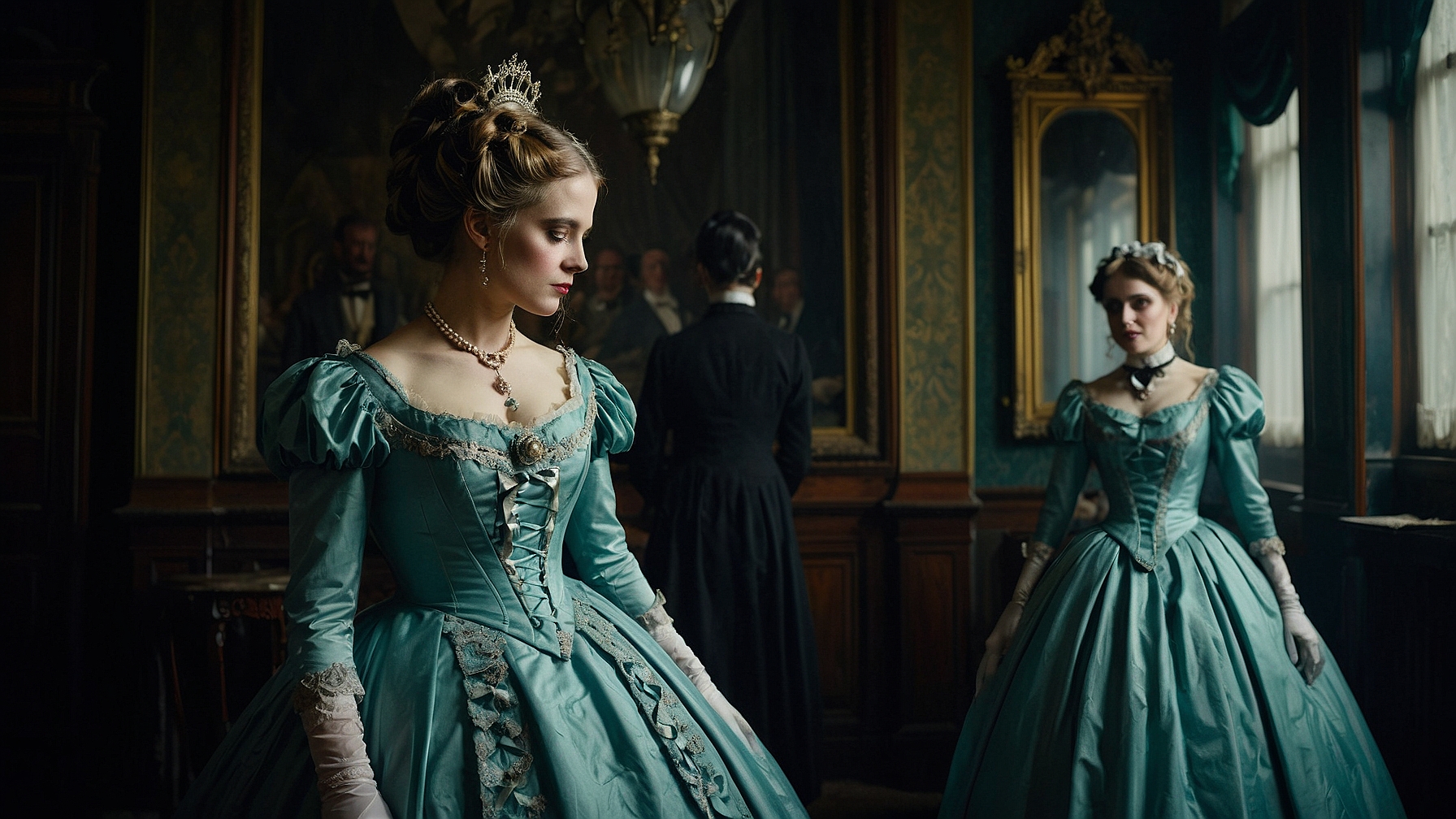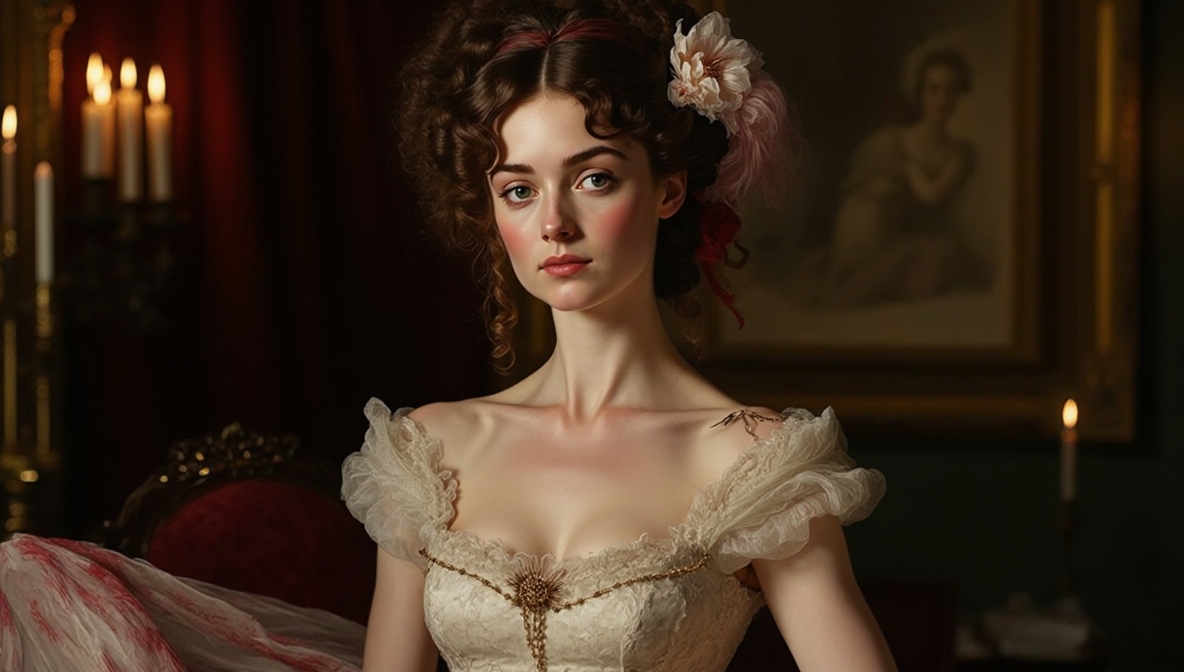

Victorian Hand Fans: The Secret Language Hidden in Elegant Accessories
The fluttering whispers of a Victorian hand fan could change a woman’s reputation in an instant. In an era when overt speech was often constrained by strict social codes, these exquisite objects became silent companions at balls, operas, garden parties, and drawing rooms. More than mere accessories, Victorian hand fans expressed wealth, taste, national identity, and even political allegiance—while also serving the very practical purpose of keeping one cool under layers of silk and whalebone. Today, they survive in museum collections as miniature works of art and remarkably revealing historical documents.
The Victorian Era and the Rise of the Hand Fan
The Victorian period (1837–1901) covering the entire extended reign of Queen Victoria, was one of quick industrial take-off, growing imperial power and changing social mores, particularly amongst the population in Britain’s emergent middle class. Fashion and social etiquettes of speech and personal presentation was crucial to the delineation of social class and moral standing. Consequently the use of personal accessories (parasols, gloves, reticules and fans) in the Victorian middle class was significant in the display of personal refinement or respectability. The hand fan moved as a luxury item from the aristocratic courts to wider society thanks to mass production and increasing international markets.
Can You Name the Masterpiece?
Ten masterpieces. Ten questions. How well do you know the history of art?
Popular in high society throughout 1800s, by Victorian times fans existed as a clearly defined institution, an integral part of a lady‘s social front. Too many events in the London Season‘s hectic schedule of balls, receptions and theatre visits to attend without a huge collection of decorative fans, as the Victoria and Albert Museum point out, there was “a proliferation in both variety and number of luxury accessories” reflecting new methods of production and consumer habits.
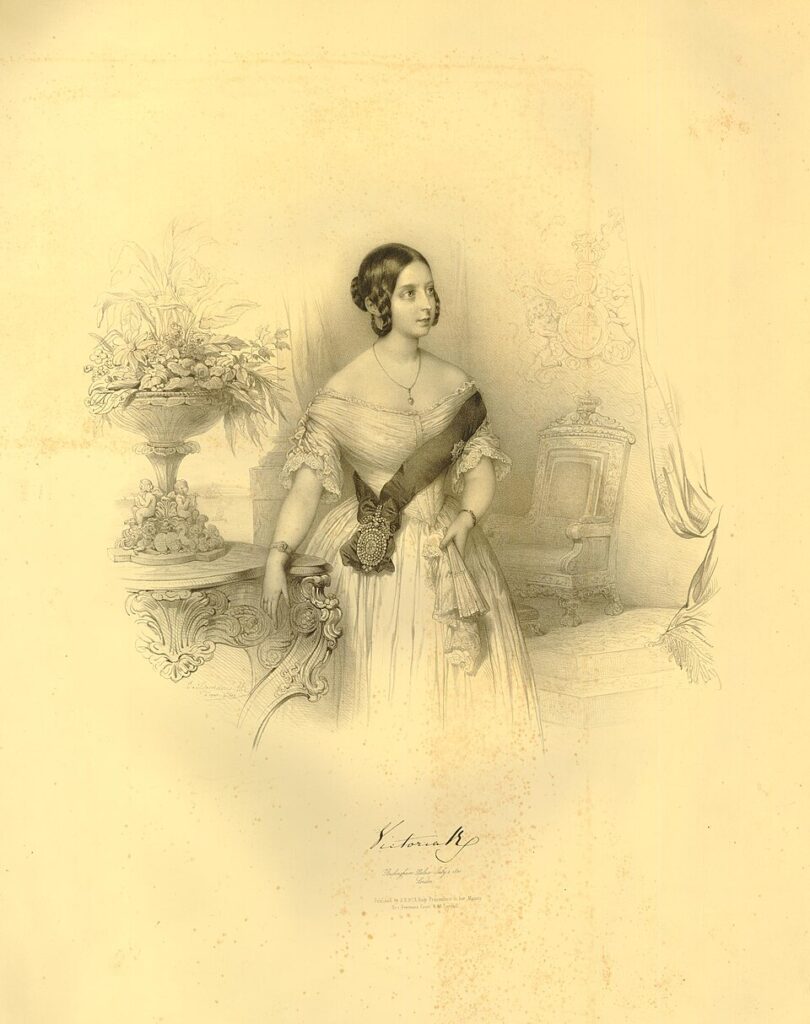
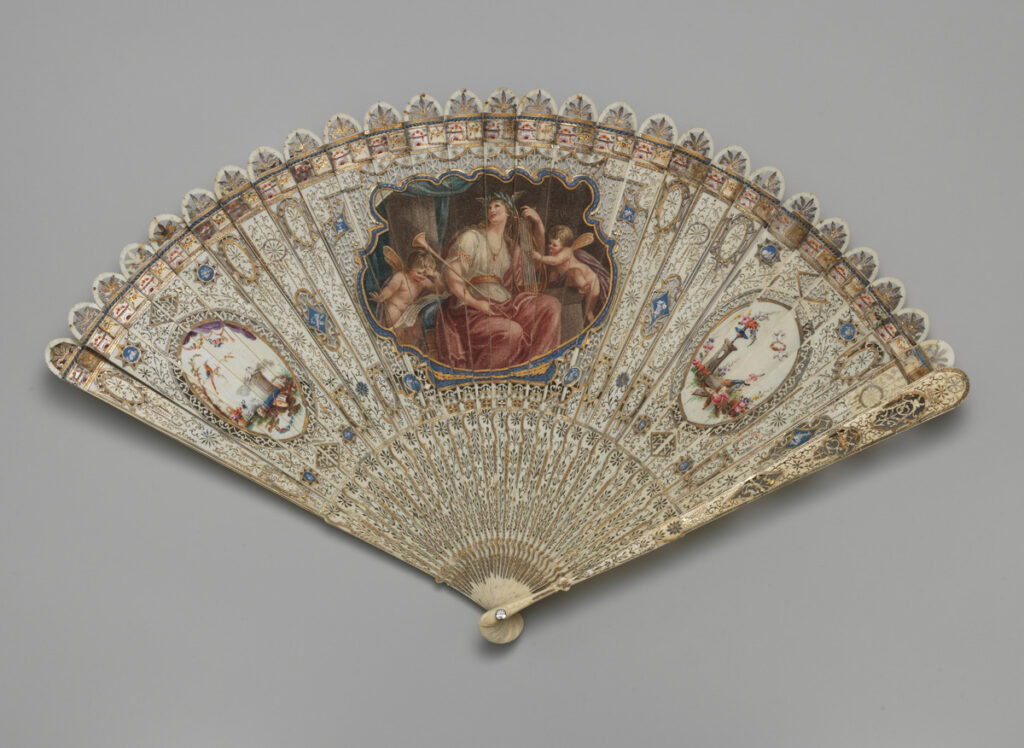
The growth of fan- making wasn’t limited to Britain. Paris was consistently one of the foremost producers of luxury fans in Europe throughout the 19th century and French fans, like the ones shown here, would have been very common amongst the upper and middle classes in Britain. As the Metropolitan Museum of Art writes, ‘Parisian fan-makers, or eventaillistes, supplied European courts and bourgeois households alike, establishing the Victorian fan as a transnational object, implicated in a shared European market and popular taste’.
Materials, Craftsmanship, and Design
Victorian hand fans ranged from modest paper pieces to opulent objets d’art crafted from ivory, mother-of-pearl, tortoiseshell, silk, and lace. The leaves (the part that opens and closes) might be made of painted paper, fine silk gauze, or bobbin lace, while the sticks and guards (the outer, protective sticks) were carved from bone, wood, or luxurious materials like mother-of-pearl. High-end examples often featured inlaid metals, tiny jewels, or applied sequins that caught candlelight in ballrooms and opera houses.
Can You Guess the Artist?
Three clues. One artist. How quickly can you identify the painter?
Such technical achievement is consistent, however, with the fact that the creation of these fans was a specialized skill: as the Victoria and Albert Museum states, ‘the production of a fan seems often to have been a collaborative achievement. The leaf might be painted by one workshop, the lace created in another, while the sticks were carved or inlaid by a third’ one that was therefore part of Europe‘s wider craft traditions (French and Italian painting studios, Belgian and French lacemakers and English and French carvers of wood and ivory). The end result being, as one photographer noted, a ‘walking gallery in miniature, a bit of haute couture in lacework, and a sample of the best carving’.
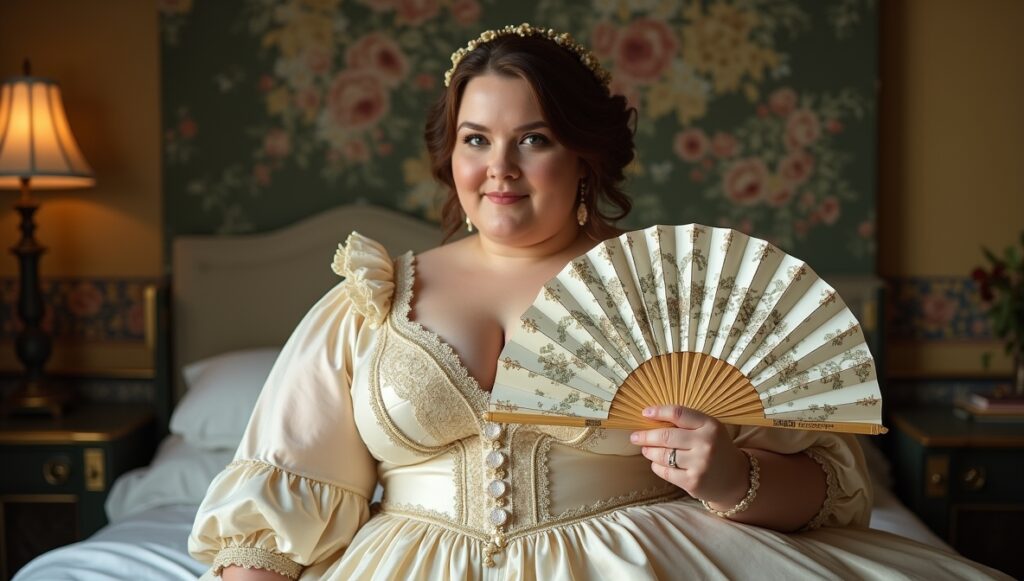
Design motifs signified both a link to former fanparaphernaliabus and a new Victorian focus. Classical subjects derived from Greco-Roman mythology, rustic scenery, and seasonal allegories still reigned supreme, but contemporary subjects also made their way onto fans, including scenes of London‘s sights, patriotic icons of the British Empire, celebrity and royal portraits, and political caricatures. One fan at the Smithsonian Institution displays satirical illustrations of late 1800s American society, for example, exemplifying how fans could be everyday reflections of social commentary.
Styles and Types of Victorian Fans
Within Victorian fashion, several main fan types dominated: the folding fan, the brisé fan, and, less commonly, the fixed or screen fan. The folding fan—where a flexible leaf is mounted on a set of sticks that open and close—was by far the most prevalent. It was portable, dramatic in motion, and offered a generous surface for decoration. As the Louvre Museum’s collections show, folding fans had been prized since the 17th century, but the 19th century saw their mass adoption and stylistic diversification.
Brise fans constructed only of sticks joined at the top by ribbon or thread are also seen to enjoy fashionable phases. They eliminated the continuous leaf, each stick acting as a miniature decorative plane, and Victorian examples often pierced-carved, gilt and painted seem to glow with jewel-like exuberance. The Metropolitan Museum of Art notes:
Thus revived, the fans appeared in the form of the 19th-century blaths, with their carved ivory and mother-of-pearl surfaces adorned with ornate openwork patterns derived from both Rococo and East Asian sources, as well as in the form of the innovative brise-fans, which had been so popular during the 17th century.
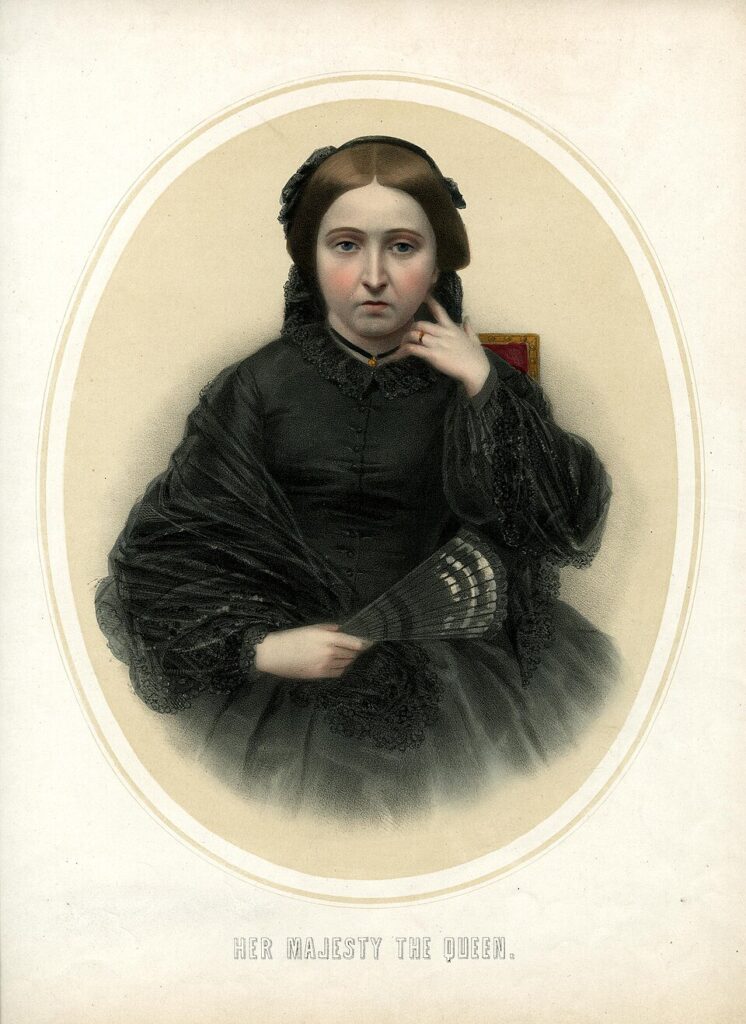
Other types of fan catered to specific prescriptions or preferences. By the end of the Victorian era and into the Edwardian, feather fans (some made from ostrich plumes) had become fashionable, with their association with theatrical glamour and evenings. Mourning fans made in sombre black, grey or dark purple followed Victorian mourning requirements to the letter. Commemorative fans were used to mark royal occasions such as Queen Victoria‘s Golden Jubilee in 1887, often featuring a portrait and patriotic symbols. Each type can be seen as a manifestation of the fan‘s ability to adapt to elaborate ritual needs.
Symbolism, Etiquette, and the Myth of the “Language of the Fan”
Victorian society prized self-control and indirect communication, particularly for women of the middle and upper classes. In this context, the fan became a powerful extension of gesture and social nuance. Period etiquette manuals and satirical prints linked the fan to flirtation, modesty, and social signaling. A half-hidden face behind a fan could suggest coyness or reserve; a sharply snapped fan might hint at displeasure. As the V&A notes in commentary on 19th-century accessories, fans were “integral to a woman’s behavior in public, used to convey emotion within strict codes of propriety.”
During the 19 th and early 20 th centuries, a popular notion arose that there was a fully codified ‘language of the fan’ for example, someone passing a fan swiftly across her cheek was apparently saying ‘I love you’, or placing her fan on her right cheek was ‘Yes’. But most professional historians now dismiss these rigid sequences as more or less apocryphal, or at the very least heavily inflated. As the Fan Museum based in London (a specialized institution that is often quoted by larger museums in the field) states, ‘There is little evidence that a standard fan language was ever routinely used; rather, fans were employed in a highly expressive and informal manner, determined by local custom and individual choice’.
Undeniably, fans were part of a larger set of etiquette tools. Guides like Mrs. Beeton‘s Book of Household Management(1861) would not have offered an explicit “code” for using one‘s fan, but they preached the virtues of deportment, self-control in gesture, and timidity in presentation. The fan, in this context, was a sanctioned instrument for controlling the direction of one‘s gaze, one‘s blush, and one‘s bodily comfort, all without losing wifely respectability albeit at the expense of directness and plain speech.
Global Influences: From Asia to the Victorian Drawing Room
The Victorian fan was not purely a European invention; it was deeply shaped by Asian traditions and global trade. Folding fans originated in East Asia, likely in Japan or China, and were introduced to Europe by the 16th century through Portuguese, Dutch, and later British and French traders. By the 19th century, Asian export fans were widely available in European markets, and their aesthetics profoundly influenced local production. The Smithsonian Institution’s collections of Chinese export fans demonstrate the high level of craftsmanship and complex iconography that European buyers admired and sometimes attempted to imitate.
Japanese influence would begin to be known worldwide more prominently after Japan‘s opening to Western trade in the 1850s and the popular displays exhibited at world fairs like the 1867 Exposition Universelle in Paris. Such rise in Samurai culture is also attributed to the trend of Japonisme-a trend in the 19th-century West encouraging admiration for and imitation of Japanese culture-in the medium of fan decoration and design. As The Metropolitan Museum of Artsays in its essays on Japonisme, “Japanese fans… With asymmetrical layouts, stylized nature, and obscured use of empty space…create an aesthetic that affected European decorative art in the late nineteenth century.” Cherry blossoms, cranes, and ukiyo-e landscapes appeared on Victorian fan leaves.

Another facet of those transnational networks was at the level of material or labor. While a piece of ivory or tortoiseshell, a piece of exotic wood, or a delicate labor-intensive engine-turned shell came from the colonies or trading networks in Africa and Asia, the finest of the salon accessories was attached to the empire‘s economic inequalities. A piece of lace for a British or French fan may have been embroidered in Belgium, or painted leaves may have shown the capital of Venice, Paris, or London for the benefit of the export market. Thus within the Victorian fan lay one of the more paradoxical expressions of the global networks of ‘culture’ and power.
Technology, Industry, and the Democratization of Fans
Industrialization transformed the production and distribution of fans. While luxury examples remained hand-crafted, new technologies allowed for cheaper, mass-produced versions that broadened the market. Machine-printed chromolithographic leaves, for example, made it possible to reproduce colorful images quickly and at low cost. As the Victoria and Albert Museum notes in its discussions of printed ephemera, “The proliferation of affordable, brightly colored printing processes in the 19th century revolutionized decorative objects, including fans intended as souvenirs and advertisements.”
Purchasing power spread more widely as the industry was opened up to the middle classes and eventually to the working classes as well. Middle-class or working-class women could purchase attractive paper or celluloid fans to use on a day-to-day basis, take to the theater or purchase as souvenirs from exhibitions or seaside resorts. A few fans were also used as advertisements, bearing images and names of goods, stores or public events in a manner not unlike the earliest bill-boards carried in a woman‘s hand. For example, the Musée du Louvre‘s collection of fans printed in the 19 th century show how “fans became both fashion accessories and carriers of commercial and political messages”.
Simultaneously, there was no decline in artisanal quality and special order fans, with hand painted scenes and use of superb materials, could still be bought by aristocratic and rich. The existence of both types is typical of the Victorian material world and accounts, in part, for the huge range of fans in museum collections.
Table: Key Characteristics of Victorian Hand Fans
| Feature | Description | Typical Variations |
|---|---|---|
| Main Types | Folding, brisé, fixed/screen, feather | Folding most common in social settings |
| Common Materials | Paper, silk, lace, bone, wood | Luxury: ivory, mother-of-pearl, tortoiseshell |
| Decorative Techniques | Painting, printing, gilding, carving, piercing, embroidery | Sequins, spangles, appliqué, inlay |
| Popular Motifs | Classical scenes, florals, landscapes, portraits | City views, political emblems, Asian-inspired art |
| Social Functions | Cooling, fashion, flirtation, modesty, signaling status | Mourning, commemoration, advertising |
| Production Centers | Paris, London, Brussels, Chinese and Japanese export centers | Regional styles across Europe and Asia |
| Price Range (Then) | From inexpensive printed paper to bespoke luxury objects | Accessible to middle classes; elite patrons for top end |
| Present-Day Context | Museum collections, antiques market, costume research | Exhibited by Met, V&A, Louvre, Smithsonian, others |
Collecting, Conservation, and Museum Scholarship
Today, Victorian fans occupy an important place in museum collections worldwide. The Metropolitan Museum of Art, the Victoria and Albert Museum, the Louvre Museum, and the Smithsonian Institution all preserve and display significant examples. These institutions study fans not merely as fashion accessories, but as artifacts that intersect art history, social history, technology, and gender studies. As the V&A succinctly puts it in its collections overview, “Accessories such as fans provide a unique lens through which to view the daily lives and aspirations of past societies.”
Fans, being a composite material, are difficult to conserve. Fine, friable materials such as paper, silk, lace, and natural materials such as ivory or tortoiseshell, are sensitive to light, relative humidity, pests, and mechanical stresses. Museum conservators must strike a balance between accessibility and preservation, and fans may be placed in protective cabinets, displaying less frequently and under low light levels, limited handling and other sources. The Smithsonian Institution conservation guidelines specify that stable conditions and limited intervention are most appropriate for composite objects, such as fans “require integrated conservation strategies that consider all materials simultaneously.
Similarly, museum scholarship has helped to dispel myth and define provenance. Through close cataloguing, technical examination (including microscope and pigment analysis) and archival research into ‘maker‘s marks’ and workshop publications we can trace the movement of works and the multiple hands involved. Loan exhibitions and online collections allow for examination between institutions, enabling greater understanding of 19th Century stylistic and commercial movements and changing tastes.
Frequently Asked Questions About Victorian Hand Fans
Q: Were Victorian fans really used as a secret code for lovers?
Historical evidence suggests that while fans were indeed used in flirtatious and expressive ways, the strict “language of the fan” charts often reproduced today are largely later inventions or exaggerations. Museums and fan specialists generally agree that there was no single, universally recognized code, though individual circles may have developed informal conventions.
Q: How can you tell if a fan is Victorian rather than from another period?
Dating a fan requires examining materials, style, construction techniques, and iconography. Victorian fans often feature industrially printed imagery, 19th-century fashion and hairstyles, and motifs related to the British Empire or major 19th-century events. Consulting reference works and online databases from the Met, V&A, or Louvre can help with comparison. For valuable items, professional appraisal or consultation with a museum or specialist dealer is recommended.
Q: Were hand fans used by men in the Victorian era?
While fans became strongly associated with women in Western Victorian society, men did occasionally use them, especially in hot climates, on travel, or in non-Western contexts. In Europe, however, male use of ornate folding fans had largely declined by the mid-19th century, and the fan was predominantly a feminine accessory in elite and middle-class social settings.
Conclusion
Victorian hand fans were far more than decorative trifles. They merged fine art, fashion, global trade, industrial innovation, and the intricate social codes of a rapidly changing society. From Parisian ateliers to London ballrooms and Asian export workshops, these objects traveled widely and spoke subtly—through images, materials, and gesture—about power, gender, and taste. Thanks to the work of institutions such as The Metropolitan Museum of Art, the Victoria and Albert Museum, the Louvre Museum, and the Smithsonian Institution, we can now read these fragile survivors not just as accessories, but as eloquent historical documents in miniature.
AI Notice: Some visual content in this article may have been created or enhanced using artificial intelligence (AI) for artistic, editorial or illustrative purposes. Learn more about our approach in our AI & Editorial Principles.