Victorian Era Peasant Clothing: The Harsh Reality Behind 19th-Century Rural Fashion
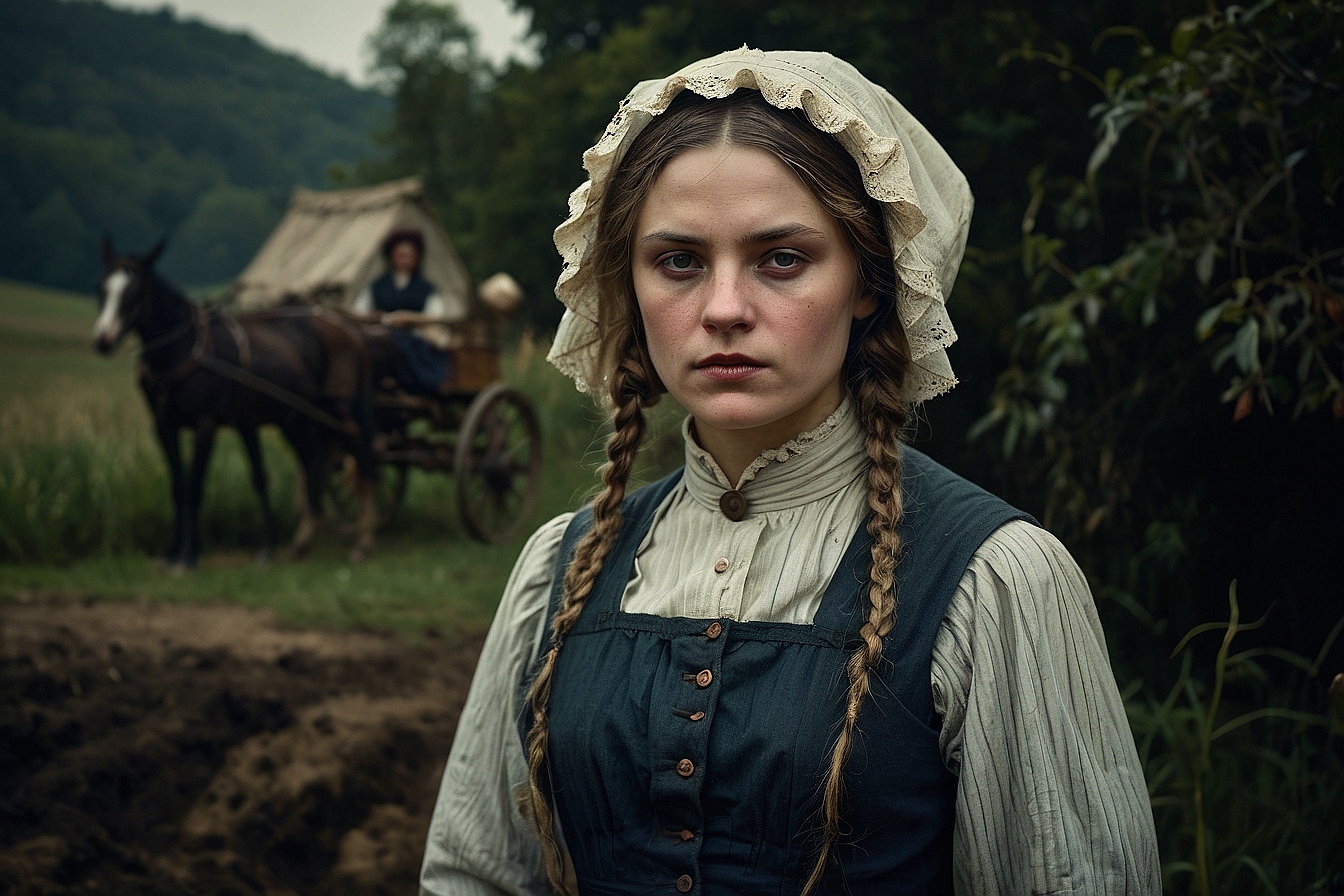
Peasant clothing in the Victorian period, often depicted as a standard ‘rustic’ attire – shawls and clogs, patched skirts – was in fact much more specific and better documented regionally, chronologically, across the length and breadth of the British Isles and Europe between 1837 and 1901. The dress of journeymen farmers and rural laborers was determined by a mixture of factors: local custom, climate, religion, and most significantly for this discussion, class economy. At a time when Britain‘s railways, townships and agricultural factories were revolutionizing the means of cloth production and distribution, the everyday dress of the peasants and tillers of the land was unchanging tough, practical, and for wearer and wash-day alike, suitable for the crucial activity of the field, market day, church, or seasonal ritual.
What “Peasant Clothing” Meant in the Victorian Era (1837–1901)
Strictly speaking, ‘peasant’ was not the most common Victorian British term newspapers, government reports, and official statistics still referred more often to ‘agricultural labourers’, ‘cottagers’ or ‘rural poor’. On the continent, the term ‘peasant’ makes a more straightforward link to smallholding farmers and rural workers: and it is in many European curatorial collections (notably French and Central/Eastern European) that museums employ ‘peasant dress’ as a referent category again, when describing clothing used over many Victorian decades, less the products of a fashion cycle then of traditional durability and repair, and local custom.
Can You Name the Masterpiece?
Ten masterpieces. Ten questions. How well do you know the history of art?
Industrialization transformed the peasant wardrobe. The mechanized cotton mills of Lancashire and the increase in inexpensive factory-spun yarns meant by the middle of the century it was becoming easier to select cotton prints and readymade components. But rural people remained conservative: clothes were “put by” for year, reconstructed, and handed down; patching and darning were widely practiced. In Britain, the “hungry forties” and interim agricultural fails resulted in the second hand market and home sewing becoming important; in Ireland, the Irish Great Famine, 1845–1852, widened the gap between garments worn as a matter of course and for “Sunday best”.
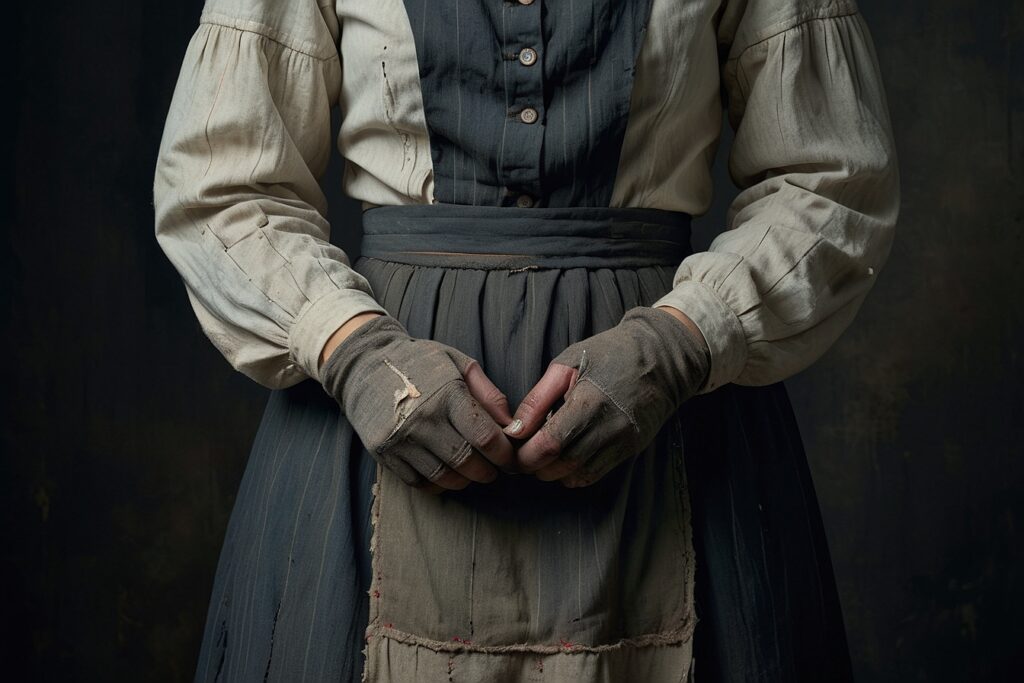
Museum collections underline that everyday dress is best understood through surviving items and textiles rather than romantic paintings alone. The Victoria and Albert Museum (London) and the Metropolitan Museum of Art (New York) hold extensive 19th-century textiles and dress objects that show the era’s materials and construction. As the V&A notes in its fashion resources, dress is a record of “what was available, affordable, and socially acceptable,” not merely what was fashionable—an especially important lens for rural and working populations.
Fabrics, Construction, and Everyday Practicality
‘Peasant’ dress in the Victorian period was never one shape: in Britain and Ireland, a coal-fed economy meant that fishermen on the coast were draped in oilskins and thick pullovers, while laboring in a plow county, farmers were wearing smocks or working coats and gaiters a different face of the same phenomenon. For women, headgear ranged from caps to bandannas or shawls; Highland and island communities had identifiable wool traditions; and in Wales, the stereotyped tall hat and shawl persisted in imagination, with its presentation affected by time, place and occasion. Within the continent, regionally specific folk dress was often more rigidly materialized and could consolidate signaling markers of a community. In France, there‘s variation in the rural standard in Brittany, Alsace, Provence and Auvergne or within the Habsburg and eastern European lands embroidered blouses, kitchen aprons, vests, or headgear indicated age, matrimony and sometimes religion. The collections at the Louvre Museum, along with research of 19 th-century European material culture provide further contextual developments of how folk and peasant imagery traveled from rural communities into urban areas.
Can You Guess the Artist?
Three clues. One artist. How quickly can you identify the painter?
Textile availability was also shaped by institutions and trade. The growing reach of British manufacturing and empire meant printed cottons—calicoes and later more colorfast prints—became common, while chemical dyes (notably after the introduction of aniline dyes in the mid-19th century) expanded color options. However, the brightest colors were not always practical or affordable for the rural poor; darker tones and patterned prints could disguise dirt and wear, and many families reserved better garments for church or fairs.
Victorian Peasant Women Clothing
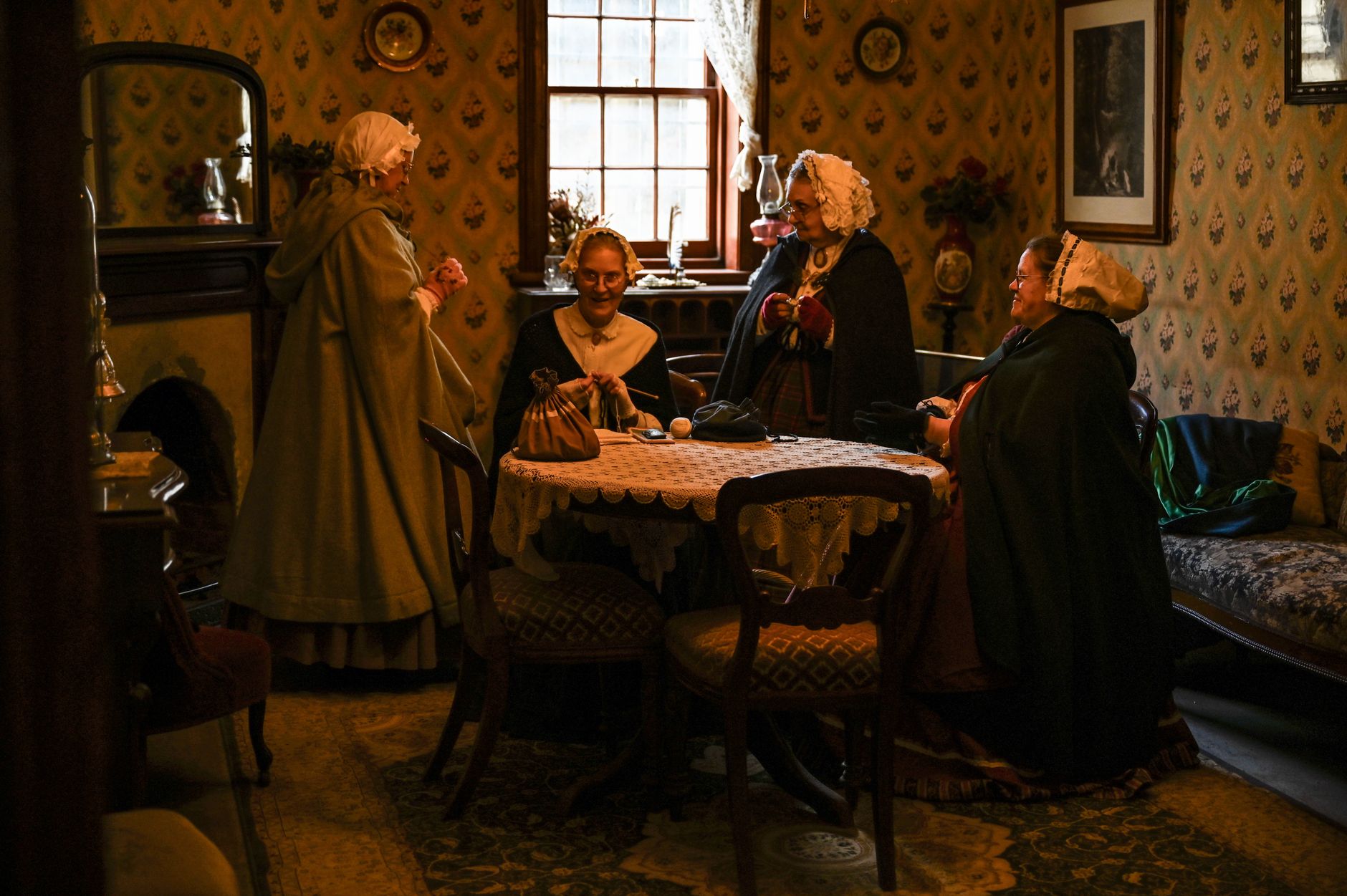
Victorian peasant women wore practical garments designed for long hours of physical labor rather than fashion or social display. A typical outfit included a simple ankle-length skirt, a loose-fitting blouse, a woolen shawl, and a sturdy apron. Most rural women owned only a few sets of clothing and often repaired garments repeatedly to extend their lifespan.
Color choices were limited because bright dyes were expensive. Earth tones such as brown, gray, dark green, and faded blue dominated rural wardrobes. During colder months, women layered wool petticoats and heavy cloaks to protect themselves from harsh weather conditions.
Unlike the elaborate dresses worn by wealthy Victorian ladies, peasant women’s clothing prioritized durability, warmth, and practicality. Fashion trends from London and other major cities rarely reached rural communities in a meaningful way.
Victorian Peasant Men’s Clothing
Victorian peasant men typically wore hard-wearing garments suited for agricultural work and manual labor. Their clothing usually consisted of coarse wool trousers, simple cotton or linen shirts, waistcoats, and heavy boots. Flat caps were common and served as both practical headwear and protection against the elements.
Because most rural families had limited income, clothing was often purchased second-hand, passed down between relatives, or repaired countless times. Farmers and laborers frequently wore patched trousers and worn jackets that reflected years of daily use.
Unlike upper-class Victorian gentlemen who changed outfits multiple times per day, many rural men owned only one set of work clothes and a slightly better outfit reserved for church services, weddings, or other special occasions.
What Did Poor Victorians Wear?
Poor Victorians wore whatever they could afford, often relying on hand-me-downs, second-hand clothing markets, and homemade garments. Clothing was considered a valuable household asset rather than a disposable commodity.
In urban areas, poor families frequently purchased used garments from street markets, while rural families often produced or altered clothing at home. Many garments were patched repeatedly, and children commonly inherited clothing from older siblings.
Footwear was especially expensive. Some of the poorest Victorians owned only one pair of shoes, while others occasionally went barefoot during warmer months. The overall appearance of poor Victorian clothing reflected economic necessity rather than personal style or social status.
Victorian Rural Fashion vs Victorian Upper-Class Fashion
The contrast between rural peasant clothing and upper-class Victorian fashion was dramatic. Wealthy Victorians used clothing to display status, wealth, and social refinement, while peasants focused almost entirely on practicality and survival.
| Feature | Victorian Peasants | Victorian Upper Class |
|---|---|---|
| Fabrics | Wool, linen, coarse cotton | Silk, velvet, satin, fine wool |
| Colors | Dark, muted tones | Rich and fashionable colors |
| Purpose | Work and durability | Status and appearance |
| Number of Outfits | Very few | Large wardrobes |
| Accessories | Minimal | Gloves, hats, jewelry, parasols |
Upper-class women often wore corsets, bustles, and decorative gowns, while peasant women wore simple garments that allowed freedom of movement. Similarly, upper-class men followed strict fashion conventions, whereas rural laborers prioritized comfort and functionality.
This clothing divide visually reinforced the significant social and economic inequalities that characterized Victorian society.
Victorian Peasant Clothing Materials
Victorian peasant clothing was made primarily from affordable and durable materials that could withstand daily wear. Wool was one of the most common fabrics because it provided warmth and remained relatively inexpensive. Linen and coarse cotton were also widely used, particularly for shirts, undergarments, and workwear.

Many rural households practiced home sewing and clothing repair. Garments were often altered, patched, and reused for many years. It was not unusual for a single piece of clothing to be worn by multiple family members over its lifetime.
Luxury materials such as silk, satin, lace, and velvet were largely inaccessible to peasants and were associated with the middle and upper classes. As a result, the fabric choices of rural Victorians reflected their economic realities and the practical demands of everyday life rather than changing fashion trends.
Regional Variation Across Britain and Europe
Importantly, Victorian interest in “folk” life grew alongside nationalism and ethnographic collecting. By the later 19th century, scholars, artists, and collectors increasingly preserved regional garments as symbols of heritage, sometimes freezing living traditions into museum categories. The Smithsonian Institution has emphasized in its material-culture scholarship that objects should be interpreted within the lived conditions of their makers and wearers—labor, climate, economy—rather than only as aesthetic artifacts.
Social Meaning: Class, Work, and “Sunday Best”
Peasant clothing communicated class position instantly. The cut might echo broader Victorian silhouettes, but fabric quality, fit, and cleanliness signaled resources. For rural workers, clothing had to survive repetitive labor: harvesting, milking, hedging, fishing, hauling. Aprons protected skirts; shawls doubled as warmth and baby carriers; stout boots or clogs prevented injuries. Men’s caps, neckerchiefs, and heavy outerwear served practical needs while also aligning with local norms.
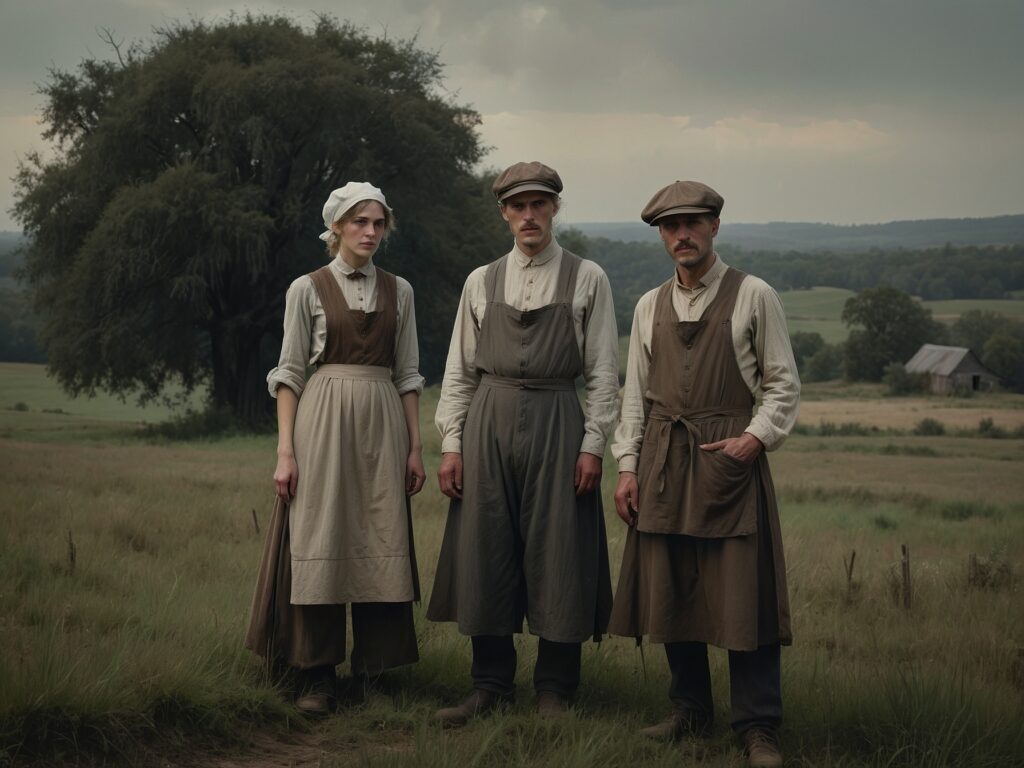
Yet even the poorest households often maintained a “best” outfit. Churchgoing, hiring fairs, weddings, and market days demanded garments that were cleaner, less patched, or made from better cloth. This distinction appears repeatedly in 19th-century social investigation. Henry Mayhew, documenting working lives in London Labour and the London Poor (1851), captured the basic economic truth behind clothing choices: “People must be fed before they can be taught.” While Mayhew wrote primarily about urban poverty, the principle applies to rural communities as well—clothing budgets were constrained by food, rent, and fuel.
Rural dress also sat at the intersection of respectability and necessity. Victorian moral culture placed weight on cleanliness and propriety, but laundering was laborious, fuel costly, and replacement clothing expensive. As museum conservation notes often stress—visible in institutions like the Metropolitan Museum of Art—surviving garments show repeated mending and alteration, evidence of thrift rather than neglect.
Key Characteristics at a Glance
| Aspect | Typical Features in Victorian-Era Peasant Clothing | Why It Mattered |
|---|---|---|
| Fabrics | Wool, linen, cotton (increasingly common), sometimes hemp | Durability, warmth, washability, cost |
| Colors/Patterns | Dark solids, checks, stripes, small prints | Practical for work; hid stains; affordable dyes/prints |
| Women’s Wear | Chemise, petticoats, skirt, apron, bodice/jacket, shawl, cap/kerchief | Layering for warmth and modesty; protection during labor |
| Men’s Wear | Shirt, waistcoat, trousers/breeches, work jacket or smock, cap | Mobility, toughness, pockets/storage |
| Footwear | Stout leather boots, clogs; regional variations | Safety, longevity, weather resistance |
| Maintenance | Frequent mending, patching, reshaping, hand-me-downs | Maximized garment life under tight budgets |
Frequently Asked Questions
1) Did Victorian peasants wear corsets?
Some rural women did wear stays or corset-like support, but less consistently than middle- and upper-class women, and often in simpler forms. For many, layered bodices, lacing, or practical undergarments provided structure without the expense of fashionable corsetry. Museum collections at the V&A and the Met show a wide range of 19th-century supportive garments, but ownership depended heavily on means and local custom.
2) Were bright colors common in peasant clothing?
Bright colors existed—especially in certain European folk traditions and festive garments—but everyday workwear often favored darker or patterned textiles for practicality and longevity. After mid-century chemical dyes expanded options, but cost, colorfastness, and utility still influenced choices.
3) What is a smock-frock, and who wore it?
A smock-frock is a loose outer garment associated with English rural laborers, commonly worn over other clothes to protect them during work. It could feature decorative embroidery, showing that even workwear could carry regional identity. Smocks appear in British dress history resources and museum holdings as emblematic 19th-century rural clothing.
4) How did industrialization change peasant dress?
Industrialization increased access to factory-woven cloth, cotton prints, and cheaper garments, gradually reducing reliance on homespun textiles in many regions. It also widened the gap between “fashion” and “necessity,” as urban styles evolved quickly while rural wardrobes changed more slowly due to cost and function.
5) Where can I see authentic examples today?
Major institutions with relevant holdings and research include the Victoria and Albert Museum, the Metropolitan Museum of Art, the Smithsonian Institution, and—within broader European material culture contexts—the Louvre Museum. Their online collections and curatorial essays are excellent starting points for verified examples and terminology.
Victorian-era peasant clothing was not a costume category but a lived system of materials, labor, and local identity shaped by the Industrial Revolution and regional tradition. When you look closely—at surviving textiles in the V&A or the Met, and at material-culture interpretation championed by the Smithsonian—you see wardrobes built to endure: layered, mended, and meaningful, reflecting both hardship and resourceful craft in the 19th-century countryside.
Authoritative sources consulted (recommended starting points): Victoria and Albert Museum (Fashion and Textile collections), The Metropolitan Museum of Art (Heilbrunn Timeline and collection entries on 19th-century dress and textiles), Smithsonian Institution (material culture research and dress collections), Louvre Museum (19th-century European cultural collections and scholarship).
How Victorian Peasant Clothing Changed Throughout the Seasons
Unlike wealthy Victorians who could afford separate wardrobes for different occasions, rural peasants and farm laborers often owned only a few sets of clothing. Seasonal adaptation relied on layering rather than purchasing new garments.
During winter, workers wore thick wool jackets, shawls, knitted scarves, and heavy boots whenever possible. In summer, lighter linen shirts and simpler cotton garments helped reduce discomfort during long hours of physical labor. Clothing was frequently repaired and reused for years, making durability more important than appearance.
The changing seasons had a direct impact on clothing choices. Harvest periods required practical garments that allowed freedom of movement, while colder months demanded extra protection against rain, mud, and freezing temperatures.
Common Seasonal Clothing Items
| Season | Typical Clothing |
|---|---|
| Spring | Linen shirts, simple skirts, aprons |
| Summer | Lightweight cotton garments, straw hats |
| Autumn | Woolen layers, thicker jackets |
| Winter | Heavy wool coats, shawls, sturdy boots |
The seasonal reality of Victorian peasant life highlights how clothing served as a tool for survival rather than a form of self-expression.
Victorian Farm Workers vs Urban Working-Class Clothing
Although both groups belonged to the lower social classes, rural peasants and urban workers often dressed differently due to the nature of their work.
Farm laborers required practical clothing capable of withstanding harsh weather conditions and physically demanding agricultural tasks. Their garments were usually loose-fitting, heavily patched, and designed for durability.
Urban factory workers, meanwhile, often wore simpler but slightly more standardized clothing suitable for industrial environments. Factory regulations, machinery hazards, and city lifestyles influenced what workers wore on a daily basis.
Key Differences
| Rural Peasants | Urban Workers |
|---|---|
| Heavier outdoor garments | Lighter industrial workwear |
| More exposure to weather | More indoor working conditions |
| Greater use of wool | Greater use of cotton |
| Handmade repairs common | Factory-made clothing more accessible |
These distinctions reveal how occupation and environment shaped fashion among Victorian Britain’s lower classes.
Myths About Victorian Peasant Clothing
Modern films and television dramas often romanticize Victorian rural life. However, historical evidence paints a much harsher picture.
One common misconception is that peasants wore picturesque, clean, and colorful outfits similar to those seen in period dramas. In reality, most garments were practical, worn repeatedly, and frequently repaired. Bright colors were uncommon because dyes could be expensive, while clothing was often stained from agricultural work.
Another myth is that every peasant dressed similarly. Regional traditions, local industries, income levels, and access to textile markets created significant variation across Victorian Britain.
Historical Reality
- Clothing was often handed down through generations.
- Repairs and patching were routine.
- Many workers owned only a few complete outfits.
- Appearance was secondary to durability and functionality.
- Garments reflected local economic conditions.
Understanding these realities helps separate historical fact from modern romanticized interpretations of Victorian rural fashion.
Regional Differences in Victorian Rural Dress
No one form of peasant attire in the Victorian period existed. A farm Labourer in the rural Midlands might have dressed very differently from a crofter in the Scottish Highlands, a fisherman in the Welsh coastal regions or the small holder in rural Ireland. Geography was always relevant since clothing had to reflect the local climate, sources of fabric, local traditions and labor.
In Scotland more emphasis was placed upon the use of wool, partly due to its rather cool climate, and partly due to a long tradition of textile manufacture. Heavy woollen skirts, shawls, knitted garments, waistcoats, and practical outer layers could form a barrier to wind and rain, and in more isolated parts of Wales the use of flannel and wool also became associated with everyday clothing, although regional hats and shawls could also serve as symbolic regional markers. The tall black hats worn by Welsh women, for example, have come to serve as one of the best known symbols of Welsh rural costume, although the image presented in the popular press oversimplified the great diversity between communities (Williams 95).
Ireland also had its regional traditions. Linen played an important part in Ireland‘s long history, but wool, cotton prints, shawls, aprons and knitted garments gained popularity in the nineteenth century. Although the image of the Irish country-woman in her shawl has its basis in reality, a shawl could also fulfill multiple functions: warmth, transport of goods, preservation of clothing and even the raising of babies. The efficiency of a garment such as the shawl contributes to its survival as a practical female item long after urban trends had changed.
In the rest of continental Europe, too, local variations would often be considerable. In the rural areas of France, Austria, Bavaria, Hungary, Scandinavia and Eastern Europe, local distinctive textiles, embroidery, headdresses, aprons, waistcoats, and jewelry often gave rise to recognizably distinct peasant costumed. The current concept of ‘folk costume’ could therefore often be a very localised type of dress.
AI Notice: Some visual content in this article may have been created or enhanced using artificial intelligence (AI) for artistic, editorial or illustrative purposes. Learn more about our approach in our AI & Editorial Principles.