
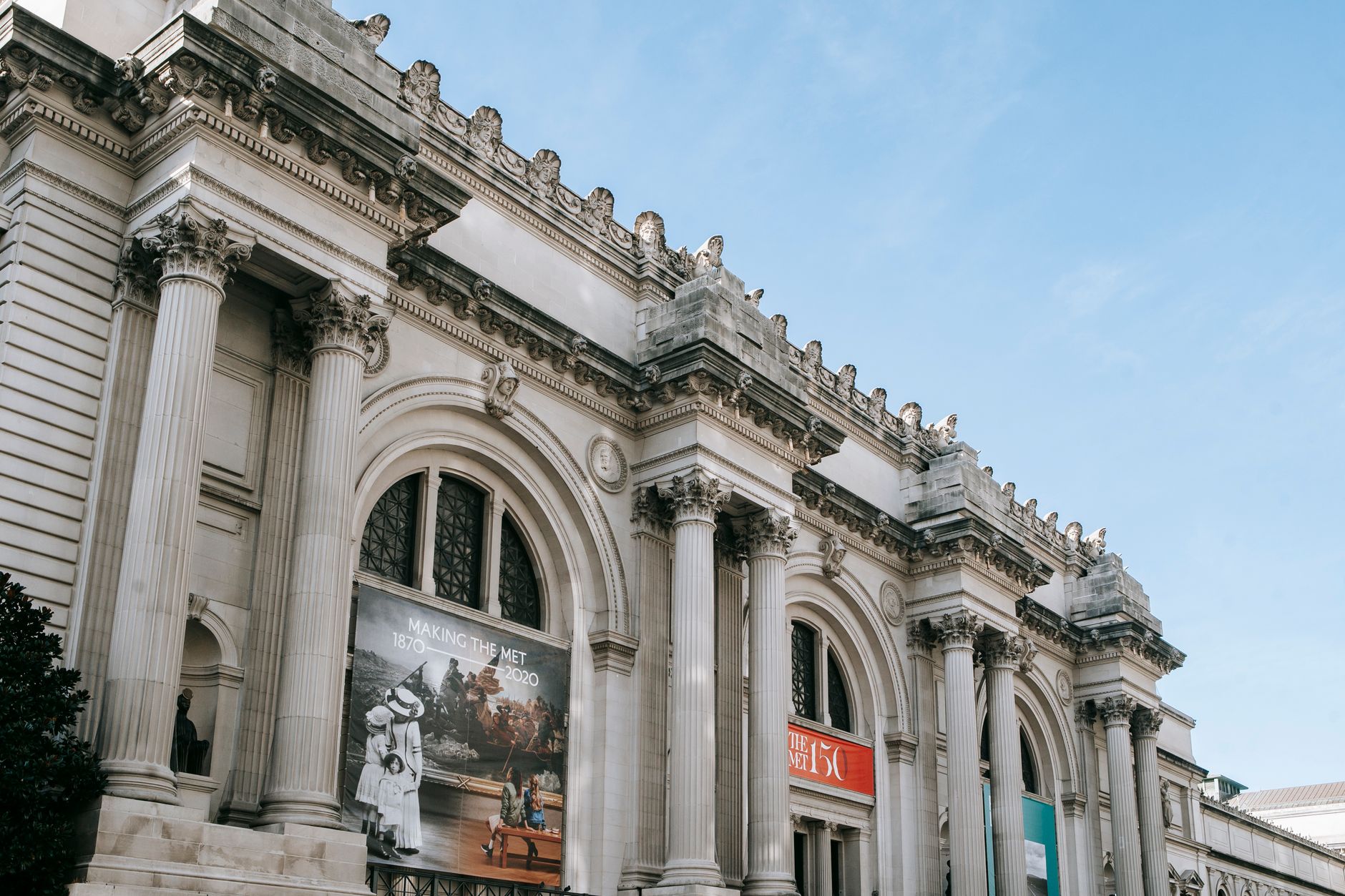
New York’s Metropolitan Museum of Art has officially begun construction of the Oscar L. Tang and H.M. Agnes Hsu-Tang Wing for Modern and Contemporary Art. Designed by Mexican architect Frida Escobedo, the five-story, 126,000-square-foot wing is scheduled to open in 2030 and will provide nearly 70,000 square feet of exhibition space. The project follows a $550 million private fundraising milestone announced in 2024, while The Met says it has now raised $670 million to cover the full construction cost and a significant portion of the new wing’s operating endowment.
A New Chapter Begins at The Met
The Metropolitan Museum of Art has finally reached one of the most important moments in its long-running transformation of the museum.
On September 15, 2026, The Met officially broke ground on its new Oscar L. Tang and H.M. Agnes Hsu-Tang Wing for Modern and Contemporary Art.
The ceremony marked the beginning of construction on a project that has been years in development and is expected to change how one of the world’s most important museums presents art from the 20th and 21st centuries.
The new wing is scheduled to open in 2030.
For The Met, however, this is about much more than adding another group of galleries.

The project is intended to rethink the relationship between modern and contemporary art, the museum’s historic architecture, Central Park and the millions of people who visit the institution every year.
At the center of that transformation is architect Frida Escobedo.
Frida Escobedo Makes Met History
The appointment of Frida Escobedo is one of the most significant aspects of the project.
The Mexico City-born architect is the first woman to design a new wing in The Met’s 156-year history.
That makes the Tang Wing significant even before the first visitor walks through its doors.
Escobedo is internationally recognized for an architectural approach that often combines contemporary forms with local materials, history and cultural context.
Her design for The Met is particularly challenging because it must coexist with one of the most famous museum buildings in the world.
The new wing cannot simply look like a separate contemporary building.
It has to become part of The Met.

That means responding to the museum’s existing architecture while creating a distinctly modern environment for contemporary art.
Escobedo’s design attempts to do precisely that.
A $550 Million Project Has Grown Even Larger
The figure of $550 million has become closely associated with the Tang Wing.
In May 2024, The Met announced that it had secured $550 million in private donations for the project.
That fundraising milestone included a historic $125 million gift from Oscar L. Tang and H.M. Agnes Hsu-Tang.
The project has since moved beyond that original fundraising figure.
As of the groundbreaking ceremony, The Met announced that it had raised $670 million to fund the full cost of construction and a significant portion of the endowment intended to support the wing’s future operations.
The scale of the fundraising demonstrates just how important the project has become for the institution.
The Met is not simply renovating a few rooms.
It is investing in the future of its modern and contemporary art collection.
The New Wing Will Contain 126,000 Square Feet
The Tang Wing will contain approximately 126,000 square feet across five stories.
Of that area, about 69,500 square feet will be dedicated to exhibition space.
That represents an almost 50 percent increase in gallery space for modern and contemporary art compared with the museum’s current wing.
The new building will remain within the existing footprint rather than expanding dramatically outward.
Its height will also remain below the Fifth Avenue facade and will not exceed the height of the original 1880 wing at the center of the museum complex.
The result is intended to be a large transformation that does not overwhelm the historic character of The Met’s Fifth Avenue campus.
A Museum Designed Around Its Art
One of the most interesting aspects of Escobedo’s design is the way the galleries will vary in scale.
Gallery ceilings will range from approximately 11 to 22 feet.
That variation is important because modern and contemporary art can require dramatically different types of spaces.
A small painting needs a very different environment from a monumental installation.
A sculpture may require significant floor space.
A video installation may need controlled light.
An immersive artwork may require visitors to move through an environment rather than simply stand in front of it.
The new wing is designed to accommodate those differences.
The galleries will flow into one another while still allowing for more intimate spaces.
The intention is to create a sequence of environments rather than one repetitive corridor of exhibition rooms.
The Building Itself Will Become Part of the Experience
The facade is one of the most distinctive elements of the project.
Escobedo’s design uses a limestone celosía, or architectural screen, creating a lattice-like surface across the exterior.
The design draws inspiration from the many architectural traditions represented across The Met’s enormous campus.
Rather than attempting to copy the museum’s historic architecture, Escobedo is using a contemporary interpretation of architectural layering.
The stone screen is designed to respond subtly to changing sunlight throughout the day.
This means that the appearance of the building will change depending on the time and conditions.
For an art museum, that is particularly appropriate.
The building itself becomes something visitors experience visually before they even enter a gallery.
The Met Wants to Open Toward Central Park
Another major ambition is to create a stronger physical connection between the museum and Central Park.
The Tang Wing will include outdoor terraces on the fourth and fifth floors.
Together, these terraces will provide approximately 18,500 square feet of outdoor space.
Visitors will be able to experience views toward Central Park and the Manhattan skyline.
The design also includes improved paths and landscaping around the building.
The goal is to make the relationship between the museum and its surrounding public space more fluid.
The Met has historically been a monumental institution.
Escobedo’s design seeks to make part of it feel more open and connected to the city around it.
Accessibility Is Part of the Architecture
The project also addresses accessibility.
The new wing will include two elevator cores, ramps, improved entrances from adjacent sections of the museum and clearer circulation routes.
This is important because The Met welcomes millions of visitors every year.
A contemporary museum cannot simply focus on appearance.
It also has to consider how people move through the building.
The new design therefore treats accessibility as part of the architectural experience rather than as an addition made after the building is designed.
That philosophy is increasingly important in major cultural institutions.
Sustainability Is Another Major Focus
The project is also being designed with energy consumption in mind.
The existing modern and contemporary galleries include areas with southern and western exposures where natural light and heat can create difficult environmental conditions for the long-term preservation of artworks.
Museums have to maintain carefully controlled temperature and humidity levels.
That requires enormous amounts of energy.
The new Tang Wing will use its facade, window placement and below-ground mechanical infrastructure to reduce solar heat gain and improve energy efficiency.
The building will also make greater use of natural light where appropriate.
The project therefore combines the traditional museum priority of protecting artworks with the modern demand for more sustainable buildings.
Why Modern Art Needed a New Home
The Met’s collection extends across approximately 5,000 years of art history.
That is one of the institution’s greatest strengths.
But it can also create a challenge.
Modern and contemporary art often requires very different spaces from historical painting, sculpture or decorative arts.
Large installations can be difficult to display in traditional galleries.
New media and conceptual works may require specialized environments.
Contemporary art can also involve materials and formats that were not common when older museum spaces were designed.
The Tang Wing is intended to solve some of these limitations.
Instead of forcing contemporary art into spaces created for a different era, The Met is building an environment specifically designed for it.
The Collection Is Getting More Diverse
The new wing will also give The Met an opportunity to reconsider the way modern and contemporary art is presented.
The museum says the galleries will provide a home for its diverse collection of 20th- and 21st-century art.
That includes artists and movements from different parts of the world.
The ambition is not simply to tell a traditional story of modern art centered around a small group of European and American figures.
Instead, the new galleries are intended to create connections between different artistic cultures and periods.
That approach reflects how contemporary art history is increasingly understood.
The story of modern art is not a single straight line.
It is a network of movements, cultures, ideas and exchanges.
Oscar Tang and Agnes Hsu-Tang
The wing carries the names of Oscar L. Tang and H.M. Agnes Hsu-Tang, whose support has played a central role in making the project possible.
Oscar Tang was a longtime Met trustee and a major philanthropist.
Agnes Hsu-Tang is an archaeologist and art historian.
Their $125 million gift was the largest cash donation in the museum’s history when announced.
The decision to name the new wing after the couple recognizes both their financial contribution and their longstanding relationship with the institution.
Their support also illustrates the important role private philanthropy continues to play in the development of major museums in the United States.
A Building That Connects Different Centuries
Perhaps the most ambitious idea behind the Tang Wing is that it will connect very old art with very new art.
The Met contains objects created thousands of years ago.
Its modern and contemporary collection, meanwhile, includes works that were created within living memory.
These worlds can sometimes feel separated inside a traditional museum.
Escobedo’s design aims to make the connections more visible.
The new wing will remain physically connected to the rest of The Met.
Its galleries will allow visitors to move between different areas of the collection.
That could change how visitors understand contemporary art.
Instead of seeing modern and contemporary art as something isolated from the museum’s historical collections, they may begin to see it as another chapter in a much larger history.
Why 2030 Matters
The opening is scheduled for 2030.
That may seem far away, but projects of this scale require years of construction, engineering and conservation planning.
By the time the doors open, the cultural landscape may look very different from today.
Some artists currently emerging may become major figures.
New technologies may change the way museums display art.
And The Met’s own collection will continue to grow.
The building therefore has to be flexible enough to remain useful for decades.
That is one reason the architectural design places such emphasis on adaptable gallery spaces.
What Visitors Will See Before 2030
The construction does not mean modern and contemporary art will disappear from The Met until the new wing opens.
The museum says selected works will continue to be presented elsewhere in the institution during construction.
Temporary and rotating installations will also bring modern and contemporary art into other parts of the museum.
This includes exhibitions such as Krasner and Pollock: Past Continuous and the Genesis Facade Commission: Liu Wei, Speculation.
The transition will therefore be gradual rather than a complete disappearance of contemporary art from the museum.
More Than a Museum Expansion
The Tang Wing represents a broader shift in how major museums think about architecture.
For decades, museum buildings were often treated primarily as containers for art.
Today, architecture itself is increasingly part of the cultural experience.
Visitors expect museums to provide spaces that are accessible, environmentally responsible and visually memorable.
They also expect institutions to reflect a broader range of cultures and artistic perspectives.
The Met’s new wing attempts to address all of those demands at once.
It is a new gallery.
It is an architectural statement.
It is an environmental project.
And it is an attempt to redefine how one of the world’s greatest museums presents the art of its own time.
The Next Era of The Met
When the Tang Wing finally opens in 2030, visitors will probably focus first on the artworks.
But the building itself will already have become part of the story.
Frida Escobedo’s architecture will stand alongside the historic Beaux-Arts character of The Met and the landscape of Central Park.
Inside, tens of thousands of square feet will provide new possibilities for paintings, sculpture, installations and experimental contemporary practices.
For the Metropolitan Museum of Art, the groundbreaking ceremony on September 15, 2026 was therefore more than the beginning of construction.
It was the beginning of a new chapter.
The Met is attempting to build a space for the art of the 20th and 21st centuries while simultaneously connecting that art to everything that came before it.
And when the doors finally open in 2030, one of the world’s oldest and most influential museums will have a very different way of looking at the art of our own time.
Sources
- The Metropolitan Museum of Art – Tang Wing groundbreaking
- The Art Newspaper – Metropolitan Museum breaks ground on new wing
AI Notice: Some visual content in this article may have been created or enhanced using artificial intelligence (AI) for artistic, editorial or illustrative purposes. Learn more about our approach in our AI & Editorial Principles.