
Mary Boleyn Unveiled: Beyond the ‘Other Boleyn Girl’ Myth and the Intimate Politics of Desire
On a misty morning in Tudor England, when the court still smelled of damp wool and beeswax, a young woman stepped quietly out of the frame of history. Not with a public beheading, a royal decree, or a blaze of scandal, but with something far more ordinary—and therefore, in the eyes of chroniclers, far less interesting: a private life.
Her name was Mary Boleyn.
Can You Name the Masterpiece?
Ten masterpieces. Ten questions. How well do you know the history of art?
Today, her image is crowded by other people’s fantasies. She has been passed down to us as “the other Boleyn girl”: the softer sister, the pliant mistress, the prelude to Anne’s more spectacular tragedy. Cinematic retellings turn her into a sacrificial lamb of desire, the naive pawn pushed into a king’s bed by a ruthless family.
Yet when you stand very still and listen for Mary herself, the noise recedes. What remains is not a blank, but a quiet, resistant presence—a woman who stepped out of a dangerous narrative long before it crushed those she loved.
To reclaim Mary Boleyn is not to deny the seductions of the myth. It is to peel it back, layer by layer, until we find something far more compelling: a story about intimacy as power, silence as survival, and what it means to be desired in a world where desire is currency.
The Silences Around a Scandal
Can You Guess the Artist?
Three clues. One artist. How quickly can you identify the painter?
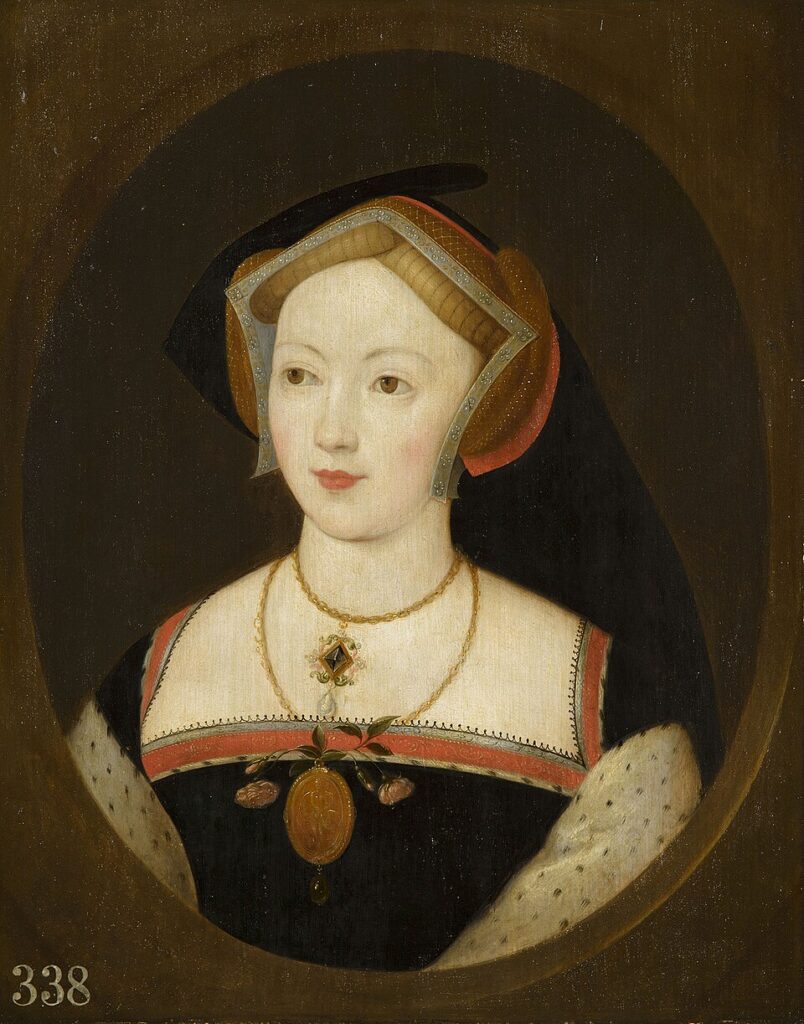
Mary Boleyn’s life is a strange paradox: she is famous for an affair we can’t fully document and for feelings we can’t hear in her own words. No letters survive in her hand. No confirmed portrait bears her name. What we know is scattered across diplomatic reports, household accounts, and the dangerous gossip of ambassadors.
In this sense, Mary is less a woman preserved than a silhouette lit by other people’s candles.
We do know that she walked through the same perfumed, perilous rooms as Anne. She moved in the French court of Francis I—where she acquired, fairly or not, a reputation for sexual availability—and then in the more buttoned-up, anxious glitter of . At some point, she became the king’s mistress. At some point, she stopped being the king’s mistress. Then history’s spotlight swung decisively toward her younger sister.
This is precisely where fiction rushed in. Modern narratives fill the gap with scenes of Mary as a trembling ingenue pushed toward Henry’s bed by an ambitious father, or as a romantic martyr in love with a man she cannot keep. It is seductive storytelling, perfectly tuned to contemporary melodrama.
But the sources are quieter—and that quiet is important. The lack of emotional confession does not mean there was no emotion. It tells us instead that Mary’s interior life was not for public consumption. In a culture that turned women’s sexual reputations into political weapons, concealment could be a form of agency.
Mary’s scandal was never just about sex. It was about who was allowed to control desire, and what happened when a woman refused to play her assigned part in the drama.
Court as Theatre: Mary in the World of Ornamented Power
To understand why Mary still fascinates us, we need to picture the world she inhabited not as a dusty tableau of names and dates, but as an exquisite, suffocating stage.
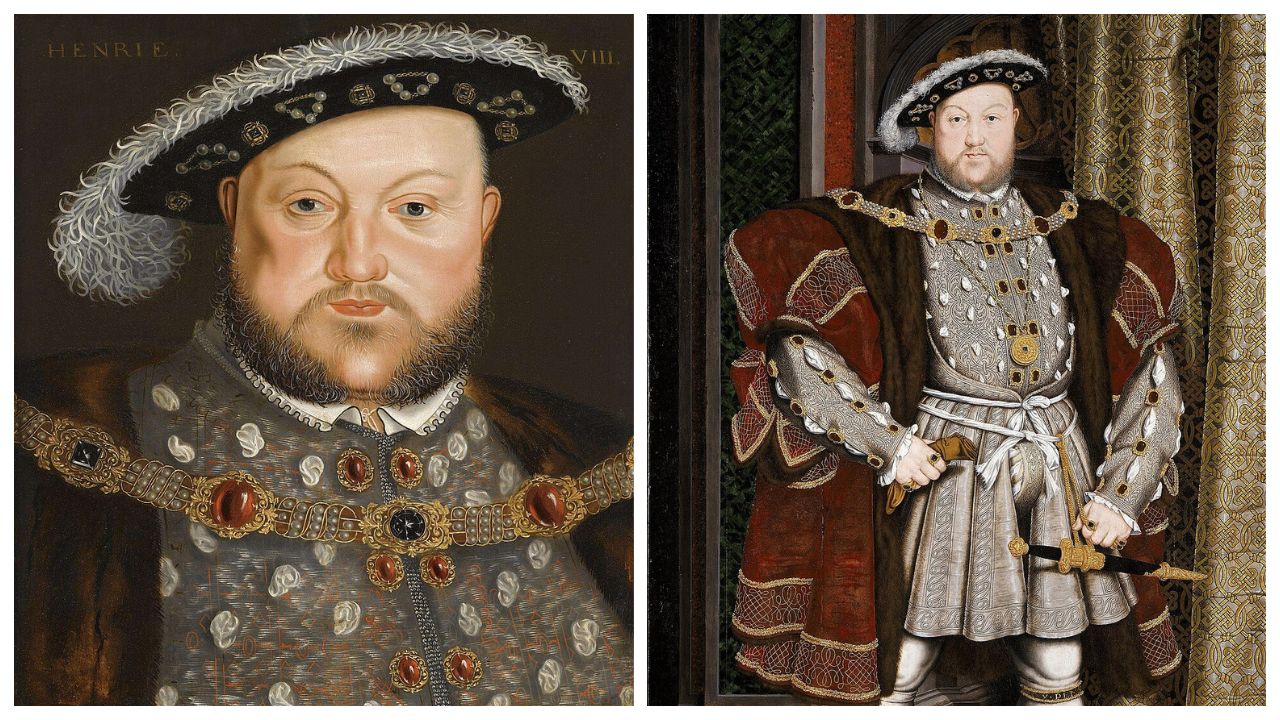
The Tudor court was a theatre of objects and bodies. Velvet and ermine were not just fabrics; they were declarations. Banquets were not only feasts, but performances of hierarchy. Every glance at a masque, every embroidered sleeve, every slow, choreographed bow was a line in an unwritten script.
At its center: the king, glowing in gold-thread and expectation. Around him: a constellation of courtiers, each orbiting carefully, hoping to catch the light.
Women of noble birth, like Mary, were part of the aesthetic machinery. They were there to be looked at—intelligent, yes; witty, often; educated, increasingly—but also to be visually and erotically legible. Their bodies carried dynastic possibility. A flirtatious laugh, a lingering dance, a half-glimpsed ankle at a joust: such moments could ripple into diplomatic consequences.
Mary’s beauty, hinted at in contemporary commentary, was a resource. Appearing in the king’s line of sight was never neutral. To be desired was to be dangerous and endangered at once.
The “other Boleyn girl” myth flattens this atmosphere, turning it into a simple moral chess game: the passive girl, the scheming sister, the voracious king. The real ambience was subtler, more claustrophobic. Desire at court was not just a personal feeling; it was a public event. A royal affair could make or unmake fortunes. Behind every stolen kiss was a ledger of potential outcomes: a title, a lands grant, a ruined reputation, a sibling raised or destroyed.
Mary moved through this world first as an ornament, then as a participant, then as an escapee.
Mistress, Mother, Mystery: The Intimate Politics of Desire
The word “mistress” conjures a particular image: a woman lounging among silks, the private pleasure of a powerful man. For Mary, the reality was simultaneously more banal and more perilous.
Being Henry VIII’s mistress was not an official position, but it had a kind of shadow authority. It could bring rewards, but also intense scrutiny. Ambassadors speculated: Were Mary’s children by Henry? Were the Boleyns angling for recognition? Was the king still involved with her when he began to circle Anne?
Here, desire becomes political capital—something to be traded, leveraged, and feared.
Mary’s role in this economy was precarious. If we strip away the melodramatic overlay, what emerges is a young woman whose body was read every day as a text: is she pregnant? With whose child? Is she still favored? Has his attention wandered? Each change in her physical state could have meant a shift in family strategy, a recalibration of plan.
Yet when the affair ended, when Henry’s passion moved on and his strategic gaze fell full-force on Anne, Mary did something quietly radical: she receded. She did not fight publicly for the central role in the king’s bedroom. She did not claw her way back into his line of sight. Instead, her presence in the record becomes more dispersed, less luminous, harder to track.
In the highly codified world of Tudor desire, to step out of the spotlight was almost unthinkable. But it may have been precisely what saved her.
The Sister in the Shadows: Mary and Anne’s Twinned Fates
The pairing of Mary and Anne invites irresistible symbolism: the bright, doomed star and the softer, forgotten satellite. Popular culture loves this contrast because it reads like myth—the Virgin and the Magdalene, the ambitious and the yielding.
But sisters seldom live as opposites; they live as echoes.

Imagine them together in their youth: the same tutors, the same French fashions, the same music in their ears, the same scents—orange peel, musk, the faint metallic tang of court jewelry polished daily. They shared a family that believed its path to power lay through female charm and proximity to the throne.
Anne’s story has the clearer arc: mistress-in-waiting, then queen, then martyr. Mary’s is harder to contain. She neither triumphs nor dies on cue. She does something more ambiguous, more human: she adapts.
When Mary later married a man beneath her rank—William Stafford, a gentleman with no great political power—she was effectively choosing personal attachment over dynastic calculation. It was a dangerous, almost insolent act in a world where marriages were transactions.
The Boleyns were furious. Anne, by then queen, was said to be appalled. Mary was banished from court, financially vulnerable, forced to ask—almost humbly—for help.
Yet through a modern lens, this moment glows with a quiet feminist significance. Mary had known what it meant to be exchanged, to be desired as a family investment. She had watched her sister ascend a deadly throne woven out of passion and politics. In marrying for affection, she was not simply rebelling; she was redefining the terms on which her body and heart would be used.
Anne’s path was incandescent and terminal. Mary’s was low-lit and enduring. One became a legend; the other, a survivor.
The Refusal to Perform: Mary’s Vanishing Act
History loves those who die dramatically. It is less interested in those who sidestep the spectacle.
Mary’s later life is hazy: a handful of references, a suggestion of financial strain, then the pale line of her death in 1543, years after her siblings had died on the scaffold. There is no grand exit, no last speech from the Tower, no public recitation of wrongs. Just a woman who lived through the storm of Henry’s reign and outlived its most notorious casualties.
Here lies a deeper debunking of the “other Boleyn girl” myth.
The story we are so often told is one of passivity: Mary as pawn, passed from king to husband, manipulated by her family. But her vanishing feels less like erasure and more like refusal. At every turn, she did the untheatrical thing. She did not align herself with factional schemes. She did not become the king’s permanent plaything. She did not stage a dramatic return.
In a culture that rewarded performance, Mary Boleyn’s quietness becomes an act of resistance. She declined to be the visible symbol her world wanted to make of her—either as temptress, as penitent, or as tragic heroine. Instead, she chose something so ordinary it has often been dismissed as unremarkable: a relatively private life, outside the tight gravitational pull of the throne.
There is something almost modern in this retreat. It anticipates the contemporary impulse to step away from public gaze, to redraw the boundary between the self and the spectacle.
Why We Keep Looking at Mary
What, then, explains our stubborn need to keep reimagining Mary—on screen, in novels, in lush book covers with women in jewel-toned gowns turning away from us?
Part of it is the aesthetic allure of the era itself: the pearls, the French hoods, the candlelit rooms and diamond-bright danger. Tudor England offers visual drama in abundance, and Mary is perfectly placed within it: close enough to the heat to glow, but not so close that she’s reduced to ash.
But our fascination runs deeper than costume.
Mary dramatizes the oldest, and still unresolved, tension between desire and agency. In every retelling, the same questions pulse beneath the brocade:
- When a woman is desired, who holds the power?
- Is silence complicity, or self-protection?
- What does it cost to refuse a role the world has written for you—especially when that role seems to promise glamour, security, proximity to greatness?
She also offers a mirror to our own era’s obsession with visibility. We live in a culture that often equates existence with exposure. To be known, you must be seen; to be seen, you must be consumable. Mary’s life suggests another possibility: that there is power in strategic retreat, that a life lived outside the main beam of history’s spotlight can be no less intentional, no less meaningful.
For modern audiences, she becomes the patron saint of the almost-famous, the nearly-mythic, the woman who brushed the edge of legend and walked calmly away.
Beyond Myth: Seeing Mary Again
To debunk the “other Boleyn girl” myth is not to strip Mary of drama. It is to relocate that drama from the obvious scandal to the quieter choices.
Instead of imagining her only in the moment she enters Henry’s bed, we might picture her years later, in some smaller house, the court far behind her. The air no longer thick with incense and politics, but with more modest smells: woodsmoke, damp linen, the sharp sweetness of apples in a storage room. Perhaps she is overseeing a household, negotiating debts, caring for children whose paternity once fueled whispered speculation and now simply demand bread and warmth.
It is in this setting—not the glittering court—that Mary becomes subversive. Her life suggests that not all resistance is shouted from a scaffold; some is enacted in the refusal to keep playing a dangerous game.
The symbols around her shift, too. No longer the jeweled “M” initial on a court gown, but a worn wedding ring from a love-match that cost her status. No longer the king’s gaze like an anointing light, but the softer, steadier regard of a man without titles, chosen rather than assigned. No longer the laurel wreath of public fascination, but something less visible and perhaps more precious: the right to be, for once, unremarked upon.
In a culture magazine age, we are trained to look for spectacle, for the moment of maximum drama. Mary Boleyn offers a counter-aesthetic—a different kind of beauty, rooted not in the gaze but in its refusal.
She reminds us that the most radical stories are sometimes the ones that leave the least trace. That a woman can pass through one of the most scandalous courts in European history, touch the heart of a king, and still choose, at the last, to belong mostly to herself.
And that beyond the myths—the soft-focus sister, the tragic mistress, the “other” Boleyn girl—there waits a more unsettling, more contemporary figure: a woman who understood, in a world intoxicated by visibility, the art of disappearing on her own terms.
AI Notice: Some visual content in this article may have been created or enhanced using artificial intelligence (AI) for artistic, editorial or illustrative purposes. Learn more about our approach in our AI & Editorial Principles.