
Why Antique Pie Safe Cabinets Are Suddenly So Valuable (And How to Spot One)
Antique pie safe cabinets look deceptively simple—just a wooden cupboard with punched-tin panels—but they sit at the crossroads of early American food safety, domestic labor, and decorative craftsmanship. Before electric refrigeration, a pie safe was a practical technology: it protected cooling baked goods, butter, and bread from insects and curious hands while allowing airflow through perforated metal. Today, surviving examples have become sought-after folk-art furniture, valued not only for their patina and utility, but also for the regional patterns and workshop traditions embedded in every pierced rosette, starburst, and tulip motif.
What Is an Antique Pie Safe Cabinet?
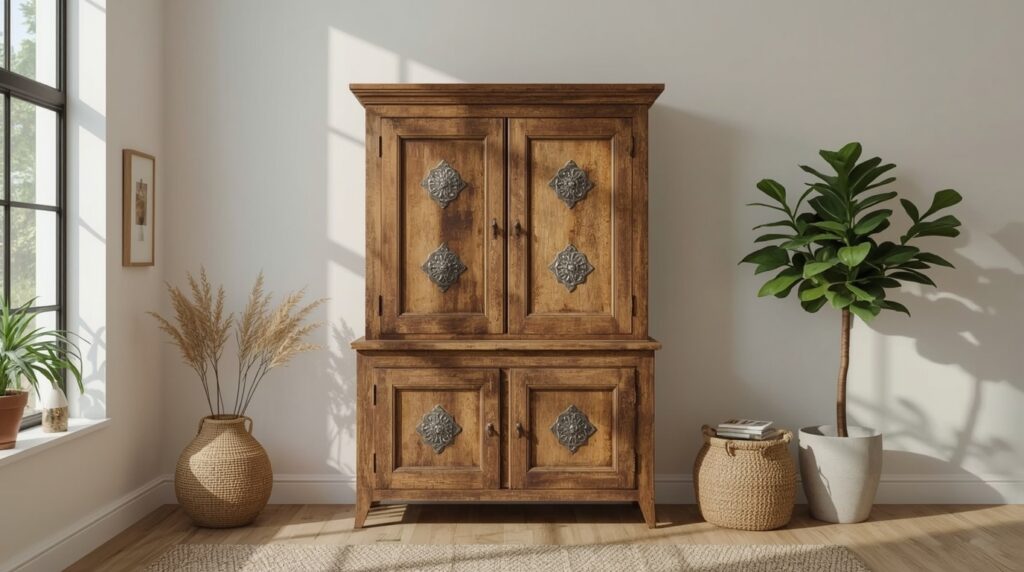
An antique pie safe cabinet is a ventilated storage cupboard—typically made of pine, poplar, or other readily available woods—with punched-tin (or sometimes punched-zinc) panels set into the doors. These panels functioned like a breathable screen, letting heat and moisture escape while keeping flies and pests out. Many examples also include interior shelves sized for pies, cakes, and cooling loaves, reflecting everyday kitchen routines in the 18th and 19th centuries.
Can You Name the Masterpiece?
Ten masterpieces. Ten questions. How well do you know the history of art?
Pie safes are primarily associated with North America (especially the Mid-Atlantic and Appalachian regions) and the Pennsylvania German (often “Pennsylvania Dutch”) cultural realm (Harring 1983). Pie safes also appear throughout the Anglo-American realm of usable domestic furniture, where prevention of food spoilage and contamination was a concern in all pre-refrigerator kitchens. Although comparable storage cupboards were known elsewhere, the “pie safe” is firmly grounded in American vernacular furniture.
By the same token this time as the Smithsonian (and others) having pointed domestic utensils are powerful witnesses to history. Who knew that a kitchen utensil could shed light so brightly on the history of household economies, gendered labor, and regional handicraft? Nevertheless pie safes nonpareil unapologetically suggest all of this and more.
Historical Origins and Cultural Context (18th–19th Century)
Most antique pie safe cabinets date from roughly the early-to-late 19th century, with some earlier precedents and later revivals. Their popularity tracks closely with the period before widespread home refrigeration—an era when families relied on root cellars, springhouses, iceboxes, and well-ventilated cupboards to manage perishables. In rural households and small towns, the pie safe became a recognizable kitchen fixture, often standing near a worktable or stove where baking and cooling happened daily.
Can You Guess the Artist?
Three clues. One artist. How quickly can you identify the painter?
Regionalism is key to authenticating examples. Pie safes in Pennsylvania, Ohio, Indiana, and Kentucky often demonstrate regional woodworking traditions or immigrant stylistic choices. Punched-tin patterns often, but not always, imitate more expansive decorative iconographies, as seen in fraktur art or painted furniture. These tell a collector, or historian, where the item might have come from, and sometimes even shop traditionas evidenced by no surviving tag.
In an institutional perspective of period achievement, it is useful to review how grande magasins have positioned 19C decorative arts; the Victorian Victoria and Albert Museum and the Met both exhibit 19C furniture as functional sculpture that results from the confluence of function, materiality and taste that narrative is apt for pie safes, albeit without the context of cabinetmaking for the aristocracy. Similarly, the Louvre Museum, Decorative Arts department, asserts the determination of style within production of time-appropriate utilitarian objects in all levels of luxury.
Design, Materials, and Key Characteristics
Authentic antique pie safe cabinets are usually built from secondary woods—pine and poplar are common—because these were economical and widely available. Construction can be surprisingly refined: mortise-and-tenon joinery, dovetailed drawers (on some forms), pegged joints, and hand-planed surfaces are all possible. The most defining feature is the pierced metal panel, traditionally punched by hand with simple tools, producing patterns that range from naive to intricate and highly symmetrical.

Because of differences between places and individual household requirements, form comes in a variety of shapes and sizes. A few pie safes are taller boxes, sometimes the equivalent of a two-door cabinet, while the majority are low table-height cabinets or corner safes, sometimes altered for ventilation. Most pie safes have shelves inside and some even the earliest are divided in the middle or have small drawers for utensils. Original surface finishes milk paint, early forms of varnish, and very thin layers of washes are especially valued by collectors, because they show use and aging that refinishing hides.
The punched-tin itself is usually the visual focus. The most successful panels are crisply patterned and have irregularities (such as off-pattern punching) that speak to handwork. Surface techniques and tool marks can be as revealing as V&A curatorial descriptions of technique for metalwork (Victoria and Albert Museum, technical and curatorial resources), especially when applied to pie safes, where close viewing of punching, nails, and oxidation can separate older panels from later copies.
Table: Key Characteristics of an Antique Pie Safe Cabinet
| Feature | Typical Antique Examples (c. 1800–1900) | What It Suggests |
|---|---|---|
| Primary purpose | Ventilated food storage | Pre-refrigeration household practice |
| Woods | Pine, poplar, tulip poplar; sometimes oak | Regional availability and economy |
| Door panels | Hand-punched tin or zinc | Craft tradition; insect control |
| Joinery | Mortise-and-tenon; pegged joints; hand-planed boards | Pre-industrial/early industrial methods |
| Hardware | Simple iron hinges, turn buttons, wood latches | Local blacksmithing or early factory hardware |
| Surface | Milk paint, worn varnish, patina | Age, use history, and originality |
| Interior | Multiple fixed shelves | Cooling and storing baked goods |
How to Authenticate and Evaluate Value
Authentication begins with construction evidence. Look for tool marks consistent with the 19th century: irregular saw kerfs (sometimes circular-sawn boards appear later in the century), hand-planed surfaces, and joinery that matches the cabinet’s supposed age. Examine nails and screws: machine-cut nails are common through much of the 19th century, while modern wire nails and Phillips screws are red flags unless clearly part of later repairs. Evaluate whether the tin panels sit naturally in the door frames and whether oxidation, wear, and paint layers align with the cabinet’s overall aging.

Condition and originality are factors that influence value. Replacing tin panels, over-sanding surfaces, or over-using “antiquing” techniques can deter collectors. However repairs if well done, documented and not obvious are often acceptable. Provenance family history, documented location, such as Lancaster County, Pennsylvania, or maker can be lucrative and draw scholarly interest.
For a systematized method, take a museologic approach meticulously examine texture and technique as a basis for analysis. The Metropolitan Museum has taught generations that materiality and technique inform object analysis, whereas the Smithsonian has taught that comparison offers benchmarks for identifying abnormalities. In application, compare your object to photographic examples in museum collections and respected decorative arts books, and hire a qualified appraiser when purchasing expensive objects (The Metropolitan Museum of Art; Smithsonian Institution).
Collecting, Care, and Display in the Modern Home
Collectors often pursue pie safe cabinets for both function and character. In contemporary interiors, they work as pantry cabinets, dish storage, coffee-bar stations, or textile cupboards—roles that echo their original purpose without requiring food contact. The perforated doors also make them ideal for storing linens or ceramics that benefit from airflow. When used for food today, line shelves with removable food-safe mats and avoid placing unwrapped perishables directly on historic wood.
Conservation-minded care preserves value. Avoid harsh chemical strippers and heavy sanding, which remove original finishes and evidence of age. Dust with a soft cloth, keep the cabinet away from direct sunlight and HVAC vents, and maintain stable humidity to reduce wood movement. If metal panels show active rust, consult a conservator; improper abrasives can damage thin tin and alter historic surfaces. As conservation departments in major museums routinely advise, minimal intervention is often the best intervention for historic decorative arts (guidance consistent with museum conservation practice, including resources published by major institutions).
Display choices matter. Good lighting can emphasize punched patterns without overheating the wood; use indirect light and avoid high-wattage bulbs placed close to panels. If you must add shelving supports or anti-tip hardware, do so reversibly—another conservation principle common to museum practice. Document any changes you make; future owners (and appraisers) will value a clear record.
Frequently Asked Questions
Are antique pie safe cabinets only American?
They are most closely associated with American vernacular furniture, especially the 19th-century United States. Ventilated food cupboards existed elsewhere, but the classic “pie safe” form with punched-tin panels is a distinctly American collecting category.
What punched-tin patterns are most desirable?
Desirability depends on rarity, craftsmanship, and regional appeal. Crisp, hand-punched geometric or floral motifs—especially when matched across both doors—tend to be valued. Unusual patterns can increase interest if they appear period-correct.
How can I tell if the tin panels are original?
Check whether wear, oxidation, and paint layers match the rest of the cabinet. Look for consistent fastening methods (older tacks or nails) and signs that panels have not been re-seated or trimmed. Inconsistently “new” metal on an otherwise old cabinet is a warning sign.
Does repainting reduce value?
Often, yes—especially if original paint or patina is removed. Some historically accurate, well-documented repaints may be acceptable, but collectors and appraisers generally prefer original surfaces.
Where can I research comparable examples?
Start with the decorative-arts and folk-art resources of major institutions and their online collections. The Metropolitan Museum of Art, the Victoria and Albert Museum, the Louvre Museum, and the Smithsonian Institution all publish collection information and educational materials that help build visual literacy and historical context.
Conclusion
An antique pie safe cabinet is a practical invention turned cultural artifact: a ventilated cupboard that embodies how 19th-century households protected food, organized labor, and expressed local aesthetics through humble materials. By studying construction, tinwork, and provenance with the same careful attention museums apply to decorative arts, collectors can appreciate these cabinets not merely as rustic décor, but as durable witnesses to domestic history.
Authoritative sources consulted: The Metropolitan Museum of Art; Victoria and Albert Museum; Louvre Museum; Smithsonian Institution (collections and educational publications on decorative arts, material culture, and object study).
AI Notice: Some visual content in this article may have been created or enhanced using artificial intelligence (AI) for artistic, editorial or illustrative purposes. Learn more about our approach in our AI & Editorial Principles.