Christie’s is preparing a major series of 20th- and 21st-century art sales in Hong Kong on September 29 and 30, 2026. The auctions will feature major works by Jean-Michel Basquiat, Yayoi Kusama and Zao Wou-Ki, alongside artists including Paul Cézanne, Chu Teh-Chun, Liu Ye and Wu Guanzhong. One of the principal highlights is Basquiat’s 1984 painting Ancient Scientist, estimated at HK$56 million to HK$76 million. The Hong Kong sales also form part of Christie’s 40th anniversary celebrations in Asia.
A Major Autumn Auction Arrives in Hong Kong
Hong Kong is preparing for another important moment in the international art market.
On September 29 and 30, Christie’s will hold a series of auctions devoted to 20th- and 21st-century art.
The sales bring together artists from Europe, the United States and Asia, reflecting the increasingly international character of the Hong Kong art market.
Among the most closely watched names are Jean-Michel Basquiat, Yayoi Kusama and Zao Wou-Ki.

Their presence illustrates the unusual range of the Hong Kong market.
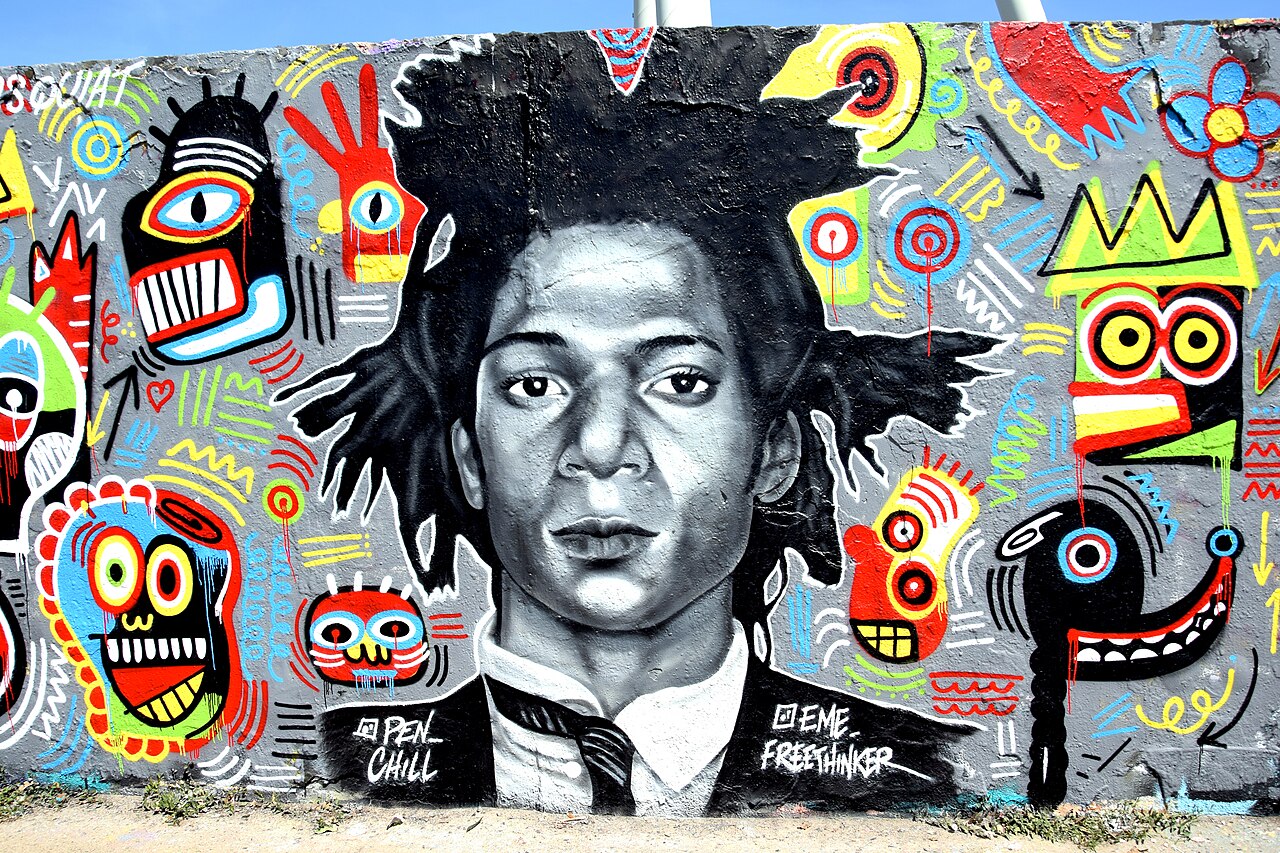
Basquiat represents the explosive energy of New York’s 1980s art scene.
Kusama brings her instantly recognisable visual language of repetition, infinity and obsessive pattern.
Zao Wou-Ki represents a very different artistic history, connecting Chinese traditions with the language of post-war European abstraction.
Together, they tell a much larger story about how modern and contemporary art has moved between cultures.
Basquiat’s Ancient Scientist Takes Centre Stage
The leading work among the sale highlights is Jean-Michel Basquiat’s 1984 painting Ancient Scientist.
The work carries an estimate of HK$56 million to HK$76 million.
That places it among the most important lots of the Hong Kong sales.

Painted during one of the most productive periods of Basquiat’s career, Ancient Scientist contains many of the visual elements that made his work so influential.
Words, symbols, skeletal forms and fragmented figures collide across the surface.
Basquiat’s paintings often appear spontaneous at first glance.
But beneath the apparent chaos is a sophisticated combination of art history, popular culture, anatomy, language and personal symbolism.
His work emerged from the downtown New York scene of the late 1970s and early 1980s, first through graffiti and the pseudonym SAMO and later through the international gallery system.
By 1984, Basquiat had become one of the most important young artists in the world.
Why Basquiat Still Commands Attention
Basquiat’s market has remained exceptionally strong decades after his death in 1988.
Part of that appeal comes from the intensity of his short career.
He died at only 27.
Yet within roughly a decade, he created a body of work that fundamentally changed the way American contemporary art approached race, identity, language and popular culture.
His paintings refuse to separate high art from everyday visual experience.

Classical references can appear alongside comic imagery.
Medical diagrams can sit next to words.
African and Caribbean references can coexist with American consumer culture.
The result is deliberately fragmented.
The viewer is forced to construct connections.
That makes Basquiat’s paintings particularly rewarding in an auction environment, where provenance, scale, date and subject matter can dramatically influence demand.
Yayoi Kusama Brings a Different Kind of Obsession
Yayoi Kusama is another major figure in the Hong Kong sales.
Her artistic universe could hardly look more different from Basquiat’s.
Where Basquiat often created dense fields of words, symbols and figures, Kusama is famous for repetition.
Polka dots.
Meshes.
Mirrored environments.
Pumpkins.
Infinity rooms.
These recurring forms have become among the most recognisable images in contemporary art.
But Kusama’s repetition is not merely decorative.
It has deep roots in her artistic philosophy.
She has described experiences of hallucination and psychological distress in which patterns appeared to multiply across surfaces and objects.
Painting became a way to transform those experiences into visual form.
Her work therefore connects popular visual culture with ideas about infinity, self-erasure and perception.
From Japan to the Global Art Market
Kusama was born in Matsumoto, Japan, in 1929.
In the late 1950s she moved to New York, where she became involved in the city’s experimental art scene.

She participated in happenings and developed radical installations and performances.
Her work challenged established ideas about painting, sculpture and the body.
After returning to Japan in the 1970s, she continued working with extraordinary consistency.
Her later international popularity has made her one of the most recognisable living artists in the world.
Her presence in Hong Kong is therefore significant for another reason.
Kusama represents the increasingly powerful role of Japanese and wider Asian artists within the international contemporary art market.
Zao Wou-Ki Connects East and West
Zao Wou-Ki occupies an entirely different position in this story.
Born in Beijing in 1920, he moved to Paris in 1948 and gradually developed a distinctive abstract language combining Chinese artistic traditions with European modernism.
His paintings are often characterised by large fields of colour, energetic brushwork and luminous atmospheric spaces.
They can appear abstract from a Western perspective while still retaining a relationship with the traditions of Chinese calligraphy and landscape painting.
This cultural duality became central to Zao’s international reputation.
His paintings are not simply examples of European abstraction created by a Chinese artist.
They represent a sustained dialogue between two artistic traditions.
That makes his work particularly relevant in Hong Kong.
Zao Wou-Ki and the Asian Market
Over the past two decades, Zao Wou-Ki has become one of the strongest names in the international Asian art market.
His works regularly appear among the most valuable Chinese paintings sold at auction.
The demand reflects a broader reassessment of artists who operated between cultural systems.
Zao’s career cannot easily be placed into one national category.
He was Chinese by birth and training, French by artistic environment and international in his later career.
Hong Kong provides an especially appropriate setting for his work because the city itself occupies a similar position between cultural and economic worlds.
A Meeting of Three Artistic Languages
The combination of Basquiat, Kusama and Zao Wou-Ki is therefore more meaningful than it might initially appear.
They represent three very different approaches to modern and contemporary art.
Basquiat transformed symbols, words and street culture into an intense personal language.
Kusama turned repetition into an exploration of infinity and perception.
Zao transformed the meeting between Chinese tradition and Western abstraction into a new visual vocabulary.
Their works may look completely different.
But all three artists questioned established boundaries.
They refused to remain within a single artistic tradition.
And all three developed highly recognisable visual languages.
The Importance of the Asian Market
Christie’s decision to place these artists together in Hong Kong reflects the growing importance of Asia to the international art market.
Hong Kong has become one of the world’s major auction centres.
It provides access to collectors from mainland China, Taiwan, Japan, South Korea, Southeast Asia and beyond.
The city’s auction calendar increasingly includes both Western blue-chip artists and major Asian names.
That combination is visible throughout the September sales.
A Basquiat can appear alongside Zao Wou-Ki.
A Japanese contemporary artist can share the spotlight with European modernism.
The boundaries between regional markets are becoming increasingly blurred.
Christie’s 40 Years in Asia
The 2026 Hong Kong sales also carry a symbolic significance for Christie’s.
The auction house is marking its 40th anniversary in Asia.
Christie’s established its Asian presence in the 1980s, and Hong Kong has subsequently become one of its most important international locations.
The anniversary provides an opportunity to reflect on how dramatically the Asian art market has changed.
Four decades ago, the global auction system was far more concentrated in London and New York.
Today, Hong Kong is a central destination for major international collections.
Beyond the Headline Names
Although Basquiat, Kusama and Zao Wou-Ki are likely to attract the most attention, the auctions include a much wider group of artists.
Among the names appearing in the sales are Paul Cézanne, Chu Teh-Chun, Liu Ye and Wu Guanzhong.
This mixture is important.
It shows that the Hong Kong market is no longer simply an Asian satellite of the traditional European and American auction system.
It has developed its own identity.
Western modernism and Asian modernism can now appear within the same commercial conversation.
Paul Cézanne Enters the Conversation
Paul Cézanne may seem like an unexpected companion to Basquiat and Kusama.
Yet his presence makes historical sense.
Cézanne transformed the way artists thought about form, perspective and the relationship between painting and reality.
His influence can be traced through generations of modern artists.
The auction includes his work L’Assiette bleue.
Cézanne’s paintings remain fundamental to understanding the development of modern art because he treated ordinary subjects as opportunities to rethink visual structure.
His still lifes and landscapes helped open the door to Cubism and the many forms of abstraction that followed.
Chu Teh-Chun and the Language of Abstraction
Chinese-French artist Chu Teh-Chun provides another connection between East and West.
Like Zao Wou-Ki, Chu left China for France and developed a distinctive form of abstraction influenced by both European modernism and Chinese traditions.
His paintings often use sweeping brushwork and luminous colour.
They are neither straightforwardly European nor traditionally Chinese.
Instead, they occupy a space between cultures.
That makes Chu’s presence especially appropriate in a Hong Kong auction that is bringing different artistic histories together.
Wu Guanzhong’s Modern Chinese Vision
Wu Guanzhong represents another crucial chapter in modern Chinese art.
He studied in France and later returned to China, where he developed a modern painting language that incorporated elements of Western art while retaining connections
Sources
AI Notice: Some visual content in this article may have been created or enhanced using artificial intelligence (AI) for artistic, editorial or illustrative purposes. Learn more about our approach in our AI & Editorial Principles.