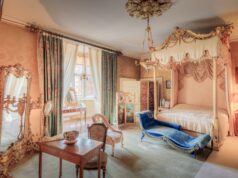
What marks the advent of a solid boudoir in the French Rococo tradition is not the presence of a specific piece of furniture, but rather the felt delineation of the space: it seems to become more touchable. Corners and angles ebb into rounded shapes, light traces itself along gilt scrolls, chairs are less solid and definite and more amenable and of lesser importance. This held true not merely for the furniture in these rooms but in the subjects that took place within them. Revealed here was a revolution in taste that was unheralded. It was a revolution whose silent and barely evidenced echoes are heard unimpeded in the late 17th and early 18th century boudoir. It was a revolution that and saw the geography of the aristocratic home recede, and thus the focus of expressed taste shift from the public to the private, from the court to the boudoir.
From Versailles to the Salon: Rococo’s Intimate Rebirth
The Rococo was not born in the Hall of Mirrors. It was born in the aftermath of its creation. The death of Louis XIV in 1715 redressed the shift of power from the Versailles to the Parisian hôtels particuliers. It diffused to townhouses of the aristocrats and to the casinos presided over by witty women. The boudoir part visit, part sanctuary, part theatreroem for scandal embodied this new domestic society.
Furniture adapt to such shifting rituals. Large Baroque armoires and rectilinear chairs were clearly too inadequate for the meager, flexible spaces. As designers and ebenistes improved ratios and shapes and even introduced imbalances, they created furniture to meet the performance of the great boudoir, a place where reading and knitting in the morning, clandestine appointments in the afternoon, and dealing powder in the evening were to take place.

Most important, Rococo taste matched this transition. Ornament softened from imperial to natural symbols, playfully idyllic forms having precedence; sensuous comfort, not dynastic power was now the motif. In the magnificent boudoir, furniture was no longer a monument. It was an accessory.
Curves, Cartouches, and Shells: Decoding Rococo Forms
The grammar of the French Rococo is very clear: the line speaks for itself. The lines seem asif they were written in scrip, the chair rail curve, the cabriole bend out of a knee shaped form before curling inward invitingly, the armrest expanding in a welcoming bow before returning inward. Those curves are not accidental. They do in fact imitate the rocaille, a word which distinguished the rococo style from the baroque, defined by therockwork and seashell shapes used in garden grottoes, were they derive their name.
Cartouches framed, usually vacant, shield‑like figures are inset into the commodes and boiseries of the French Renaissance, with a suggestion that a monogram or a painted scene might be inserted. They punctuate flat planes with a waveform of convex and concave surfaces that reflect light. Shells crown seat rails, flower at the knees of legs, nestle in corner brackets: ridged carvings providing shadows.

Asymmetry is yet another flagrant move of the Rococo, expressed often through an outlandish scroll of foliage which more frantically unfurls on one side than another, or in the tendency for a panel to let one of its corners melt away into a cascade of tendrils. If this dynamic centrifugal force is well reduced, the opposition is no longer static but rather a visual articulation akin to a musical phrase concluding on an surprising note. Within a capacious boudoir, all this escapade enlivened the perimeter of the room so that, occupied or not, the interior seemed in gentle perpetual animation.
Gilded Surfaces and Silks: The Alchemy of Materials
Rococo furniture derives its singular glamour by an elegant alchemy ofmaterials. Beneath everything, the skeleton is mostly oak or beech, selected for its equilibrium and for its carving properties. On top of these solid platforms, craftspeople built machine upon machine that transferred material into a space.
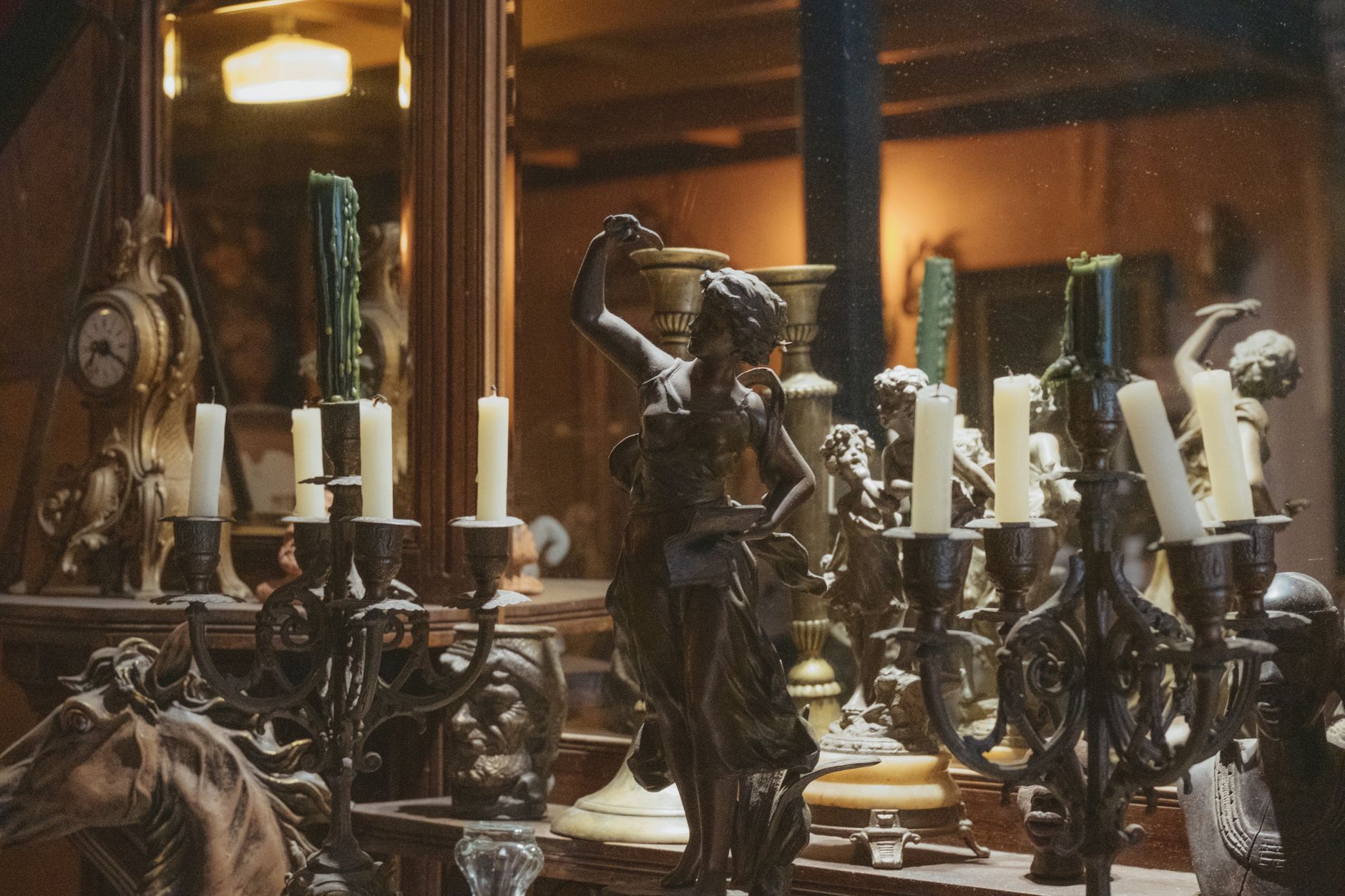
Giltwood is maybe the most recognisable. It leapt out over a gesso surface that was carved with the flowing lines of shells, acanthus and rocaille and then dressed in single leaf gold so that it almost became coloured light. When candle or late afternoon sun fall onto a gilt bergère or console the gold appears to quiver against textiles and flesh.
Marquetry and veneer all exotic woods like tulipwood or kingwood bestowed painterly delicacy on commodes and writing desks. Flustered bouquets in contrasting woods seem to flower across surfaces, while sinuous inlay of brass or pewter highlights the furniture‘s bends.
The textiles round off the scene. In a luxurious boudoir, chairs could be covered with pastel- tinged celadon silk damask, pink-upon-pink striped taffeta or brocaded with minute triumphal arches. Because silk damask is so soft, the tactile richness of polychromed gilding and polished ebony is complemented by the silky cool of the damask. The sense of tactility and visual richness is precisely balanced so that the viewer perceives a sumptuous clouded heaviness supported by consummate skill.
Boudoirs, Bureaus, and Power: Furniture as Theater
Although it is considered to be superficial, up close the décor of the Boudoirs revealed the fluidity of power, social, erotic, or intellectual embedded deeply within the rococo. The bureau plat or secrétaire à abattant was not merely a “pretty table,” but a working station for correspondence and patronage. Drawers hid letters, promises, and political intrigues alongside rouge pots and fans.
The seating was used in a similarly calculated way. Those toshes-à-oreilles who met you cupped the person‘s shoulders and brought their all-too-conscious heads into the lap of coquette-free comfort; the more open, capitonné fauteuil posed as a sublime image of stooped posture and transit in a private-public situation hardly a court of the King. The arrival of specialized types the chaise-longue, the duchesse brisée (a kind of dinky, segmented lounger), the fauteuil de toilette outlined particular bodily movements of recline and coat and reception.
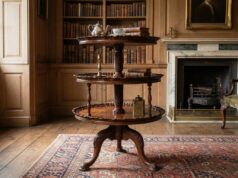
In this way, the grand boudoir was a theater with shelving as its stages, furniture as its actors. Circling rails and nimbly set low tables invited intimacy; diminutive and gliding guéridons could be pulled alongside for chocolate and inkstands. The ability of these pieces- in comparison to their Baroque forerunners- to be moved much more simply, helped enact an intricate dance of closeness. The rococo chamber is not only decorated.
Reviving Rococo Today: Grand Boudoir Inspirations
Contemporary designers are re‑examining Rococo not as a costume to reproduce wholesale, but as a vocabulary of comfort, wit, and sensuality. In a modern grand boudoir, a single antique French fauteuil with a serpentine frame can anchor an otherwise restrained space, its gilded carving playing against matte plaster walls or smoked oak flooring.
The principles are adaptable. Scale down the ornament, but keep the curve: a softly rounded headboard or a kidney‑shaped writing table nods to Rococo without pastiche. Use textile contrast intelligently—perhaps a historical chair re‑covered in a solid, almost austere wool satin, letting the silhouette do the talking. Or pair a richly veneered 18th‑century commode with contemporary art, allowing the marquetry to converse with bold abstraction.
What still resonates is Rococo’s insistence that luxury is experienced bodily: the depth of a seat, the curve of a backrest, the way a gilt frame catches candlelight or a reading lamp. To bring Rococo into the present is to reclaim the boudoir as a room for cultivated privacy—not merely a bedroom, but a chamber for reading, reflecting, dressing, and occasionally, plotting.
French Rococo style furniture, especially in the context of the grand boudoir, represents a rare moment when artistry, comfort, and social nuance aligned perfectly. Its curves are not only decorative; they articulate a culture turning inward, toward conversation, pleasure, and the sovereignty of the private self. The gilded shells and sinuous legs carry with them histories of patronage, seduction, and intellectual exchange, reminding us that small rooms can host large dramas.
To engage with Rococo today—whether through a single 18th‑century piece or a contemporary reinterpretation—is to affirm that interiors are more than backdrops. They shape how we sit, speak, rest, and dream. In that sense, the grand boudoir, softly glowing with Rococo forms, remains a compelling manifesto for intimate grandeur.
AI Notice: Some visual content in this article may have been created or enhanced using artificial intelligence (AI) for artistic, editorial or illustrative purposes. Learn more about our approach in our AI & Editorial Principles.