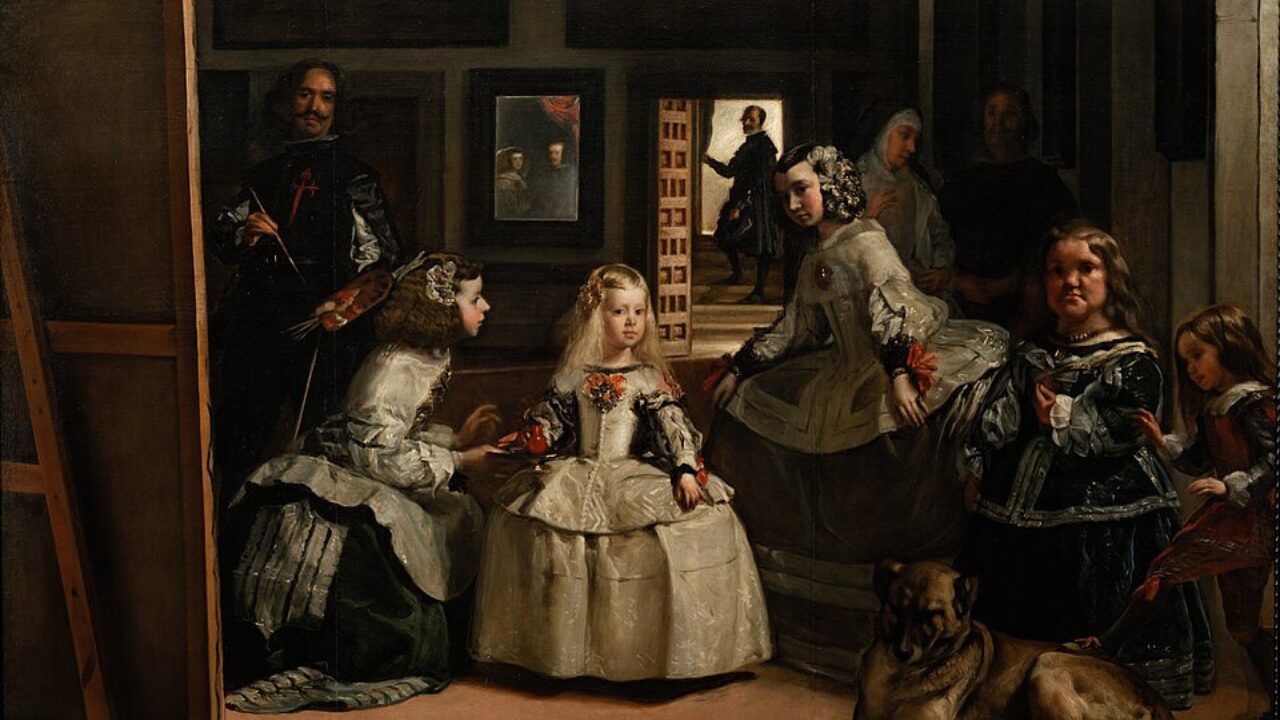

In seventeenth-century Italy, a room was never just a room. A disagreement had taken place.
Once the dust settled from the Reformation, uncertainty took root where faith once stood firm. Not even soldiers could fix what logic now failed to reach. Speeches lost their grip, touching only those already convinced.
Can You Name the Masterpiece?
Ten masterpieces. Ten questions. How well do you know the history of art?
A different path opened – raw presence, felt rather than argued. Feeling, shaped by surroundings, began to speak louder than doctrine ever did.
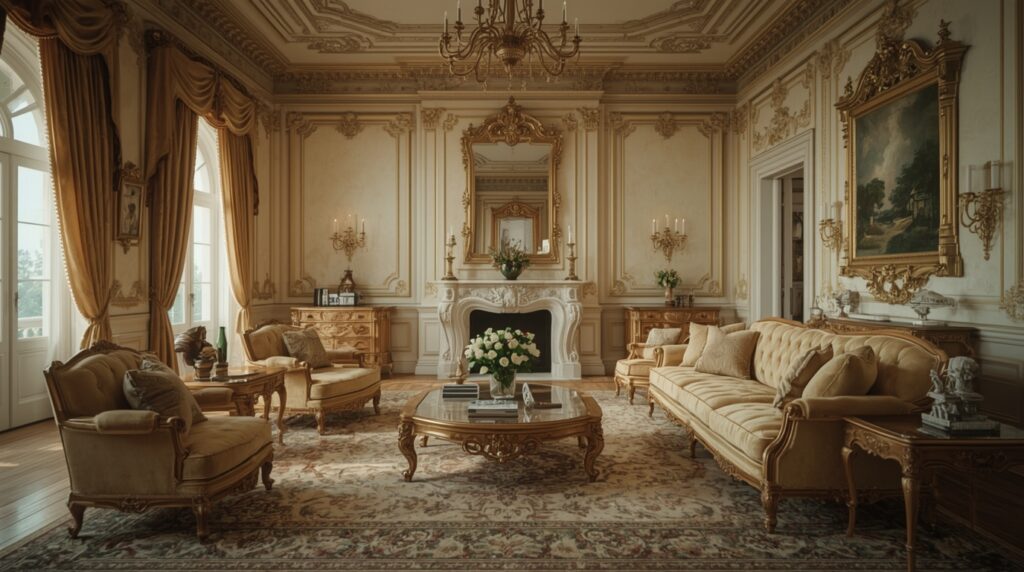
A shift occurred right then, giving rise to Italian baroque interiors.
Not aimed at ornament, or merely pleasing forms, their goal took another direction entirely. Space itself became a tool of influence. Stepping into one of these rooms, guests encountered more than visuals – conviction arrived first, thought followed after.
Heaven seemed to break through ceiling panels, while sculptural forms melted along wall surfaces, their shapes guided by beams of calculated illumination.
Can You Guess the Artist?
Three clues. One artist. How quickly can you identify the painter?
In Italy’s Baroque era, sacred space wasn’t displayed – it unfolded in motion.
The Counter-Reformation room
To understand italian baroque interior design, one must first understand its audience. The Church no longer spoke to a unified medieval society. It spoke to skeptics, doubters, and the newly educated urban population. Conviction had to move from doctrine to sensation.
Architecture therefore stopped presenting order and began staging revelation.
Changing religious communication
| Period | Method of persuasion | Interior effect |
|---|---|---|
| Medieval | Symbolic teaching | Quiet contemplation |
| Renaissance | Rational harmony | Intellectual admiration |
| Baroque | Emotional immersion | Immediate conviction |
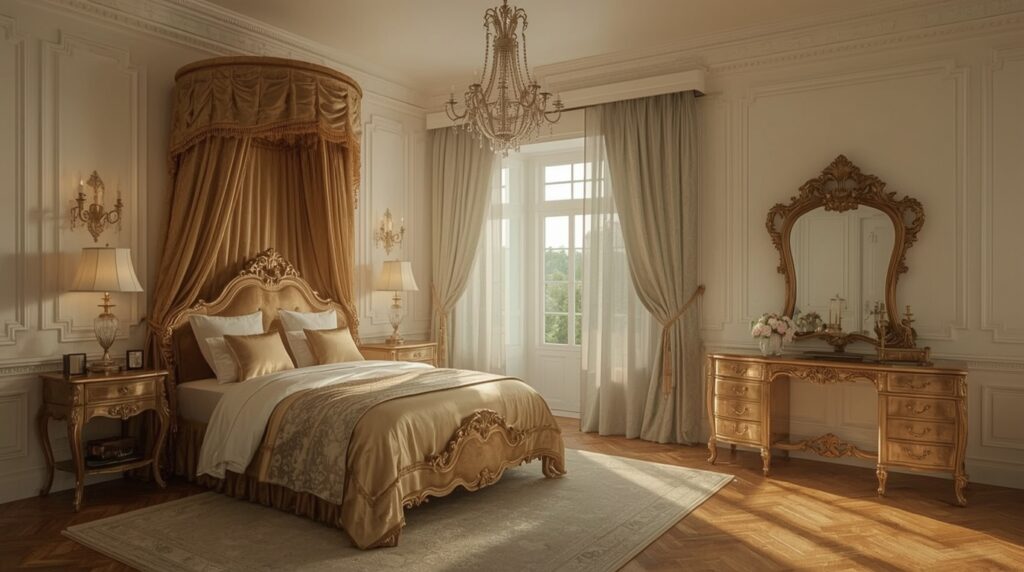
The baroque interior replaced explanation with experience. Belief became spatial.
Movement as theology
Curving walls define earlier spaces shaped by balance. Movement drives Italian baroque rooms instead. Columns step forward without warning. Ripple-like cornices cut across rigid lines.
Restless eyes follow forms that refuse stillness. Certainty holds firm through constant motion.
What mattered wasn’t clarity – it was involvement. While someone still may wonder, a person in motion joins in.
Movement shifts into loyalty. Bernini saw it clearly – sculpture flows into buildings, those structures merge with painted surfaces, and color blends into illumination.
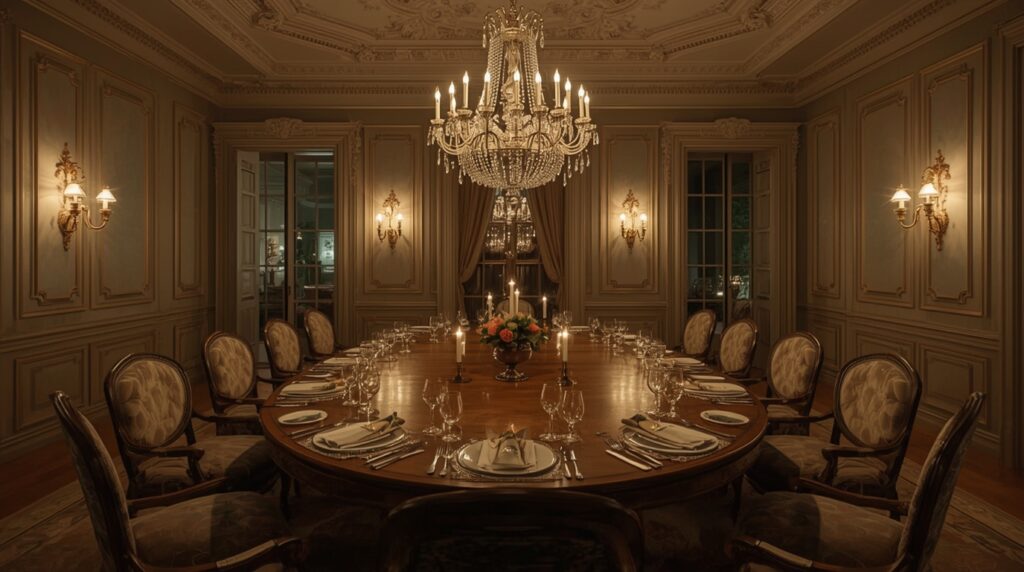
Boundaries blur between forms until what is real becomes indistinct from what stands in its place. Space becomes event.
Light as invisible authority
Light in italian baroque interior design is rarely neutral. Hidden windows, concealed openings, and reflective materials create illumination that appears intentional — almost conscious.
Visitors often could not identify the source. This was deliberate.
Functions of baroque light
| Lighting effect | Psychological result |
|---|---|
| Hidden windows | Sense of miracle |
| Gilded surfaces | Warm transcendence |
| Dramatic shadows | Moral contrast |
The interior does not merely contain light. It directs interpretation.
Ornament and the persuasion of richness
Inside Renaissance spaces, decoration followed strict rules – Baroque Italy shattered them. Rich marbles clash in hue, gold-laced plaster crawls across ceilings, scenes burst from walls, stone patterns multiply without pause.
Logic fades when eyes drift through such excess. Sensation takes hold where numbers fail. What looks like excess actually serves a purpose. Through fullness, meaning takes shape.
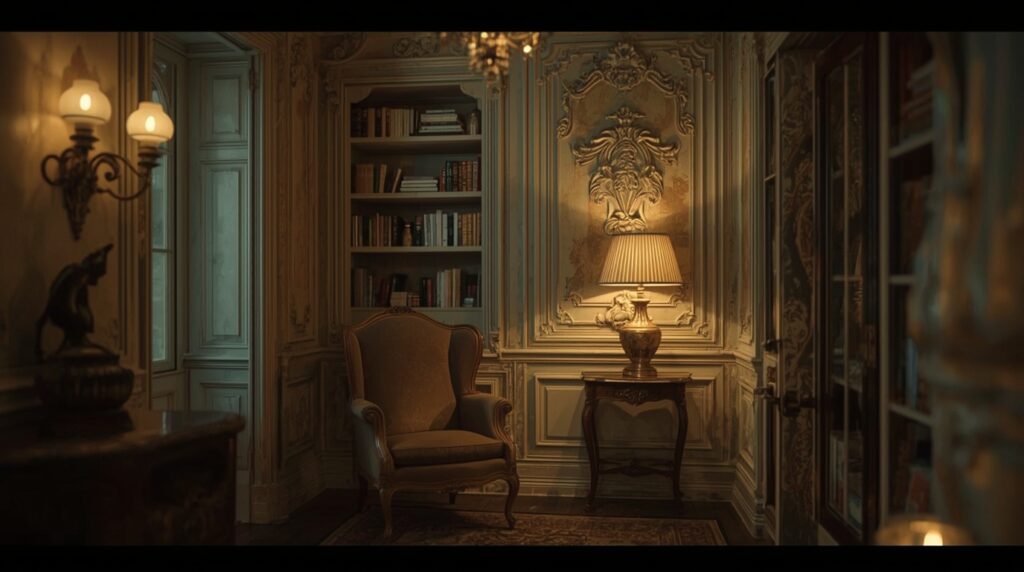
When an organization feels secure, its presence shows without limits. Caught in too much sensation, space shrinks. To question what surrounds requires stepping back.
Ceiling painting: the opened sky
Baroque ceilings dissolve architecture’s final boundary: the roof. Perspective painting extends space upward into infinite height. The viewer stands indoors yet experiences outdoors eternity.
Meaning of the illusion
| Element | Interpretation |
|---|---|
| Open sky | Divine accessibility |
| Floating figures | Continuous presence |
| Vanishing architecture | Earth joining heaven |
Italian baroque interior design therefore collapses metaphysical distance. Heaven is not promised — it is spatially demonstrated.
With each step forward, baroque spaces shift into focus – static sightlines give way to shifting perspectives. Walking alters what is seen: shapes meet only when approached from certain angles.
Alignment happens gradually, built into the act of moving through space. Perception changes mid-stride, revealing layered details over time. What appears fragmented at first slowly comes together.
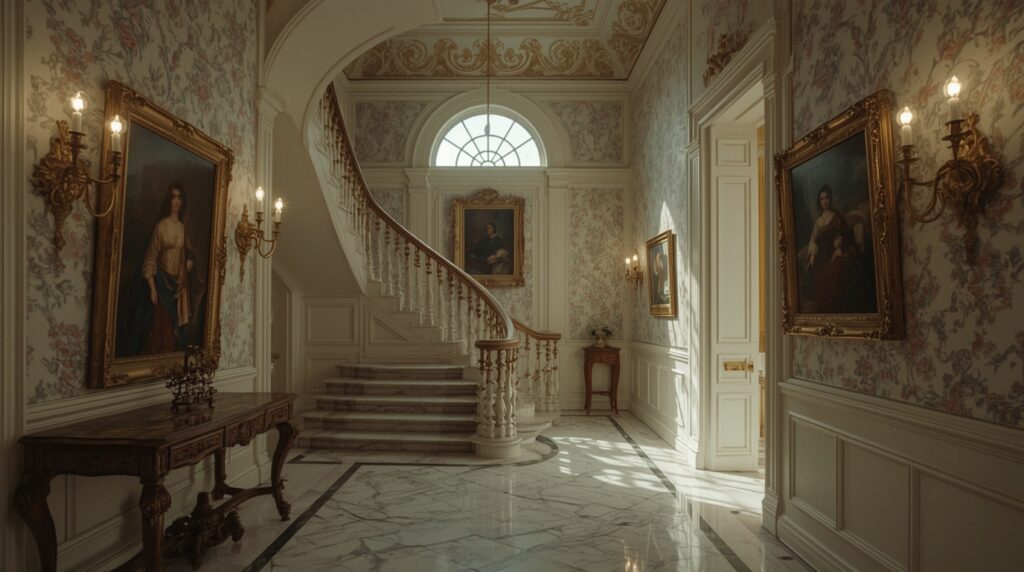
The experience relies on bodily progression, not still observation. Compositions lock into place as position shifts. Images gain coherence through changing vantage points. Movement becomes part of understanding the design.
Now stepping into the scene, the watcher joins the action. Participation begins where observation ended. Built through collaboration, this approach reveals how Italian Baroque interiors shaped spaces like theaters, palaces, and opera halls.
Rather than separate realms, politics, faith, and artistic expression merged – each relying on immersive experience to convey meaning.
Opposition and the rise of restraint
By the early eighteenth century, critics began favoring clarity and order again. The Enlightenment valued reason over sensation. Neoclassical interiors rejected emotional persuasion for intellectual stability.
Changing values
| Style | Social ideal |
|---|---|
| Baroque | Faith through emotion |
| Neoclassical | Truth through reason |
Italian baroque interior design did not disappear because it failed. It disappeared because society changed its preferred way of believing.
Legacy and misunderstanding
Though many today see baroque design as mere ornament, its forms carried deeper intent. Not just beauty, but belief shaped those spaces. Curves did not only please the eye – rather, they answered uncertainty with order.
Mirrors, light, trickery of perspective – all worked to comfort minds uneasy with change. Today’s replicas lose depth when stripped of original context. Style alone cannot carry what once grew from societal unease.

What remains is surface, not argument – form without pressure. Meaning shifts when fear fades. A look replaces a warning. Beauty stands in for urgency.
Even now, traces of their impact linger in places where atmosphere takes priority – mood-shaped environments like performance halls, high-end accommodations, and grand civic areas favor experience instead of clarity.
Baroque Architecture Highlights: Rome and Beyond
St. Peter’s Basilica
Bramante kicked off the project, Michelangelo added the soaring dome and hefty pilasters, and Carlo Maderno’s 1626 facade wrapped it up in full Baroque flair—fusing Renaissance precision with dramatic visual punch.
Vignola
His Il Gesù layout became the blueprint for Jesuit churches, packing in oversized classical columns, domes, and clever light play for maximum theatrical impact.
Gianlorenzo Bernini
Baroque powerhouse in art and architecture. His S. Andrea al Quirinale (1658–61) features an elliptical floor plan and textured, sculpture-like walls. The massive bronze baldacchino over St. Peter’s altar bursts with decoration, while his basilica altar, city layouts, fountains, and theater sets defined Rome’s Baroque vibe.

Francesco Borromini
A master of spatial tricks, Borromini’s S. Carlo alle Quattro Fontane and S. Ivo della Sapienza showcase twisted geometries, bulging and indented surfaces, plus symbolic stars and spirals.
Baroque Beyond Rome
Venice
Baldassare Longhena’s S. Maria della Salute (started 1631) stands as the city’s Baroque highlight, with its eight-sided base and dazzling light-shadow dynamics capturing the style’s showy essence.
Turin
Guarino Guarini’s Holy Shroud Chapel and Filippo Juvarra’s Superga blend intricate engineering with jaw-dropping spectacle.
Italian baroque interior design represents a civilization choosing experience over debate. Rather than prove ideas logically, it constructed environments in which doubt felt impossible.
Symbolism in italian baroque interior design
Inside Italian Baroque rooms, symbols did not just decorate. They shaped a kind of silent sermon about control, belief, how brief life is, and cosmic balance.
A painting on high above might blur into sky-like scenes, while moldings twisted like frozen smoke – each part meant to strike emotion first, thought later. Look up, and ceilings seemed to vanish where holy figures rose through fake clouds – not for show, but to shrink distance between people below and endless time beyond, pushing the idea that only the Church could open heaven’s door.
Often, pillars appeared thicker than needed or came in pairs, standing firm like doctrine after rebellion shook older truths – the Church unwavering, or noble houses claiming fate backed their rule. Shine from gold wasn’t there to dazzle alone; it carried meaning – purity untouched by decay, glow from another world, proof of rightful place.
When someone entered such a hall, warmth on skin became rank made visible. Deep green marble hinted at life returning from death. Red stone spoke of royal bloodlines without saying a word.
Black stone brought thoughts of dying and regret, pointing toward fleeting luxury. Mirrors didn’t stretch rooms just to impress – they opened doors to endlessness, suggesting presence everywhere unseen. Space unfolded differently when paths bent under arched corridors – walking became part of understanding.
Round halls pulled people forward in loops, making belief something felt, not only seen. Power found quiet ways to speak inside noble homes – frescoes tied ancestors to ancient rulers or stars above.
Churches used similar tricks to draw worshippers into grand stories larger than themselves. Rooms shaped like prayers guided attention upward. Light fell like favor shown from beyond.
Decoration reached past what eyes can fix on. False appearances made facts waver, tipping minds off balance. Visitors left stirred, smaller somehow, convinced that rule below echoed rule above.
Use of illusion in 17th century architecture
Reality shifted when architects began treating walls like thoughts. Not by accident did columns rise where none were built, instead a calculated dance of angles made ceilings vanish into clouds.
Space stretched longer than stone allowed, thanks to corridors drawn crooked on purpose. Height fooled the eye upward, not because truth mattered less, but because seeing changed what existence could be.
Painted arches replaced real ones, guiding sight beyond masonry limits. A small room transformed, not through size but slant and shadow, becoming something weightless.
Distance bent under careful lines, making steps echo like processions. What looked solid was often flat surface pretending otherwise. Heaven appeared above rooms never designed to hold it, held up only by math and gaze.
Trying to convince people worked different ways. Inside churches, fake effects suggested belief showed hidden realities unseen by eyes alone. Palaces used them too, hinting power rose above physical rules.
Lighting played tricks on purpose. Windows tucked out of view gave glow like from nowhere, darkness hid where walls ended making things seem to float. Buildings even lied about their bones.
Stone pretended to drape like cloth, level roofs turned into high arches, straight lines disappeared inside painted worlds. Doubt mattered in those moments.
Thinkers of the time trusted experience through senses, forcing thought to move between vision and truth. Fakery shifted meaning then. It proved what feels real can be filtered, steered, reshaped by forces skilled at bending how we see.
The Ceiling as a Gateway to Heaven
Few features demonstrate the psychological ambition of Italian Baroque interiors more clearly than the ceiling.
In earlier architectural traditions, the ceiling often reinforced the physical boundaries of a room. Baroque designers increasingly treated it as something that could disappear.
Painted architecture extended beyond the actual structure. Clouds appeared to open above the viewer. Saints and angels seemed to occupy the same visual space as the congregation. Painted columns continued imaginary architecture into the heavens.
This technique, known as illusionistic painting or quadratura, transformed a flat surface into an apparently limitless space.
The effect was deliberately disorienting.
A visitor standing beneath such a ceiling was encouraged to look upward and experience the sensation that earthly architecture had opened onto a supernatural realm. The distinction between painted and physical space became deliberately difficult to maintain.
The ceiling was no longer simply above the viewer.
It became an event.
Bernini and the Architecture of Emotional Impact
Gian Lorenzo Bernini became one of the defining figures of this new approach to space.
His importance to Baroque interiors lies not only in his sculpture but in his understanding that architecture, sculpture, painting, light, and movement could function as one theatrical composition.
The Cornaro Chapel in Rome provides one of the clearest demonstrations.
Bernini did not simply place a sculpture of Saint Teresa inside a chapel. He created an entire visual environment around the mystical experience represented by the sculpture. Hidden lighting, architectural framing, marble, sculpture, and the viewing positions of the Cornaro family members combine to create the impression of a supernatural event unfolding before the spectator.
The result is neither purely architecture nor purely sculpture.
It is something closer to staged experience.
The visitor becomes part of the composition.
Borromini Took Movement in Another Direction
If Bernini demonstrated how Baroque space could become theatrical, Francesco Borromini demonstrated how radically architecture itself could be manipulated.
His interiors frequently reject the predictable geometry of the Renaissance.
Walls curve.
Surfaces alternate between concave and convex forms.
Cornices undulate.
Geometric patterns appear to expand and contract depending on where the viewer stands.
The church of San Carlo alle Quattro Fontane in Rome is perhaps the most famous example.
Its relatively small interior creates an extraordinary sense of movement despite its limited dimensions. The architecture seems to breathe.
This is one of the secrets of Italian Baroque design.
Grandeur did not always require enormous scale.
Through geometry, light, proportion, and visual rhythm, even a relatively compact room could produce a sensation of overwhelming spatial complexity.
Light Was a Material
Baroque architects treated light almost as if it were another building material.
Windows were positioned carefully. Hidden openings could illuminate sculptures from unexpected directions. Gold surfaces reflected candlelight. White marble intensified brightness while darker materials absorbed it.
The purpose was not simply to make a room easier to see.
Light directed attention.
A beam could isolate a saint.
A brightly illuminated altar could become the visual destination of an entire church.
A shadow could conceal architectural details until the viewer moved closer.
This created an experience that changed with position and time.
Natural daylight transformed the interior during the day, while candles produced another atmosphere after sunset.
Baroque architecture therefore had a temporal quality.
The room was never visually identical from one moment to the next.
How to Recognize an Italian Baroque Interior Today
When identifying the character of an Italian Baroque interior, look for relationships rather than individual decorations.
Typical characteristics include:
- curved or dynamically articulated walls;
- dramatic contrasts between light and shadow;
- illusionistic ceiling painting;
- elaborate stucco;
- gilded architectural details;
- colored marble;
- sculptural integration with architecture;
- theatrical altar compositions;
- strong visual axes;
- monumental staircases or processional spaces;
- asymmetrical or highly dynamic ornament;
- carefully controlled views and focal points.
Not every Baroque interior contains all of these elements.
The essential characteristic is the sense that multiple artistic disciplines are working together.
The room should feel conceived as a total experience.
AI Notice: Some visual content in this article may have been created or enhanced using artificial intelligence (AI) for artistic, editorial or illustrative purposes. Learn more about our approach in our AI & Editorial Principles.