

Whispers of Power and Velvet: Inside the Symbolic Interiors of the French Aristocracy
Step into a French aristocratic interior of the 17th or 18th century and the air feels curated—perfumed with beeswax and orange blossom, threaded with rustling silk, muffled by thick carpets that swallow the sound of footsteps and secrets alike. It is not merely “beautiful.” It is deliberate. A theatre of surfaces that tells you, silently but insistently, who holds power here.
French aristocratic homes were never just decorated. They were written—layer by layer—in gilt, velvet, and light. Their interiors formed a living script of power, desire, insecurity, belief and spectacle. To understand how the French aristocracy decorated is to read a language made of mirrors, tapestries, and the choreography of rooms.
Can You Name the Masterpiece?
Ten masterpieces. Ten questions. How well do you know the history of art?
And that language, centuries later, still haunts the way we dream about luxury today.
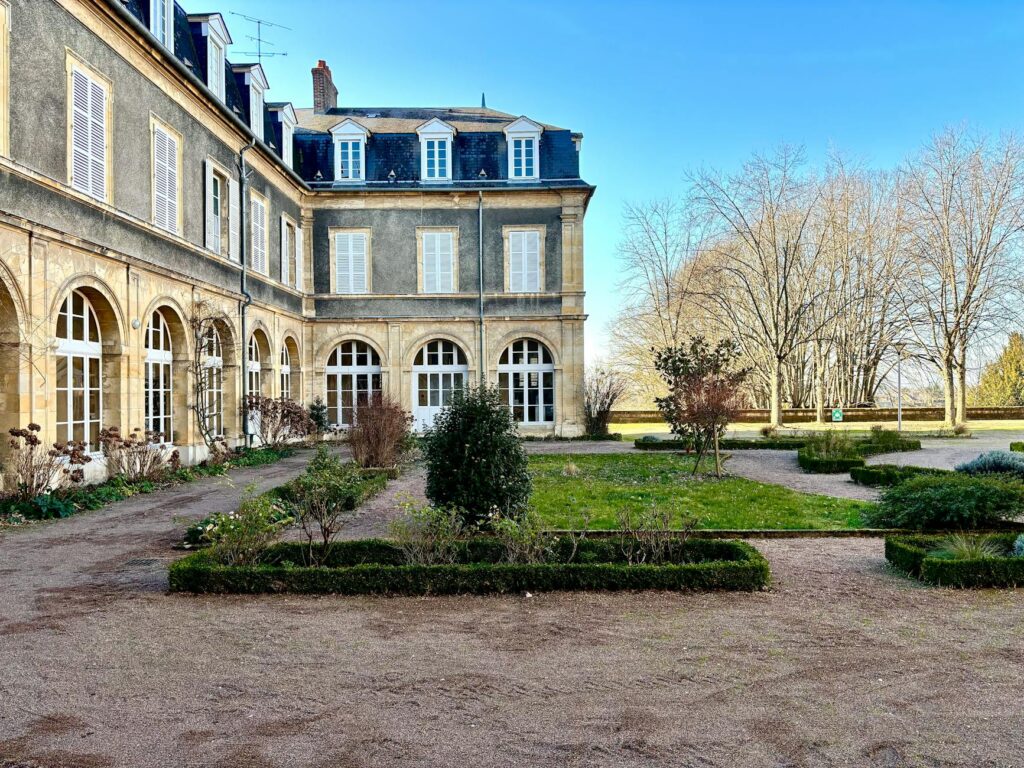
The House as a Stage of Self
By the time you sit in the chair or flick on the chandelier, you have first felt the intention.
Unlike their Italian and English equivalents, the aristocratic interiors in France were thought of more as scenery on which they sat to perform: rank, genealogy, the composure that must be maintained in a crisis. Each panel of boiserie, each embroidered pillow was a well rehearsed line in a tightly scripted performance. The guestsdid notmerely” came in, they moved from room to room as if from scene to scene.
Can You Guess the Artist?
Three clues. One artist. How quickly can you identify the painter?
The enfilade the iconic line of rooms aligned from door to door is the pinnacle of this venue. Moving through them, the sightlines glide forward into a vanishing point of gilding and order. It‘s simultaneously awe-inspiring and demoralising: welcome to a room that wants to be adored but also scrutinised.
Decaration was psychological here, too. The aristocrat knew power was not merely wielded in councils and decrees but also in what they saw when they looked up: the ceiling mythologising the family in painted allegory, the portrait saint-of-the-day perched omnipresent above the mantel, the clock whispering time in gilded bronze. To walk through the house was to be subtly schooled in social hierarchy.
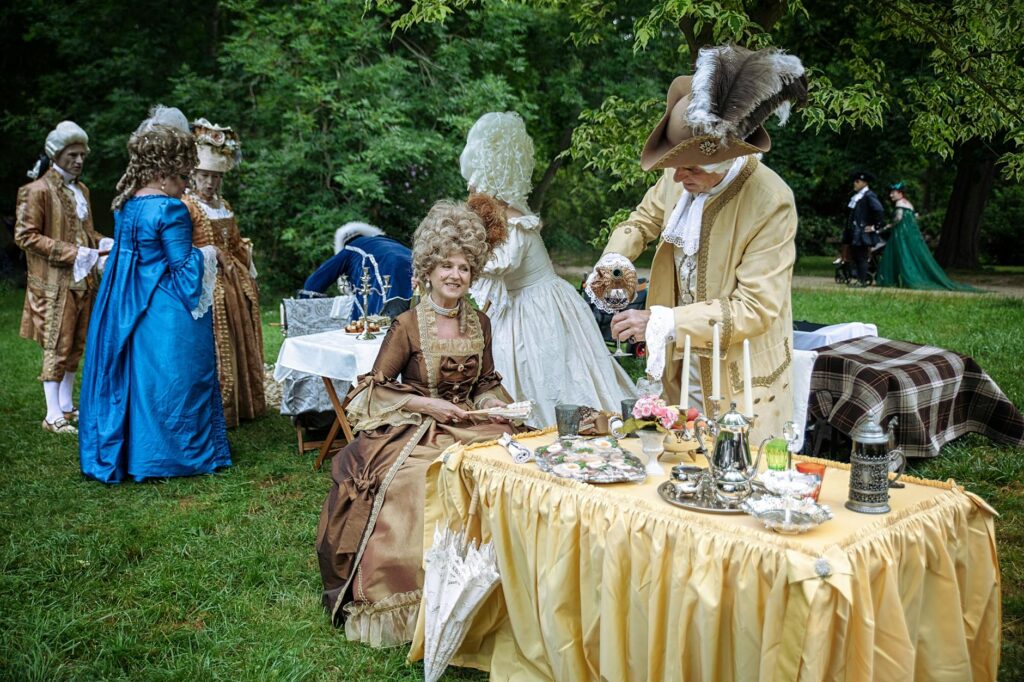
We tend to think of decoration as personal taste. For the French aristocracy, it was a form of self-portraiture in which the sitter never appears alone. Their image is always refracted through myth, family history, religion, and the watchful approval of the king.
Corridors of Hierarchy: How Space Dictated Status
European aristocratic homes the city hotels particuliers and the country chateaux conceived of space as precisely as a court ritual. Parallel to titles, rooms were ranked.
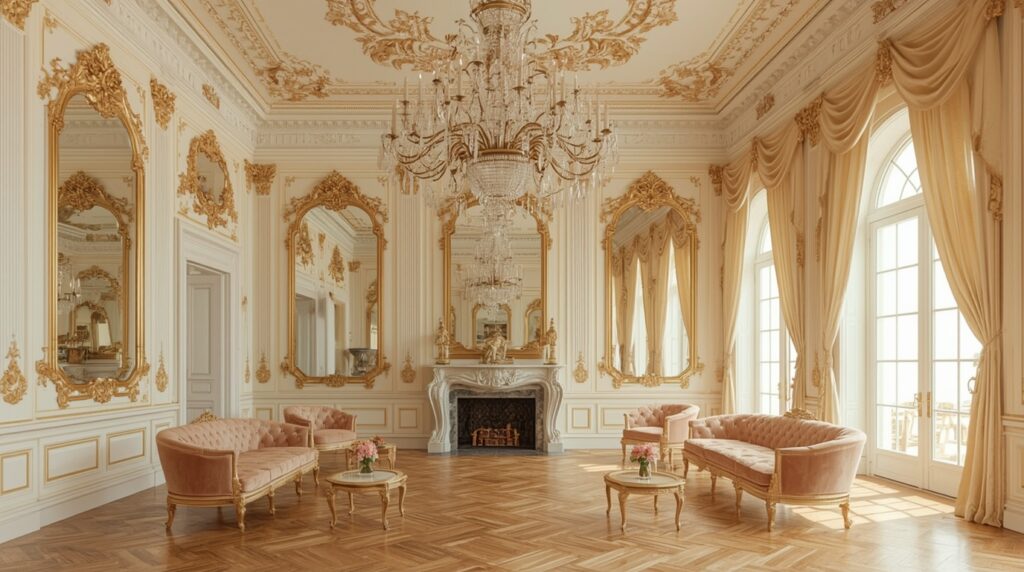
Yet, the grand salon was more than just the most voluminous room in an apartment; it was the emotional center of social performance. Painted clouds and gods hung high in the vaulted ceiling; dazzling chandeliers vibrated their light across gilded moldings. The acoustics wereoptimalfor music and speech, voices echoing within a tender mesh of draperies and shining surfaces. To be called into this space was to be recognized.
Outside the household, even more private and coded might be the access. The chambre de parade (ceremonial bedchamber) may have been the setting for a modest court of spectators in the rising or retiring of the owner a ritual of modest privacy requiring choreography, hierarchy and decorum. The bedspace, usually raised on a dais is draped in brocade and fringed with bullion and more resemble a throne than a bed. Sleeping, was not. Dignity was.
The intimacy of the inner apartmentsthe private cabinet, the boudoirwas where this prescriptive notion of secrecy was sequestered away. Decoration became more intimate, muted colors, individual ornamentation: a lover‘s miniature sat on a desk, textiles became decadent, personal portraits private, secured behind hinged walls. Here, the language of power was still spoken, it was just whispered.
To move through such a house was to feel your own status modulate, room by room. Architecture became choreography; decoration, the unspoken dialogue between host and guest.
Walls That Listen: Tapestry, Paneling, and the Illusion of Warmth
The walls of a French aristocrat’s home were more than boundaries. They were storytellers.
Tapestries, those vast woven narratives from Gobelins, Beauvais or Aubusson, turned rooms into immersive fictions. Battles, mythologies, pastoral scenes—woven in painstaking gradations of color—unfurled over walls like cinematic panoramas. In a world without screens, a tapestry was a film perpetually paused, ready to resume in the imagination of anyone who cared to look.
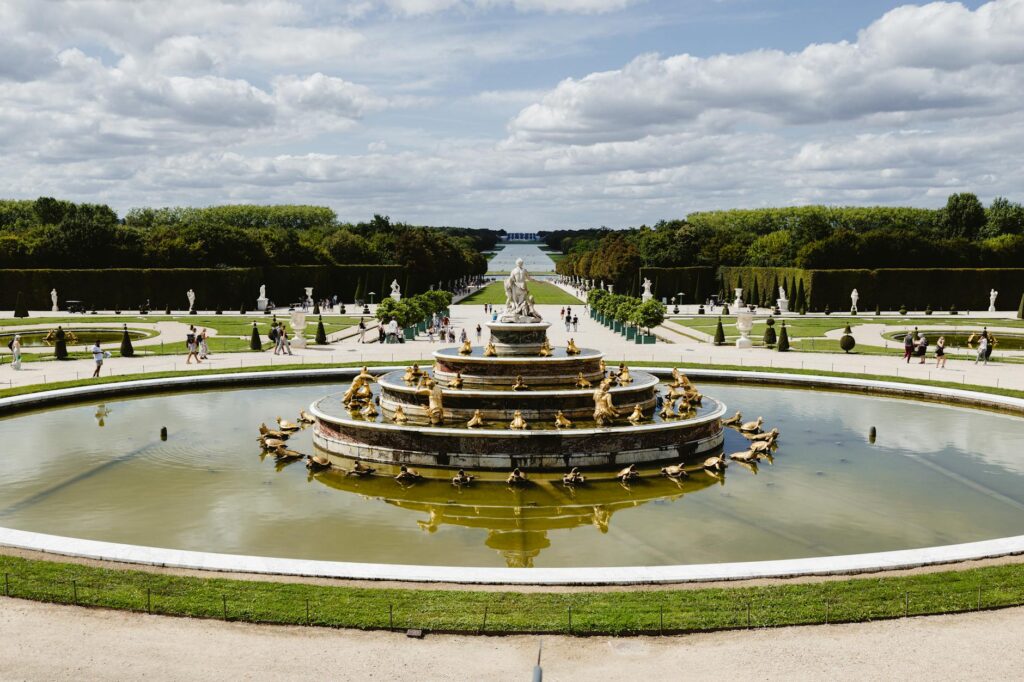
The practical design of French aristocratic dwellings hotel particulier in the city, chateaux in the country was as constrained as an offer. Rooms had their place according to their rank and the rankings were as strict as those accorded to persons.
Yet these were more than just fun. Selecting a tapestry series implied selecting a role: Hercules for vigor, Alexander for empire, shepherd lovers for vice and finesse. The room was a moral stage; the host would naturally project one‘s self into the cast.
Below or in between these woven texts, in a softer psychological function, boiseries- sculpted wood panelling which still constitutes French interior fantasy- offered a more subdued wrap-around. Their were carved scrolls, their apple and tulip motifs. Charged with the joy of their rhythm, they created a visible surround. Coated in pastel greens and creams, dusted with gold, they softened rocks’ asperities, touching off the eye even if the air was chilly.
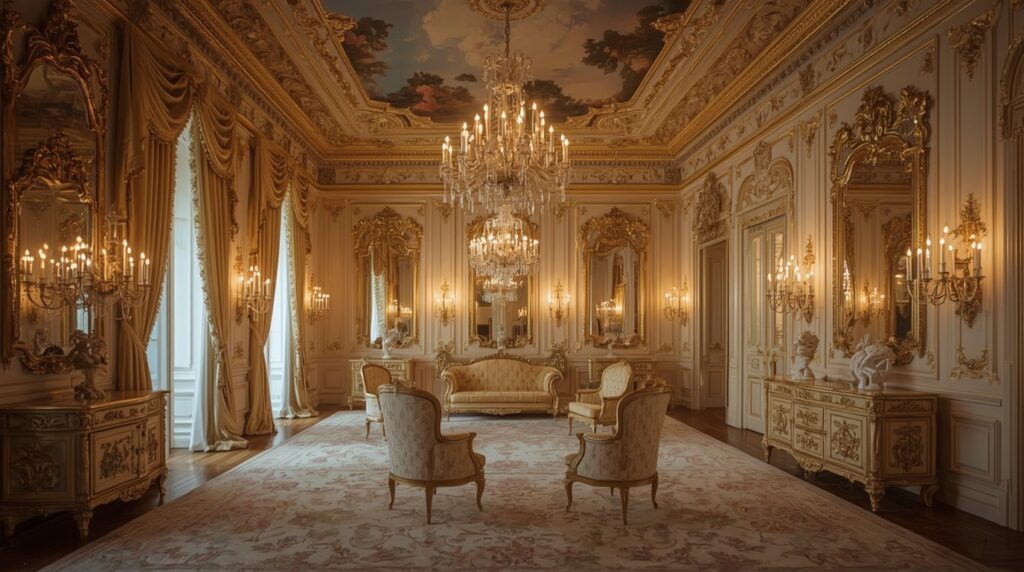
These walls did not just testify to taste. They negotiated between the attraction of intimidation and the protection of familiarity. The tapestry kept out the draughts and the loneliness, but it also kept out the sound echoed back through the carved woodwork,‘one softens the words’ of power written in other places; a profile, a family shield. The aristocrat cloaked themselves in stories carved out not only for others to see, but to become part of a story about them that felt believable, even reassuring.
Light, Mirrors, and the Seduction of Reflection
If power is a performance, light is its most subtle costume designer.
The organization of aristocratic houses in France whether urban hôtels particuliers or country chateaux was as elaborate as the intricacies of a court ceremony, with room hierarchy as rigid as that of titles and precedence.
Nothing in a grand aristocratic house was more spatially defined or more carefully orchestrated than light. The pale Paris glow illuminating the room from great bay windows, the glow of a candle light amplified a hundredfold by a thousand cut glass surfaces mirrors remained quintessentially costly and technically difficult to satisfy; the chief actors in the game of light.
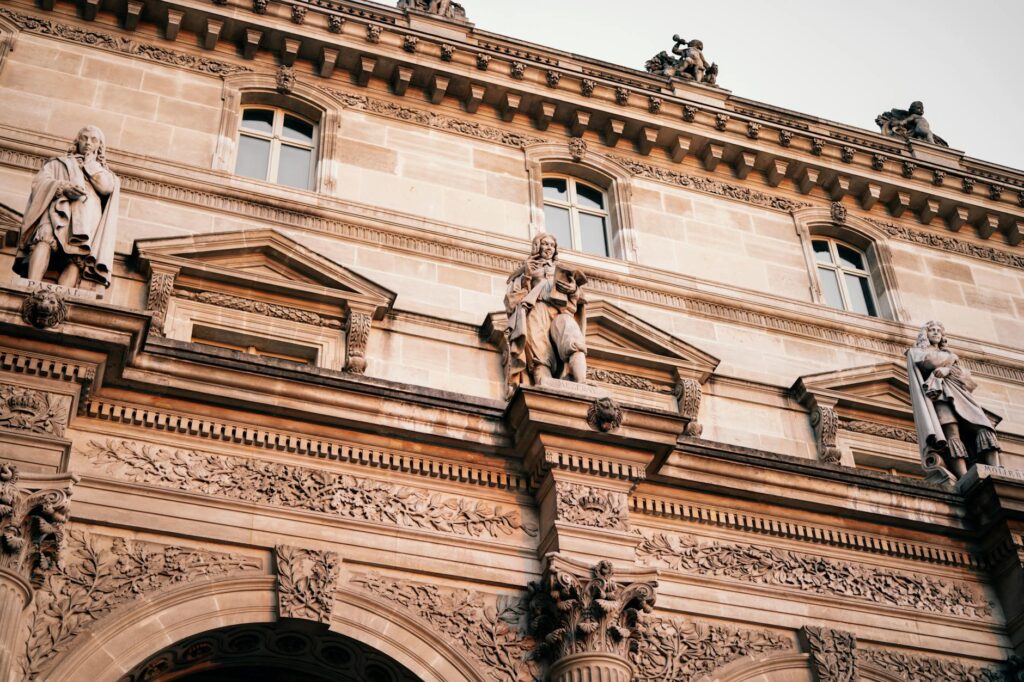
A mirror in this great salon didn‘t quite reflect the room. It re-created it. Frames of gilded acanthus leaves and shells bestowed a certain sovereignty to these glass surfaces. Set across from the windows or dare each other to stare, they transmogrified candle light into glittering constellation. By night, the space was aperture into a flickering repetition: Faces, finery, jewelry, gesture all abstracted in a kaleidoscope of images.
To be in such a space was to have your dimensions sharpened and expanded… a tiny bit fictionalized. You were the type of person who: belonged in a room like this. For now.
This psychological seduction is obvious. Mirrors didn‘t just provide the aristocracy with an infinite reaffirmation of their image, they also instituted an insidious instability. With every gesture being magnified, with every smile repeated thrice in the glass, individual identity was, simultaneously, magnified and undermined. In such a vain world, the mirror was both foe and friend.
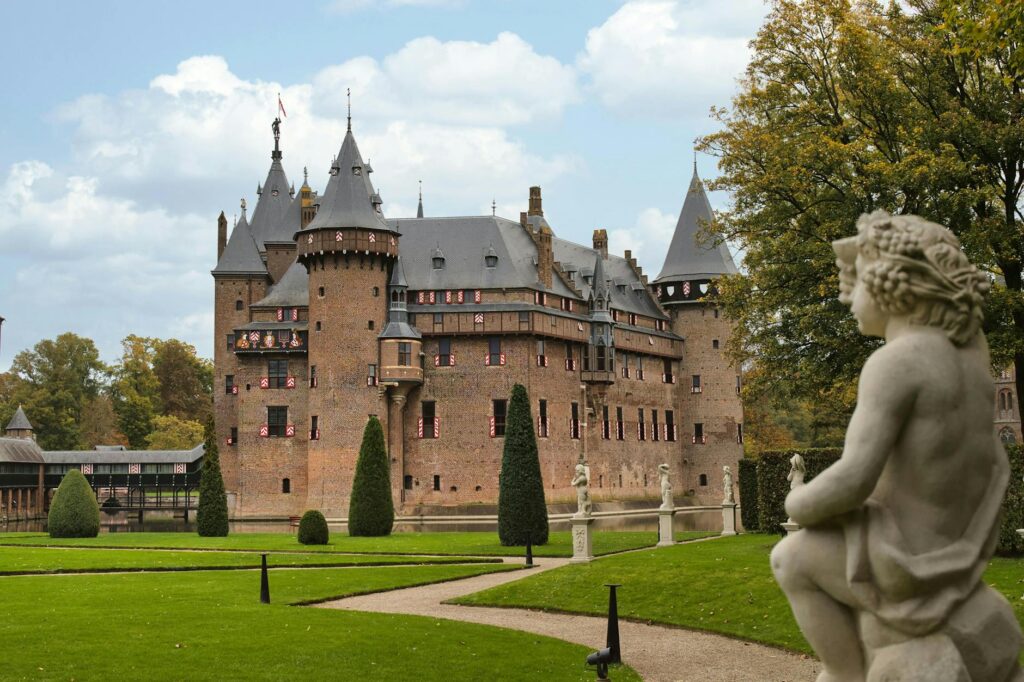
Today, the Hall of Mirrors at Versailles remains the most famous example of this visual drama, but the same principle echoed in countless more intimate interiors. The aristocratic home used light as a silent collaborator in the ongoing project of self-fashioning.
Fabrics That Touch the Mind
If the walls and mirrors spoke, the textiles whispered.
Fabrics in French aristocratic homes were not mere ornament. They were a sensory technology, shaping how a room felt on the skin and in the mind. Heavy velvet curtains muffled gossip. Silk wall hangings softened voices into a kind of permanent murmur. Upholstery turned chairs and sofas into invitations—not just to sit, but to linger, to confide.
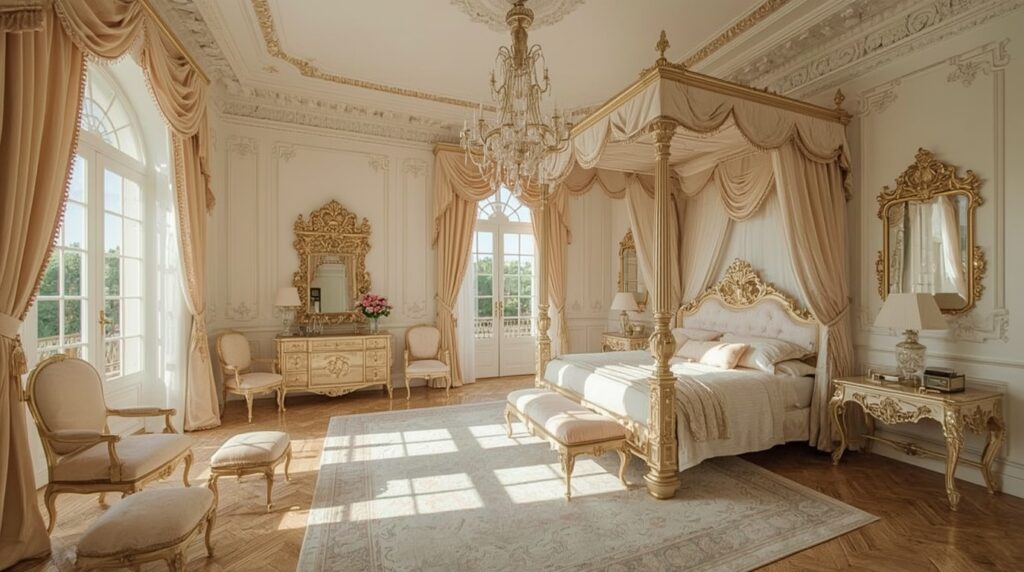
Color was never innocent: the gravest carmines and the highest-blown royal blues proclaimed dignity and hierarchy, the more tender pistachio greens and blushing royals called for closeness, sentimentality, flirtation even. In the boudoir, the textiles would often relax what had become a too-stiff world: flowered chintzes, coquettish stripes, can-could panting of the silken ruching. It is no coincidence that the French term for it had originally come from bouder–to sulk, to pout. Flourished textiles in the different boudoirs allowed for a mood that the protocol of the court could not:
It further enhanced signification. The embroidery on cushions and hangings images of laurel wreaths, doves, arrows, belted bows could take on tales of love, of allegiance, of beauty or vision. The very technique of the hand whether brought from the atelier, by craftsmen, or undertaken in stoic patience under the lady of the house created an illusion of intimate home life surrounding, on the surface, a show of wealth.
Below the plushness was a hardness: the solid oak frame of a bergere armchair, the cold angles of parquet floors. The fabric was a buffer: a soft cover over formality, a reassuring, hands-on comfort that this place of rank and ceremony could, privately, human.
Objects as Oracles: Symbolism in Everyday Splendor
A French aristocratic interior invites you to read it like a poem, where objects function as words loaded with subtext.
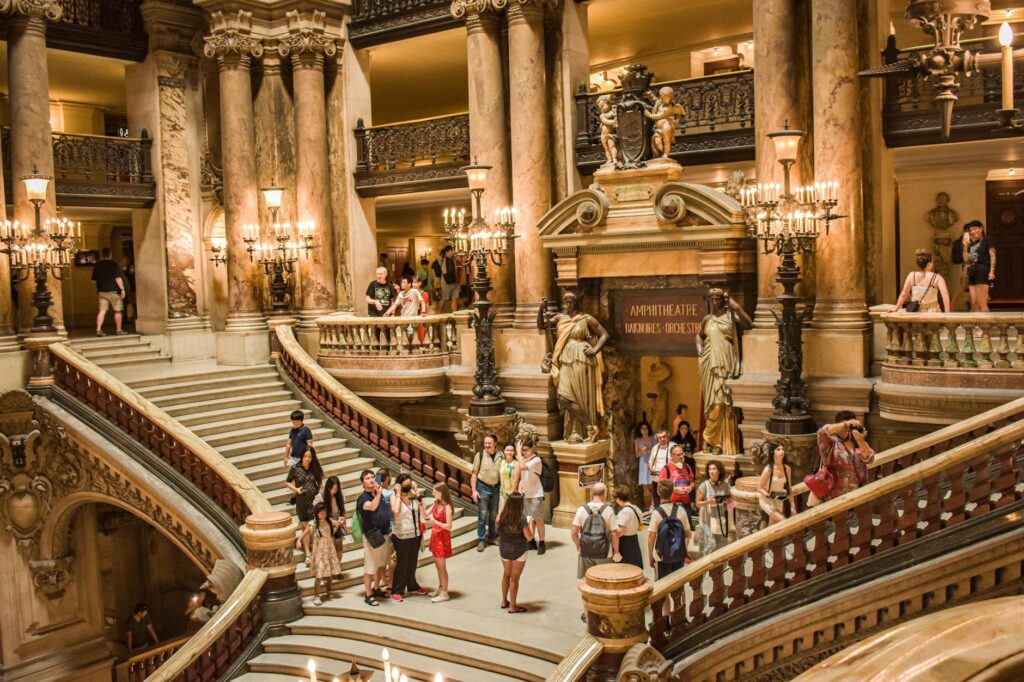
Consider the clock on a chimney-piece: a altar or shrine to that vanity of vanities, time. The clock itself is more than a time-keeper: in no fewer than gilded bronze, surrounded by allegorical figures Time destroying Love; or the four seasons elevates the mundane, relentless march of seconds into a philosophy, a testament to power. Time is reigned over, known. To own a clock was to be a rich man, and a confident one.
On each side, a pair of candelabra was evenly balanced, reaching out from the mantle to dominate the room like courtier to a monarch. Candles, of course, contained a paradox; they were both the thing that shone, and the thing that whittled away. They illuminated soirees, salon conversations, nocturnal plots and plans; they also carved away at each deliciously long second of a monarch‘s life, or a noble‘s reign. Eighteenth-century aristocrats carried on living by a candle that was already halfway to extinction.
Porcelain vases and figurines, particularly Sevres ones, sat on shelves and tables as if flecks of a more fragile world. Their pastel colors and fragile forms introduced a sweetness, seemingly edible, into hard-edged architectural rooms. A plaster shepherdess in a Parisian salon was a contained, sweetened new innocence in a web of intrigue.
Books, too, when displayed in neat ranks in a library, signaled not only intellectual taste but a particular relationship to knowledge: ordered, bound, domesticated. The printed spine became yet another decorative motif, but one that flattered the owner as cultivated, enlightened, modern.
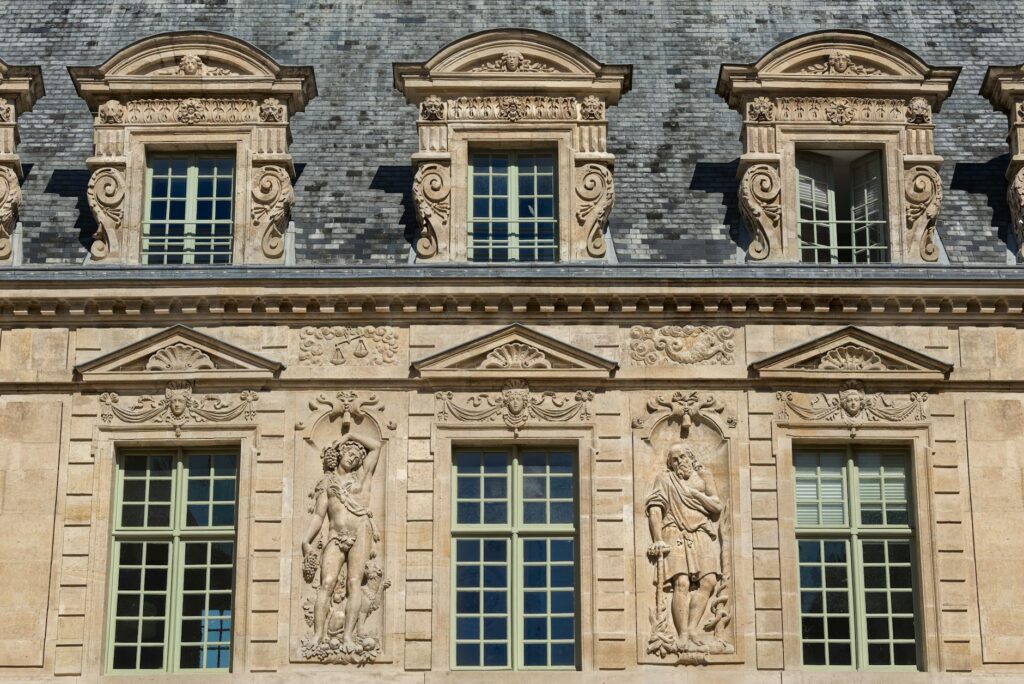
Every object in such a home operated on at least two levels: utility (however minimal) and self-definition. Together, they composed a portrait in things, more revealing than any oil painting.
Gilded Anxiety: What Luxury Tried to Hide
Behind all this radiance lay a quieter story: fear.
French aristocratic interiors glowed with certainty, yet they were also shelters against deep-seated anxieties—about mortality, about status, about the volatile favor of the court. Decoration became both armour and distraction.
Ancestors’ portraits along a staircase or in a gallery served, at least in some manner, as geneological proof: That‘s who we are, and this is the length of our stay. Yet, at another level, they served as spell binding us to survival: Every eye was a warning to the world that this species, as tender as this pillowy body, will not die.
Religion brought a further dimension. A prayer corner in a corner of an opulent suite, a crucifix hewn into the ceiling above one’s bed, a saint’s image in an ornate carved frame these objects cloaked spiritual hope in visual codes similar to those of worldly splendour. Faith was for the aristocrats as much a matter of display as private belief, borrowing the language of decoration into the soul.
And there was, especially in the eighteenth century, a strain of theatricality that was slightly suffused with melancholia. The kind of excess in surface pleasure rococo curves, overflowing stucco, giddy fantasies reached its own level of expectation, betraying sense that its world was fragile. The greater the instability the more it was compelled to interior GRACE, ELEGANCE.
Seen in hindsight, these rooms feel like beautifully arranged premonitions. Cracks would eventually run through the marble; the portraits would be slashed; the tapestries removed or sold. But at the moment of their creation, they tried—with color, light, and symbolism—to freeze a world that feared movement.
Why These Rooms Still Haunt Our Imaginations
Centuries later, we are still recreating echoes of those interiors: in films, in fashion editorials, in boutique hotels that promise “château-inspired” experiences. Why?
Part of the fascination lies in the clarity with which these spaces articulated power. Today, we live in a world where influence hides inside algorithms and discreet memberships; our own interiors are often styled to suggest casual ease rather than overt hierarchy. The French aristocratic interior, by contrast, is unapologetically structured. It shows us what it looks like when a society decides that beauty should be an instrument of social order.
There is also the sheer sensuality. Modern minimalism, with its clean lines and disciplined palettes, can feel like a retreat from emotional complexity. The rooms of the Ancien Régime revel in it: layered textures, charged colors, objects that almost seem to gossip. To look at them—whether in preserved châteaux, museum reconstructions, or period films—is to indulge in a kind of emotional maximalism we rarely permit ourselves in daily life.
But perhaps the deepest pull is psychological. These interiors offer a mirror—much like those gilded panels once did—to our own desire to compose ourselves through our environments. We may not line our walls with Gobelins tapestries, but we still use objects and spaces to build narratives: of taste, of success, of belonging. A carefully curated bookshelf in a small apartment, a single dramatic armchair, a candle on a marble tray—each is a democratic descendant of aristocratic self-fashioning.
The French aristocratic home, in all its shimmering complexity, reminds us that interiors are never neutral. They are confessions. Not only of what people can afford, but of what they fear, what they admire, and how they want to be seen.
To stand in such a room—even in imagination—is to hear those whispers of power and velvet: the rustle of silk, the ticking of a clock, the soft echo of a world that believed it could write its own eternity into plaster, gold, and light.
AI Notice: Some visual content in this article may have been created or enhanced using artificial intelligence (AI) for artistic, editorial or illustrative purposes. Learn more about our approach in our AI & Editorial Principles.