

Identifying Antique Dresser Styles Collectors Don’t Want You To Know
Many of us ignore tired looking antique dressers at estate sales or second-hand stores. Other people, sound collectors of antique furniture, see a find worth purchasing, receive it, and ultimately make thousands selling it again. It’s not luck that come between the two; it’s knowing how to recognize a vintage dresser. If you understand what features to search for when examining the style and hardware on an antique dresser, you will automatically understand which pieces to purchase and which to ignore as a cumbersome piece of outdated furniture.
Understanding styles will also help you on your shopping to help you not overspend, help you spot deals that others will not see, and know what is worth repairing. It may also help keep you healthy: many older finishes and fabrics contain lead or other toxins you do not want to bring home with you. This article will help you identify the major dresser styles, clues to be aware of, and what to avoid.
Start With the Basics: Is It Really Antique?
Can You Name the Masterpiece?
Ten masterpieces. Ten questions. How well do you know the history of art?
Before diving into specific styles, you need to decide if a dresser is actually antique (typically 100+ years old), just vintage, or a modern reproduction.
Key signs of age
Look closely at these details:
- Joinery (how the wood pieces are joined):
- Hand-cut dovetails are irregular, slightly uneven, and usually found on pre-1860 drawers.
- Machine-cut dovetails are very regular, with identical spacing, common from the late 19th century onward.
- Tool marks:
- Hand-planed surfaces may show subtle ripples or slight unevenness.
- Saw marks running straight (from a circular saw) often indicate later manufacture.
- Drawer bottoms:
- Older drawers often have solid wood bottoms, sometimes running front to back and attached with small nails.
- Plywood or particleboard almost always means 20th century or later.
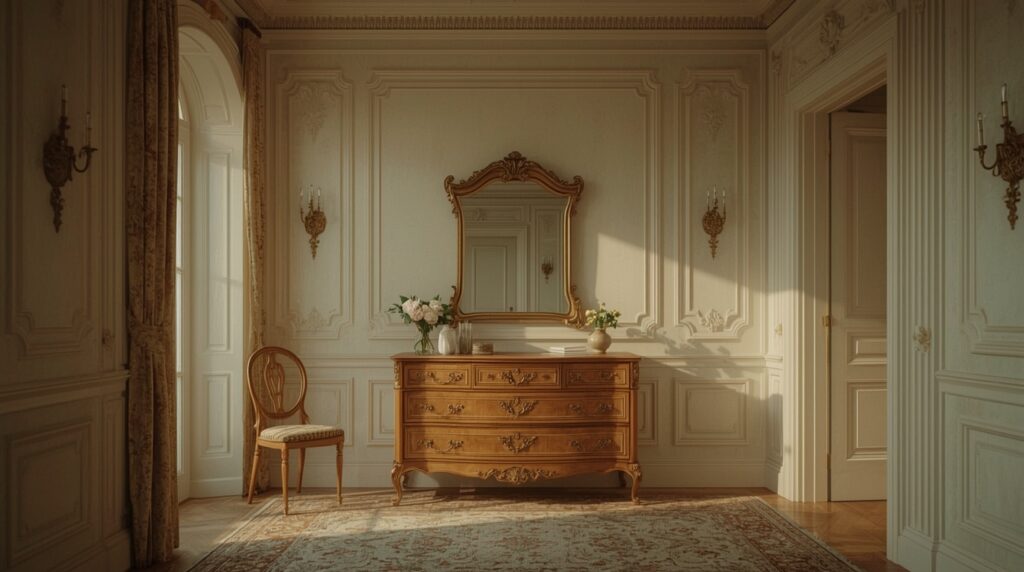
What this means for you
Understanding age helps you:
- Avoid paying antique prices for modern repros.
- Decide whether restoration is worth the effort.
- Recognize when something is “period style” but not truly old.
When to be concerned
Can You Guess the Artist?
Three clues. One artist. How quickly can you identify the painter?
If a seller claims an 18th- or early 19th-century date, but you see:
- Perfectly uniform machine dovetails
- Plywood components
- Modern screws and staples
…then approach with caution. Either the piece is misdated, heavily altered, or simply not what it’s claimed to be.
Early American & Colonial Dressers: Understated and Valuable
Early American and Colonial-era dressers (late 1700s to early 1800s) are less common but can be extremely valuable.
How to recognize the style
These tend to be simple and functional:
- Woods:
- Maple, cherry, walnut, and sometimes pine for secondary wood.
- Design traits:
- Straight lines, minimal ornament.
- Turned or simple bracket feet.
- Limited carving; any decoration is usually restrained.
- Hardware:
- Brass pulls, sometimes with simple backplates.
- Hardware may be slightly irregular from hand-casting.
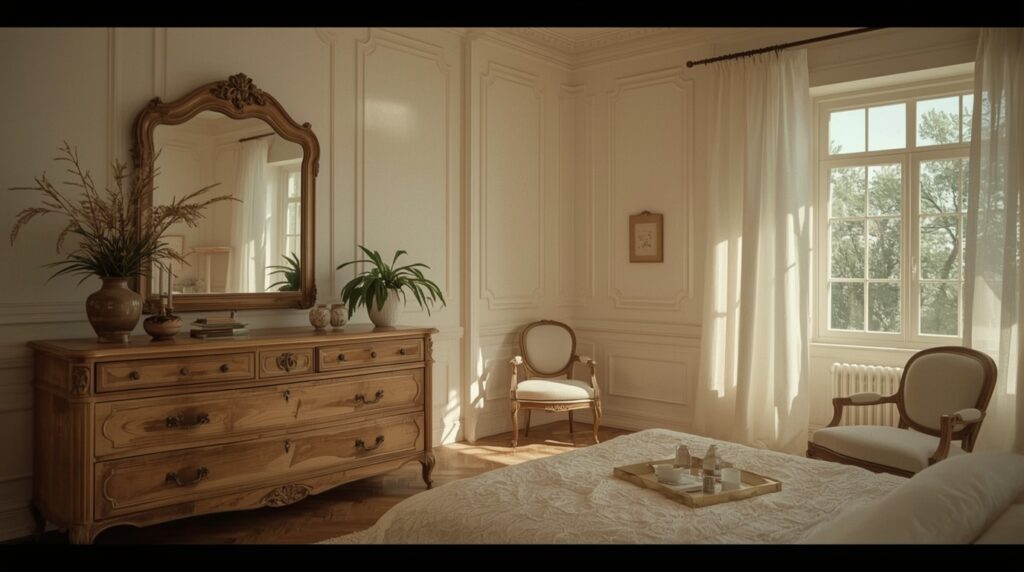
Practical tips for spotting them
- Seek out time-oxidized, concentrated dark colored hardwood with a warm inward feeling of a rich, dark patina (not the gloss and flat sheen appears from a sprayed coat).
- Verify for hand cut dovetails. Verify for hand planed drawer sides.
- Check the back and underside: they should be present but rougher and done to a lower standard by craftsmen of this period.
What to do if you find one
- Don’t rush to refinish. Stripping the old finish can dramatically reduce value.
- Clean gently with a mild wood cleaner and soft cloth.
- If you suspect it’s very early or important, consider an appraisal from a reputable antiques dealer before doing anything major.
When to be concerned
- Remove all drawers from car which have odour and/or appear to have moldy inside and keep them outside or in a ventilated space.
- The mold could be considered an irritant to the respiratory system, as the CDC does recommend ventilation and protection when working with moldy old wood. When in doubt, speak to a professional restorer.
Victorian Dressers: Ornate, Heavy, and Often Overlooked
Victorian-era (circa 1837–1901) dressers are some of the most recognizable but often misunderstood styles.
Distinctive features
Victorian pieces love drama:
- Design traits:
- Curved fronts, high backs with mirrors, carved crests.
- Elaborate moldings, scrolls, and applied decorations.
- Woods and finishes:
- Walnut, mahogany, rosewood veneer on cheaper secondary woods.
- Dark, glossy finishes.
- Hardware:
- Decorative brass pulls or sometimes early pressed glass.
Practical value
Collectors know that many people shy away from Victorian dressers because they look “too heavy” for modern interiors. That can mean bargains for those who recognize quality:
- Examine veneer carefully; quality Victorian veneer is thin and carefully applied.
- Check mirror glass: very wavy, slightly imperfect glass can indicate older mirrors.
What this means for you
- If well constructed, a sturdy Victorian dresser will last for generations.
- Modernize the appearance over time with subtle alterations (such as modern hardware) that keep the base design unchanged. Never alter the original model always store the old hardware away in order to do this.
When to be concerned
- Loose veneer: Widespread veneer loss can be expensive to repair.
- Lead-based finishes: Older paints and some varnishes may contain lead.
- Health authorities like the World Health Organization and CDC both highlight the dangers of lead exposure, especially for children and pregnant individuals.
- If you see chipping or flaking painted surfaces, avoid sanding without proper protective equipment and ventilation. When in doubt, consult a professional about testing or safe removal.
Art Nouveau & Arts and Crafts: Subtle, Underpriced Winners
Early 20th-century dressers often fall into two overlapping categories: Art Nouveau and Arts and Crafts (or Mission style). These are favorites of people who like clean lines and high craftsmanship.
Art Nouveau clues
Art Nouveau (around 1890–1910) favors organic curves and nature-inspired motifs:
- Rolling lines and fluid lines illustrated by the drawers fronts or the mirror frames.
- Figures of flowers, of horses, chariots, vines or stylized.
- Quite simple otherwise. mixture of curves
Arts and Crafts / Mission style clues
Arts and Crafts dressers are simpler and more geometric:
- Design traits:
- Straight lines, little ornament, visible joinery.
- Strong, sturdy legs; often rectilinear forms.
- Woods:
- Oak is very common, especially quarter-sawn oak with visible ray fleck.
- Hardware:
- Simple, sometimes hammered metal pulls, often in dark finishes.
Practical advice
- These items fit into current living styles so they are still very usable.
- If the finish is intact but appears dull, stick to the cleaning and waxing regiment.
- Look for maker‘s marks: certain Arts and Crafts workshops are much in demand.
When to be concerned
- Overly perfect surfaces can signal a full modern refinish, which may lower collectability.
- If structural joints are loose, budget for repairs — but these styles are usually worth fixing due to their solid construction.
Art Deco Dressers: Geometric, Glam, and Rising in Value
Art Deco (roughly 1920s–1930s) dressers are increasingly sought after, especially as mid-century modern collectors start looking slightly earlier.
Recognizing Art Deco
Art Deco is bold and graphic:
- Design traits:
- Strong geometric shapes: stepped fronts, chevrons, sunbursts.
- Mix of curves and sharp angles.
- Materials:
- Exotic veneers like burled walnut, bird’s-eye maple, or other figured woods.
- Sometimes mirrored panels or chrome hardware on later pieces.
- Hardware:
- Streamlined pulls, sometimes with a machine-age look.
Why collectors like them
- They bridge the gap between traditional and mid-century modern styles.
- Many have striking veneer patterns that make them statement pieces.
Practical tips
- Inspect veneers very carefully; chips and big missing areas are hard to disguise.
- Check drawer movement — smooth travel often indicates well-preserved construction.
- A gentle clean and careful scratch blending can often revive the look without full stripping.
When to be concerned
- Some of the early Lacquer Art Deco finishes may be the culprit, as lacquers tend to break down or off gas unpleasant odors in time.
- If you smell a powerful chemical aroma, take the dresser outside or to a well-ventilated space. If the smell still lingers after a few days, consider having it tested before placing it in a living area, particularly if you have a respiratory disorder.
Mid‑Century Modern Dressers: Sleek Lines, Serious Competition
Mid-century modern (roughly 1940s–1960s) isn’t old enough to be antique by strict definition, but many dressers from this era are now highly collectible and often mistaken for newer furniture.
Key style markers
- Design traits:
- Clean, low profiles; minimal ornament.
- Tapered legs, sometimes splayed.
- Integrated pulls or very simple hardware.
- Woods and finishes:
- Teak, walnut, and rosewood veneers are common.
- Often lighter or medium-tone finishes, not heavy varnish.
Practical value for you
- These dressers are easier to integrate into modern homes than most earlier styles.
- Many people mistake real mid-century pieces for cheap “old” furniture, so deals still exist in local markets and online listings.
What to look for
- Labels or stamps from known makers (e.g., American, Scandinavian, or branded manufacturers).
- Solid drawers and high-quality veneer with consistent grain patterns.
When to be concerned
- Water damage and veneer lift are typical problems
- Early Core of Particleboard may crumble: If the sides or bottom are spongy or flaky, then be cautious.
- The off-gassing from an older finish such as paint, glue or vinyls (carpets) may be a slight concern, always ensure pieces are aired out before putting in bedrooms for children to play on.
Health agencies like the WHO and national public health bodies often note that indoor air quality can be affected by older building materials and finishes. The same logic applies to older furniture: good ventilation and cautious sanding practices are smart.
Practical Checklist: How to Assess Any Dresser in Minutes
When you’re standing in a shop or browsing an online listing, you don’t have hours to research. Use this quick process:
Check construction
- Dovetails: hand-cut vs. machine-cut.
- Solid wood vs. plywood/particleboard.
- Drawer bottoms: solid boards or thin composite?
Identify style cues
- Curvy and ornate? Think Victorian or Art Nouveau.
- Straight, sturdy, simple? Early American or Arts and Crafts.
- Geometric and bold? Likely Art Deco.
- Low, clean, tapered legs? Mid-century modern.
Examine hardware
- Original brass or glass vs. modern replacements.
- Screw type: older slotted screws vs. newer Phillips/Robertson can hint at age.
Look for issues
- Major veneer loss, severe splits, or active mold.
- Strong chemical or musty odors.
- Insect damage (tiny exit holes, frass).
Decide on value for you
- Does it fit your home and needs?
- Are repairs within your budget and skill level?
- Are you buying for use, for resale, or both?
Turn “Old Furniture” Into Informed Choices
Identifying antique dresser styles isn’t a secret code reserved for dealers. By paying attention to construction, style cues, hardware, and condition, you can quickly sort true antiques from reproductions and recognize which eras match your taste and budget.
For everyday buyers, this knowledge means avoiding costly mistakes, choosing safer pieces for your home, and spotting quality where others see only clutter. For aspiring collectors, it’s the foundation for making smart, confident purchases. Start practicing on dressers you already own or see in thrift stores; the more you look, the faster those “hidden” styles will reveal themselves.
AI Notice: Some visual content in this article may have been created or enhanced using artificial intelligence (AI) for artistic, editorial or illustrative purposes. Learn more about our approach in our AI & Editorial Principles.