Why Romanticism in Fashion Is Everywhere Again—and What It Really Means
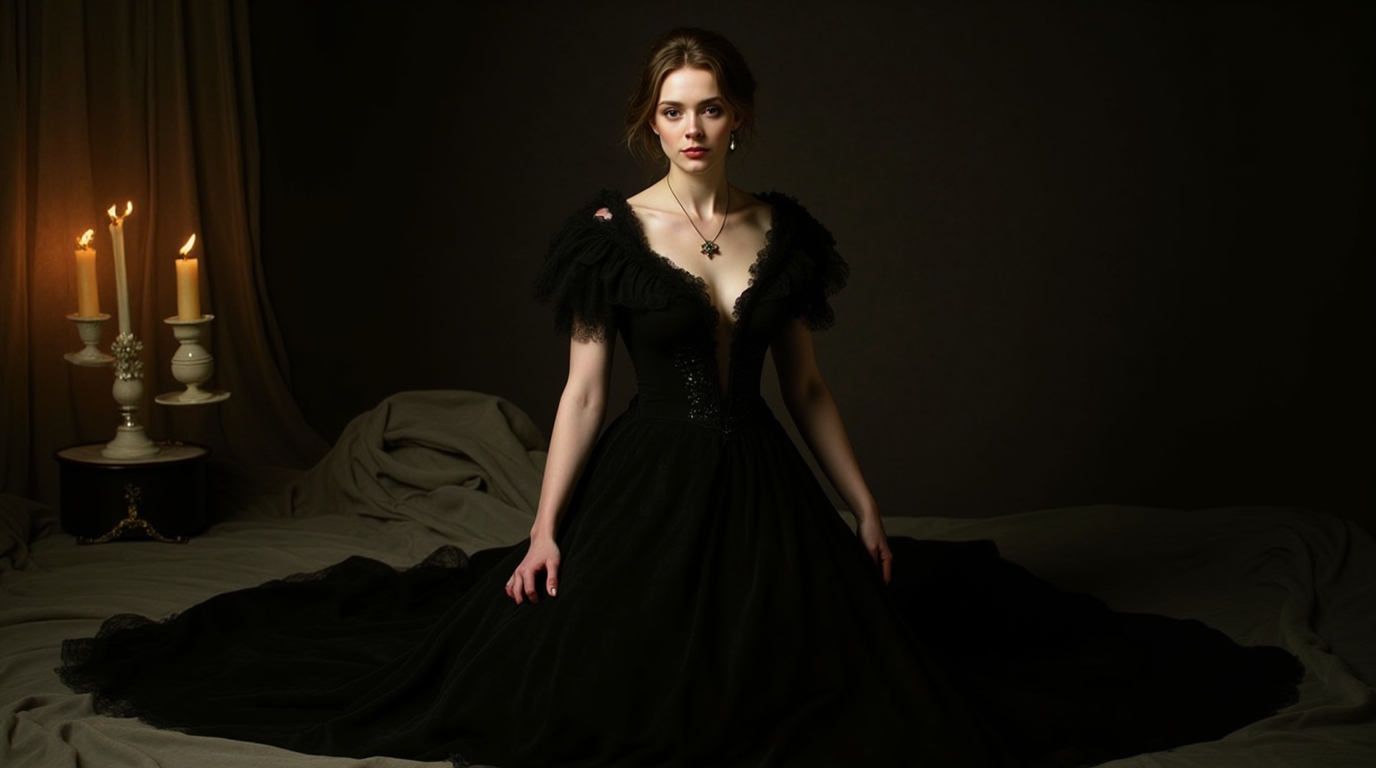
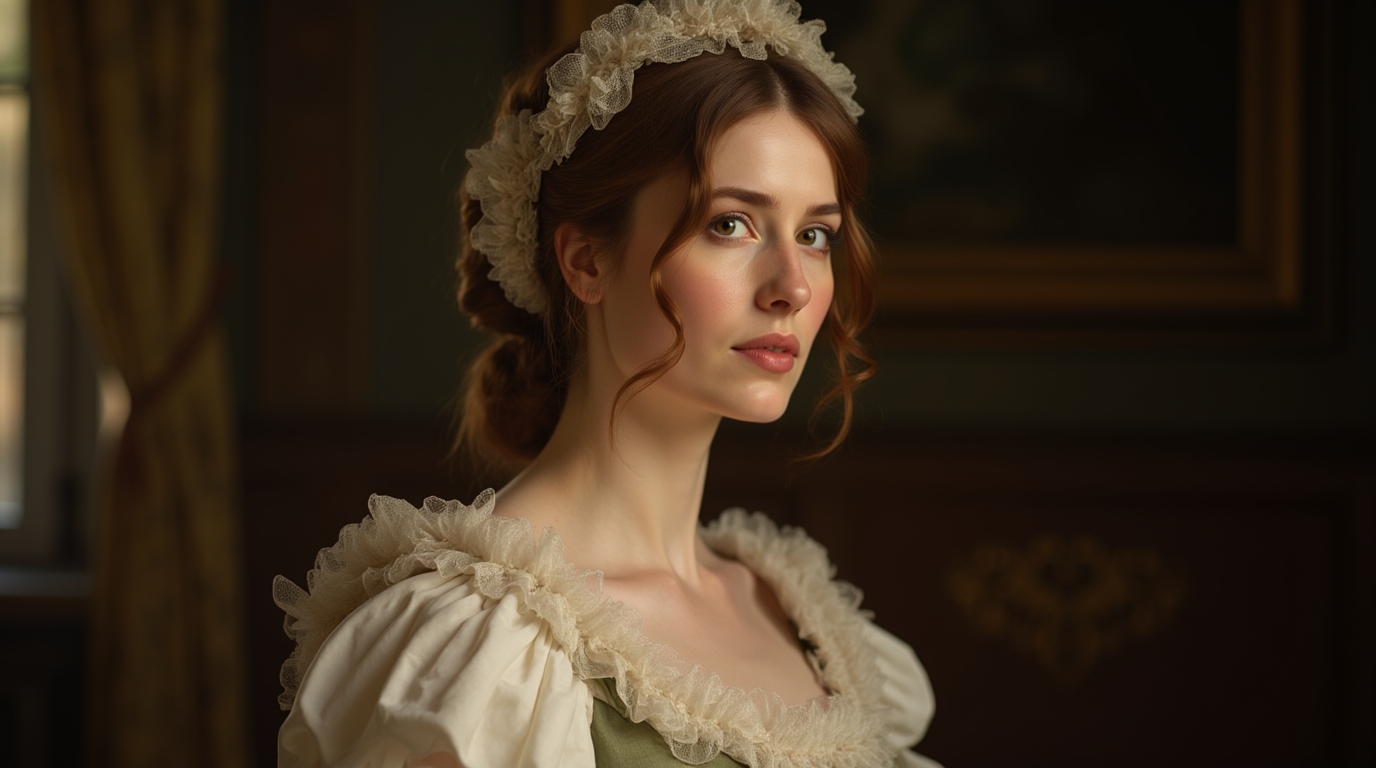
Romanticism in fashion is more than lace, ruffles, and wistful silhouettes—it is clothing used as a language of emotion, individuality, and longing. In the early 19th century, as Europe and America wrestled with revolution, industrialization, and changing social ideals, dress became a visible stage for the Romantic imagination: sleeves swelled like storm clouds, colors deepened, and historical references appeared in fabrics and trims as wearers searched for meaning beyond the purely rational. Today, designers return to Romanticism whenever culture craves beauty, drama, and feeling—proof that this aesthetic is not a passing trend but a recurring way of seeing the world.
What Romanticism Means in Fashion (and Why It Emerged)
Romanticism was a broad cultural movement that flourished roughly from the late 18th century into the mid-19th century, strongly associated with literature, painting, music, and philosophy. In fashion, Romanticism is best understood as an emphasis on emotion and expressive form—clothing that communicates sensitivity, melancholy, heroism, nostalgia, or intimacy. Museums frequently describe this era’s dress in terms of silhouette and sentiment: the rise of historically inspired detail, heightened surface ornament, and dramatic proportion. The Metropolitan Museum of Art’s Heilbrunn Timeline of Art History, for example, situates early-19th-century fashion within rapidly changing artistic and social currents in Europe and the United States (The Met).
Can You Name the Masterpiece?
Ten masterpieces. Ten questions. How well do you know the history of art?
No expression of a movement, can be understood without a context of concrete historical conditions. Emerging out of the aftermath of the French Revolution (1789–1799) and the era of Napoleon (1799–1815), European states returned to a period of nation building, reconstructions, and identity politics, in which cultural self-definition was sought. Concurrently, the Industrial Revolution increased the mechanization of textile production a development which greatly expanded the availability of cottons, printed fabrics, and, after around 1825, mechanically manufactured trimmings. Romantic fashion like nearly all aspects of the Romantic movement contained certain discontinuities: it can be both village and factory, hand-made and mechanized.
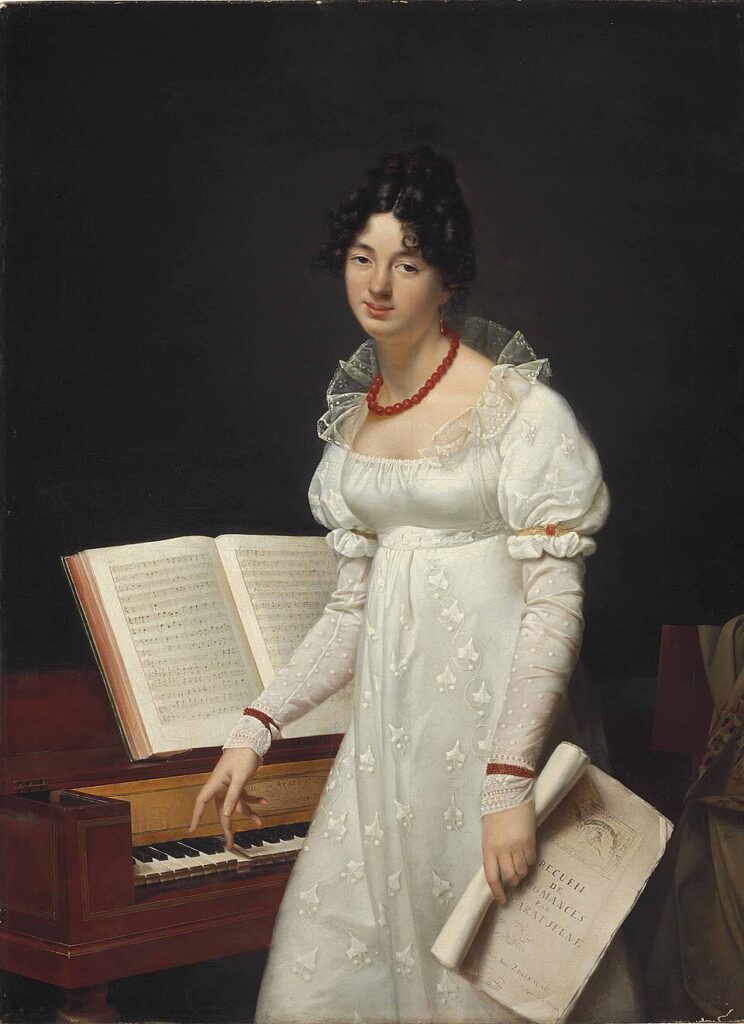
As shows by institutions like the V & A (London) and the Met (New York), we see how dress in the period also articulated these new notions of femininity and masculinity. Women’s dress shifted from the high-waisted neoclassical ‘Empire’ line toward the much broader and more structured silhouette of the 1830s, while men‘s fashion became more precisely tailored, with more pronounced shoulder shapes. As the V & A‘s own fashion histories suggest, dress in the period became one of the most conspicuous signs of social distinction and status, governed by standards of decorum as much as beauty:
The Romantic Silhouette: Structure, Volume, and Sensibility
The most recognizable Romantic silhouette in women’s fashion appears in the 1820s–1840s: a natural waistline returns, skirts widen, and sleeves expand into the iconic gigot (leg-of-mutton) shape by the 1830s. These forms were not random exaggerations; they created a theatrical outline that matched Romantic art’s taste for drama and heightened emotion. Surviving garments in museum collections demonstrate the engineering behind the look—careful gathering, interlinings, stiffened supports, and strategic seaming to control volume.
Can You Guess the Artist?
Three clues. One artist. How quickly can you identify the painter?
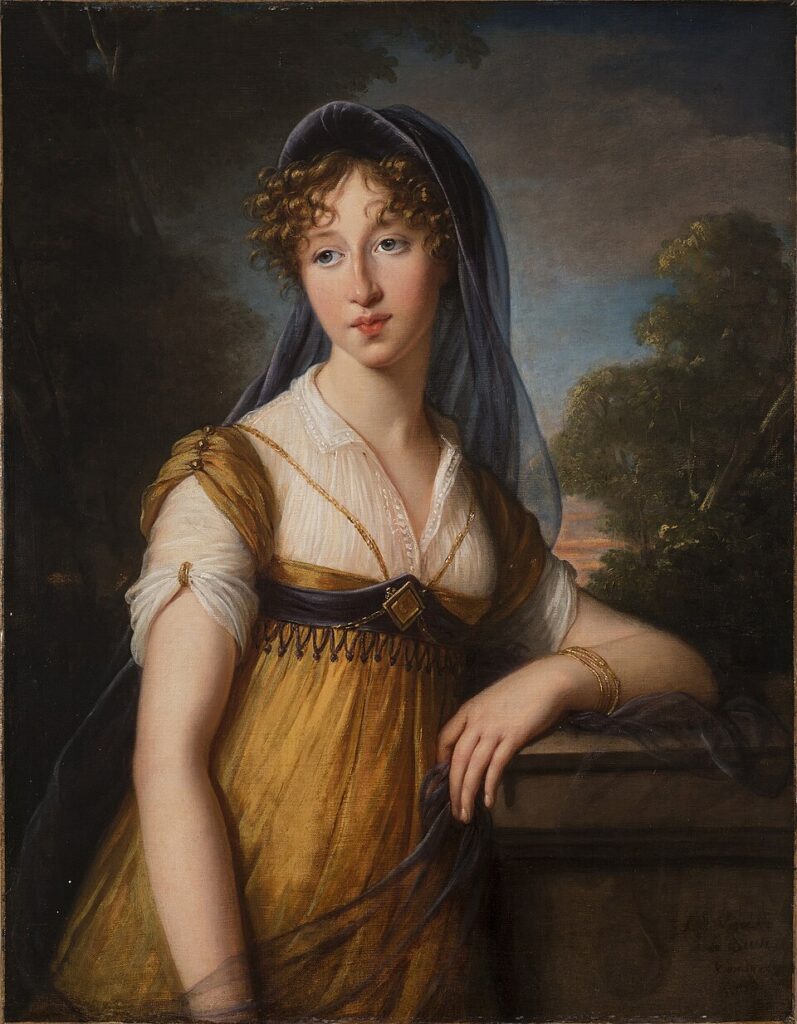
It was also a period of significant surface adornment as ribbon trims, embroidery, pleating, ruching, lace and other adornments represented the placemaking of a expressed emotion and sentiment, while accessories such as cachets, capes, shawls, gloves and bonnets forged a finely designed image. Exhibited in the decorative art collection of the Louvre Museum and contemporary images of European dress provide evidence that dress was part of an overall material culture in which a concern of artisanship, symbolism and historical associations (Louvre Museum).
Men‘s Romantic Garments are perhaps the most easily ignored by-parts of the movement; they are, after all, an incidental element of the style. But men‘s garments were central to how the movement could be expressed fully: the tailoring was the sophisticated result of a trend that had developed across the city of London through the first few decades of the 19th century, the stiff, fitted waists, sharply cut coats and carefully curved collars. The combination of yield and charisma: the serious black wool broadcloths with the scrupulously white linen, cravats and glossy black boots. The look echoes the way in which Romantics sought to sculpt the self the controlled exterior hiding the turmoil within.
Key Characteristics of Romanticism in Fashion (Summary Table)
| Dimension | Romantic Characteristics in Fashion | Typical Era/Examples |
|---|---|---|
| Silhouette | Dramatic volume; emphasized shoulders and sleeves; widening skirts | 1820s–1840s, especially 1830s gigot sleeves |
| Materials | Fine cottons, silks, wools; growing access to trims via industry | Britain/France textile expansion, early industrial production |
| Decoration | Lace, ribbon, ruching, embroidery, florals; sentimental detail | Day dresses, evening bodices, ornate outerwear |
| Color & Mood | Deeper hues, contrasts, and “poetic” palettes alongside pastels | Portraiture and fashion plates of the 1830s–1840s |
| Cultural References | Medievalism, pastoral ideals, historic revival elements | Gothic/medieval revivals, folk influences |
| Social Meaning | Clothing as moral and emotional presentation of the self | Courtship, respectability, and class signaling |
Institutions, Evidence, and What Museums Show Us
Romanticism in fashion is best studied through surviving garments, fashion plates, paintings, and letters—exactly the types of evidence preserved by major institutions. The Metropolitan Museum of Art’s Costume Institute provides a particularly strong record of 19th-century dress in Europe and America, illustrating how construction techniques, imported textiles, and local taste intersected. The Met’s scholarly essays repeatedly emphasize that fashion history must be read through material evidence, not just modern assumptions (The Met).
The Victoria and Albert Museum provides the backup of experts, in particular about textiles, design tuition and British made. London‘s position as a commercial, cultural hub insured that people would have come across, in department stores, print culture and tailors, ideas of Romanticism. The closer look in a Museum study room at a period corset or a mans coat makes the concept of Romantisim more concrete. There is evidence of repair, of repairs, and wear that shows them to be lived objects as opposed to costume.
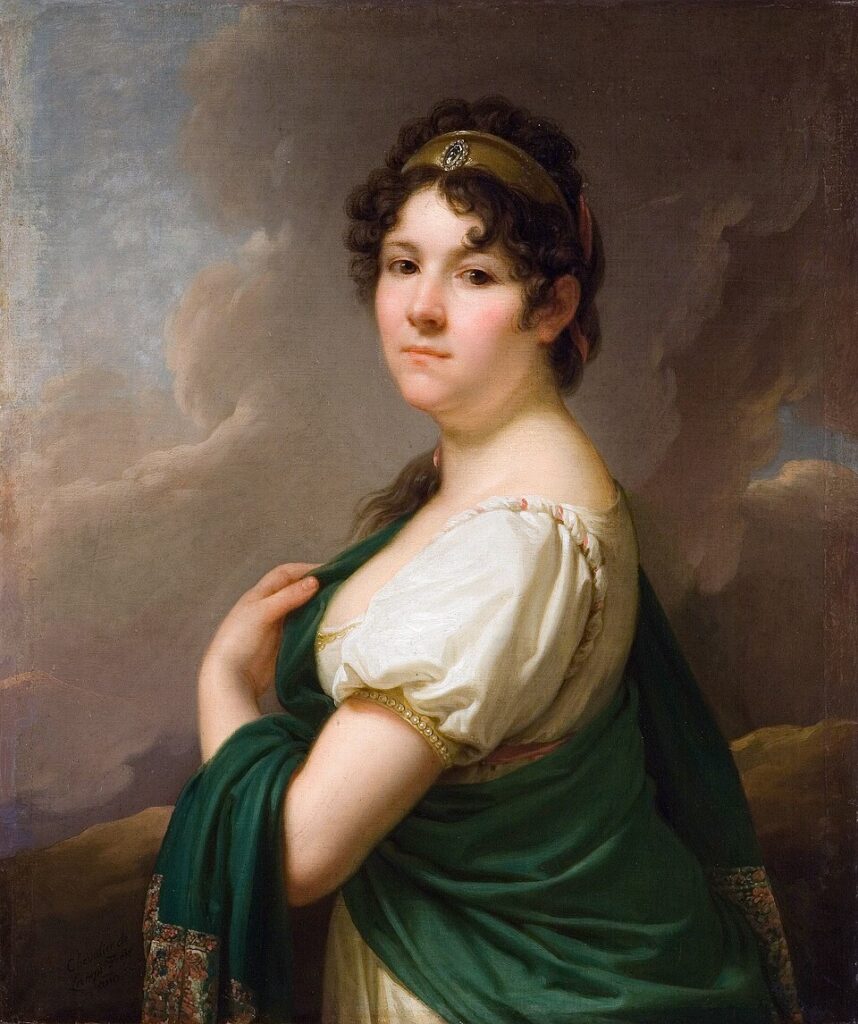
The Smithsonian Institution assists in establishing links between Romantic fashion and social history more generally, such as technology, concepts of gender, or life in the United States. This is significant because Romanticism did not only exist in Parisian salons or aristocratic portraiture. Even across the Atlantic, new ideas about domesticity and respectability began to influence what people wore as mass production for ready made clothing began to grow.
Romanticism’s Modern Revival: Designers, Runways, and Cultural Cycles
Romanticism returns in fashion whenever culture swings toward feeling, fantasy, and individual expression. In the late 20th and early 21st centuries, designers have repeatedly mined Romantic codes—billowing sleeves, corsetry, florals, historical references, and a mood of “beautiful melancholy.” This is not mere nostalgia; it is a deliberate strategy to create emotional impact. As Anna Wintour famously put it, “Fashion is not beautiful, nor ugly. Why should it be? Fashion is fashion.” The point is that fashion communicates values—and Romanticism communicates intensity.
Contemporary Romanticism is apparent in the paradox of translucence and rigidity. Contemporary designers combined gossamer and bias-cutting with corset- and underwire-like shaping, reflecting 19 th century associations of craft with structure. This expressively unstable design principle mirrors life today, where consumers seek both warmth and truthfulness alongside entertainment and change. In this way, a Romantic lexicon is updated with new textiles, technical patterning and worldwide imagery.
Meanwhile, contemporary shifts are opening space for ethic and interpretive considerations serious fashion writing will need to address. Romantic Garments were connected to class privilege, gender conformity, and through the global cotton economy systems of capital that involved the major exploitation. Museums and researchers contextualize wearable objects more and more against historical circumstances, and less and less as ornament. And this applies the critical tool more often to Romanticism, not less: it ensures the tradition‘s continued pertinence as a way to think about society.
Frequently Asked Questions
1) What years define Romanticism in fashion?
Romantic-era fashion is most strongly associated with the period from the 1820s through the 1840s, though Romantic ideas begin earlier in the late 18th century and continue influencing later revivals.
2) What is the most recognizable Romantic fashion element?
For women’s dress, the 1830s gigot (leg-of-mutton) sleeve and widened skirt are among the most iconic features. For men, the era’s refined tailoring and shaped coats are key.
3) Which countries most shaped Romantic fashion?
France and Britain were central (Paris for fashion leadership; London for tailoring and textile commerce), but Romantic fashion also developed distinct expressions in the United States and across Europe.
4) How do we know what people really wore?
Through surviving garments, paintings, fashion plates, and written records preserved by institutions such as The Metropolitan Museum of Art, the Victoria and Albert Museum, and the Smithsonian Institution.
5) Is “Romantic” fashion the same as “Victorian” fashion?
They overlap but are not identical. Romantic fashion is strongest in the early Victorian era (from 1837 onward in Britain) and in the decades immediately before it. Victorian fashion continues and changes significantly after the 1840s.
Sources (Credible Reference Points)
- The Metropolitan Museum of Art (Heilbrunn Timeline of Art History; Costume Institute collections and essays): https://www.metmuseum.org/
- Victoria and Albert Museum (Fashion and textile collections; historical context): https://www.vam.ac.uk/
- Smithsonian Institution (American social history collections and scholarship): https://www.si.edu/
- Louvre Museum (Decorative arts and material culture context): https://www.louvre.fr/
Romanticism in fashion is the art of wearing emotion: a historically grounded aesthetic born in the upheavals and inspirations of the early 19th century, preserved in museum collections, and revived whenever culture seeks drama, tenderness, and meaning. By studying real garments and the institutions that safeguard them, Romantic fashion stops being a vague “vintage look” and becomes what it has always been—a powerful statement about how people want to feel, and how they want to be seen.
AI Notice: Some visual content in this article may have been created or enhanced using artificial intelligence (AI) for artistic, editorial or illustrative purposes. Learn more about our approach in our AI & Editorial Principles.