
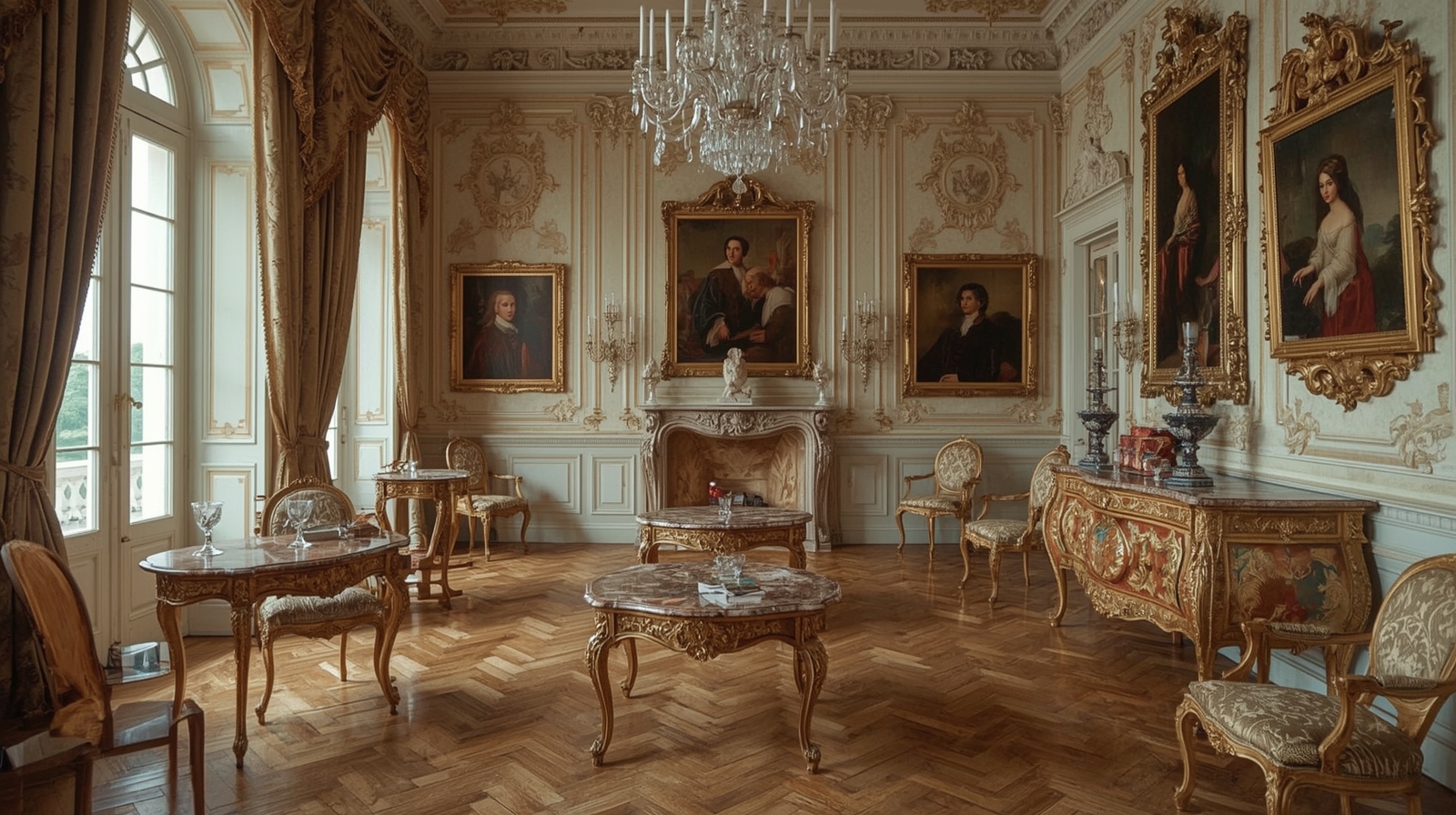
Curved legs, carved wood, plush cushions, a quiet grace – they look much alike at first sight. Still, those who had them made wouldn’t mix one up with another. Back then, in a room where talk flowed like wine, sitting down in the wrong chair could mean saying something without words.
A single misstep in seating spoke louder than speech. Furniture like that one pulled people together, just by being there.
Can You Name the Masterpiece?
Ten masterpieces. Ten questions. How well do you know the history of art?
A curved back welcomes quiet moments. Soft fabric holds whispers of past days. This seat shaped space for hushed talks. Wood arms cradled thought between pauses.
A curved back rises gently, holding space like a quiet note in air. Legs arch outward, shaped by time yet standing without effort. Upholstery follows form, smooth but never stiff.
Gilding catches light just once, then lets go. Balance lives here, not forced, simply there. Not just ornaments on a shelf, these items had jobs to do. Built for specific ways people move through space.
Can You Guess the Artist?
Three clues. One artist. How quickly can you identify the painter?
Today it matters less where they came from, more how they fit into the flow of now. When their original purpose clicks, choices line up without confusion.
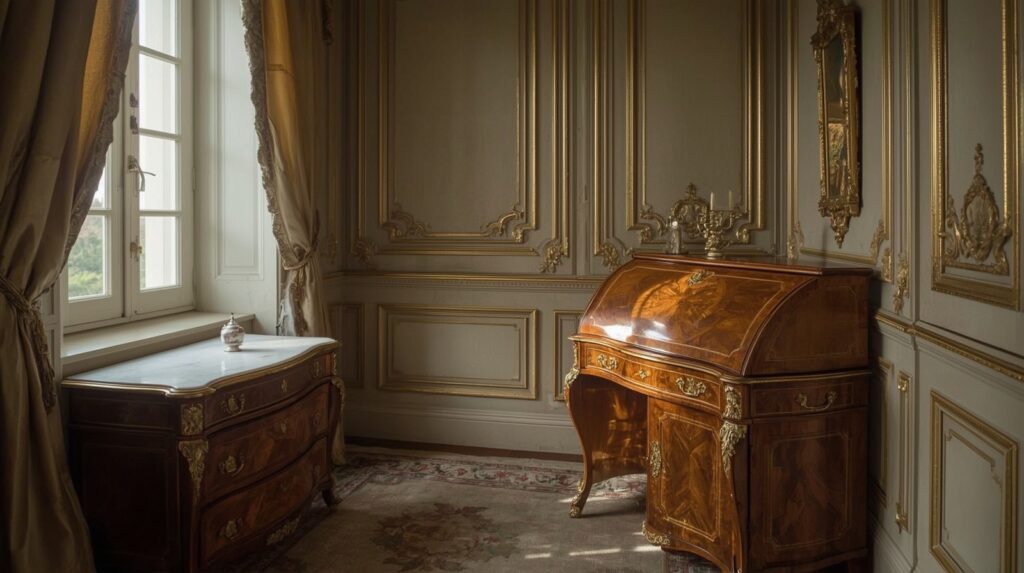
The social logic behind seating
French interiors of the mid-1700s were organized around conversation rather than display. People sat facing one another rather than facing authority. Furniture therefore defined distance between individuals.
| Seating Type | Historical Purpose | Modern Equivalent Feeling |
|---|---|---|
| Sofa | Shared interaction | Lounge or family seating |
| Bergère | Protected personal space | Reading chair |
| Armchair | Formal comfort | Guest or accent chair |
Every louis xv style chairs category comes from this behavioral distinction — not from decorative preference.
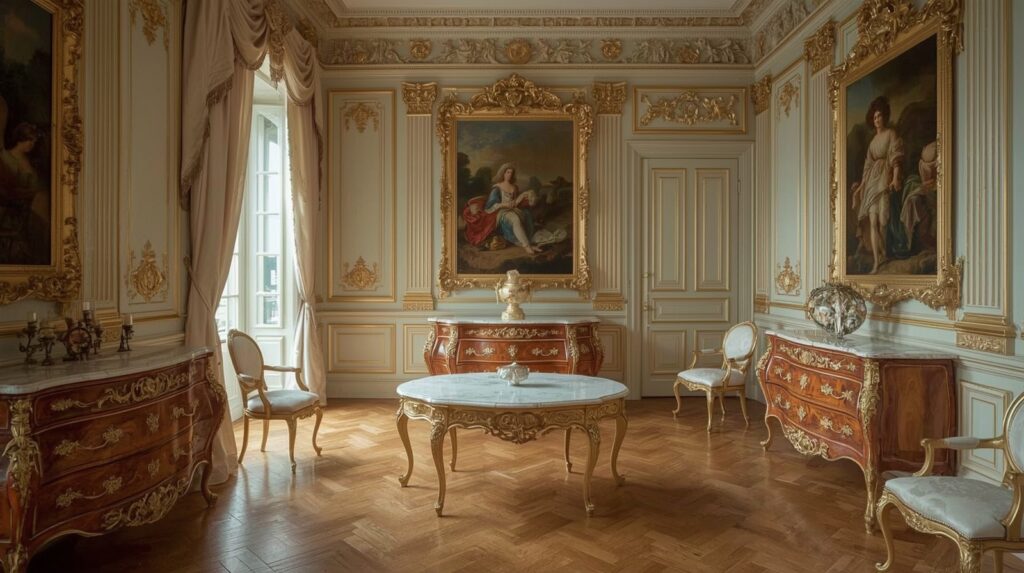
The louis xv sofa — conversation as architecture
Around the time chairs were common, something shifted. Conversation started to matter more than order. The louis xv sofa showed up once that need grew clear.
People wanted to sit together without one person seeming above another. Hosts stopped arranging visitors by importance.
A flat surface changed how gatherings felt. Curving gently inward, the Louis XV sofa stands apart from older bench styles. Because of its shape, folks face each other without thinking.
Not meant for showing off, it’s built for sharing space. Sitting here feels less like performance, more like conversation.
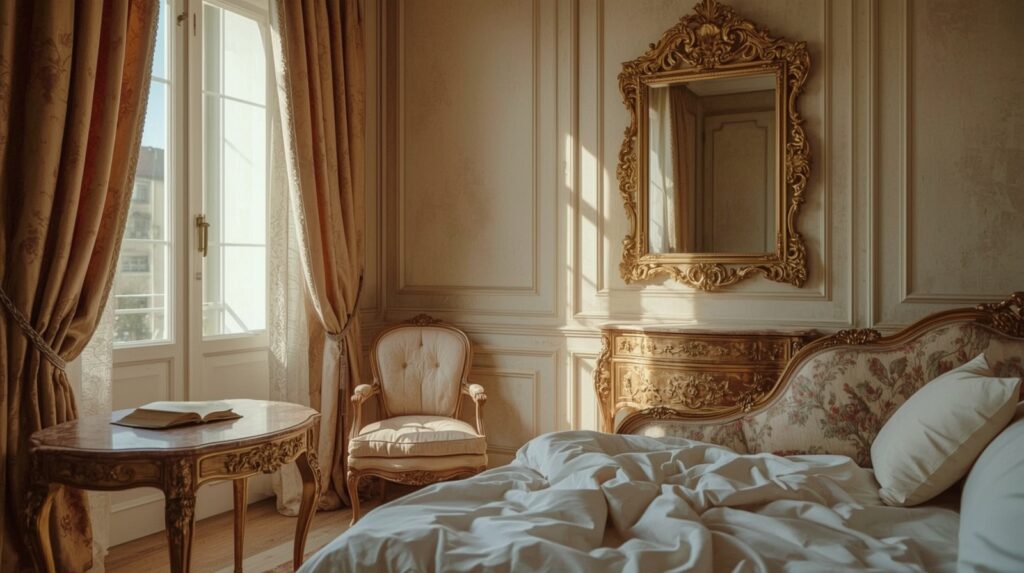
What defines a true louis xv couch
- Cabriole legs supporting a light frame
- Continuous upholstered back
- Moderate depth (shallower than modern sofas)
- Carved crest rail, often asymmetrical
The important feature is proportion. Original pieces were designed for upright comfort — ideal for discussion, less ideal for sprawling.
When it works best today
- Living rooms meant for conversation
- Elegant apartments with moderate space
- Homes where guests sit formally rather than lounge
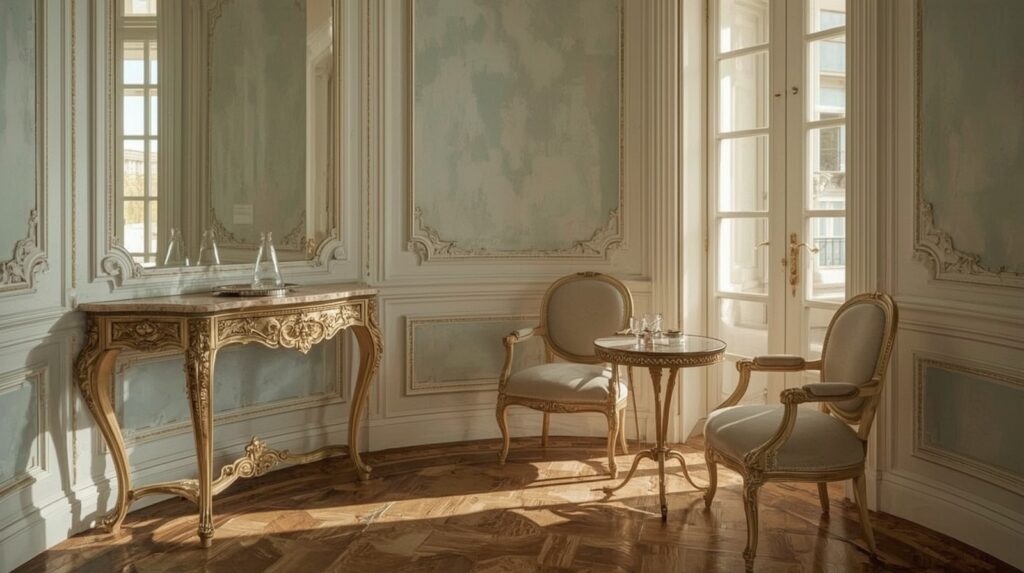
When it doesn’t
- TV-centered rooms
- Deep relaxation seating areas
- Minimalist interiors lacking other classical elements
The louis xv bergere chair — intimacy and enclosure
Inside French antique chairs from the Louis XV era, the bergère stands out by feeling oddly personal. Cushioned panels wrap around like quiet walls.
A person who sits there shows presence but stays shielded. Hidden arms offer comfort without announcing it.
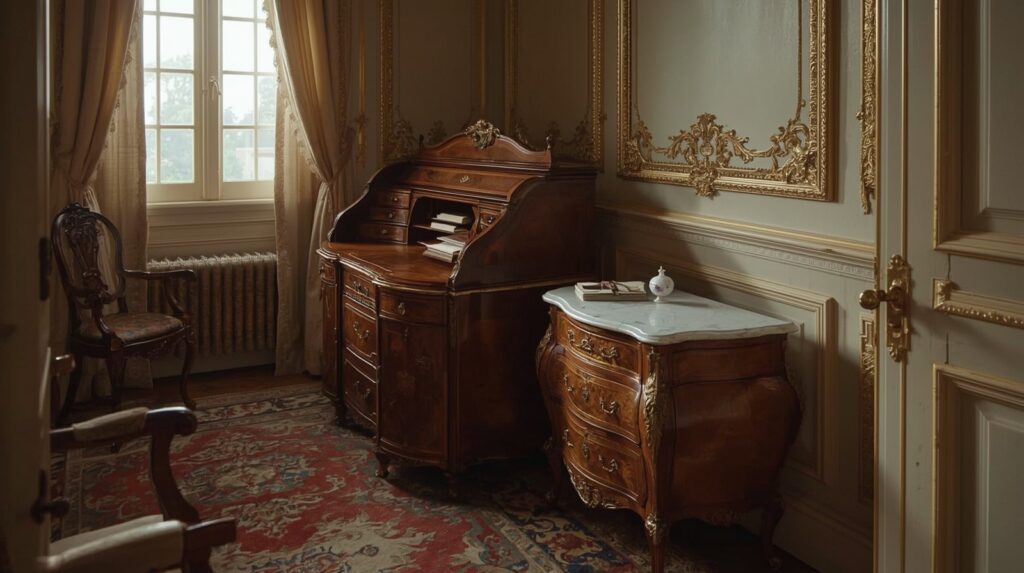
At first, people used it for reading books, writing letters, or quiet talks. Sitting there showed you were around, yet not open to being disturbed.
| Feature | Effect |
|---|---|
| Closed upholstered arms | Sense of enclosure |
| Deep seat cushion | Extended comfort |
| Low seat height | Relaxed posture |
| Wide back | Visual softness |
The bergère does not dominate a room; it absorbs it.
Best modern use
- Reading corners
- Bedrooms
- Fireplace seating
- Quiet spaces within large rooms
It works poorly as formal guest seating because it encourages staying too long.
The louis xv style armchair — balance between form and ease
Comfort mattered, yet so did looking proper. That’s why the open-arm fauteuil found its place. Often named after Louis XV, it balanced ease with dignity.
Sitting felt good, but slouching stayed out of reach. Wooden arms stayed bare and unblocked. Garments flowed freely, then full skirts, now modern clothes, never pinched or pressed.
Once upon a time, salons reached for this chair first – its design handled quick stops just as well as slow lingering. From brief touch-ups to hours of talking, it stayed steady without calling attention to itself.
Characteristics of a louis xv style armchair
- Exposed wooden armrests
- Upright back angle
- Moderate seat depth
- Lighter visual presence than bergère
It visually communicates welcome without intimacy.
Choosing by room function, not style
People often select furniture based on appearance alone. Louis XV seating was never purely decorative. Its forms correspond directly to behavioral expectations.
| Room Type | Best Choice | Reason |
|---|---|---|
| Formal living room | louis xv style armchair | Encourages polite conversation |
| Library or reading area | louis xv bergere chair | Supports long sitting |
| Reception or gathering room | louis xv sofa | Promotes shared interaction |
| Bedroom | Bergère or small sofa | Creates intimacy |
| Entry salon | Armchairs pair | Flexible use |
Most people overlook how far it extends when choosing a Louis XV sofa now. Back then, chairs sat closer to the body since sitting styles were different.
Put one in a wide current living area, it might seem out of place.
Distance between seat and wall matters more than expected.
A single chair finds its place today just as it did before, since needing a spot of one’s own hasn’t changed over time.
Mixing pieces intelligently
Historically rooms used combinations rather than uniform sets. Matching suites are largely a nineteenth-century habit. A balanced modern interior often benefits from the same logic.
Recommended arrangement:
- One louis xv sofa as anchor
- Two louis xv style chairs facing
- One bergère as retreat seat
This recreates conversational flexibility rather than museum symmetry.
Visual weight and atmosphere
Different pieces alter how a room feels:
| Piece | Atmosphere Created |
|---|---|
| Sofa | Sociable and open |
| Bergère | Quiet and personal |
| Armchair | Polite and adaptable |
Understanding this effect prevents the common error of choosing furniture that contradicts room purpose.
The difference between a louis xv sofa, a louis xv bergere chair, and a louis xv style armchair is not mainly decorative — it is behavioral. Each object defines how people occupy space and interact within it.
Choose the sofa when you want shared presence.
Choose the bergère when you want retreat.
Choose the armchair when you want flexibility.
The eighteenth century designed furniture for social psychology. Interiors today still follow the same logic, even if we no longer notice it.
AI Notice: Some visual content in this article may have been created or enhanced using artificial intelligence (AI) for artistic, editorial or illustrative purposes. Learn more about our approach in our AI & Editorial Principles.


