
Victorian filigree brooches sit at the intersection of art, fashion, technology, and sentiment. To hold one is to hold a fragment of the 19th century’s beating heart: a period marked by industrial progress, intense romanticism, and strict social codes. These miniature sculptures of twisted gold and silver wire reveal an era that prized both precision and emotion. Today, collectors, historians, and jewelry lovers seek them not just for their beauty, but for the stories they tell about Victorian society—its obsessions with memory, status, and craftsmanship in a rapidly changing world.
More than adornment, the Victorian filigree brooch served as a means of communication, a token of love, a very personal memorial. On the throat of a lace collar or clinging to the velvet bodice, it told its story to the Victorian parlour or the London street in a way which anyone could understand. A brooch could ‘talk’ of mourning, of fidelity, of faith, of love all accordingly timed into its layout and design. In a world before the overspill of photographs and screen images, jewelry was among the most influential forms of self-display.

Today you find museums carrying these classic types of Victorian filigree works, from the Victoria & Albert Museum in London to the Metropolitan Museum in New York, which allow us to study how they might have been constructed, and learn to contextualize what they meant. as jewelry historian Clare Phillips explains of the Victorian V&A collection,‘Jewelry is the most personal of all the arts,’ which means studying these brooches offers unparalleled access to the Victorian mind in its most personal and detailed form.
The Historical Context of Victorian Filigree Brooches
Victorian jewelry broadly refers to the period of Queen Victoria’s reign, from 1837 to 1901, but the style is far from uniform. Scholars often divide it into three main phases: the Early Victorian or Romantic Period (c. 1837–1860), the Mid-Victorian or Grand Period (c. 1860–1885), and the Late Victorian or Aesthetic Period (c. 1885–1901). Filigree brooches appear in all three phases, but they evolved dramatically in appearance and symbolism. Early pieces often reflect the romanticism and optimism of the young queen’s court, while mid-century brooches grow heavier and more somber, shaped by mourning culture and the impact of industrialization.
But filigree is an ancient art even before the Victorian era. As the Smithsonian Institution describes, wirework and filigree formations existed in early Mesopotamian, Etruscan and Greek civilizations, before being reinterpreted through Byzantine and Islamic goldsmith customs. In the 1800s, European jewelers-notably those in England, France and Italy–drew on the break. Past technique in response to an overwhelming fashion trend labeled ‘historicism.’ The Louvre‘s displays of jewelry from the Renaissance and Baroque periods, which were extensively studied and repitched during the 19 th century, were particularly influential sources of inspiration for Victorian designers attempting ornate metalworking.

Simultaneously, the changes wrought on the manufacture and meaning of jewelry by the industrial revolution is also revealing. The widespread use of mechanized rolling mills and wire-drawing machines rendered more affordable the fine-wire working necessary for filigree. At the same time, filigree brooches and pendants became a symbol of hand skill and artisanal capability in a mechanized age. The Metropolitan Museum of Art notes that 19thcentury jewelers relied ‘on sophisticated equipment then available, but it was common practice to go to any length to ensure that the principal finishing was done by hand, especially on these fragile filigree designs’. This physical tension between machine and hand is an essential element to the Victorian filigree brooch.
What Is Filigree? Technique and Craftsmanship
Filigree is a decorative metalworking technique in which fine wires of gold or silver are twisted, curled, and soldered together to create lace-like, often symmetrical patterns. In a Victorian filigree brooch, these wires might form scrolls, arabesques, floral shapes, or geometric latticework. Sometimes the wires are left open and airy; in other cases they are laid against a solid metal backplate, producing a richly textured surface. True filigree is structurally integral to the design, not simply engraved or cast to mimic wire—this distinction is crucial for collectors and conservators.
The skill required to make a filigree brooch is incredible. Goldsmiths and silversmiths would stretch out the metal to create incredibly fine filaments, less than a millimeter across, by pulling it through a succession of increasingly fine ‘dies’. These strips could then be twisted or flattened using pliers and tiny mandrels, ready to be shaped and soldered. This process, involving tiny amounts of solder being applied to incredibly tiny joints required a steady hand and the utmost control of heat. The Victoria and Albert Museum reports that a highly intricate brooch can have dozens or hundreds of solder joints any individual joint could be the weak point.
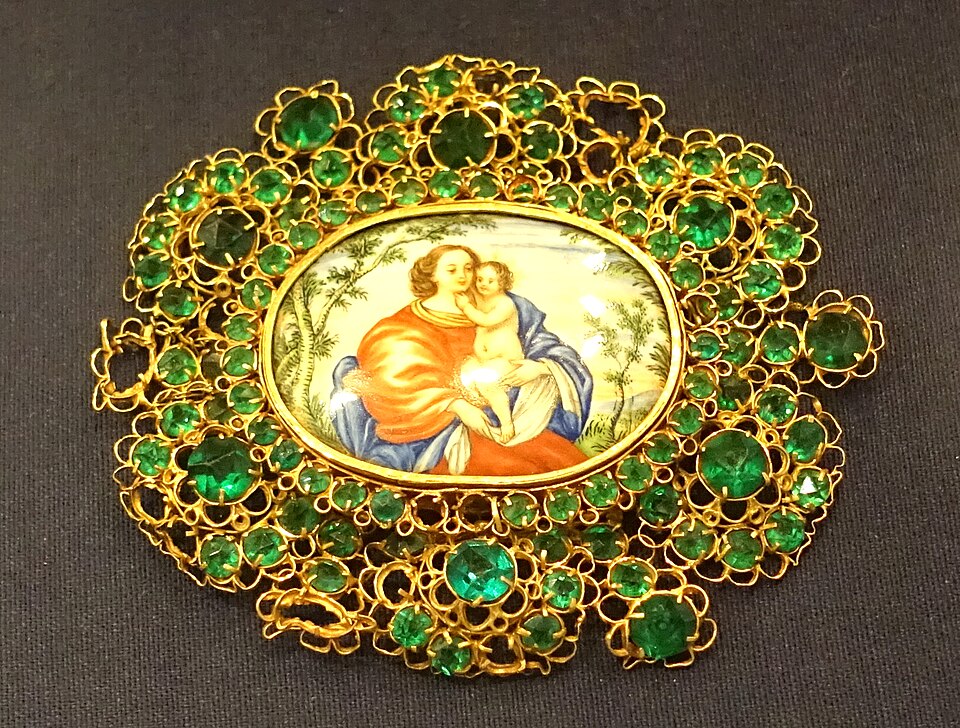
Filigree was often used in conjunction with other Victorian jewelry manufacture. Brooches might have cannetille (raised, highly elaborately scrolled filigree), granulation (tiny gold beads were applied to the surface of the metal), or repousse (hammer pressed design). Gemstones of all kinds especially garnets, turquoise, seed pearls, and eventually diamonds could be set into the ‘reserved areas’ of the open work, producing interest and contrast between solid brilliance and airy laces of metal. As the Metropolitan Museum notes, some Italian and French pieces had areas of the filigree purposely left unglided and unpolished so the finishes varied between shadows and highlights. Such examples of jewelry were to be found in the top London and Paris workshops, exemplifying the ideal of 19thcentury ‘art jewelry’: highly skilled, historically inspired and attractive.
Design Motifs and Symbolism in Victorian Filigree Brooches
Victorian culture delighted in symbolism, and filigree brooches became miniature canvases for this visual language. Floral motifs were especially prevalent. Roses signified love, daisies innocence, and forget-me-nots enduring remembrance. Ivy, with its clinging habit, suggested fidelity. These motifs were not random decorations but deliberate choices; many Victorian etiquette manuals and gift guides explained such symbolism. A delicate filigree frame around an enameled forget-me-not, for instance, would have been read immediately as a token of lasting affection.
That more broadly nature influenced filigree design can be seen in the use of animal shapes such as birds, butterflies, and leaves in surviving brooches. The Smithsonian records how the trend for 19 thcentury natural history, botany, and zoology even affected jewelers, especially after prominent scientific reports and world exhibitions propagated knowledge and images of plants and animals from around the world. The most significant was the Great Exhibition of 1851, in London, where the worlds of decorative arts and natural history converged at the Crystal Palace to offer jewellers a chance to imitate the natural world‘s shapes in the precious metal. And because of its ability to imitate delicate outlines and vein striations, filigree proved ideal for these organic designs.
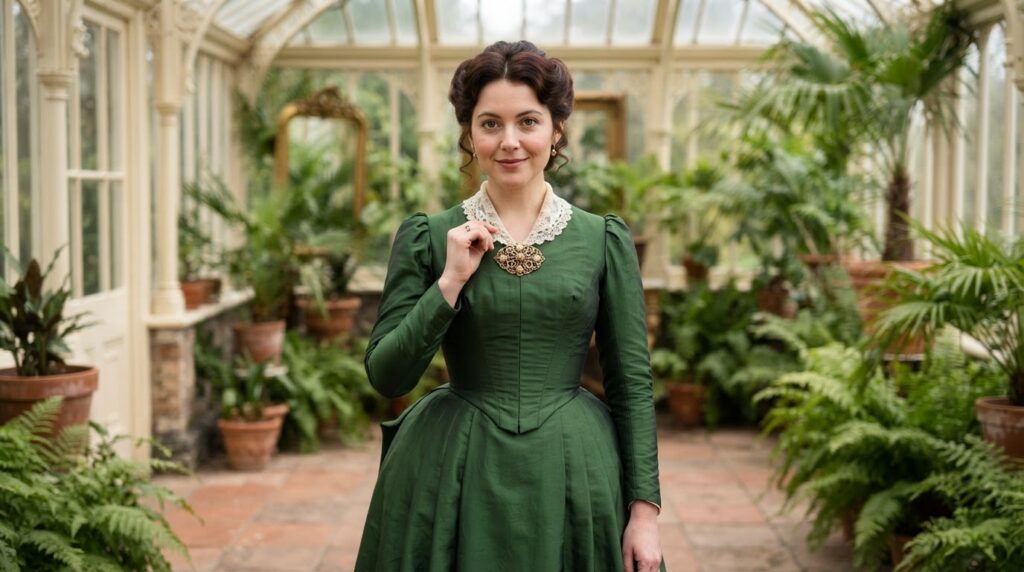
Other elements also had significance. In particular, crosses, anchors and hearts (symbolising hope) were often set into delicate filigree, especially in brooches sent as tokens of devotion or friendship. Mourning jewellery became the most successful type of brooch in the lateVictorian era, as the death of Prince Albert in 1861 prompted Victoria to mourn for the rest of her life. Silver filigree was tarnished by a blackening process, and black enamel or jet frequently combined with this to surround locks of hair or miniature photographs of the dead person. The V&Aexplains, ’[o]vertures that steeped itself in elaborate workmanship and the most profound grief, transforming brooches into tiny mausolea.’
Materials, Styles, and Regional Variations
Victorian filigree brooches vary widely in materials and finishes, often reflecting the wearer’s social class and the jeweler’s regional style. High‑end brooches usually employed high‑karat gold (15K, 18K, or higher in Britain) or finely worked silver-gilt. In more modest pieces, jewelers used low‑karat gold, rolled gold, or gold-plated base metals, allowing middle‑class consumers to access the look of luxury. As the Metropolitan Museum notes, the rise of the 19th‑century bourgeoisie was accompanied by an explosion of “fashionable yet affordable” jewelry forms, including filigree. Seed pearls and small garnets were common gemstone choices, as they were relatively economical yet visually striking against metal lace.
The regional variations imparted various characters to the filigree brooches. In Britain many of the pieces that were produced tended to be more interior and sentimental, tended to be botanical and smaller in scale. Workshops based in Paris, France and working under neoclassical ideals, then Second Empire ones, obviously incorporated more opulent use of scroll-work and fashionably used the stones within the jewelry for embellishments. Roman and Naples, Italy workshops excelled in the prime example of a labored lightweight grainy, filigree with a delicate ghost like quality. Why not gasp as they were intended for the tourist market as “Grand Tour” gifts.
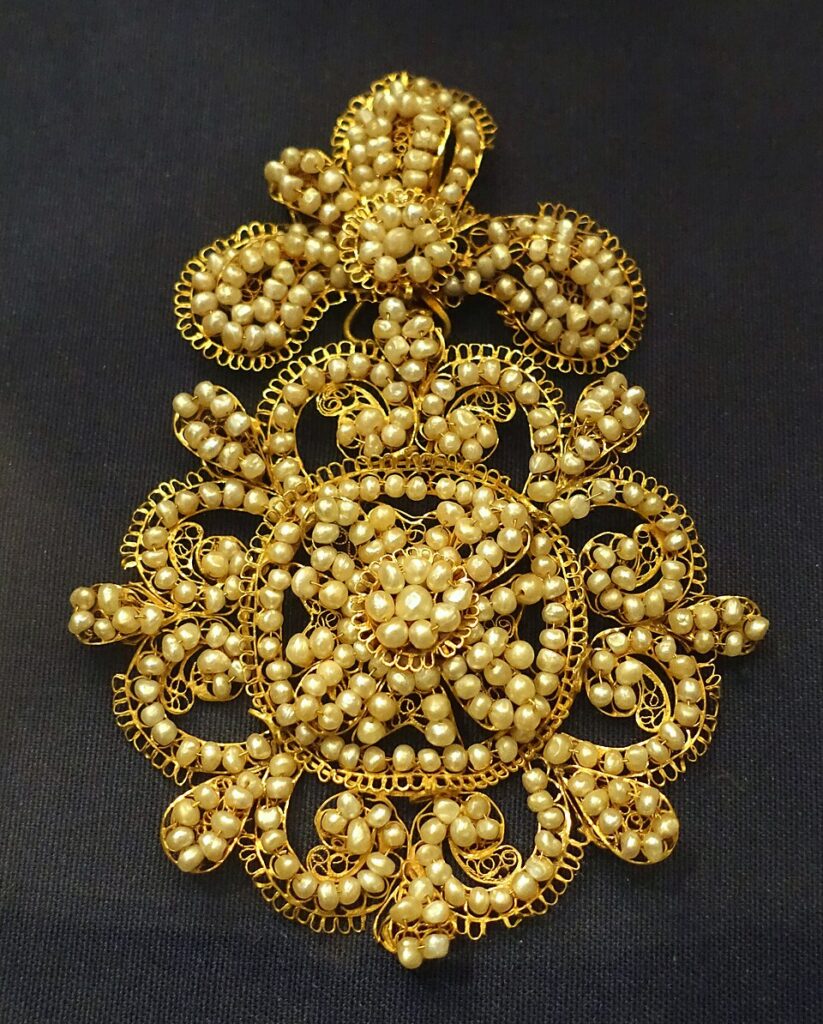
Outside Europe itself, colonial links also informed Victorian filigree: goldsmiths working in Britain and France found inspiration in the Indian and Ottoman styles of gold wirework that had been so perfected in those regions over centuries. Some of the jewelry produced in colonial workshops combined ‘European’ forms (brooches, lockets) with nonEuropean styles of filigree. The collection of the Smithsonian Institution‘s Global Arts program emphasizes the way that crosscultural borrowing in the nineteenth century made a straightforward narrative of “European” design difficult to sustain the Victorian filigree brooch as many examples appear are neither fully Western or Eastern but fully hybrid objects, the product of empire, trade and migration.
Key Characteristics of Victorian Filigree Brooches
Below is a summary of core traits that help identify and understand Victorian filigree brooches:
| Characteristic | Typical Features (Victorian Era) | Notes for Collectors & Historians |
|---|---|---|
| Time Period | c. 1837–1901 (Early, Mid, Late Victorian phases) | Stylistic dating often based on motifs, size, and clasp construction |
| Materials | Gold (15K–18K), silver, silver‑gilt, rolled gold, base metal with plating | High‑end museum pieces usually in high‑karat gold or fine silver |
| Technique | True filigree: fine wires twisted, scrolled, and soldered; often cannetille detail | Beware cast imitations mimicking filigree textures |
| Motifs | Flowers, leaves, scrolls, hearts, crosses, anchors, knotwork, mourning symbols | Motifs can indicate function (e.g., romantic vs. mourning) |
| Gemstones/Ornament | Seed pearls, garnets, turquoise, small diamonds, enamel, hairwork | Hair compartments common in sentimental and mourning brooches |
| Back/Clasp | C‑clasp (early–mid), simple pin; later safety catches (late Victorian) | Clasp type is a key clue for approximate dating |
| Regional Influences | British sentimental style, French scrollwork, Italian airy filigree, colonial mixes | Provenance can affect value and historical significance |
| Condition Considerations | Broken wires, missing solder joints, replaced clasps, over‑polishing | Original patina often preferred; heavy restoration can reduce authenticity |
Collecting, Authentication, and Care
Serious collecting of Victorian jewelry took off in the later 20th century, as museums and scholars recognized its importance for understanding social history, fashion, and technology. Filigree brooches were once relatively overlooked compared to large diamond or enamel pieces, but that has changed. Today, collectors value filigree for its craftsmanship and for the survival challenge it represents—delicate wires and tiny solder points make genuine 19th‑century examples relatively rare in good condition. The V&A and the Met both maintain notable collections of Victorian jewelry and frequently publish technical and stylistic analyses that help authenticate pieces in the market.
Authentication depends on a few factors how it was made (construction), what clasps were used, whether there are hallmarks (and where they are from), whether the wear looks consistent,…and accounting for variances in all these factors. An authentic Victorian piece will commonly have subtle inconsistencies that can only be seen through the loupe and indicate most stand out as irregularities, telling of it being hand made rather than machine cast. Often the back of the brooch will prove more informative than the front with wire ends, solder joins, and original pin fitting lines visible. British hallmarks, when available can help discern possible dates and regions although hallmarks were not always used. Specialists look for oxidized, uneven surfaces; V&A Jewelry curator Alice Minter has repeatedly mentioned in interviews, ‘a surface that looks too perfect can be a warning sign’.
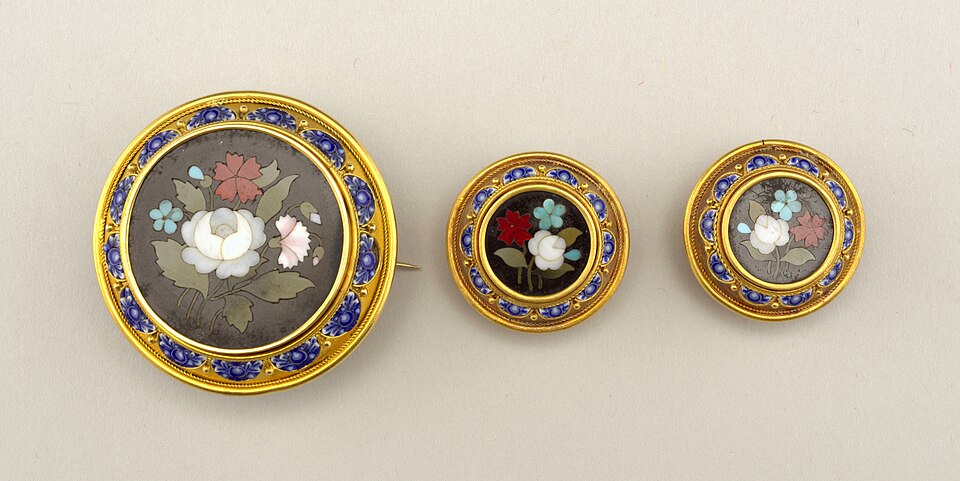
As with the Victorian filigree brooch, care must be taken. So much cleaning can damage the historic patina and even break solder joins. The best advice for conservators working at the Smithsonian is to advise a gentle dry cleaning with a soft brush and to avoid any chemical dipping of the piece, as this can remove gilding and attack soldered joins. Storage should take the pressure off the wires, so display and storage should ideally take place in either bespoke supports, or box cushions. Restoration work should be kept to a minimum and the piece fully documented. However, as a museum would want to see the evidence of history and maintain integrity of the item rather than balance aesthetic perfection and any private owner should seek a conservator or knowledgeable jewelry supplier before deciding to undertake restoration work.
Frequently Asked Questions about Victorian Filigree Brooches
1. How can I tell if a filigree brooch is genuinely Victorian and not a modern reproduction?
Look closely at technique, clasp style, and wear. Authentic Victorian pieces usually have:
- True wire construction (not a cast piece imitating filigree) visible under magnification.
- Period-appropriate clasps: early to mid‑Victorian brooches often have simple “C” clasps without safety catches; later Victorian examples may show early safety fittings.
- Natural, uneven patina and minor wear consistent with age, especially on high points and pin stems.
Hallmarks can help, especially on British pieces, but absence of a hallmark does not automatically mean a fake. When in doubt, compare with documented examples from the Metropolitan Museum of Art or the Victoria and Albert Museum collections, or consult an experienced jewelry historian or appraiser.
2. Were Victorian filigree brooches only worn by wealthy women?
No. While the finest high‑karat gold and gemstone‑set filigree brooches were the domain of the elite, mass production and new metalworking technologies made similar-looking pieces accessible to the growing middle class. Rolled gold and silver‑plated filigree brooches allowed shopkeepers, teachers, and clerks to participate in fashionable trends. As the Smithsonian’s research on 19th‑century consumer culture shows, jewelry became a key marker of aspirational respectability, not just aristocratic wealth.
3. Are Victorian filigree brooches a good investment?
Their primary value lies in artistry and historical importance rather than guaranteed financial return. High‑quality, well‑documented pieces from reputable sources can appreciate over time, especially examples linked to notable makers or with museum‑comparable workmanship. However, the market can be volatile, and condition issues (broken wires, replaced parts) significantly affect value. Anyone purchasing with investment in mind should prioritize provenance, authenticity, and quality, and should cross‑reference prices with auction results from major houses as well as curatorial notes from institutions like the V&A and the Met.
Conclusion
More than carven relics, ornate Victorian filigree brooches are detailed whole histories of a century in transition. The prismatic wire mirrors and refracts the dips and climbs in dreams, the collapse of love lost and the assumption of grief accumulated, the forging of character in metal laces. Their persistance into the New Millennium presents a revelation to investigate not only innovative jewelry skills, but also rethought models of recollection, class, and aesthetic.
As the Victoria and Albert Museum declares of its jewellery galleries, ”… each piece is as much a witness to the moment in which it was made as to the life of the person who owns it.” This is very much true of the Victorian filigree brooch, that marriage of jeweller and consort. It is the jeweller‘s art as witness of that Victorian world, while it is the history of the wearer that records the memory of her life, the lightest gold and silver filaments the faintest of threads binding the two together. Looking at these miniature designed objects of historical, technical and symbolic importance, allows us to understand the Victorian world as never before, so that we may better discover why that age continues to enthrall us.
AI Notice: Some visual content in this article may have been created or enhanced using artificial intelligence (AI) for artistic, editorial or illustrative purposes. Learn more about our approach in our AI & Editorial Principles.