Antique Victorian Cameo Brooch: History, Value, and How to Recognize the Real Thing
In an age of fast fashion and disposable accessories, the antique Victorian cameo brooch stands out as a small object with a remarkably large story. More than just decorative pins, these tiny, hand-carved portraits once signaled education, taste, social status, and even political allegiance. Today, collectors and jewelry lovers prize them for their craftsmanship and history—but the market is also crowded with reproductions and misattributed pieces. Understanding what truly defines an authentic Victorian cameo brooch is the key to appreciating, collecting, and preserving these miniature works of art.
What Is a Victorian Cameo Brooch?
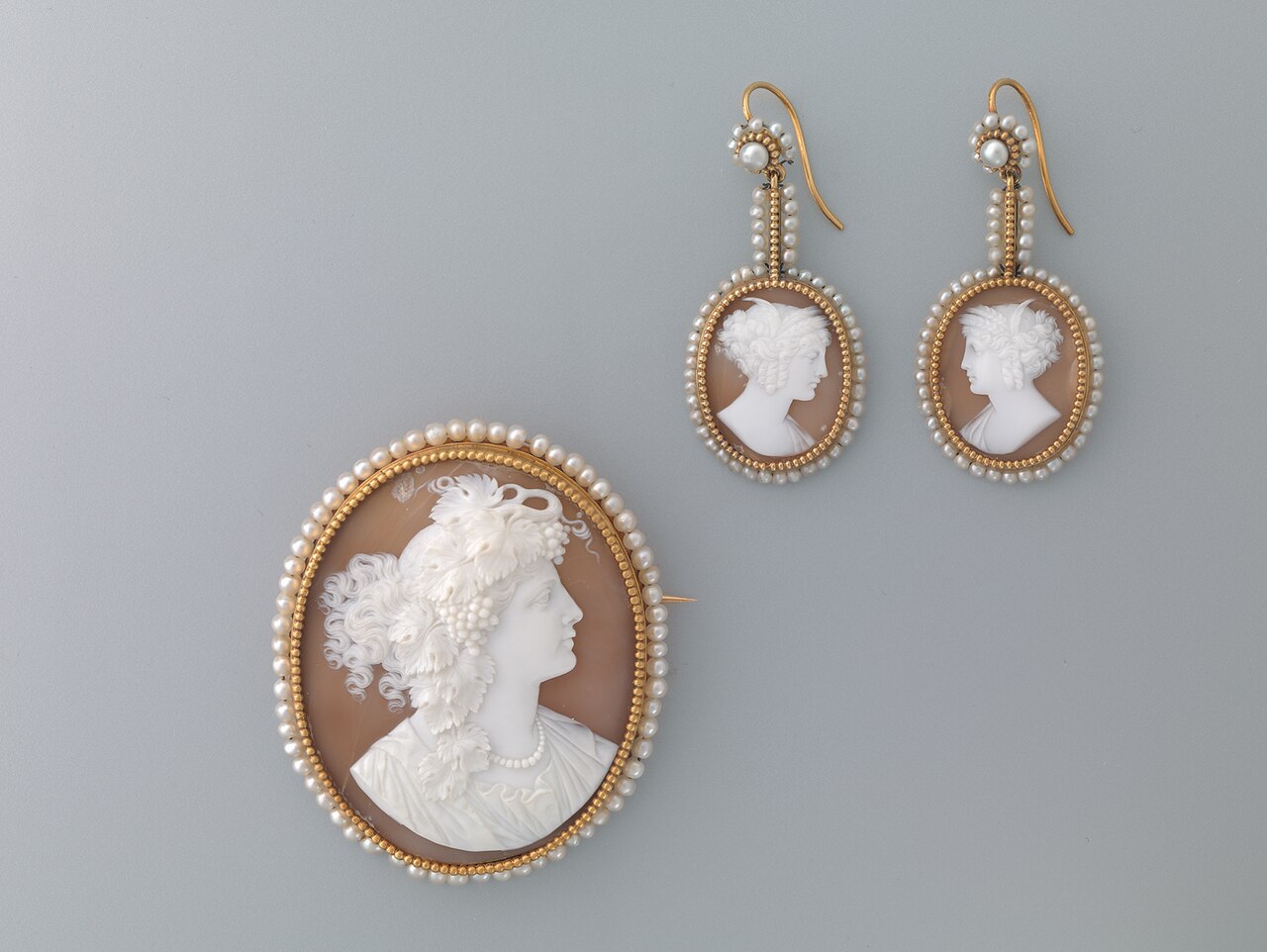
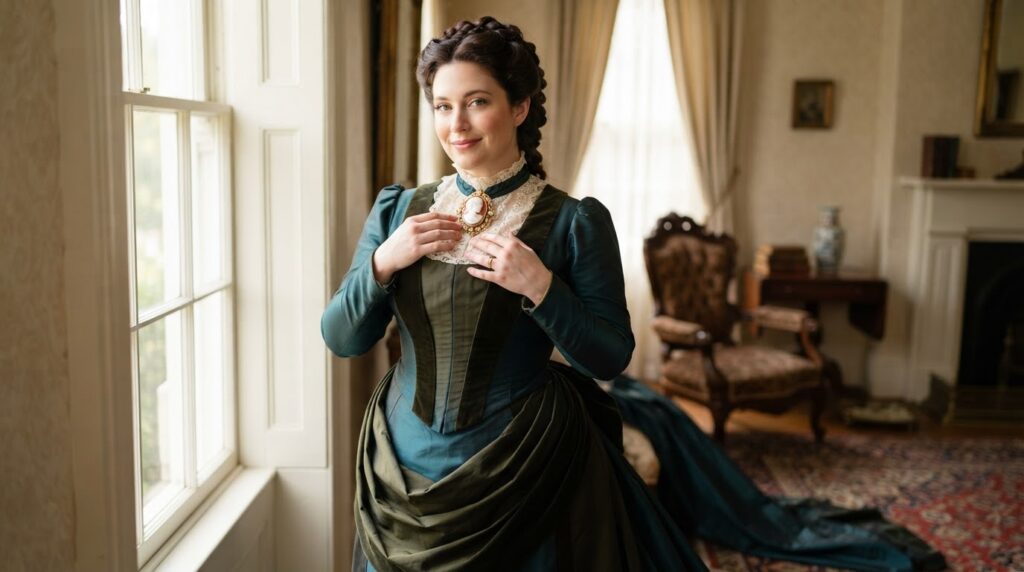
The cameo is a form of relief carving where material has been inlaid from different colored materials so that the design appears on one of several raised layers. A variety of materials was used for the cameo, the most common being shell and semi-precious stones. Cameos were mounted on all sorts of jewelry, including brooches, pendants, bracelets and rings, as well as hair pieces. The most common form of mounting for a piece of jewelry was a brooch and this was often placed at the throat, on a bodice or on the shoulder to contain shawls and capes.
Can You Name the Masterpiece?
Ten masterpieces. Ten questions. How well do you know the history of art?
The most common kind ofVictorian cameo brooches show classical mythological figures, elegant female profiles, literary heroines, or allegorical scenes and motifs such as flowers. Many of them are cut from shell, but you can also find examples made from hardstone (such as agate or onyx), Mount Vesuvius’ lava, coral, and, in the case of cameo glass, even glass. The setting mounts were usually of gold, gold-filled metal, silver, or pinchbeck.
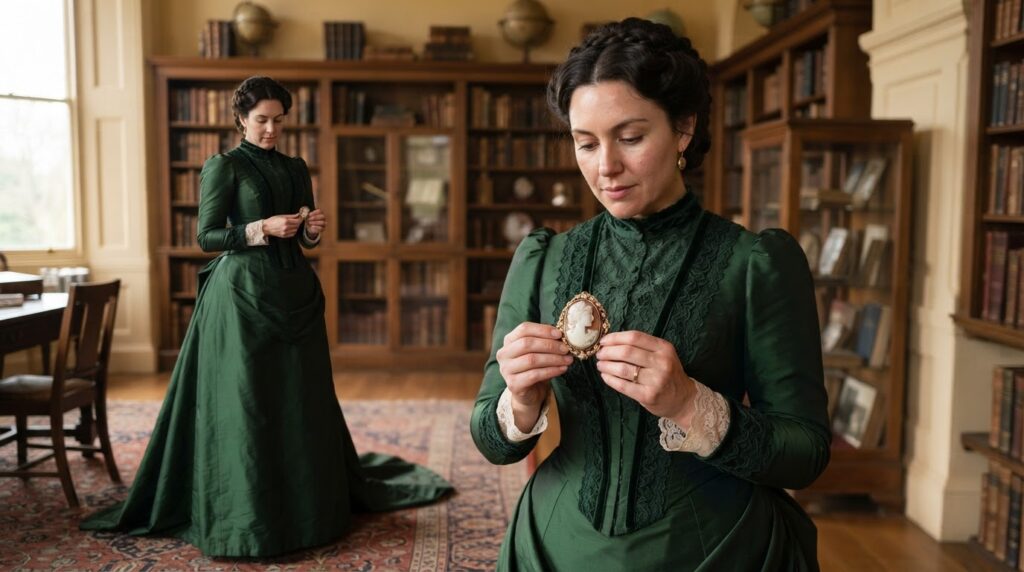
The V&A Museum explains, “The use of cameos reached a peak in the 19th century, when they were collected as reminders of the Grand Tour and sported as fashionable tokens of culture”. This twofold significance of the Victorian cameo brooch may illuminate its continued praise.
Historical Background: Cameos Before and During the Victorian Age
The cameo is an ancient art form, with roots in Hellenistic Greece and Imperial Rome. The Louvre Museum’s collections include Roman cameos carved from sardonyx and other hardstones, often bearing imperial portraits or mythological scenes. These early cameos served as luxury items and symbols of power, worn by the elite or used as diplomatic gifts. The tradition continued through the Renaissance, when cameos were revived as objects of scholarly interest and artistic pride.
Can You Guess the Artist?
Three clues. One artist. How quickly can you identify the painter?
By the 18 th century, cameos were in great demand among the aristocracy in Europe, particularly for those taking the Grand Tour which was a study circuit through Italy, France and other levels of classical society. Workshops sprung up in cities such as Rome, Naples and Florence. According to the metropolitan museum of art, the Italian carvers worked directly for the tourists, appearing in the form of I goddess, figure portraits of Roman emperors, providing medallions and other jewelry in “antique-style” to hands.
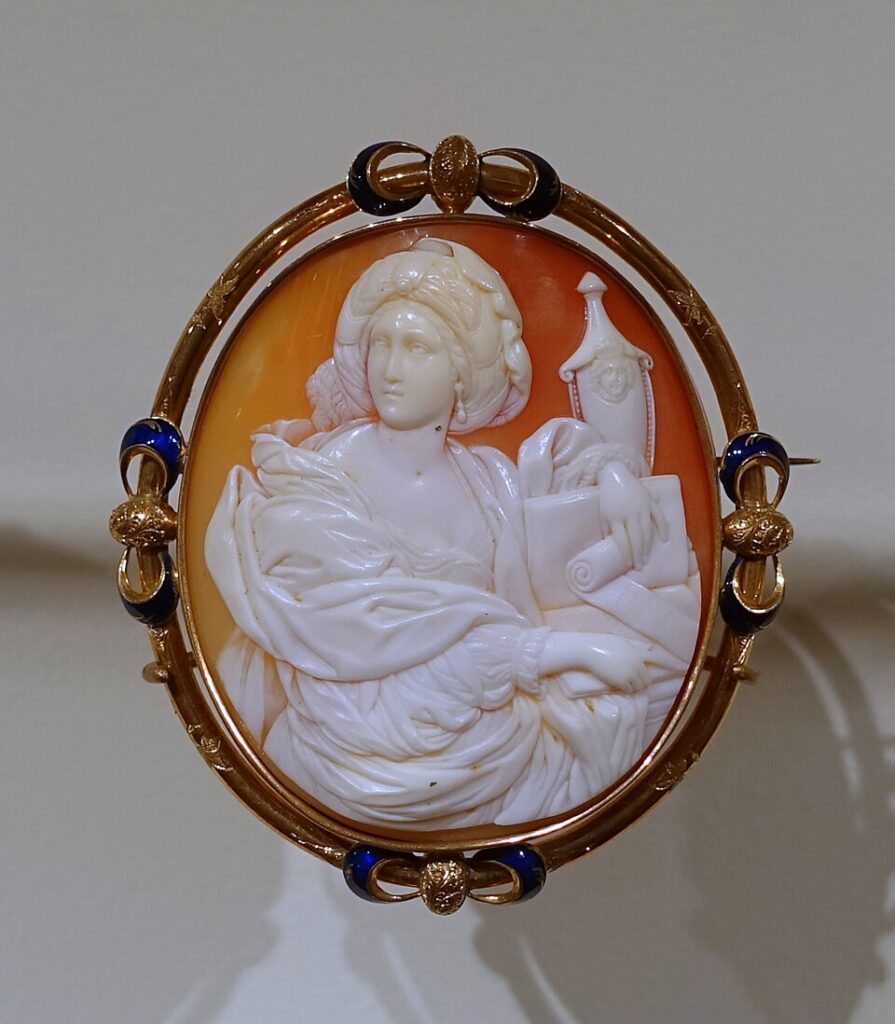
There was another boom in the making of cameos in the Victorian era and many innovations. Queen Victoria was a fashionable trendsetter; with a liking for sentimental jewelry and classical images, her desire to wear charms served to popularize the genre. Following the emergence of railways and the growth of middle-class travel throughout the mid-1800s, an increasing number of Brits could journey to Italy and buy a romantic reminder of their cultured taste. Simultaneously, the advent of mechanized techniques made more affordable mounts and cameo fakes.
Materials and Techniques: Shell, Stone, and Beyond
Victorian cameo brooches are often immediately recognizable by their materials. Shell cameos—typically carved from helmet shell or queen conch—became especially popular in the 19th century. Their relative softness allowed for fine, detailed carving and faster production compared with traditional hardstone. The Smithsonian Institution notes that the widespread use of shell “democratized” cameo jewelry, making it more accessible beyond the aristocracy.
Hardstone cameos, carved from layered agate, onyx, or sardonyx, were more labor-intensive and expensive. They usually feature sharp color contrasts—white figures on darker grounds—and very crisp details. The Metropolitan Museum of Art’s collection includes several 19th-century hardstone cameos that show how skilled carvers could exploit the natural banding of the stone to give depth and realism to hair, drapery, and facial features.
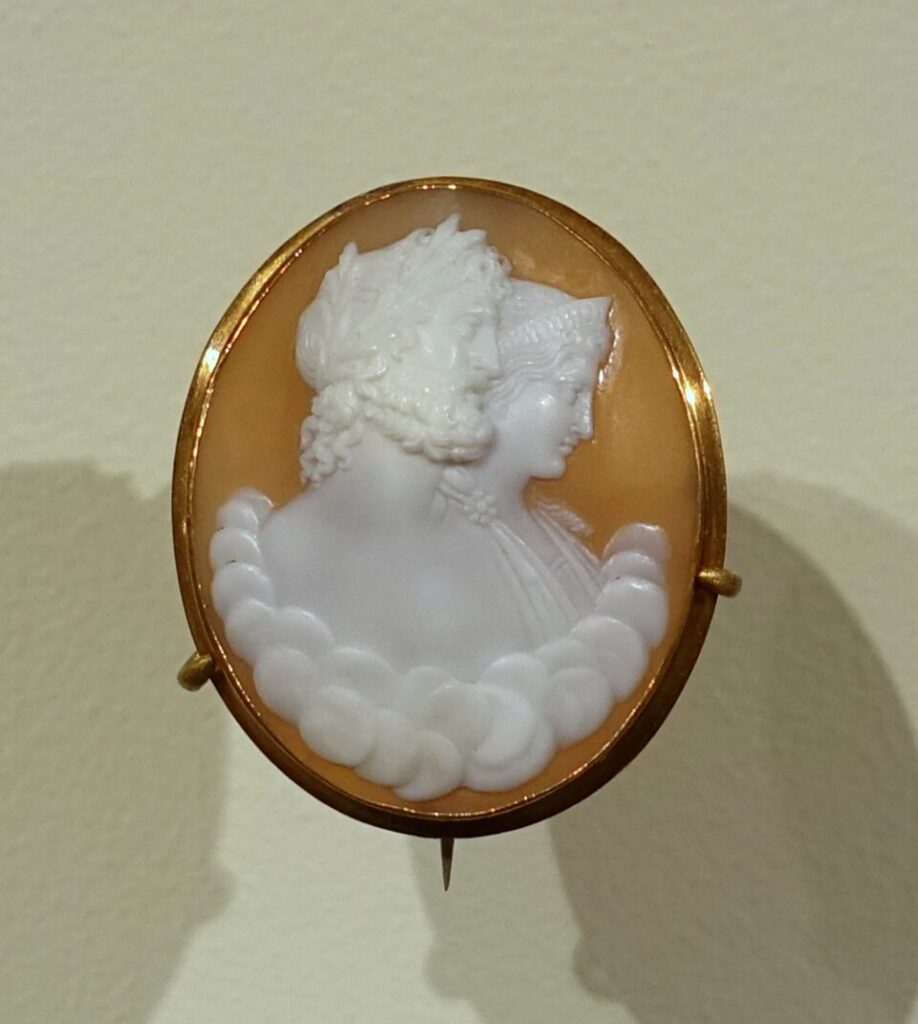
Lava cameos, carved from soft volcanic stone from the region around Mount Vesuvius near Naples, formed another distinctive Victorian category. Tourists flocking to Pompeii and Herculaneum in the mid-19th century created a strong demand for “souvenir” cameos depicting classical ruins or mythological heads in gray, brown, or ochre lava. Settings varied: wealthier buyers chose gold or high-quality silver, while others opted for pinchbeck (a copper-zinc alloy) or gold-filled mounts that mimicked the appearance of precious metal at a lower cost.
Iconography and Symbolism: Reading a Cameo
Victorian cameo brooches are more than portraiture; they often encode layers of meaning through imagery. Classical mythology was a favorite source. Figures such as Athena, Aphrodite, Apollo, and Medusa appear frequently, their profiles adapted to 19th-century tastes. Wearing such cameos signaled education and affiliation with the classical ideals championed by universities and learned societies in London, Paris, Berlin, and beyond.
Male profile cameoshowever, These could be silver heart-shaped presentation pieces, or expressions of virtue and civility. Hairstyles and clothing can be useful to date early works. The V&A explains, For much of the 19th century, the ideal woman was embodied in the profile cameos favor in Victorian jewelry, and one can trace that ideal back through the decades of early Victoria with ease.
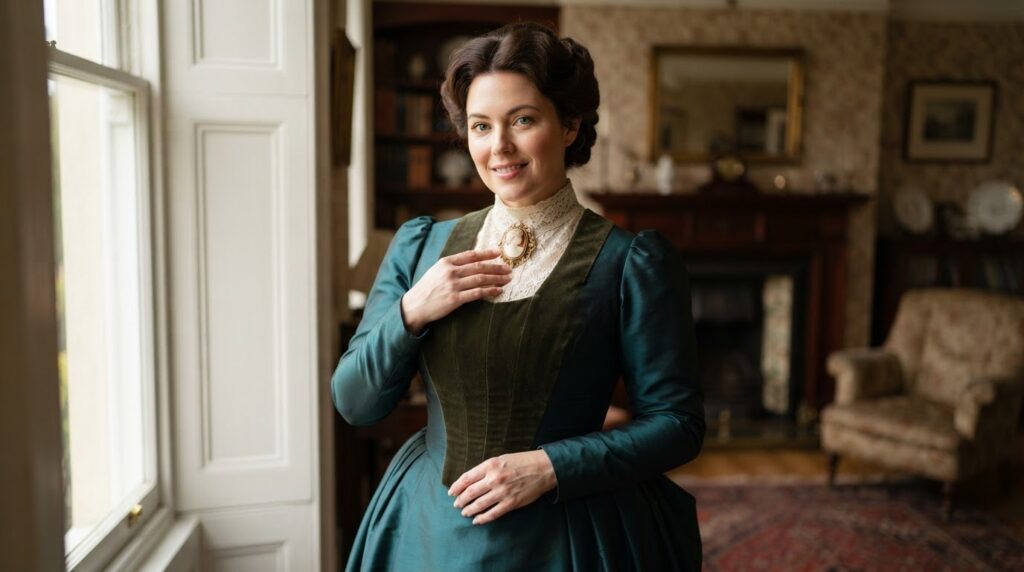
Symbolic and allegorical images too were numerous. Floral images could also express love, farewell or fidelity; anchors may signify hope; doves may indicate peace or fidelity; mourning pendants, which often were set against black enamel or jet backgrounds, showed urns, wailing willows, or gateways of heaven. The Victoria and Albert Museum and the British Museum agree that these visual languages could help Victorians establish relatively complex exchanges of emotion through their jewelry.
How to Identify an Authentic Victorian Cameo Brooch
Distinguishing a genuine Victorian cameo from a later reproduction or modern copy requires attention to materials, craftsmanship, and style. Under magnification, authentic hand-carved cameos—especially in shell or stone—show subtle tool marks, slight asymmetries, and a sense of “life” in the features. Mass-produced molded cameos (often in plastic or resin) appear overly smooth, with uniform surfaces and no evidence of carving.
The brooch is revealing clues. Genuine Victorian brooches will be in 9k, 14k, 18k gold, silver, pinchbeck or rolled gold. Check for the correct period clasps: C-clasps and drawn out “T-hinges” are favoured during the 19 th century, and locking safety catches are characteristic of later pieces. Use the back of the brooch as well the construction, solder work, and condition all tell more than the front does. The object records at the Metropolitan Museum of Art and the one-on-one collections of the V& A can be used to compare the backs of brooches from different decades.
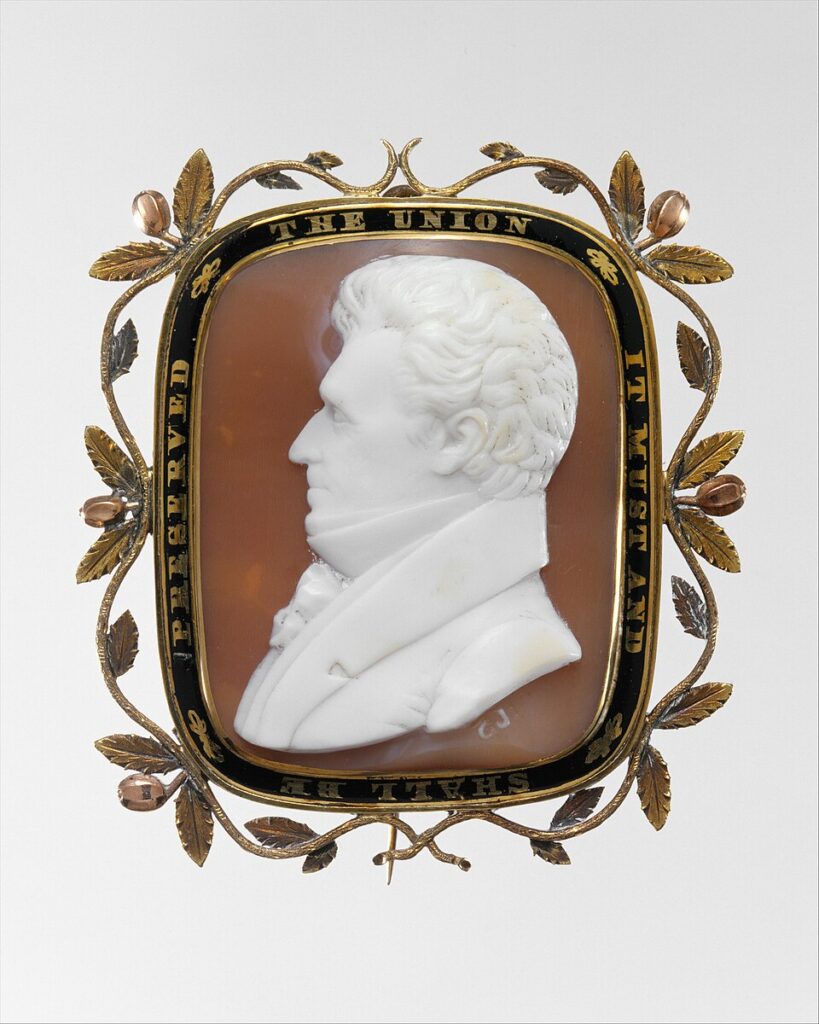
Style is significant as well. Carving in high relief, delicate features on a scholar‘s curls, and the subject‘s clothing all suggest an earlier Victorian? mid-1870s work. Conversely, anonymous female busts with less detailed reverse profiles, flat features, and “Gibson girl style” coiffures all point to the late 19 th / early 20 th century. As the Smithsonian Institution stress in their introduction to the decorative arts, “Attribution must take style, technique and context into account; no one item in isolation will be conclusive.” When in doubt, seek the advice of a reputable jewelry historian or expert appraiser of 19 th century European jewelry.
Key Characteristics of Antique Victorian Cameo Brooches
Below is a summary of important features that often (though not always) indicate a genuine Victorian cameo brooch:
| Feature | Typical Victorian Characteristics | Notes for Collectors |
|---|---|---|
| Date Range | 1837–1901 (early, mid, late Victorian) | Style and clasps can help narrow the period within these dates. |
| Materials (Cameo) | Shell, hardstone (agate, onyx), lava, coral, cameo glass | Shell most common; hardstone and lava often higher value. |
| Materials (Mount) | Gold (9k–18k), silver, pinchbeck, rolled gold, occasionally base | Hallmarks may be present on British and some European pieces. |
| Typical Subjects | Classical deities, female profiles, mythological scenes, florals | Mourning and sentimental themes also present. |
| Carving Quality | Hand-carved relief, visible tool marks, fine facial details | Overly smooth, plastic-like surfaces often indicate modern copies. |
| Clasps & Findings | C-clasps, tube hinges, extended pins, later safety clasps (c. 1890) | Back construction often crucial for dating and authentication. |
| Origin Centers | Italy (Naples, Rome), UK (London, Birmingham), France (Paris) | Many shell cameos carved in Italy and mounted elsewhere. |
Collecting and Valuing Victorian Cameo Brooches
An auction house or specialist dealer will value a Victorian cameo brooch on age, material, workmanship, subject, condition and provenance. Strong prices are attracted at auction houses and by specialist dealers from a really good, well preserved mid-Victorian hardstone cameo in an original gold frame; a signature carver or association with a high class workshop may make a difference. The less expensive but still collectible are set quality carved shell cameos.
Subject matter can also be important in determining value. Skilled collectors may seek out cameos depicting well known historical personas, mythological episodes with multiple figures, or divergent allegorical schemes. As one of the guardians at The Metropolitan Museum of Art remarked in connecting 19th century jewelry to the examples above, “Circumstances of this sort, which mark complex narrative cameos as being the ultimate in both skill and thought, make these objects particularly desirable to connoisseurs.”
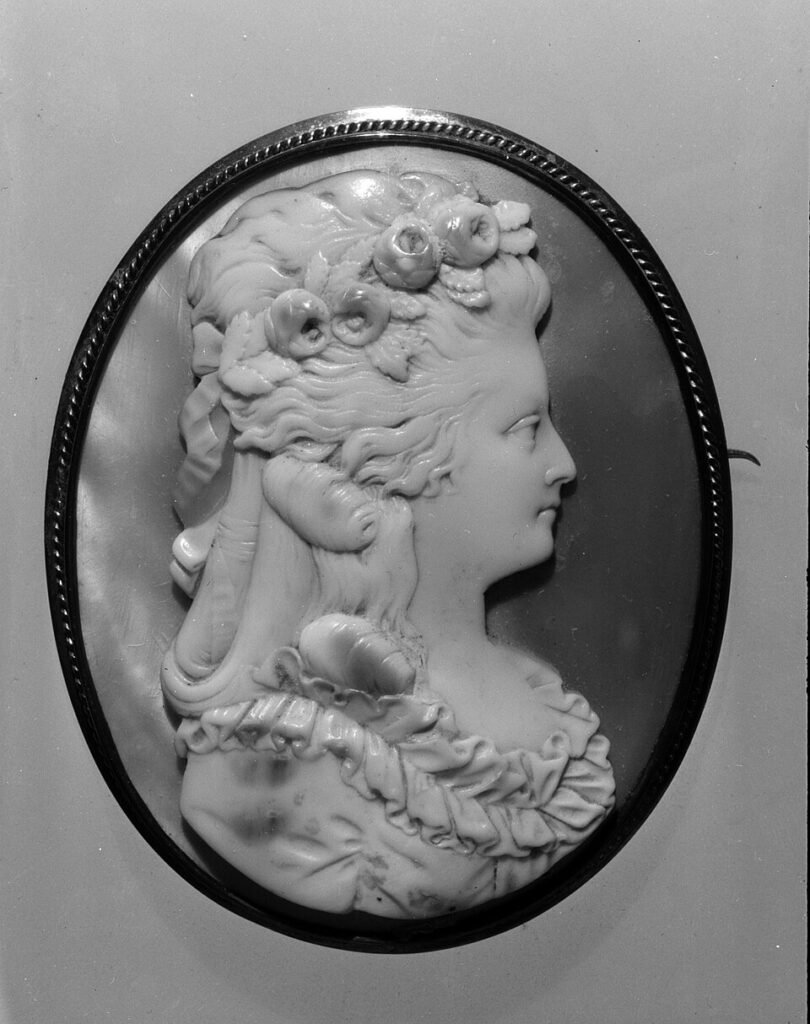
Condition is also important. Cracks in the cameo, chips, excessive wear and poorly executed later repairs all detract from desirability and value. Mounting is also of concern: a Victorian cameo re-set into a modern setting might be attractive to wear, but is also less desirable as an artefact for collecting. Dealers and auction houses that are experienced in the market (for example those that sell regularly to the V&A, the Smithsonian and to museums and historical collections) can normally be relied upon to give a sale/auction condition report and attribution than a seller on eBay.
Care, Conservation, and Ethical Considerations
Victorian cameo brooches are both historical artifacts and delicate organic or mineral materials. Shell, coral, and some lava types are porous and sensitive to chemicals, heat, and abrupt changes in humidity. Museums such as the Victoria and Albert Museum and the Metropolitan Museum of Art emphasize preventive care: store cameos in padded, dry environments away from direct sunlight and extremes of temperature; avoid ultrasonic cleaners, harsh chemicals, and prolonged exposure to perfumes or hairsprays.
Cleaning should be minimal and gentle. A soft, dry cloth is usually sufficient for the metal mount. For the cameo itself, very light dusting with a soft brush is safer than any form of soaking. If deeper cleaning or repair is needed, a professional conservator with experience in jewelry and organic materials is the best choice. The Smithsonian Institution’s guidelines for object conservation stress the principle: “First, do no harm; reversible and minimal interventions are preferred.”
Ethical and legal considerations also arise. Many antique cameos are entirely lawful to own and trade, but modern regulations regarding endangered materials (such as certain corals or shells) and wildlife protection can complicate import and export. Collectors should familiarize themselves with conventions such as CITES and national laws, especially when buying or selling internationally. Purchasing from reputable sources that provide documentation and comply with regulations helps ensure responsible stewardship of cultural heritage.
Frequently Asked Questions
1. How can I tell if my cameo brooch is Victorian or a later reproduction?
Look at a combination of factors: the material (shell vs. plastic or resin), the style of carving, the subject, and especially the brooch fittings. Hand-carved shell or stone with visible tool marks, a C-clasp or tube hinge, and period-appropriate styling suggest a 19th-century origin. Modern imitations often use safety-pin style backs, base metals, and molded plastic cameos. When in doubt, seek an evaluation from a jewelry historian or appraiser.
2. Are shell cameos less valuable than hardstone cameos?
Not always. While hardstone cameos are generally rarer and often more expensive, a finely carved shell cameo in excellent condition and a quality mount can be highly valuable and collectible. The overall artistry, subject matter, and historical interest frequently outweigh the hierarchy of materials.
3. What institutions hold important collections of Victorian cameos?
Major collections and reference examples can be found at the Victoria and Albert Museum (London), the Metropolitan Museum of Art (New York), the Louvre Museum (Paris), and the Smithsonian Institution (Washington, D.C.). Many have digitized portions of their jewelry collections, allowing you to study authentic 19th-century cameo brooches online.
4. Can a cameo brooch be worn safely today, or should it be kept only as a collectible?
If in sound condition and properly secured, a Victorian cameo brooch can still be worn. However, it should be treated as a fragile antique: avoid wearing it during strenuous activity, in bad weather, or with fabrics that might snag it. After wearing, store it carefully to prevent scratches or knocks.
5. Is it possible to restore a damaged Victorian cameo?
Some damage—like minor chips or loose mounts—can be addressed by a specialist restorer or conservator. However, cracks through the cameo itself are difficult to repair invisibly and may compromise structural stability. Any restoration should be fully documented and, ideally, reversible, in line with museum conservation standards.
Conclusion
The antique Victorian cameo brooch is more than a nostalgic fashion accessory; it is a compact record of 19th-century taste, technology, and cultural ideals. From the Italian carving workshops that supplied Europe’s Grand Tourists to the London jewelers who mounted cameos for a rising middle class, these pieces reveal how art, travel, and personal identity intertwined in the Victorian age. Informed by museum research, historical documentation, and expert practice, today’s collectors and admirers can approach Victorian cameos not just as adornments, but as enduring works of miniature sculpture—objects to be worn with care, studied with attention, and preserved for the future.
AI Notice: Some visual content in this article may have been created or enhanced using artificial intelligence (AI) for artistic, editorial or illustrative purposes. Learn more about our approach in our AI & Editorial Principles.