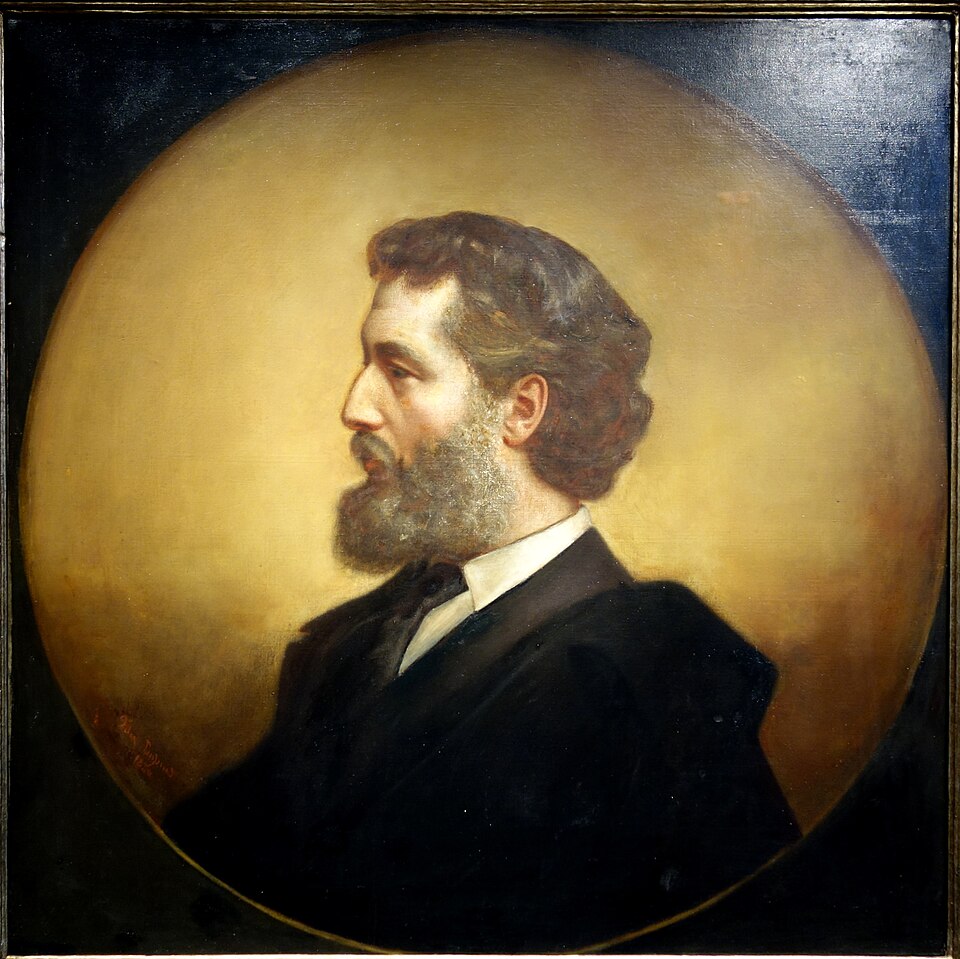
Frederic Leighton (1830–1896) was one of the most prominent British painters and sculptors of the Victorian era, celebrated for his polished academic technique, classical subjects and sumptuous decorative sensibility. As a leading figure of late 19th-century art in Britain, Leighton achieved both critical acclaim and institutional authority, combining an international training with a distinctively cultivated aesthetic. His work, ranging from monumental historical canvases and mythological figure-pieces to portraits and decorative schemes, epitomizes the intersection of academic classicism and the Aesthetic Movement. This article provides a comprehensive account of Leighton’s life, training, artistic development, major works, legacy, market value and presence in public collections—material tailored for an art and antiques audience.
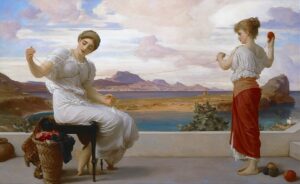
Early Life
Frederic Lord Leighton born in 1830 into a wealthy AngloItalian family of cosmopolitan background. He grew up moving from one part of the cultural world to another and raised with tradition of high culture as he was constantly living in continents, mainly Italy, France and Germany. The experience of living in cultural capitals is reflected in his visual language of the late 20 th century. He was exposed to classical forms, the art of the Renaissance and contemporary art scene. He had traveled extensively through Europe yet before he has formal art training he had studied in Italy, France and Germany. He may come back to England at unequal intervals, but he was mostly based in the continent.
Education and Training
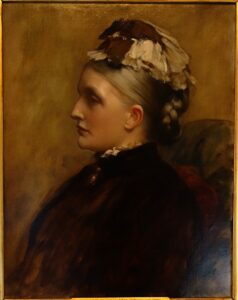
Leighton‘s education was somewhat eclectic and autodidactic, a mixture of privated tactorship, study and travel. His studies in drawing and painting were completed by a variety of lecturers on the Continent and by diligent copying of Old Master drawings and paintings in museums and churches. These lessons were supplemented by visits to archaeological sites and the observation of ageless ateliers in Rome and Florence, where academic technique and a deep seated love for the antique ruled supreme. The practical apprenticeship undergone by Leighton in European ateliers (rather than in one sense of the word a prolonged institutional education) implies a modular and cosmopolitan training: learned draughtsmanship; studies of the human body and its proportion; and decorativeness.
Career Development
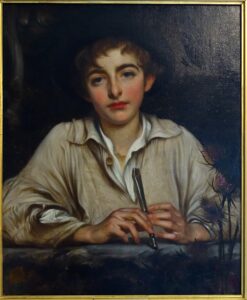
Leighton’s public career developed steadily through exhibitions, portrait commissions and decorative projects. He first attracted attention with ambitious history and mythological paintings shown at major exhibitions. His reputation was buoyed by a capacity to create large-scale, bravura canvases that demonstrated technical command and narrative clarity. Over time, Leighton became deeply integrated into British artistic institutions. He achieved formal recognition at the highest level through appointments and honors, eventually occupying key leadership positions within the art establishment. Alongside painting, Leighton accepted important decorative commissions—murals, mosaics and interior schemes—that allowed him to work on an architectural scale and to shape an aesthetic environment in which his paintings sat naturally.
Leighton’s home and studio in London became a focal point for his career. The house itself—now Leighton House Museum—was conceived as a total work of art and reflects his taste for eclectic ornament, polychromy and the fusion of painting and interiors. In later life his public stature was cemented by membership and leadership roles in national academies and by honours that acknowledged his contribution to British cultural life.
Artistic Style
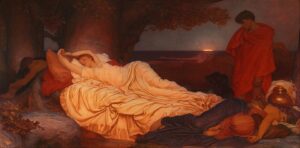
Leighton’s artistic language combines the discipline of academic naturalism with a sophisticated decorative sensibility. His painting style is characterized by:
– Flawless draughtsmanship and careful modeling of the figure, rooted in study from life and classical sculpture.
– Highly controlled composition, often with a central figure framed by architectural or landscape elements that direct the viewer’s attention.
– A luminous, refined handling of oil paint, with attention to surface finish and the interplay of color and light.
– Elegance of line and an emphasis on idealized beauty; faces and bodies are often smoothed toward an aestheticized ideal rather than idiosyncratic realism.
– Decorative use of pattern, textiles and architectural motifs—reflecting both his interest in ornament and his work in decorative schemes.
– A palette that evolved over time, at moments intense and saturated (as in his late, vividly chromatic pieces) and at others cool and restrained, depending on subject and mood.
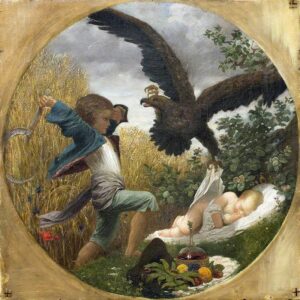
These formal qualities made Leighton a leading exponent of late Victorian classicism and aligned him, in part, with the Aesthetic Movement’s preoccupation with beauty and surface. Yet his work retained a seriousness and narrative dignity derived from classical and academic traditions.
Influences and Inspirations
Leighton drew on a wide range of influences:
– Ancient Greek and Roman art: Classical sculpture and relief work provided prototypes for idealized poses, drapery treatment and compositional structure.
– Renaissance masters: Leighton studied the works of Raphael, Titian and other Italian painters for their harmony of composition and mastery of color.
– Academic tradition: His approach reflects the pedagogy and values of European academies—importance of life-drawing, anatomical knowledge and historical subject matter.
– Contemporary European painting: Time spent in Rome, Florence and Paris exposed him to currents in contemporary painting and the decorative approaches of colleagues.
– Literature and mythology: Classical mythology, ancient history, poetry and Renaissance literature supplied recurrent narratives—Psyche, Andromeda, Perseus—that Leighton translated into pictorial form.
– Decorative arts and interior design: His interest in mosaic, tilework and ornament influenced the surface treatment and patterning in many of his paintings.
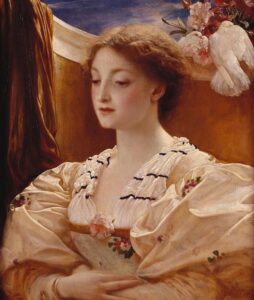
Leighton’s synthesis of these influences resulted in a personal idiom: academic in method, aesthetic in finish, and classical in content.
Famous Works
Below are at least five notable artworks by Frederic Leighton, with short explanations and details of medium and present location.
1. Flaming June
– Year: 1895
– Medium: Oil on canvas
– Current Museum or Collection: Museo de Arte de Ponce, Puerto Rico
Explanation: Flaming June is Leighton’s most iconic work and a late masterpiece. The painting depicts a sleeping woman draped in a translucent, vivid orange gown that flows over the contours of her reclining form. The composition is notable for its sculptural modeling of the body, the jewel-like color palette and the poignant stillness of the subject. The painting’s rediscovery and restoration in the 20th century significantly enhanced Leighton’s modern reputation and made Flaming June a symbol of Victorian aestheticism.
2. The Fisherman and the Syren (also titled The Fisherman and the Siren)
– Year: 1856
– Medium: Oil on canvas
– Current Museum or Collection: Tate Britain, London
Explanation: This early, dramatic canvas captures a mythic encounter between a mortal fisherman and a seductive water spirit. The work manifests Leighton’s command of complex figural composition and mood—dark, moody waters contrast with the luminous figures. The painting reflects themes of temptation and the fatal allure of the supernatural, and it demonstrates his early engagement with romantic subject matter alongside classical form.
3. Perseus and Andromeda
– Year: 1891
– Medium: Oil on canvas
– Current Museum or Collection: Walker Art Gallery, Liverpool
Explanation: Leighton’s Perseus and Andromeda revisits the classical rescue narrative with theatrical flair and refined draughtsmanship. The canvas foregrounds the heroic figure of Perseus, the bound Andromeda and a carefully staged spatial depth that combines rocky seascape with classical theatricality. The painting exemplifies Leighton’s mature interest in mythologized drama rendered with clarity and polished surface.
4. The Bath of Psyche
– Year: c. 1890
– Medium: Oil on canvas
– Current Museum or Collection: Leighton House Museum, London
Explanation: The Bath of Psyche is representative of Leighton’s late classical figure-pieces, focusing on a mythic female protagonist in an intimate, contemplative moment. The painting emphasizes delicate modelling, serene compositional balance and ornate details—mosaics, draperies and classical furnishings—that mirror the decorative environment of Leighton’s own house. It highlights his sensitivity to texture and the eloquent arrangement of the human figure within a carefully designed interior.
5. Clytie
– Year: 1872
– Medium: Oil on canvas
– Current Museum or Collection: The Walker Art Gallery, Liverpool (or Leighton House Museum; works by Leighton are held in both collections)
Explanation: Clytie, a subject drawn from classical myth, portrays the sorrowful girl transformed into a flower as she pines for Apollo. Leighton’s treatment emphasizes melancholic beauty and an elegiac mood, with lyrical line and refined surface tone that evoke the sentimentalism and moral resonance of myth interpreted through Victorian sensibility.
6. The Garden of the Hesperides
– Year: 1892
– Medium: Oil on canvas
– Current Museum or Collection: Birmingham Museums and Art Gallery (or other major British collection)
Explanation: As a decorative, large-scale composition motivated by mythological narrative, this painting combines luxuriant landscape detail with the serene, almost sculptural presence of classical figures. The work demonstrates Leighton’s capacity to orchestrate complex spatial arrangements and to integrate decorative foliage, architecture and figural groupings into a cohesive aesthetic whole.
Note: Many Leighton works are in public collections across Britain and internationally—Tate, Victoria and Albert Museum, the Walker Art Gallery, Birmingham Museums, Leighton House Museum and others. Titles and locations provided here reflect principal known holdings and major public exemplars; individual paintings can be subject to loan, rotation and changing displays.
Legacy and Influence
Leighton’s legacy is multifaceted. As a painter he helped sustain academic classicism at a moment when new movements—Impressionism and later modernism—were gaining ground. His emphasis on draughtsmanship, public-spirited commissions and formal beauty left a durable imprint on British art institutions. As a public figure—occupying leadership roles and contributing to artistic policy—Leighton influenced generations of artists and the structure of the British art world.
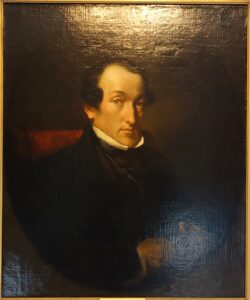
His decorative projects and the design of his studio-home became a model for the integration of visual arts into domestic spaces, anticipating later modern notions of total design. The revival of mid-20th-century interest in Victorian art re-established Leighton’s reputation, with Flaming June becoming an emblem of Victorian aesthetics in museum displays and popular culture. Today Leighton is appreciated both for his technical mastery and as a window onto Victorian taste, the classical revival and the role of picture-making in public and private life.
Market Value and Collectibility
Leighton’s paintings remain desirable in the market for several reasons:
– Quality and rarity: Many of his major works are retained in public collections, making high-quality examples scarce on the market.
– Iconic status: Works such as Flaming June have high cultural recognition, increasing the value of comparable paintings and studies.
– Decorative appeal: His mastery of figural beauty, color and surface make his works attractive to collectors interested in Victorian decorative painting.
Market observations:
– Large, major canvases in good condition that can be verified with provenance and exhibition history command the highest prices.
– Smaller works, studies or works on paper are more accessible to private collectors and can still achieve strong results at auction.
– Condition, provenance, and exhibition history significantly affect value; works with documented heritage and presence in catalogues raisonnés or major exhibitions attract premium pricing.
– Because many major Leighton works are in museums, collectors may focus on preparatory studies, drawings, watercolors and minor canvases for acquisition.
For buyers and investors, consultation with specialists in Victorian art, thorough condition reports and provenance research are essential. The market for Victorian academic painting is specialized but steady, with strong institutional interest and a committed collector base.
Museums and Collections
Frederic Leighton’s works are held in numerous public collections worldwide. Key repositories include:
– Leighton House Museum, London: the artist’s former home retains decorative schemes, studies and paintings and is essential for understanding his decorative practice.
– Tate Britain, London: holds important examples of his oeuvre and is a resource for study of Victorian painting.
– Walker Art Gallery, Liverpool: houses significant canvases and has a strong collection of 19th-century British art.
– Birmingham Museums and Art Gallery: contains works that exemplify Leighton’s classical themes and decorative leanings.
– Museo de Arte de Ponce, Puerto Rico: home to Flaming June, one of Leighton’s most famous paintings.
– Various regional museums and private collections in the UK and abroad also hold paintings, studies and drawings.
These institutions regularly feature Leighton in exhibitions exploring Victorian art, classicism and the art of the Aesthetic Movement.
Interesting Facts
– Leighton House Museum: Leighton designed his London home and studio to display his art and decorative tastes; the Arab Hall of the house features an extraordinary mosaic floor and Middle Eastern-inspired décor.
– International upbringing: Leighton’s cosmopolitan childhood—spent in Italy, France and Germany—gave him direct access to classical and Renaissance sources and contributed to his European sensibility.
– Leadership in the arts: Leighton served in senior roles within British artistic institutions, influencing exhibitions, policies and the promotion of the arts at a national level.
– Late-career color: Many of Leighton’s most celebrated works, including Flaming June, date from the last decade of his life and show a powerful and intense chromatic sensibility.
– Popular revival: Though his reputation waned in the early 20th century with the rise of modernism, Leighton experienced a mid- to late-20th-century reassessment; Flaming June became a popular icon and drew renewed public interest to Victorian painting.
FAQ
Who was Frederic Leighton and why is he important?
Frederic Leighton was a leading British painter and sculptor of the Victorian era, known for his technically refined, classically inspired figure paintings and for his role in British art institutions. He is important for his contribution to academic classicism, decorative schemes and for influencing late 19th-century British taste.
What are Frederic Leighton’s most famous paintings?
Leighton’s most famous painting is Flaming June (1895). Other notable works include The Fisherman and the Syren, Perseus and Andromeda, The Bath of Psyche and Clytie. These works showcase his mastery of figure composition, classical narratives and decorative surface treatment.
Where can I see Frederic Leighton’s work in person?
Major collections with Leighton works include Leighton House Museum (London), Tate Britain (London), Walker Art Gallery (Liverpool), Birmingham Museums and Art Gallery, and Museo de Arte de Ponce (Puerto Rico), among others. Leighton House is particularly significant for its preserved studio and decorative interiors.
How much do Frederic Leighton paintings sell for?
Prices vary widely depending on size, subject, provenance and condition. Major museum-quality canvases are rare and can command high sums if they appear on the market, while studies, drawings and smaller works are more accessible. Provenance, exhibition history and condition reports are critical in assessing market value.
What themes and subjects did Leighton favor?
Leighton favored classical mythology, ancient history, allegory and the idealized figure. He frequently painted mythic heroines, heroic narratives and decorative interiors that emphasize beauty, elegance and formal harmony. His themes reflect both academic narrative painting and the aesthetic preoccupation with beauty.
AI Notice: Some visual content in this article may have been created or enhanced using artificial intelligence (AI) for artistic, editorial or illustrative purposes. Learn more about our approach in our AI & Editorial Principles.