Victorian Era Gowns: The Hidden Details That Made Them So Alluring
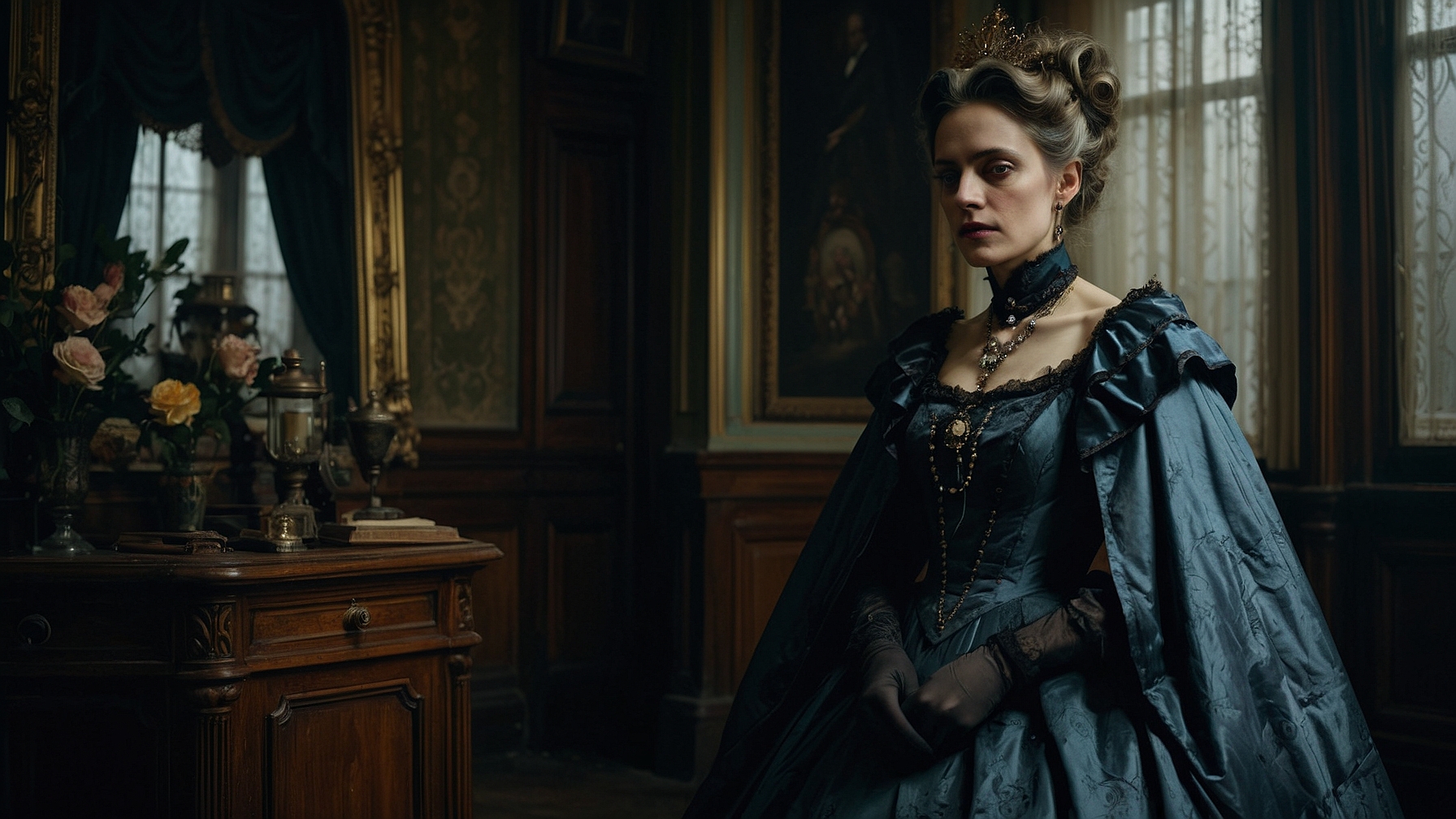
Victorian era gowns were not merely beautiful garments—they were engineered statements about class, morality, industry, and the rapidly shifting role of women in the 19th century. From the restrained silhouettes of the 1840s to the architectural bustle of the 1880s, these dresses encoded social rules as clearly as they expressed taste. Today, museums such as The Metropolitan Museum of Art (New York) and the Victoria and Albert Museum (London) preserve thousands of surviving examples, allowing us to read the era’s values in silk, wool, whalebone, steel, and stitchwork. What emerges is a history as structured as the gowns themselves: precise, layered, and shaped by global forces.
Defining Victorian Era Gowns: Periods, Silhouettes, and Social Meaning
Victorian era gowns span the reign of Queen Victoria (1837–1901), but the term covers multiple distinct fashion phases. Early Victorian styles of the 1840s and 1850s typically featured sloping shoulders, tight bodices, and full skirts supported by many petticoats. Mid-century introduced the crinoline (a cage-like support), and later decades brought the bustle, shifting volume to the back and creating an unmistakable profile. Because these changes were chronological and dramatic, dating a gown often begins with its silhouette.
Can You Name the Masterpiece?
Ten masterpieces. Ten questions. How well do you know the history of art?
The gowns served as social language too; in London, Paris and industrial cities like Manchester, dress was indicative of respectability and class (or pretentions to the same) especially for the burgeoning middle classes. Day dress in sober dark wool suggests the restrained respectability; evening dress in silk, with low cut necklines and short sleeves indicated to the world that we are guests at separate occasions, and other standards of decorum applied. Museums routinely face up to this distinction; the V & A Museum exhibits are motivated by this, with their emphasis on ‘materials, making, and meaning’ of dress in the context of both ceremony and common life.
Moreover, class, institutions, and transnational exchanges further defined Victorian dress: Britain, funneling its empire‘s cocoons and cottons into increasingly efficient supply chains; France, dominating high-end couture; and America, a rising industrial manufacturing giant, were main drivers. Sewing, shopping, and Instagramming ones’ wardrobe arrangements became more organized above all in the world‘s two leading fashion epicenters, London and Paris, whose department stores and fashion magazines provided just a little more access than before to the latest fashions. As the Costume Institute at New York‘s Metropolitan Museum of Art makes clear in its permanent collections, the gowns that survived are as much industrial modernist objects as they are manifestations of individual taste.
Construction and Materials: How Victorian Gowns Were Engineered
A Victorian gown was an assembled system: bodice, skirt, understructure, and finishing layers worked together to create the correct line. Understructures were essential. Early fullness relied on multiple petticoats; by the 1850s, the crinoline (often steel-hooped) dramatically widened skirts, reducing the weight women had previously carried in layered fabric. Later, the bustle reoriented volume to the rear, supported by pads, frames, and tailored overskirts.
Can You Guess the Artist?
Three clues. One artist. How quickly can you identify the painter?
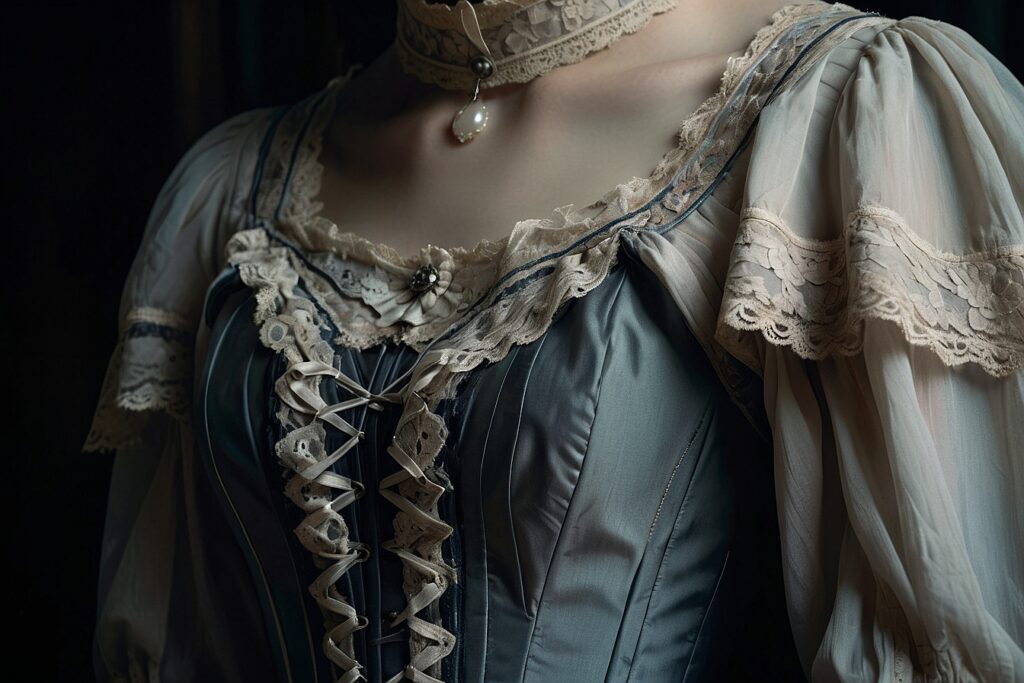
Materials signify status and occasion. Silk taffeta, satin, and moire are dressy, while cotton, wool, daywear and working wardrobes. The Smithsonian Institution shows how production and innovation expanded the colors and patterns of textile during the second half of the nineteenth century, adding the increase of access to cotton and the advent of chemical dyes. At the same time, trims like lace, fringe, passementerie and beading are indicitive of decoration and labor (handmade or bought).
Conservators on both sides of the Atlantic have frequently pointed to the technical acumen of these garments. The Metropolitan Museum of Art has stated that dress is a design craft which ‘demands mastery of cut and structure…’ knowledge which is revealed in the exhibition of original seams, boning channels and meticulously applied closures. It is relevant because these Victorian dresses cannot be considered costumes; they are high-performance clothing built to fulfill the demands of social schedules, travel and the limitations of Victorian ideals.
Style Evolution Across the Century: From Crinoline to Bustle
The early Victorian period (1837–1850) favored a relatively natural shoulder line and bell-shaped skirts, with bodices emphasizing a narrow waist through darts and boning. Skirts expanded steadily through the 1850s as crinolines became common, creating the famous dome silhouette seen in portraits and surviving garments across European and American collections. This phase coincided with industrial scaling—textiles, trimmings, and sewing tools became more widely available, accelerating style change.
The 1860s and 1870s were a period of transition. Skirts pinned at the front and slowly grew extended behind us, leading to the to the first bustle period. By the 1880s the bustle was an engineered shelf-like form the quintessential Victorian answer to beautiful things to be seen and for the fashion hungry to show off. Paris central to this transition in its relationship to couture and fashion coverage but the shape was eagerly adopted and made their own very quickly in London and New York through the work of local dressmakers and retailers.
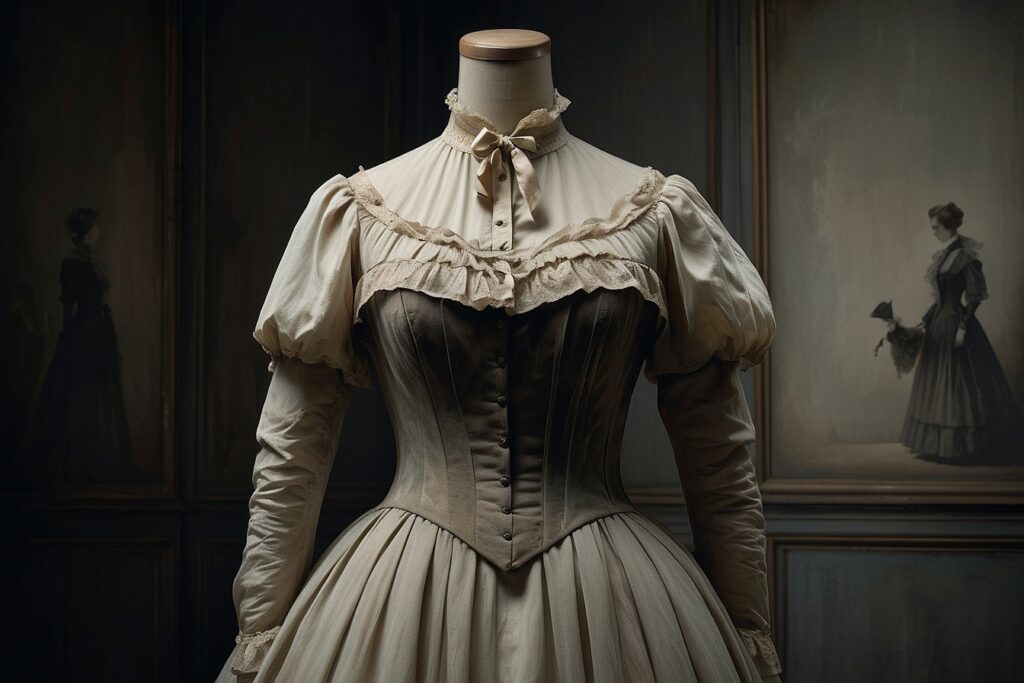
During the 1890s, these lines resumed their earlier curves: Banished, again, were the intrusive busk and petticoats, and the full, pouched skirts evolved into straighter, more refined lines. Last to be worn were those picture-frame sleeves, which leant added volume to the shape resembling a leg of mutton. This later Victorian silhouette echoed the rhythms of social change the broader education of women, the provision of a more varied social arena, and the increasing desire on the part of women to cycle and participate in outdoor pastimes. Examples in the collection of the Victoria and Albert Museum and The Met show how fashion had moved towards the lines that would inform the early Edwardian period:
Key Characteristics at a Glance (Table)
| Feature | Early Victorian (1837–1850) | Mid Victorian (1850s–1860s) | Late Victorian (1870s–1890s) |
|---|---|---|---|
| Primary silhouette | Full skirt, fitted bodice | Dome skirt via crinoline | Bustle, then smoother skirt |
| Understructure | Petticoats, light boning | Steel-hoop crinoline | Bustle frames, pads, tailored supports |
| Typical fabrics | Wool, cotton; silk for evening | Silk taffeta, printed cottons | Silks, wools; richer trims, complex drapery |
| Visual emphasis | Waist + modest neckline (day) | Maximum skirt width | Back volume (1880s), sleeve volume (1890s) |
| Common contexts | Home, church, formal visits | Public promenades, court events | Urban social life, theater, expanding leisure |
Museums, Provenance, and What Surviving Gowns Tell Us
Because Victorian gowns were worn, altered, and reused, intact examples are especially valuable. Institutions such as the Victoria and Albert Museum and the Metropolitan Museum of Art preserve garments alongside documentation of makers, wearers, and materials—turning fashion into evidence-based history. Provenance (who wore it, where, and when) can reveal networks of trade, etiquette, and even family economies, since gowns were often remade as bodies changed or as styles evolved.
Similarly, curatorial interpretation can combat the myth of Victorian women in outrageous corsets. Journeys through the collections reveal many examples of supportive, lightly boned or even no-bone bodices, as well as adaptations for maternity wear and ‘granny getsup’ practicality. As the V&A continues to reveal through its quilting and costume displays, there was no one ‘Victorian woman‘s dress’, but a wide range of clothes according to age, class, place and time.
Significance of major European Museums expands the scope still further. It is Paris, was the fashion capital in the world and is remembered for its fine art and we can equate we think that Paris was the fashion capital and it cannot draw apart the Victorian Dress industry across the world. The similarities of museum collections across the three great fashion cities of London, Paris and New York also indicate the shared visual language of silhouette with regional variations in fabric, trimmings and construction standards.
Authoritative Quotes and Sources (for further reading)
- The Metropolitan Museum of Art (The Costume Institute): Collection essays and object records on 19th-century women’s fashion, construction, and silhouette chronology.
- Victoria and Albert Museum: Fashion collection research and gallery interpretations of Victorian dress and textiles.
- Smithsonian Institution: Resources on American dress history, textiles, and the industrial context of clothing.
- The Louvre Museum: Context for 19th-century French art and visual culture that documented and influenced fashion.
Authoritative perspective (museum framing):
- The Met characterizes fashion as a serious design discipline preserved through “exceptional examples of dress” that document craft, materials, and changing taste (Met Costume Institute collection texts and object entries).
- The V&A emphasizes garments as cultural documents—objects that reflect technology, social practice, and identity (V&A fashion collection interpretation and research pages).
(Readers can consult each institution’s official collection databases and research articles for object-level documentation and peer-reviewed curatorial writing.)
Frequently Asked Questions
1) What makes a dress specifically a “Victorian era gown”?
A Victorian gown dates between 1837 and 1901 and typically reflects the era’s defining silhouette shifts (petticoats → crinoline → bustle → late-century smoothing). Construction methods—boned bodices, period-appropriate seams, closures, and fabric types—also help authenticate it.
2) Did all Victorian gowns require a corset?
Most formal and many day styles relied on structured foundations, but surviving garments show a range from heavily boned to relatively light support. Fit was achieved through multiple means: corsetry, bodice tailoring, and understructures like crinolines or bustles.
3) Why did skirt shapes change so dramatically during the century?
Changing aesthetics, industrial production, and social signaling all played roles. New materials (like steel hoops) enabled new forms; fashion cycles and urban consumer culture encouraged frequent stylistic shifts.
4) Where can I see authentic Victorian gowns in person?
Major collections include the Metropolitan Museum of Art (New York), the Victoria and Albert Museum (London), and the Smithsonian museums in Washington, D.C., which regularly display 19th-century garments and provide detailed object documentation.
Victorian era gowns endure because they combine artistry with engineering—garments built to express the ideals, anxieties, and ambitions of a century reshaped by empire, industry, and modernity. Studying surviving examples in institutions like the Met, the V&A, and the Smithsonian reveals not just changing silhouettes, but changing lives: what people valued, how they moved through cities, and how identity could be cut, stitched, and structured into cloth.
AI Notice: Some visual content in this article may have been created or enhanced using artificial intelligence (AI) for artistic, editorial or illustrative purposes. Learn more about our approach in our AI & Editorial Principles.