Mozart’s Concerto No. 21 in C Major: The Secret Behind Its Magic
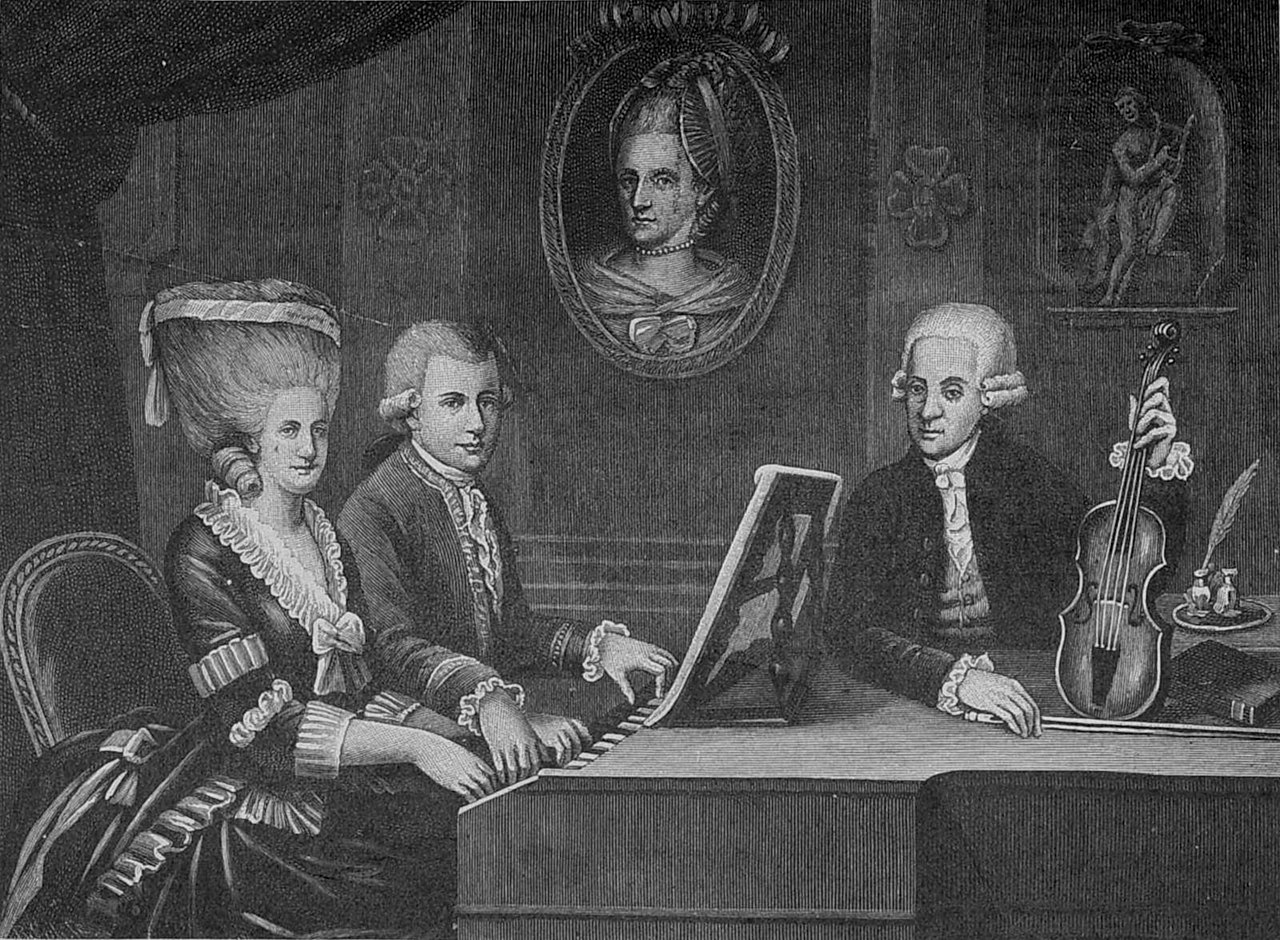
Mozart’s Piano Concerto No. 21 in C major, K. 467 has a rare double life: it is both a pillar of the Classical concert hall and a piece many listeners recognize instantly—sometimes without knowing its name—because its slow movement has seeped into modern cultural memory. Yet the concerto’s fame can obscure what makes it truly exceptional: a work composed at white‑hot speed in Vienna in 1785, at the height of Mozart’s powers, that fuses theatrical brilliance with chamber‑like intimacy. Heard in full, it is not just “beautiful Mozart,” but a sophisticated statement about public performance, virtuosity, and the ideals of the Enlightenment-era musical city.
Vienna, 1785: A Concerto for a Public City
The concerto was written in the middle of Mozart‘s great Vienna concert years, in which he was operating as composer, pianist, and businessman. In 1785 Vienna (the capital of the Habsburg Empire) boasted a vibrant subscription concert life in the aristocratic salons and public spaces of the city. Mozart was producing piano concertos at an incredible rate for these occasions, and K 467 was one of a trio written in that prolific year, including K 466 and K 488.
Can You Name the Masterpiece?
Ten masterpieces. Ten questions. How well do you know the history of art?
And understanding when the concerto was first performed is important in understanding its fusion of bravura and thoughtfulness. Mozart was aiming to engage a public made up of both connoisseurs, who expected sophisticated contrapuntal passages, and a crowd who desired flashy showmanship and hummable tunes. The outcome is a work that seems to converse naturally in a range of registers: pompous tuttis, cheeky solis and winds interchanges, and contemplative interludes.
Mozart‘s cultural world, of course, was also constituted by the institutions and collections that now preserve, study, and mediate this era. Major collections of 18th-century decorative arts and musical instruments in the Metropolitan Museum of Art (New York) and the Victoria and Albert Museum (London) help reconstruct the material culture of Mozart‘s Vienna: the domestic spaces, domestic objects, instrument collections, and social networks that structured music making in this era. (The Smithsonian Institution (Washington D. C.) places Enlightenment-era craft and technology in a broader context that helps to explain the rapid development of the piano during Mozart‘s lifetime.)
Musical Design and Key Characteristics (K. 467)
K. 467 follows the standard three-movement concerto plan, but within that framework Mozart is exceptionally inventive. The first movement (Allegro maestoso) projects public grandeur in C major, then continuously breaks the surface with surprising turns: quicksilver modulations, pointed wind interjections, and a solo part that alternates between sparkling passagework and lyrical poise. The second movement (Andante) is the famous one, but it is not mere “pretty music”—it is a carefully controlled meditation in F major, where time feels suspended and the orchestra becomes a soft halo around the piano line. The finale (Allegro vivace assai) restores bright motion with a buoyant, dance-like energy and crisp formal control.
Can You Guess the Artist?
Three clues. One artist. How quickly can you identify the painter?
A defining feature is Mozart’s handling of the wind section. In many Classical concertos, winds can feel like coloration; here they are characters. The woodwinds frequently carry important thematic statements and respond to the soloist with conversational intimacy, creating an almost operatic sense of dialogue—no surprise from a composer simultaneously active in opera and theatre.
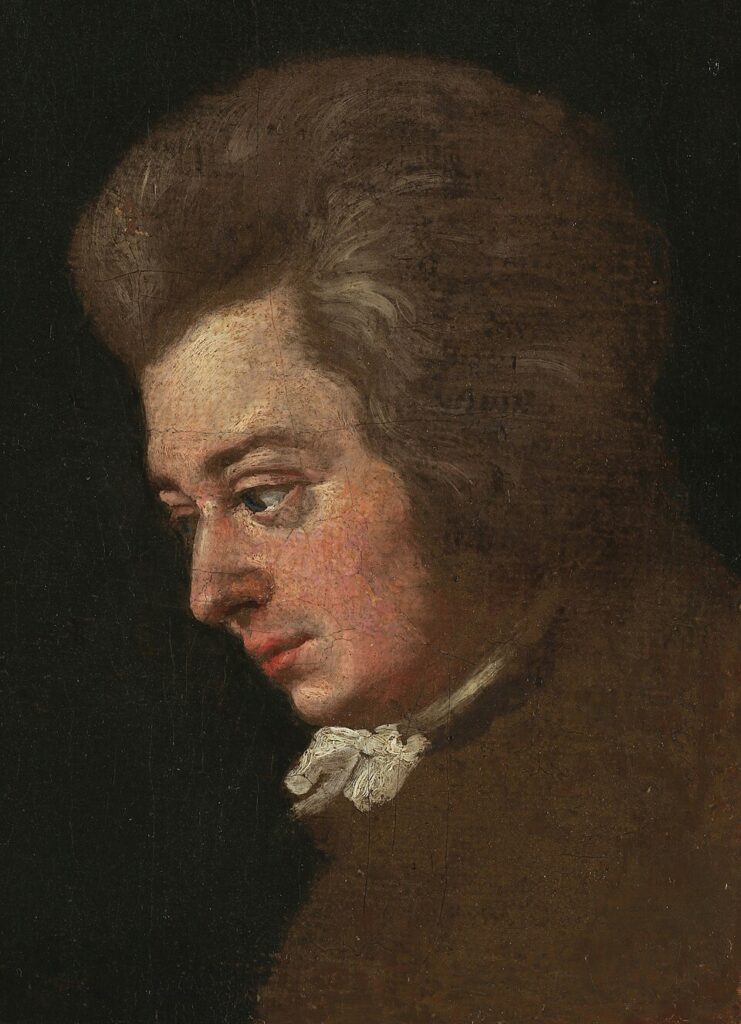
The concerto’s enduring strength is its clarity. Even when textures become elaborate, the musical argument stays lucid: themes are distinct, transitions purposeful, climaxes earned. That lucidity—so prized by later writers—helps explain why the work became a reference point for what a “Classical” concerto should sound like.
Key characteristics at a glance
| Feature | Details |
|---|---|
| Work | Piano Concerto No. 21 in C major, K. 467 |
| Composer | Wolfgang Amadeus Mozart (1756–1791) |
| Place & period | Vienna, Classical period (late 18th century), composed 1785 |
| Movements | I. Allegro maestoso; II. Andante; III. Allegro vivace assai |
| Overall character | Public brilliance + intimate lyricism; strong wind writing |
| Signature moment | The Andante in F major: sustained cantabile line and luminous orchestration |
| Typical performance forces | Solo piano; Classical orchestra with prominent woodwinds |
The Andante: Fame, Misunderstanding, and Real Depth
The second movement’s fame is a mixed blessing. Because it has been widely excerpted, it is sometimes treated as standalone “background beauty.” In context, however, the Andante functions as the concerto’s emotional axis: it is the point where public display yields to private reflection. Its melodic line is simple enough to feel inevitable, yet shaped with extraordinary care—especially in how Mozart paces harmonic change and uses the orchestra as a breathing, responsive body.
The movement’s affect has prompted evocative commentary from musicians and scholars. While interpretations vary, a reliable anchor is the broader historical assessment of Mozart’s expressive economy. Alfred Einstein, in his influential study Mozart: His Character, His Work, famously wrote that in Mozart “the greatest effects are achieved with the simplest means.” That observation fits K. 467’s Andante precisely: its power comes not from density but from restraint and balance.
For listeners wanting a historically grounded way into the sound world, museum collections help. Keyboard instruments and orchestral artifacts in institutions such as the Victoria and Albert Museum and the Metropolitan Museum of Art contextualize the lighter, quicker decay of 18th‑century pianos and the timbral blend Mozart expected with period winds. This matters: on a fortepiano, the Andante’s singing line is not “romantically sustained” by sheer volume, but shaped by articulation, ornament, and the natural transparency of the instrument.
Performance Tradition, Scholarship, and Where to Hear It Today
K. 467 has lived through multiple interpretive eras: 19th‑century Romantic expansion, mid‑20th‑century modernist clarity, and late‑20th/21st‑century historically informed performance (HIP). Each has emphasized different truths. Romantic readings highlight long-breathed lyricism and grandeur; HIP approaches reveal the concerto’s rhythmic bite, lighter textures, and sharper contrasts—often making the finale sound more airborne and the first movement more theatrically “maestoso” rather than heavy.
Authoritative scholarship and institutional resources give modern listeners stable footing. The New Grove Dictionary of Music and Musicians (Oxford University Press) remains a standard reference for Mozart’s concerto output, and the Neue Mozart-Ausgabe (New Mozart Edition) provides critical texts used by performers and researchers. For historically oriented listening, recordings that draw on scholarship (including period instruments and classical-era articulation) can illuminate details that are sometimes blurred in more generalized “lush” approaches.
Museums also contribute indirectly by preserving and interpreting the broader 18th‑century visual and material culture that shaped audience expectations. The Louvre Museum and the Metropolitan Museum of Art, for example, maintain major collections of 18th‑century European art—portraits, interiors, decorative arts—that help us picture the social environments where concertos like K. 467 were heard: refined rooms, carefully managed public etiquette, and a taste for elegance that Mozart both served and transcended. The Smithsonian Institution, as a major research and museum complex, similarly supports public understanding of the era’s craft, design, and technology—part of the same world that produced the evolving piano.
A Closer Look at the Three Movements
Like most mature Classical concertos, Piano Concerto No. 21 follows a three-movement structure that balances drama, lyricism, and exuberance. Each movement serves a distinct emotional and architectural purpose, revealing Mozart’s extraordinary ability to combine formal precision with expressive freedom.
The opening Allegro maestoso immediately establishes an atmosphere of confidence. Rather than allowing the piano to dominate from the outset, Mozart introduces the principal themes through the orchestra before inviting the soloist into an extended musical dialogue. Throughout the movement, the piano alternates between dazzling virtuosity and moments of remarkable restraint, often responding to the orchestra rather than overpowering it. This conversational approach became one of the defining characteristics of Mozart’s mature concertos.
The celebrated second movement, Andante, provides one of the most serene moments in all of Classical music. Built upon a gently flowing accompaniment and an unforgettable melody, it creates an atmosphere that many listeners describe as timeless or almost dreamlike. Although deceptively simple on the surface, the movement demonstrates Mozart’s mastery of harmonic pacing and orchestral color, allowing subtle emotional shifts to emerge without dramatic gestures.
The concluding Allegro vivace assai restores brightness and energy through playful rhythmic exchanges and sparkling piano writing. Themes pass effortlessly between soloist and orchestra, creating a sense of joyful conversation rather than competition. The finale ultimately reinforces one of Mozart’s greatest strengths: his ability to combine technical brilliance with an irresistible sense of elegance.
Why the Andante Became World Famous
Although the concerto has always been loved by musicians throughout its history, the second movement has been so popular that it is difficult to think of a Classical piece with similar level of fame. Most of the population recognize the Andante even if they cannot tell the composer and the name of the piece.
For this general awareness, one of the key events was the appearance of the generation-defining music in Swedish film Elvira Madigan (1967). The music‘s power was such that the concerto was immediately given an unofficial name “Elvira Madigan Concerto” by the press in a great many countries. While musicologists often stick to its official title, the nickname introduced Mozart‘s music to millions of new ears.
Since this time, the Andante has been used in countless movies, TV shows, documentaries, commercials, and celebrations. Its simple, romantic lyricism has made it perfect for moments of reflection, hope, love, memory, or tranquility. Few works from the eighteenth century have been used in our popular culture more frequently.
Mozart’s Revolutionary Use of the Orchestra
Amazingly, one of the things that still make Piano Concerto No. 21 a favorite among performers is Mozart‘s high level of orchestration. Unlike many of the keyboard concertos before it in which the orchestra serves as little more than a musical backdrop for the soloist, K. 467 involves every group of instruments as a contributing voice.
The woodwinds are especially active over the course of the concerto. Flutes, oboes, bassoons, and horns are frequently the ones to state the themes, respond to the piano, or add in-character voiceings to the overall ensemble. They cease to be mere accompaniment, and become voice partners on par with the piano.
This mirrored interplay is characteristic of the broader conception Mozart had of the concerto, as a ‘drama’ of conversing musicians rather than a platform for virtuosic exceptionality. The piano has its moments of shine, but also listens and interacts with the orchestra, echoing and imitating musical material as Romantic and other nineteenth-century composers from Beethoven to the twentieth century will do.
Performance Practice Then and Now
They often perform the 21st on a modern concert grand, which has a far greater potential for subtlety and volume. Mozart heard the work performed on a very different instrument an early fortepiano with a more fragile tone and relatively lighter action.
The challenge of the smaller instrument was increased transparency; with the ability of the instrument to carry the bigger Italian style no longer possible, all the density of the passage could be heard without overwhelming the orchestra. But contemporary performers actually now face an interpretative dilemma: should they exploit the expressive generosity of modem music or seek to offer the purity and transparency of late eighteenth-century performance?
While period instrument performances have gained popularity in recent decades and allow the listener to hear the music as Mozart himself might have, many of the best of today‘s pianists continue to show that with the modern piano, the concerto remains equally masterful.
Why the Concerto Still Captivates Audiences
More than two centuries after its premiere, Piano Concerto No. 21 remains one of the most frequently performed works in the piano repertoire. Its enduring popularity is not simply the result of one famous melody but of the remarkable balance Mozart achieves between technical brilliance and emotional sincerity.
The concerto rewards repeated listening because its apparent simplicity conceals extraordinary craftsmanship. Every theme feels inevitable, every orchestral entrance purposeful, and every virtuosic flourish serves the larger musical narrative rather than existing merely to impress. This rare combination of accessibility and sophistication explains why the work continues to enchant first-time listeners while remaining a lifelong source of fascination for musicians, scholars, and devoted concertgoers around the world.
Frequently Asked Questions
What is Mozart’s Concerto No. 21 best known for?
It is best known for its second movement (Andante), often performed separately. In the full concerto, that movement gains meaning as the reflective center between two extroverted outer movements.
When and where did Mozart compose K. 467?
Mozart composed it in Vienna in 1785, during an intensely productive period when he wrote piano concertos for subscription concerts and public performance.
What makes the orchestration special?
The concerto features unusually active woodwinds that do more than color the harmony: they engage in dialogue with the piano, often carrying thematic material and shaping the drama of transitions.
Is it better on modern piano or fortepiano?
Both can be persuasive. A modern piano offers sustained singing tone and dynamic range; a fortepiano (or HIP approach) can reveal sharper articulation, clearer balances, and the timbral blend Mozart likely expected with Classical winds.
What are reliable sources to learn more?
Authoritative starting points include The New Grove Dictionary of Music and Musicians, the Neue Mozart-Ausgabe, and major cultural institutions’ educational resources—alongside contextual collections at the Metropolitan Museum of Art, Victoria and Albert Museum, the Louvre, and the Smithsonian Institution for period material culture.
The Famous Second Movement: Why Everyone Recognizes It
Although the concerto is admired as a complete work, its second movement—Andante—has achieved a level of fame that few pieces of classical music ever reach.
Built upon a gentle, flowing melody supported by muted strings, the movement creates an atmosphere of serenity that feels almost timeless. Unlike dramatic operatic arias or dazzling virtuoso passages, the music never forces emotion upon the listener. Instead, it unfolds with remarkable simplicity, inviting quiet reflection rather than theatrical excitement.
For many audiences, this movement became especially familiar after its appearance in films, television, and documentaries throughout the twentieth century. As a result, countless people recognize the melody instantly without realizing they are listening to one of Mozart’s greatest piano concertos.
Its popularity has also introduced new generations to classical music, often serving as a first encounter with Mozart’s orchestral works.
A Perfect Balance Between Soloist and Orchestra
One reason Piano Concerto No. 21 remains a favorite among performers is the extraordinary relationship between the piano and the orchestra.
Unlike earlier concertos, where the orchestra frequently serves only as accompaniment, Mozart creates an ongoing musical conversation. Woodwinds answer the pianist’s phrases, strings introduce new ideas, and orchestral passages often develop themes independently before the piano rejoins the discussion.
This equality reflects Mozart’s remarkable understanding of instrumental color. Every section of the orchestra contributes to the overall narrative, making the concerto feel less like a display of virtuosity and more like a dialogue among musical partners.
Even during technically demanding passages, the piano never overwhelms the ensemble. Instead, brilliance emerges through elegance, clarity, and expressive nuance.
Why Performers Never Stop Returning to K. 467
For concert pianists, Mozart’s Piano Concerto No. 21 presents a unique challenge. At first glance, the score appears less technically intimidating than many Romantic concertos by composers such as Liszt or Rachmaninoff. Yet experienced musicians often describe Mozart as one of the most difficult composers to perform convincingly.
Every phrase demands absolute precision. Small differences in articulation, timing, dynamics, and touch become immediately noticeable because the musical texture is so transparent. There is little room to hide behind thick orchestration or overwhelming virtuosity.
This delicate balance explains why every generation discovers new interpretations of the concerto. Some performances emphasize Classical elegance and restraint, while others highlight warmth, lyricism, and expressive freedom. Each approach reveals different facets of Mozart’s extraordinary craftsmanship.
The Concerto’s Enduring Legacy
More than two centuries after its premiere, Piano Concerto No. 21 continues to occupy a central place in the international concert repertoire.
Leading orchestras program it regularly, conservatories use it to teach Classical style, and recordings by renowned pianists continue to attract millions of listeners worldwide. Advances in historically informed performance have also encouraged musicians to explore how the concerto may have sounded using period instruments and eighteenth-century performance practices.
Despite these evolving interpretations, the work’s essential appeal remains unchanged. It combines intellectual sophistication with immediate emotional accessibility—an achievement that few compositions have matched.
Why Mozart’s Music Still Feels Modern
Part of Mozart’s enduring popularity lies in his ability to express profound emotion without excess. Rather than relying on dramatic effects alone, he creates music that feels balanced, conversational, and deeply human.
Piano Concerto No. 21 embodies this ideal perfectly. Joy, contemplation, elegance, humor, and quiet melancholy coexist naturally within a single composition, reflecting the complexity of human experience itself.
This emotional honesty allows modern audiences to connect with the concerto just as listeners did in Vienna in 1785. While fashions in music have changed dramatically, Mozart’s ability to communicate beauty with remarkable clarity continues to transcend historical boundaries.
A Concerto Built Around Contrast
The second movement, Andante, is undoubtedly the part most responsible for the concerto’s extraordinary afterlife.
Its slow, flowing character creates an almost dreamlike contrast with the brilliance of the first movement. The orchestral writing is restrained, leaving space for the piano to sing rather than perform in a purely virtuosic manner. Instead of demanding attention through speed or volume, Mozart creates intensity through melody, pacing, harmony, and silence.
This is one reason the movement has been repeatedly separated from its original context. It can sound almost self-sufficient, as though it were written for contemplation rather than for a large public concert.
Yet hearing the Andante inside the complete concerto changes its meaning. After the energy and grandeur of the opening movement, the sudden reduction in dramatic force feels like a change of lighting on a stage. The listener moves from the public world of spectacle into something more intimate.
The movement’s later association with cinema and popular culture has reinforced this impression. Most famously, its music became closely associated with the 1967 film Elvira Madigan, which helped establish the concerto’s second-movement melody as one of the most recognizable examples of classical music in modern culture.
But the film association can also create a misleading impression. Mozart did not compose the Andante as sentimental background music. Its apparent simplicity conceals carefully controlled harmonic movement and an extraordinary sensitivity to phrase length and instrumental color.
Mozart’s Piano as a Speaking Voice
It is one of the most interesting aspects of K. 467 seems to be between virtuosic prowess and expression.
As a pianist Mozart was prodigious in his own right, and his concertos functioned to some extent as means of exhibition of the capabilities of his instrument. K. 467 however does not continually pin the pianist against the orchestra, as some later Romantic concertos did.
Puts it another way: Mozart ‘takes another tack, and seeks to establish a musical personality for the one voice that has not yet ‘drawn a portrait’.
The piano seems often to complete a thought started by the orchestra, to respond to an instrumental phrase, or to introduce a radically new character. Ornamentation is part of the dialog. Fast passages are brisk without seeming to be technically labored while slow passages give the pianist an opportunity to show mastery over tone and phrasing.
This is especially relevant when the concerto is being played on a modern concert grand. Modern pianos have much more power, sustain and range of dynamics than Mozart would ever have had. It then becomes a matter of artistic judgment by the modern performer as to where to be restrained. Treating every forte as enormous and every virtuoso passage as an opportunity for maximum speed can eliminate the delicately conversational nature of Mozart‘s writing.
Many historically-informed performances tend to take a different route with the concerto: lighter articulation and clearer textures, with instruments as close as possible to those of Mozart‘s own time, the fortepiano. Neither is necessarily the “correct” way -this difference serves to demonstrate how much interpretation affects the way we view the work.
Why K. 467 Still Sounds Surprisingly Modern
A reason for the concerto‘s continued success may lie in its very nature of multi-layered-ness.
From a casual listener’s perspective, the melodies are all that he or she needs. A pianist can focus on the Hungarian Rhapsody‘s technical challenges. A conductor may analyze its dramatic form. A theorist research its connection to the Classical concerto model. And a movie-experienced audience member who hears the Andante for the first time may be sure that he or she has heard this same tune before.
Very few pieces written in the 1700s have that sort of cultural flexibility.
Another thing the concerto reveals which is an important characteristic of Mozart’s mature style is that clarity does not equal simplicity. The music is often so coherent that it has a tired, breezy feel to it.
Themes are memorably consistent without being predictable. Virtuosity seems natural rather than contrived. Orchestral writing feels transparent even when there are many musical ideas in play.
That illusion of ease is one of the greatest illusions of Mozart.
AI Notice: Some visual content in this article may have been created or enhanced using artificial intelligence (AI) for artistic, editorial or illustrative purposes. Learn more about our approach in our AI & Editorial Principles.