
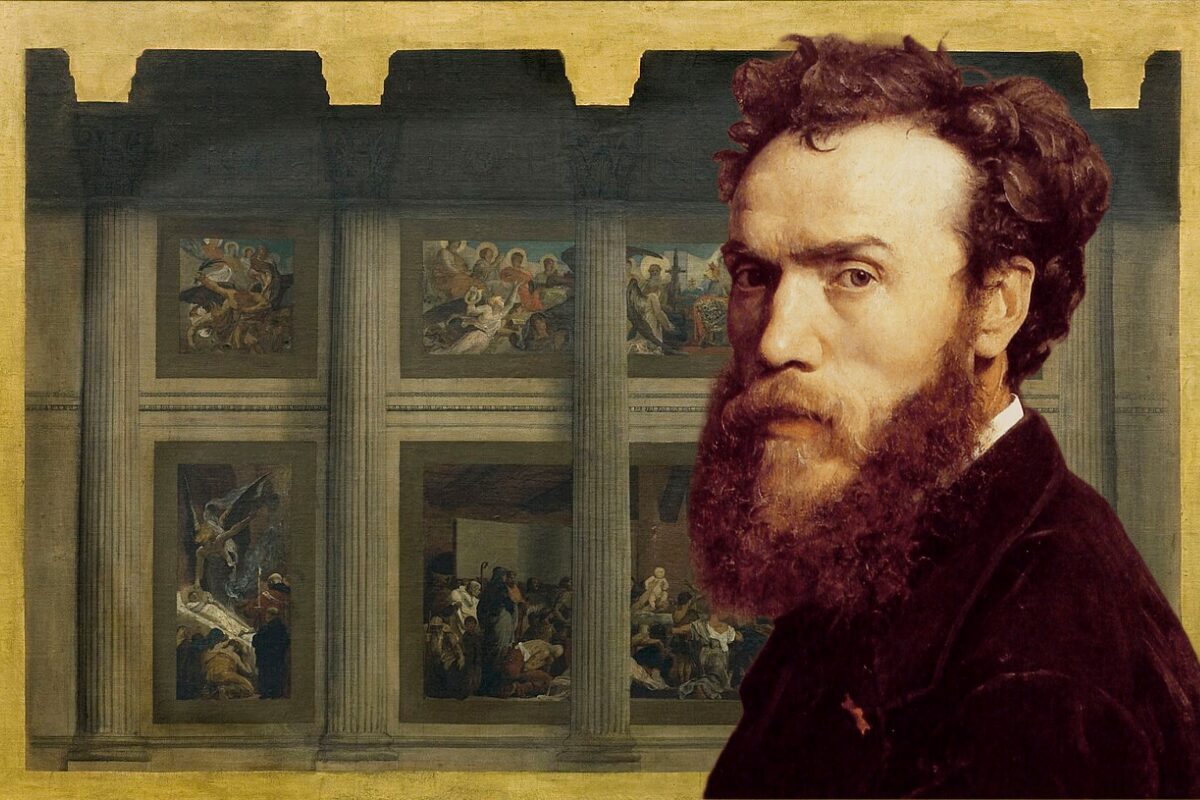
Jean-Paul Laurens
Jean-Paul Laurens (1838–1921) occupies a central place in the history of late 19th- and early 20th-century French academic painting. Renowned for his weighty historical canvases, moral narratives and monumental public decorations, Laurens established a reputation as one of the most accomplished practitioners of the history painting tradition in France at a time when the art world was undergoing vigorous change. His work is characterized by rigorous draftsmanship, a sober palette, dramatic theatricality and an insistence on narrative clarity. For collectors, curators and students of art history, Laurens represents the concluding flourish of academic historicism—an artist who both mastered classical technique and used it to interrogate political and ethical themes from antiquity to modern times.
This article traces Laurens’s life and career, places his artistic practice in context, surveys his most important works and assesses his legacy, market reception and present-day collectibility. The tone is scholarly but accessible, geared to the needs of an audience interested in art and antiques.
Can You Name the Masterpiece?
Ten masterpieces. Ten questions. How well do you know the history of art?
Early Life
Jean-Paul Laurens was born in 1838 into a France still recovering from the political convulsions of the July Monarchy and the revolutions of the early 19th century. He grew up in a provincial environment in southwestern France before moving to Paris to pursue artistic training. From his earliest years Laurens displayed a keen interest in drawing and history, and he arrived in the capital determined to be a history painter—a genre considered the highest form of art by the academic establishment.
The political turbulence of Laurens’s formative years—marked by the 1848 Revolution, the Second Empire and the Franco-Prussian War—left an imprint on his sensibility. He brought to his subjects a taste for moral ambiguity and an awareness of the human cost of political conflict. These preoccupations would later be expressed in scenes of betrayal, martyrdom and civic crisis.
Can You Guess the Artist?
Three clues. One artist. How quickly can you identify the painter?
Education and Training
Laurens undertook formal training in Paris in the 1850s and 1860s, at a time when the École des Beaux-Arts and the ateliers of the major academic masters dominated artistic education. He refined his draftsmanship and narrative technique within this academic milieu, absorbing lessons in composition, anatomy and the art of the historical tableau.
His training emphasized the classical canon: life drawing, antique casts, compositional harmony and a close study of the Old Masters. Laurens combined the rigorous technical discipline of Neoclassicism with an interest in the psychological intensity favored by academic Romanticism. The result was a painterly method that favored clarity of line, sculptural modeling and an economy of color to heighten dramatic effect.

As his practice matured, Laurens also developed mastery in monumental formats and public decoration, skill sets that would make him a sought-after painter for official commissions in the later decades of the century.
Career Development
Jean-Paul Laurens’s career unfolded across three interconnected arenas: the Salon and official exhibitions, public commissions (murals and frescoes), and private portraiture and easel painting. He first exhibited at the official Salon and quickly gained attention for his ambitious historical subjects. In an era when the Salon remained the central arbiter of taste, success there opened doors for commissions from civic institutions and ecclesiastical patrons.
Over the course of his career Laurens undertook major decorative cycles for public buildings and churches. He became known for his large-scale murals and frescoes, which demonstrated his ability to translate dramatic narrative into architectural contexts. As a teacher and professor later in life, he trained a generation of younger artists in academic technique and historical subject matter.
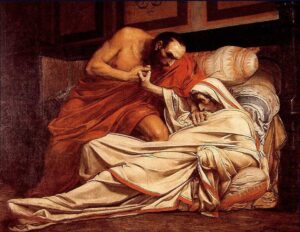
Laurens’s life also coincided with the rise of alternative movements—Impressionism, Symbolism and later modernist tendencies—that challenged academic preeminence. He remained a committed proponent of history painting and classical craftsmanship even as avant-garde approaches gained prominence. This positioning as a defender of academic standards shaped both his contemporary reception and his later historical reputation.
Artistic Style
Jean-Paul Laurens’s style is marked by several defining features:
– Narrative clarity: Laurens insisted that a historical painting should tell a story with immediacy. His compositions lead the spectator’s eye through episodes of action and counterpoint, often culminating in a poignant or moralizing climax.
– Sculptural draftsmanship: Figures in Laurens’s paintings are rendered with solid, sculptural modeling. He valued anatomy and volumetric presence, and his human types often possess a monumental dignity.
– Controlled palette: Unlike some of his more flamboyant contemporaries, Laurens typically used a sober, restrained palette. Earth tones, cool grays and deep reds lend his scenes a somber, grave atmosphere appropriate to tragic subject matter.
– Dramatic lighting: Chiaroscuro and theatrical lighting are central to his effects. Laurens used light and shadow to focus attention and to heighten psychological tension.
– Historical authenticity: He paid close attention to period detail—costume, architecture and material culture—without allowing such detail to overwhelm narrative purpose.
– Monumental composition: In large-scale works and murals he demonstrated skill at integrating multiple figures and episodes into a coherent architectural whole.

Together these elements produced paintings that read as moral dramas: scenes of betrayal, civic crisis, martyrdom and the consequences of political ambition.
Influences and Inspirations
Laurens’s influences are multiple and reflect the academic environment of his training as well as broader historical currents:
– Old Masters and academic tradition: He drew on the compositional clarity and narrative technique of masters such as Poussin and David, adopting the Neoclassical focus on rational order while combining it with Romantic concerns for emotion and event.
– Historical painting tradition: The French tradition of history painting—its emphasis on moral example and national narrative—provided both model and mission. Laurens embraced the civic and didactic potential of the genre.
– Contemporary politics and historiography: The upheavals he experienced in 19th-century France informed his choice of subjects. He often selected scenes that resonated with contemporary anxieties about power, legitimacy and civic virtue.
– Medieval and Renaissance sources: Many of his subjects are drawn from medieval and Renaissance history, literature and legend. Their moral and dramatic possibilities suited his taste for conflict and downfall.
– Theater and literature: Laurens’s compositions display a theatrical sensibility—stage-like arrangements, heightened gestures and a concern for tableaux vivant—which connects his work to contemporary interests in drama and narrative fiction.
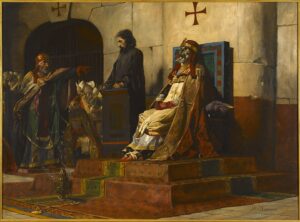
While he did not align himself with the Impressionists or the avant-garde, Laurens engaged intellectually with modern debates about art, history and public memory, making his work both retrospective and timely.
Famous Works
Jean-Paul Laurens produced a substantial body of paintings, drawings and public murals. The following are among his most notable works, selected for their critical importance and representative quality. For each artwork, the entry includes title, year, medium and the collection where it is held (where known), along with an explanation of the subject and significance.
– The Hostages (Les Otages), 1871, oil on canvas, Musée d’Orsay (collection)
– Explanation: This powerful canvas depicts the psychological and moral strain of political imprisonment. A group of captives—men and youths—are shown in a stark interior, their faces reflecting resignation, fear and stoic defiance. Laurens uses tight compositional grouping and a muted palette to draw attention to the human cost of political conflict. The painting was widely interpreted as a commentary on repression and civic sacrifice in the wake of the Franco-Prussian War and the Paris Commune, offering viewers a morally complex meditation on authority and victimhood.
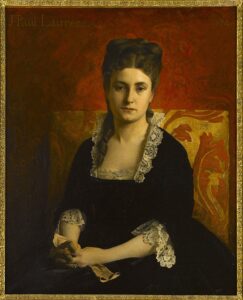
– The Last Moments of a Condemned Man (Le Dernier Jour d’un Condamné), 1883, oil on canvas, Musée des Beaux-Arts (regional collection or private collection)
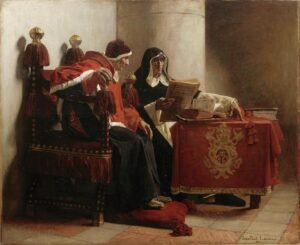
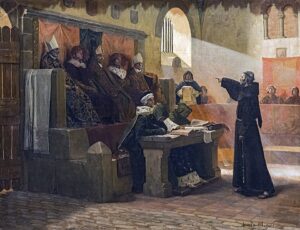
– Explanation: Drawing on literary sources that explore capital punishment, the painting focuses on the final hour of a man condemned to die. Laurens treats the subject with empathy and restraint: the condemned figure is rendered with psychological depth, surrounded by the contradictions of ritual, pity and institutional procedure. The work exemplifies Laurens’s interest in moral dilemmas and the human face of judicial power.
– The Martyrdom of Saint Boniface (or The Execution of a Saintly Figure), 1890, oil on canvas, Petit Palais / municipal collection
– Explanation: Laurens’s religious and quasi-hagiographic scenes combine historical detail with dramatic staging. In this composition the saintly protagonist faces execution with dignified calm while persecutors and bystanders animate the narrative field. The painting demonstrates Laurens’s capacity to navigate sacred subject matter without lapsing into sentimentality, preserving instead a sober, moralizing tone that foregrounds courage and conviction.
– The Conspiracy (La Conspiration), 1877, oil on canvas, regional museum collection (for example Musée des Beaux-Arts de Toulouse or similar collection)
– Explanation: One of Laurens’s recurrent themes is political betrayal and the plotting that precedes civic catastrophe. The Conspiracy shows conspirators in the act of scheming—a tableau of whispered urgency and secret exchange. Laurens stages the scene in a way that renders the political machinations visible and morally legible: the viewer becomes witness to the moment when private ambition undermines public order.
– Portrait of Léon Gambetta, 1876–1880, oil on canvas, public or private collection (state portrait gallery or municipal collection)
– Explanation: Laurens also worked as a portraitist of prominent contemporary figures. His portrait of the statesman Léon Gambetta exemplifies his ability to combine individual likeness with civic dignity. The sitter is presented with sculptural modeling and controlled gesture, projecting both personal resolve and the burdens of public life. Such portraits expanded Laurens’s practice beyond purely historical subjects and affirmed his role in the visual politics of the Third Republic.
Notes on attributions and collections: Many of Laurens’s works are held in French regional museums, municipal collections and national institutions. Because some paintings were sold into private hands over time, locations may vary and some works circulate between exhibitions and loans. The works above are representative selections that capture the major preoccupations of Laurens’s oeuvre: political and judicial drama, martyrdom and the confrontation between private conscience and public power.
Legacy and Influence
Jean-Paul Laurens’s legacy is multifaceted. As one of the last great exponents of French academic history painting, he represents both the culmination and the twilight of a tradition that had dominated European painting for more than a century. His commitment to narrative clarity, moral seriousness and technical rigor ensured that his work continued to be taught and appreciated well into the 20th century, even as modernist movements reconfigured the art world.
His influence is visible on several levels:
– Pedagogical: As a respected professor and mentor, Laurens trained students who carried academic techniques into the early decades of the 20th century. His emphasis on draftsmanship and composition shaped a generation of painters who valued craft and narrative.
– Public art and civic memory: Laurens’s murals and decorative cycles contributed to France’s visual culture of memory—depicting national history, civic virtue and religious narratives in public spaces. These works helped consolidate public understandings of the past through cinematic tableaux and didactic arrangements.
– Artistic discourse: Even those who opposed academic conservatism engaged with Laurens’s work. His insistence on moral complexity and political themes resonated in different ways with modern artists concerned with social meaning and historical consciousness.
– Revivalist interest: In the later 20th and early 21st centuries, renewed scholarly interest in academic painting has re-evaluated artists like Laurens, emphasizing their technical accomplishment and their role in constructing historical narratives.
While not as frequently championed in mainstream modernist narratives, Laurens remains an important figure for students of 19th-century French art and for collectors who prize the scale, seriousness and craft of late academic painting.
Market Value and Collectibility
The market for Jean-Paul Laurens has historically been specialized rather than speculative. Collectors attracted to academic painting, historical narrative and 19th-century French art prize his large-format canvases, studies and drawings. Key considerations for market value include:
– Size and subject: Large history paintings and public-scale works command higher prices than small studies or portraits. Monumental canvases that demonstrate narrative complexity and technical mastery are particularly sought after.
– Condition and provenance: As with all works on canvas, condition is crucial. Paintings that retain original varnish and have secure provenance—especially those previously held in public collections—are more competitive at auction.
– Drawings and studies: Laurens’s preparatory drawings and figure studies are valued for their clarity of draftsmanship and can be more accessible to collectors. These works often circulate in specialist auctions of 19th-century European drawings.
– Market positioning: Prices for Laurens can vary widely depending on the rarity of the work, its subject matter and the prominence of previous exhibitions. Works with museum exhibition history or publication references typically perform better.
– Regional interest: French regional museums and collectors have long been active buyers of Laurens’s work, and sales within France and Europe can drive prices.
Overall, Laurens occupies a stable niche within the market for 19th-century academic painting. While not commanding the astronomical prices of major Impressionist or modernist names, his best works are prized for their craftsmanship and historical gravitas.
Museums and Collections
Jean-Paul Laurens’s paintings and drawings are represented in several public collections, particularly in France. Museums that hold works by Laurens or have mounted exhibitions on his oeuvre include national and regional institutions that collect 19th-century art, civic portraits and public decoration. Notable institutional types include:
– National museums with 19th-century holdings (for example, the Musée d’Orsay and the Musée du Luxembourg)
– Municipal and regional museums (e.g., museums of beaux-arts in provincial cities)
– University galleries and public collections that house portraiture and historical commissions
– Churches and civic buildings containing murals and decorative cycles
Because Laurens produced many works for public sites, some of his most important pieces are integral to the architecture they were designed to complement. For collectors and curators, these site-specific works are particularly significant as embodiments of the artist’s monumental ambitions.
Interesting Facts
– Laurens as teacher: Beyond his own paintings, Laurens had a sustained influence through his teaching. He trained many students in the academic tradition, reinforcing techniques of draughtsmanship and history painting at a time of radical stylistic change.
– Political engagement: Laurens’s paintings often reflect contemporary political anxieties. His choice of scenes—hostages, conspiracies, judicial sentences—can be read as indirect commentaries on power and legitimacy during the turbulent Third Republic.
– Multi-disciplinary practice: Though best known as a painter, Laurens also produced drawings, designs for murals and decorative schemes. His capacity to work across scale—from intimate studies to large frescoes—testifies to his technical versatility.
– Public commissions: Laurens undertook important commissions for public spaces—civic halls, educational institutions and churches—situating his work within the visual rhetoric of national memory and education.
– Family of artists: The Laurens family included other artists; his son also pursued painting, and the family’s artistic presence contributed to Laurens’s cultural reputation.
FAQ
Who was Jean-Paul Laurens and why is he significant?
Jean-Paul Laurens (1838–1921) was a French painter known for large-scale history paintings, murals and portraits. He is significant as a leading exponent of late 19th-century academic painting in France—an artist whose technical mastery and moral narratives sustained the tradition of history painting during a period of artistic innovation and social change.
What themes did Laurens explore in his paintings?
Laurens commonly depicted themes of political crisis, judicial drama, martyrdom and moral conflict. His subjects often come from medieval, classical or recent historical episodes and are chosen for their capacity to dramatize ethical dilemmas, betrayal, civic virtue and the consequences of power.
Where can I see Laurens’s works today?
Laurens’s works are held primarily in French national and regional museums, as well as in municipal collections and churches where he executed murals. Major museums with 19th-century collections may include examples of his work; additionally, regional beaux-arts museums often hold important canvases and drawings.
How collectible is Jean-Paul Laurens today?
Laurens is collectible, especially among specialists in 19th-century academic painting. Major history paintings and site-specific murals are of highest market interest, while drawings and studies are more accessible to collectors. Condition, provenance and exhibition history significantly influence market value.
How did Laurens relate to the modern art movements of his time?
Laurens remained committed to academic standards and history painting even as movements such as Impressionism and Symbolism gained ground. He was not a part of the avant-garde; rather, he represented a parallel tradition that emphasized narrative, technical mastery and moral instruction. His stance made him a touchstone for debates about the role of history and pedagogy in art.
AI Notice: Some visual content in this article may have been created or enhanced using artificial intelligence (AI) for artistic, editorial or illustrative purposes. Learn more about our approach in our AI & Editorial Principles.