
Victorian Embroidery Secrets: Stunning Designs They Never Taught You
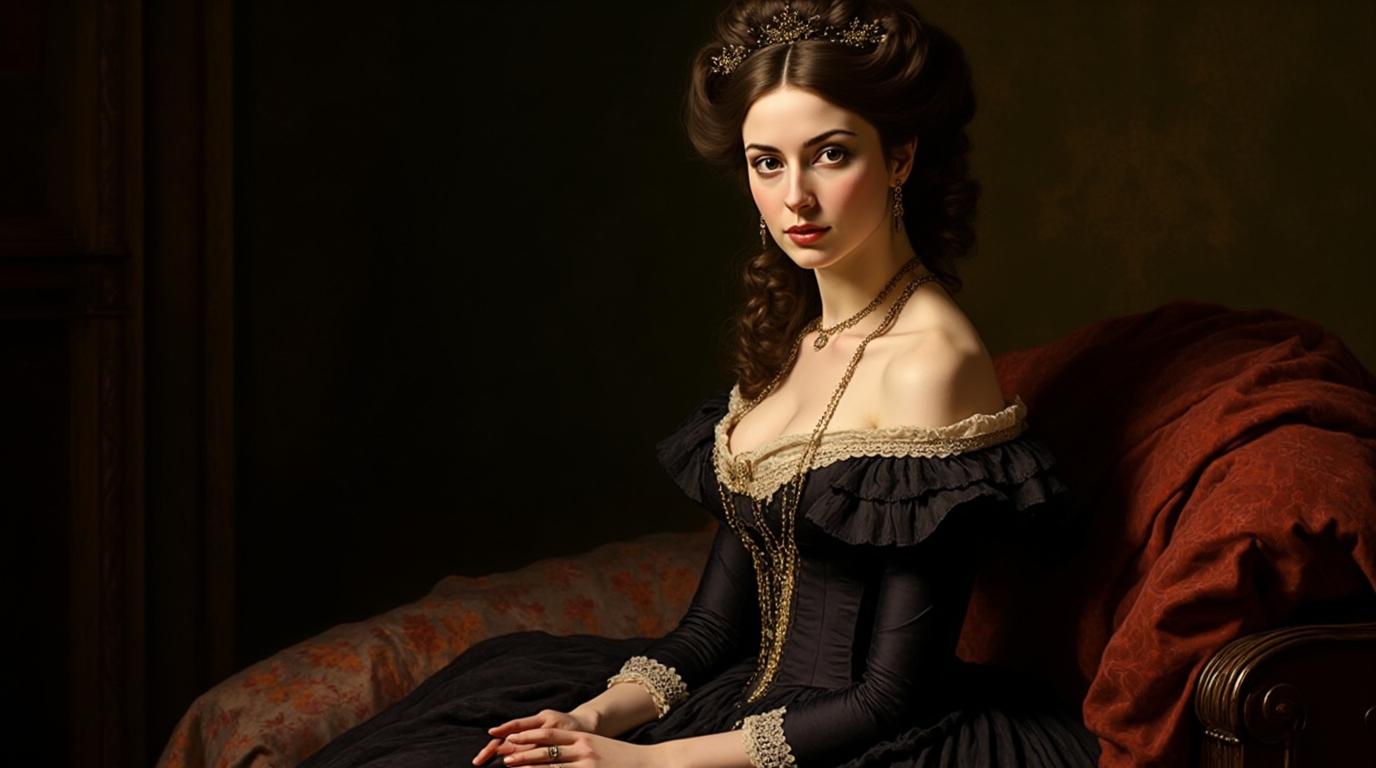
The Victorians stitched their world into cloth. In an age of industrial upheaval and strict social codes, embroidery offered a way to impose order, display taste, and quietly express individuality. From glittering silk panels in London drawing rooms to humble Berlin woolwork in provincial parlors, Victorian embroidery transformed mass‑produced materials into intensely personal objects. Today, these textiles are more than decorative relics: they are primary documents of gender, class, technology, and design in the long 19th century.
Defining Victorian Embroidery
Victorian embroidery refers broadly to hand‑stitched decorative needlework produced during the reign of Queen Victoria (1837–1901), primarily in Britain and its empire but also in related Western cultures influenced by British taste. It encompasses a wide range of techniques—crewelwork, silk shading, Berlin woolwork, whitework, crazy quilting, bead embroidery, and more—applied to household linens, garments, church textiles, and ornamental panels. While needlework predated the Victorian era by centuries, the period’s distinctive aesthetics, industrial advances, and social norms gave its embroidery a particular character.
Can You Name the Masterpiece?
Ten masterpieces. Ten questions. How well do you know the history of art?
Embroidery during this time is a craft and trade straddling both high art and the domestic sphere. According the Victoria and Albert Museum, ‘The 19th century witnessed a hitherto unequalled growth of embroidery as a middleclass pursuit thanks to the proliferation of printed pattern books and cheap materials and the demand for beautiful objects’, whilst at the same time ’ Craftsmen and reformists artists… William Morris and his contemporaries aspired to establish embroidery as an art’.
Most significantly, Victorian embroidery was never just decoration. It was a language: a code for displaying respectability, religious devotion, education and even patriotism. Samplers rendered girls literate and numerate; mourning embroidery memorialized the dead; embroideries for Holy Trinity Church expressed religious revival; motifs of empire celebrated Britain’s international domination. The garments and textiles of the Smithsonian Institution reveal that even the most humble domestic textiles contain remarkably multi-layered narratives of self-display.
Historical Context: Industry, Empire, and the Domestic Ideal
The Industrial Revolution underpinned the explosion of Victorian embroidery. Mechanized spinning and weaving in centers like Manchester and Leeds made cottons, wools, and silks cheaper and more accessible than ever before. Chemical dye innovations in the mid‑19th century created vivid, colorfast hues that transformed domestic interiors. As the Metropolitan Museum of Art emphasizes in its 19th‑century textiles galleries, “mass‑manufactured fabrics and threads allowed even modest households to participate in rapidly changing fashions.”
Can You Guess the Artist?
Three clues. One artist. How quickly can you identify the painter?
At the same time, the Victorian middle classes grew particularly in cities like London, Birmingham, and Glasgow. With wealth came new standards of home decoration. Living rooms would be piled high with embroidered cushions, antimacassars, table covers, mottoes in frames embroidery linked inextricably with the Victorian ideal of the forward-looking and morally improving ‘angel in the house’.
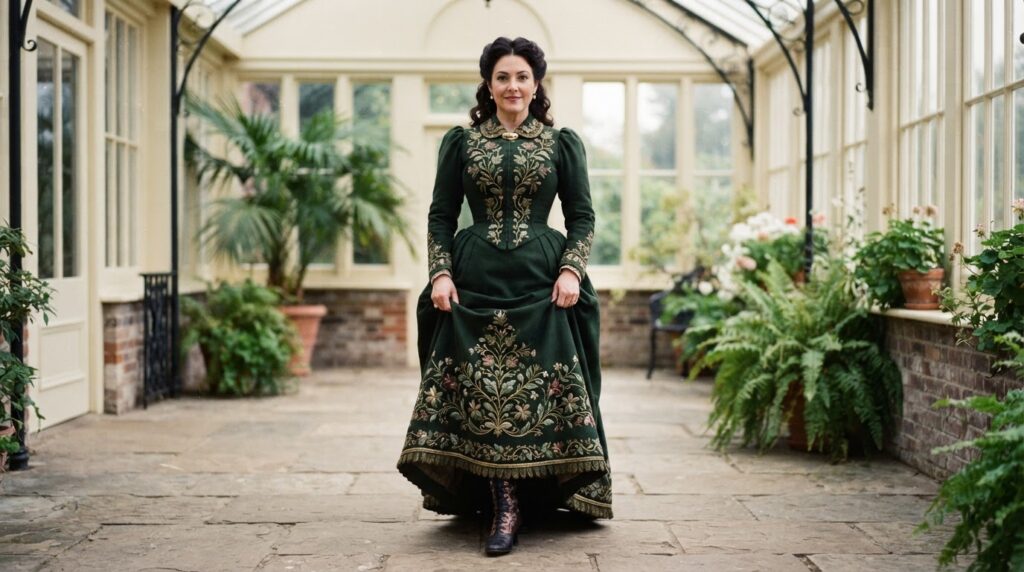
One can also see the influence of empire on Victorian embroidery. International trade facilitated access to imported silks from China, cottons from India and sheep’s fleeces from Australia. Colonial exhibitions (The Great Exhibition at Crystal Palace in London in 1851, and later the Paris and Philadelphia worlds fairs) promoted embroideries from India, Middle East and Far East nations. As the V&A suggests, the interaction on display inspired hybrid designs, with the successful translation of Persian paisley, Ottoman tulips, or Indian boteh shapes into British needlework, many of which were available in commercial pattern books.
Materials, Techniques, and Motifs
Victorian embroiderers had an unprecedented range of materials at their disposal. Cotton and linen formed the basis of household textiles; wools served for Berlin work and crewel embroidery; silks were favored for refined “silk shading” on pictures and ecclesiastical pieces. Metal threads, beads, and even sequins were used for evening accessories and decorative panels. As the Louvre Museum notes in its textile collections, the 19th century marked a “democratization of luxury materials,” with silk and metallic threads available beyond court circles.
If anything, the 19 th century was both a period of technological innovation and of technical continuation. Traditional stalwarts included satin stitch, stem stitch, and French knots. It was also the pinnacle of the heyday of Berlin woolwork (worked on canvas from a brightly colored chart), single stitch over the years as it became popular from the 1830s). Whitework, including broderie anglaise and cutwork, was another traditional form of embroidery. Later in the century, the “crazy quilting” style showed a combination of odd pieces of fabric with ornate surface embroidery. Art museums from the Met to the Smithsonian house collections of fine examples of the various techniques.
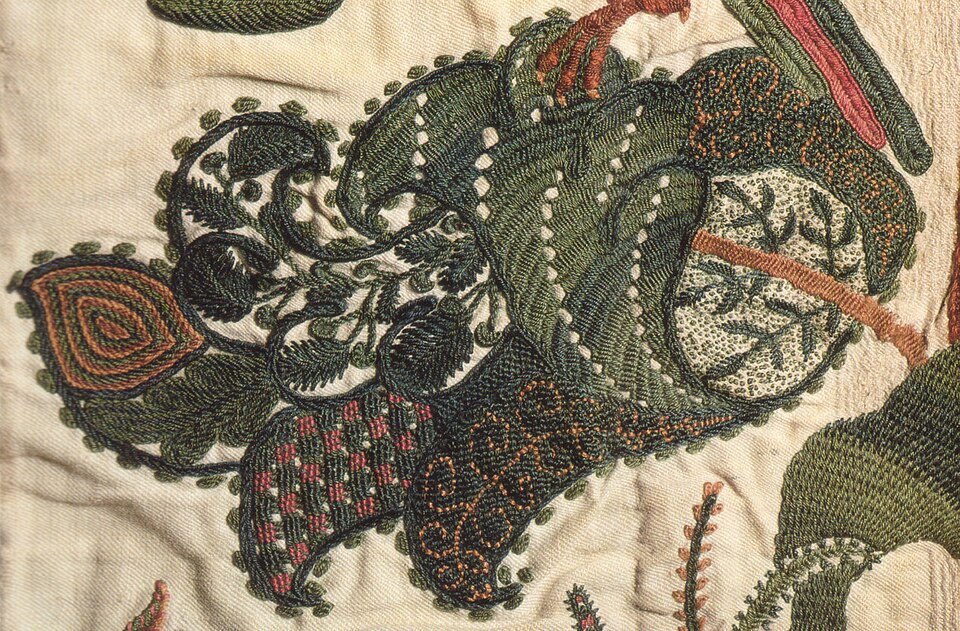
Themes responded to wider trends. During the early Victorian period floral symbolism, classical references, and excerpts from the bible were common. Toward the end of the 19th century, more naturalistic motifs featuring medically accurate insect, plant and bird designs picked up on a desire to study and know about Nature, as well as a fascination with books by naturalists such as Charles Darwin. It was also a time when foreign material culture was visible in patterns, with designs including Japanese fans, Chinese pavilions, or Moorish arches at a time when the Aesthetic Movement promoted ‘art for arts sake.’ The sample books and pattern books in the V&A demonstrate how fashion for motifs fluctuated.
Table: Key Characteristics of Victorian Embroidery
| Aspect | Early Victorian (c. 1837–1860) | Mid‑Victorian (c. 1860–1880) | Late Victorian (c. 1880–1901) |
|---|---|---|---|
| Dominant Techniques | Samplers, Berlin woolwork, whitework | Berlin work, silk shading, ecclesiastical work | Crazy quilting, art embroidery, surface stitchery |
| Typical Materials | Wool, linen, cotton | Wool, silk, mercerized cotton | Mixed fabrics, silk, novelty threads, beads |
| Design Influences | Sentimentalism, Neoclassicism, religion | Naturalism, Gothic Revival, imperial motifs | Aesthetic Movement, Japonisme, Arts & Crafts |
| Common Motifs | Alphabets, biblical verses, floral wreaths | Realistic flowers, animals, heraldry, crests | Stylized florals, peacocks, fans, abstract repeats |
| Social Associations | Female education, domestic morality | Middle‑class display, religious revival | Artistic reform, reaction against industrial ornament |
The Cultural Role of Women’s Needlework
Embroidery in Victorian Britain was deeply gendered. Needlework was coded as a “feminine accomplishment,” taught to girls in homes and schools as both a practical skill and a moral discipline. The Victoria and Albert Museum observes that “needlework was central to the upbringing of girls, reinforcing ideals of patience, obedience, and delicacy.” Samplers, often stitched by girls as young as seven, recorded alphabets, numbers, and moral aphorisms, blending literacy training with hand‑eye coordination and Christian instruction.
However, to treat Victorian embroidery solely as a tool of oppression is to miss the point. For many women, the designing and execution of intricate pieces was the source of a genuine creative satisfaction. Surviving work-books and pattern modifications reveal that women were not simply consumers of commercially available charts but active designers who modified borders, combined motifs, and created new compositions. Some women even went on to pursue embroidering as a professional or semiprofessional occupation producing church embroideries, commercial charts, or instructing at the Royal School of Art Needlework (founded in London in 1872).
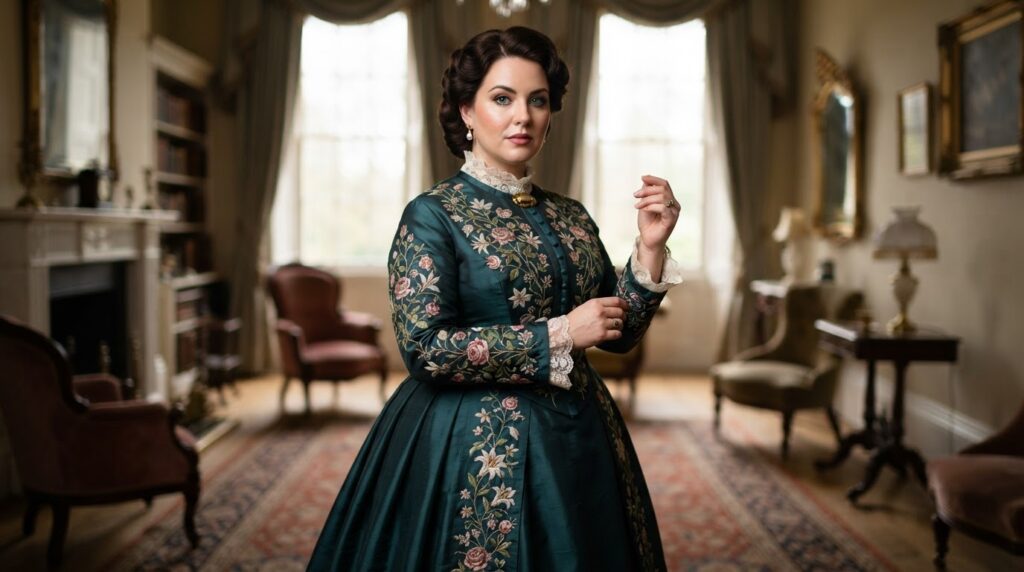
Embroidery also established networks between women. Sewing circles, charity bazaars and church-stitched needlework guilds provided outlets for social interaction other than within the home, yet still within the constraints of respectable feminine conduct. Albums, friendship quilts and church ‘hangings’ are evidence of making as a group activity. The Smithsonian‘s collections of signature quilts and inscribed household textiles illustrate how names, dates and inscriptions turned textile offerings into documentation of community and remembrance, particularly in an Anglo-American context of Victorian imposition.
Institutions, Education, and Art Embroidery
By the mid‑19th century, official institutions began to take embroidery seriously as a design discipline. The South Kensington Museum (now the Victoria and Albert Museum), founded in 1852, established design schools that influenced needlework patterns and teaching. Its collections and circulating exhibitions introduced students to historic and global textiles, encouraging more historically informed and stylistically coherent design. As the V&A has argued, these programs sought to “improve public taste” and counter what reformers saw as the vulgarity of mass‑produced ornament.
The Royal School of Art Needlework (RSN) in London, founded on royal patronage, professionalized embroidery. Women learned to produce good quality embroidery designs for churches, civic institutions and private patrons. Embroiderers from the RSN worked with designers William Morris and Edward BurneJones among others to produce the outstanding late-Victorian textiles. The Met‘s collection of Arts and Crafts textiles is evidence of the meticulous levels of embroidery and craftsmanship that these workshops were capable of, which draws a blurry line between ‘fine art’ and ‘women‘s work’.
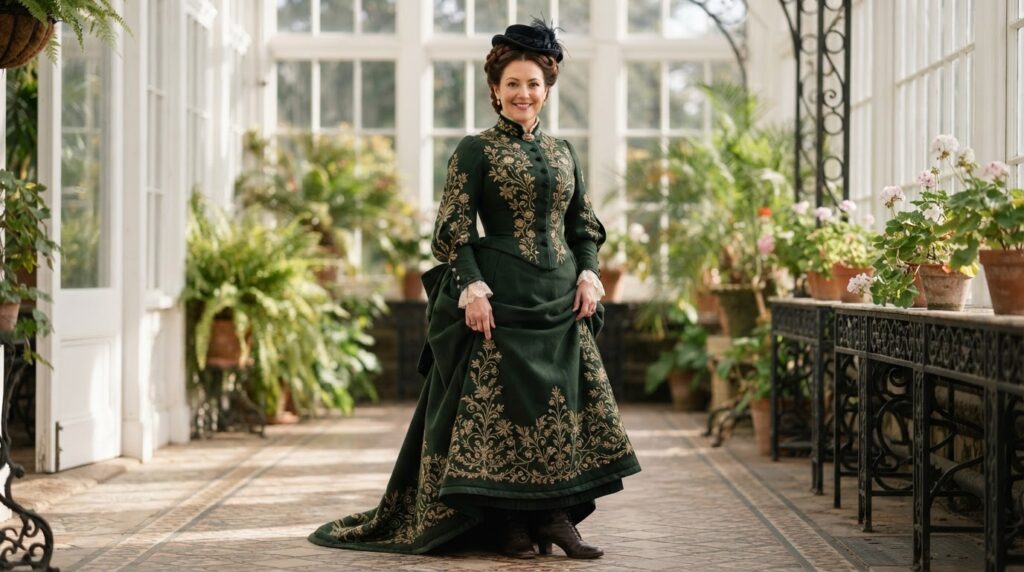
On an international level, the World‘s Fairs and museums also finally established embroidery as a art of the decorative arts. For instance, in the Exposition Universelle in 1878 in Paris, both modern and ancient needlework we exhibited, which resulted in a broad acceptance of needlework on both sides of the Atlantic. Museums such as the Louvre, and in the United States the Smithsonian, also began to treat embroidery seriously by collecting it systematically to be emblematic of national culture. By doing so, embroidery was no longer seen as just homey, and fleeting, but a fairly permanent valuable representation of contemporary thought.
Style Shifts: From Berlin Woolwork to Arts & Crafts
Stylistically, Victorian embroidery evolved dramatically from 1837 to 1901. The early and mid‑century craze for Berlin woolwork favored bright, closely shaded wools on canvas, often based on printed patterns from Berlin and London publishers. Designs included floral bouquets, religious scenes, animals, and sentimental mottoes. These pieces, while sometimes derided by later critics as gaudy or mechanical, were enormously popular across Britain, Europe, and North America; the Met’s period rooms and the Smithsonian’s domestic interiors display numerous surviving examples.
However, by the 1860s and 1870s, a new design reform movement challenged the factory feel and chromatic glut of Berlin work, with art critics and designers such as John Ruskin and those of the Arts and Crafts movement calling for a ‘truth to materials’ as well as the return to historical styles. William Morris famously promoted simplified stylized patterns (inspired by Medieval and early renaissance textiles), as described in the V&A‘s commentary on Morris, and embroidery was “one of the arts through which the principles of handcraftsmanship and honest design could most effectively be realized”.
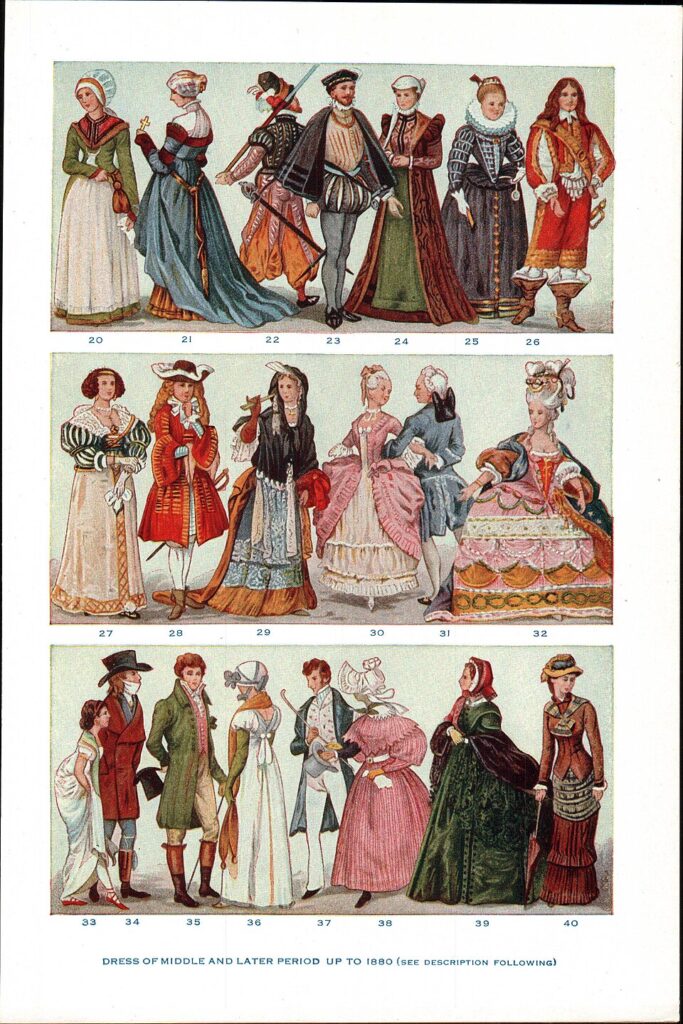
This is what late Victorian ‘art embroidery’ also epitomized. Bold outlines, plains of colour and formal plant shapes abstracted from real forms, were used in place of heavy gradations of colour and very literal depiction. Globe-twined silk and crewel wool were substituted for the heavy, glossy wools used in Berlin work and simultaneously the Aesthetic Movement drew inspiration from Japan and the Middle East. This produced asymetric design, peacocks, fans and stylised chrysanthemums, which lead the way into many of the 20th century design trends, also one of the main reasons that late Victorian textiles continue to be loved today.
Legacy, Conservation, and Contemporary Relevance
Victorian embroidery has left a deep imprint on both material culture and contemporary craft. Many families still preserve samplers, crazy quilts, and embroidered linens as heirlooms, often without fully understanding their historical context. Museums worldwide, from the V&A in London to the Met and the Smithsonian in the United States, continue to research, conserve, and exhibit these objects. Their work has shown that what might appear at first glance as merely decorative is in fact a rich archive of social history, design evolution, and technological change.
Conservation is critical as well. Victorian textiles frequently employed combination of fugitive dyes, scarce fiber types, and contrasting metals that age at various rates. As an example, excessive exposure to light, humidity fluctuations, and physical mishandling often take a great toll on deteriorating conditions. In response, the Met has implemented a stringent set of guidelines-limiting light, controlling climate, and addressing other physical sources that ensures the preservation of embroideries well into the future. Their published collection of individual conservation studies can serve as models for private collectors and regional museums.
In the 21st century there has been a revival of Victorian embroidery by artists, historians and amateurs. Feminist artists such as Susan Silton, Dianna Frid, and the Guerrilla Girls have rediscovered Victorian needlework as a way to discuss ideas of labor, domesticity and gender politics, quoting or covertly subverting period motifs. Hobby embroiderers and quilters have adopted Victorian techniques such as crazy quilting and silk shading but have updated them with contemporary color palettes and social values such as building on the use of sustainable plantbased dyes, or working with fairtrade silk threads. Online archives from museums such as the V&A or the Smithsonian have provided historic pattern books and objects free to access, making historic designs accessible to a new generation of stitchers.
Frequently Asked Questions
Q: How can you tell if an embroidery piece is genuinely Victorian?
Dating Victorian embroidery involves analyzing materials, techniques, and style. Early Berlin woolwork often uses bright aniline‑dyed wools on canvas with charted motifs; late Victorian art embroidery favors more subdued palettes and stylized designs. Linen grounds and natural dyes suggest earlier pieces; rayon or synthetic fibers indicate later dates. Provenance, inscriptions, and comparison with dated examples in museum collections (for instance, at the V&A or the Met) are crucial. When in doubt, consult a textile specialist or conservator.
Q: Were men involved in Victorian embroidery, or was it exclusively women’s work?
While embroidery was overwhelmingly associated with women, men were not entirely absent. Male designers (such as William Morris) created patterns; male clergy sometimes engaged in church embroidery; and soldiers occasionally took up needlework during convalescence. However, the making of domestic and most ecclesiastical embroidery was primarily women’s labor. This gendered division is part of why museums like the Smithsonian and the V&A now treat needlework as a key source for women’s history.
Q: Is it better to restore or leave a damaged Victorian embroidery as it is?
Textile conservators generally favor minimal, reversible intervention. Aggressive restoration—re‑stitching large areas, replacing original fabrics, or brightening colors—can erase historical information and reduce scholarly value. Instead, professional conservators stabilize fragile areas, support tears, and improve storage and display conditions. The Metropolitan Museum of Art and Victoria and Albert Museum both advise against amateur repairs on significant historic textiles; a professional assessment is recommended before any intervention.
Conclusion
Victorian embroidery is far more than floral cushions and sentimental mottoes. It is a complex, technically skilled, and socially charged art form that reflects the tensions and aspirations of a transformative century. Through the work of major institutions—including the Victoria and Albert Museum, the Metropolitan Museum of Art, the Louvre, and the Smithsonian—we can see these textiles not as quaint survivals, but as vital evidence of how people in the 19th century made meaning with their hands. To study Victorian embroidery is to thread together industry and intimacy, empire and home, design theory and quiet evenings by lamplight—and to recognize that every stitch carries a story.
AI Notice: Some visual content in this article may have been created or enhanced using artificial intelligence (AI) for artistic, editorial or illustrative purposes. Learn more about our approach in our AI & Editorial Principles.