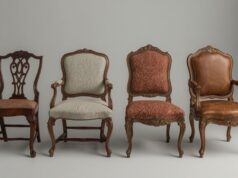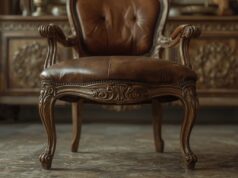

A vintage Chesterfield couch is more than a handsome piece of seating—it’s a recognizable design language that signals heritage, craft, and a particular kind of British confidence. The deep button tufting, low-slung back, and rolled arms form a silhouette that has persisted through centuries of changing taste, from Georgian and Victorian drawing rooms to 20th‑century gentlemen’s clubs and today’s curated interiors. Yet “vintage” also invites questions: What counts as authentic? Which eras matter most? And how do you judge quality before you buy?
What Defines a Vintage Chesterfield Couch?
The Chesterfield is defined by proportional harmony at its core. The arms are usually the same height as the back, and the couch has a continuous line that makes it look like it was built. Deep diamond tufting (often pulled through to the frame) and nailhead trim are common, and the seat is usually structured rather than overstuffed. A vintage Chesterfield couch usually feels more tailored and sprung than a modern one, which can be looser and plusher.
“Vintage” generally means a piece made at least 20–30 years ago, though many collectors use the term for mid‑20th century examples (roughly 1930s–1970s) that show period materials and construction. Earlier pieces—19th century or older—are often better described as “antique.” If a seller labels a couch “vintage,” it’s reasonable to ask for approximate production date, provenance, and any restoration history.
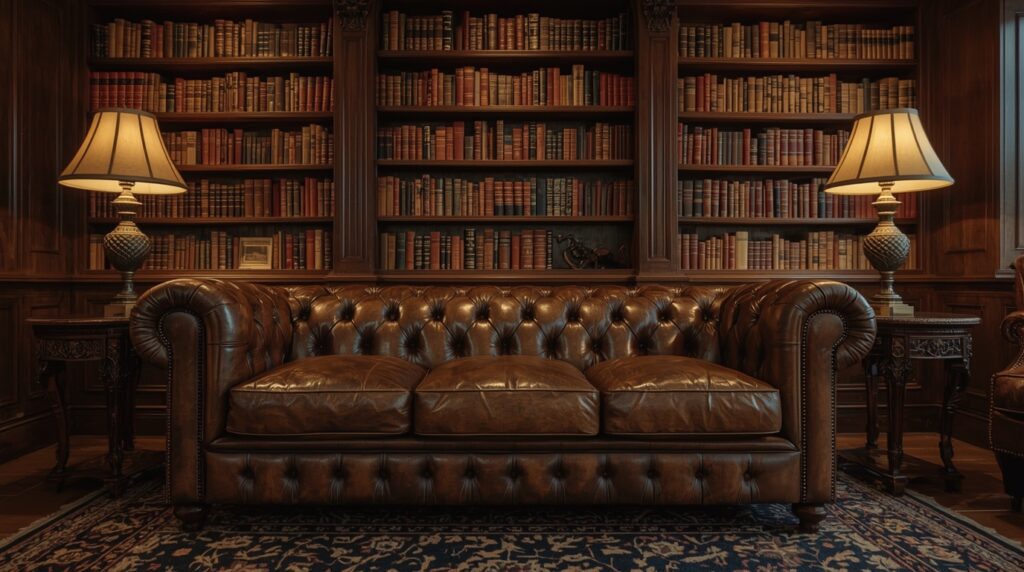
Museum collections underscore why the Chesterfield silhouette is treated as a serious design artifact rather than a passing trend. Institutions such as the Victoria and Albert Museum (V&A) in London preserve British decorative arts to document how furniture styles evolve with society, industry, and taste. Those collections help buyers and enthusiasts recognize period cues—turning vague “old sofa” impressions into informed judgment about form, materials, and context. (Source: Victoria and Albert Museum, Furniture and Woodwork collections: https://www.vam.ac.uk/)
Origins and Historical Context: From Georgian Britain to the Club Chair Era
People in Britain think of the Chesterfield as a British thing, and in the Georgian period, it was linked to Philip Stanhope, 4th Earl of Chesterfield (1694–1773). It’s hard to say for sure where the design came from, but it makes sense that it has aristocratic connections. Georgian and later Regency interiors valued symmetry, proportion, and fine upholstery that showed status without going overboard with decoration.
During the Victorian era (1837–1901), upholstery showed how far industry had come—springs, better stuffing materials, and standardized joinery made it more comfortable and able to handle more use. People in this time liked big, sturdy furniture for townhouses and social rooms, and the tufting and strong frame of the Chesterfield fit that style. Many early examples that are still around show the change from handwork to more organized methods. This change can be seen in all of European decorative arts.
Across Europe, museums document the same broad narrative: furniture reflects politics, economics, and technology. The Louvre Museum’s decorative arts holdings, for example, trace how elite interiors evolved alongside craftsmanship and patronage (Source: Louvre, Department of Decorative Arts: https://www.louvre.fr/). In the United States, the Smithsonian Institution likewise emphasizes that objects—especially domestic objects—are primary evidence of cultural history, not merely décor. (Source: Smithsonian collections overview: https://www.si.edu/)
Materials, Craftsmanship, and How to Identify Quality
A high-quality vintage Chesterfield couch typically starts with a strong internal structure: hardwood frames (often beech in British furniture), sturdy corner blocking, and traditional spring systems. Older pieces may feature hand-tied coil springs and dense natural fillings (horsehair, coir, feather blends), which can last for decades when properly maintained. The presence of these materials doesn’t automatically guarantee comfort to modern preferences, but it often signals durability and reparability.
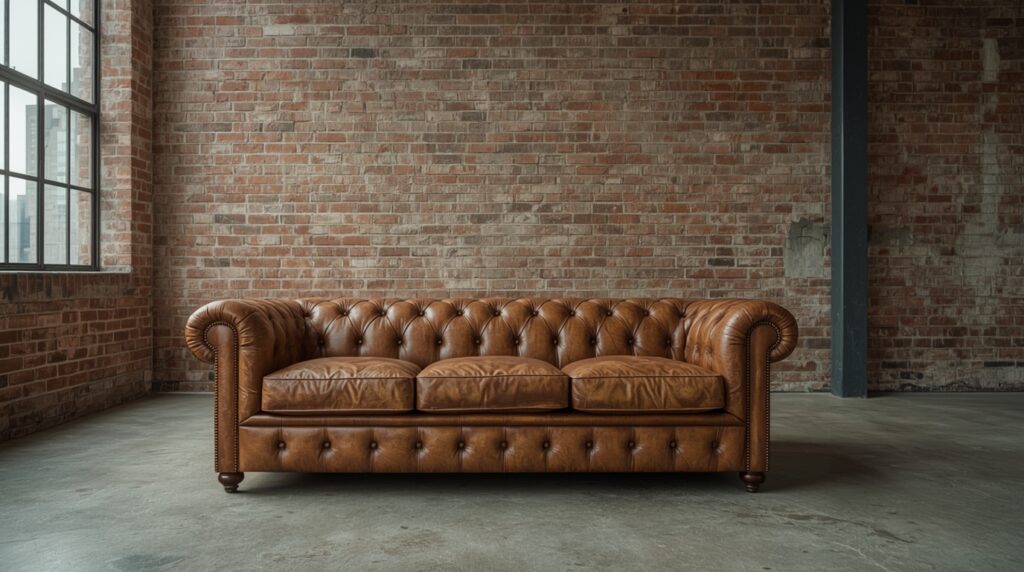
Leather is the most iconic Chesterfield upholstery, especially aniline or semi-aniline hides that develop patina rather than hiding wear. Patina—subtle sheen, color variation, and softened creases—is not a flaw in a vintage Chesterfield; it is the record of use. A couch with “perfect” uniform color may have been heavily refinished or reupholstered, which can still be acceptable if done well, but should be disclosed and reflected in price.
As the Metropolitan Museum of Art notes in its educational materials on furniture and decorative arts, close looking—studying construction, surface, and evidence of making—is a foundation of connoisseurship. That mindset applies directly to buying vintage seating: look underneath, inspect seams and tufting alignment, and check whether the couch sits square and stable. (Source: The Met, collection and research on decorative arts: https://www.metmuseum.org/art/collection)
Key Characteristics at a Glance
| Feature | What You’ll Often See in a Vintage Chesterfield Couch | Why It Matters |
|---|---|---|
| Silhouette | Arms and back at similar height; rolled arms | Defines the classic “Chesterfield” profile |
| Tufting | Deep button tufting in diamond pattern | Signals traditional upholstery technique |
| Upholstery | Leather (often with patina), sometimes velvet or wool | Patina and wear patterns help date and authenticate |
| Frame | Hardwood, substantial weight, corner blocks | Structural longevity and stability |
| Support | Coil springs (often hand-tied on older pieces) | Comfort, resilience, and repair potential |
| Trim | Nailhead trim, piping, pleated arm fronts | Period styling cues; craftsmanship details |
Decorating with a Vintage Chesterfield Couch (Without Making It Feel Heavy)
A Chesterfield can anchor a room, but it doesn’t have to dominate it. In traditional interiors, it pairs naturally with wood tones, library lighting, and layered textiles—an echo of British club rooms and late‑19th‑century drawing rooms. In modern spaces, the contrast is the point: a vintage leather Chesterfield against white walls and minimal shelving reads as intentional, not old-fashioned.
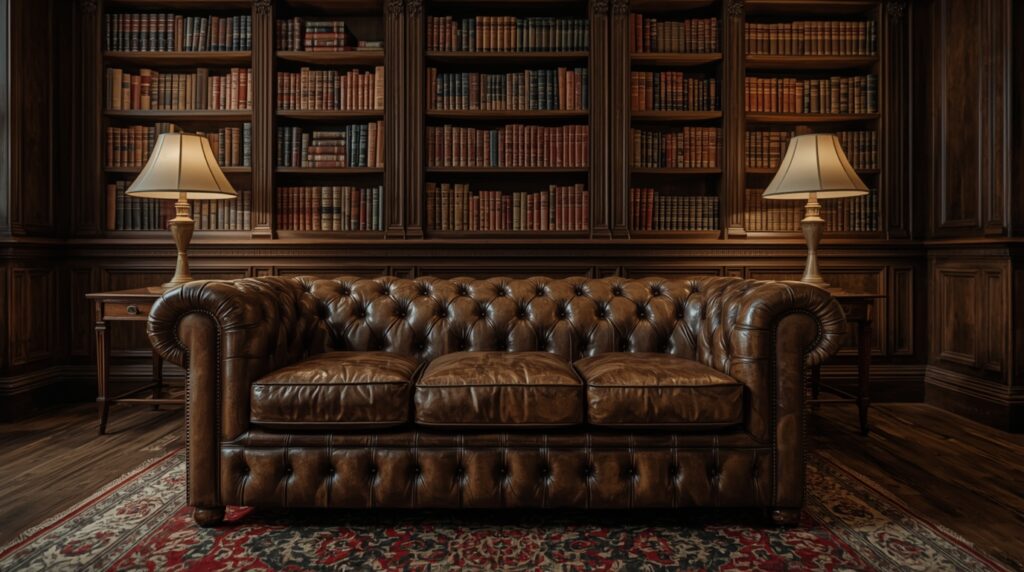
Color and finish choices matter. Classic oxblood and dark brown reference historic masculine interiors, while tan, saddle, or even worn olive leathers feel lighter and more contemporary. If you’re working with a smaller room, consider a two-seater or a “Chesterfield loveseat” scale, and keep surrounding pieces visually airy—open-legged chairs, slimmer side tables, and brighter rugs.
Design institutions often remind us that interiors are narratives assembled from objects with different origins. The V&A’s mission—preserving and interpreting designed objects—reflects this idea: you’re not just selecting a couch, you’re staging a relationship between past and present. A vintage Chesterfield couch excels here because it brings a readable history into a room, even when everything else is modern. (Source: V&A mission and collections: https://www.vam.ac.uk/)
Buying, Restoration, and Responsible Ownership
When buying a vintage Chesterfield couch, prioritize honest condition reporting over cosmetic perfection. Ask direct questions: Is the upholstery original? Has the frame been repaired? Were springs retied or replaced? A well-restored piece can be excellent, but restoration quality varies dramatically—especially when shortcuts (thin foam over failing springs, weak webbing, superficial re-dyeing) are used to make a couch look good briefly.
If you’re evaluating in person, sit in multiple spots and listen for creaks, check for racking (twisting), and look beneath cushions for torn platform fabric or loose spring ties. For leather, examine high-contact areas (front rails, seat, arm tops) and check whether cracks are surface dryness (often treatable) or deep structural damage. For tufting, uneven lines or loose buttons can indicate either age or poor reupholstery; either way, it’s a negotiation point.
Responsible ownership also means respecting materials. Use appropriate leather conditioners sparingly, keep the couch away from radiators and direct sunlight, and embrace gentle signs of age. The Smithsonian Institution’s object-care guidance frequently emphasizes preventive conservation: stable environment and careful handling do more than aggressive cleaning ever will. That conservation logic applies at home—especially for vintage upholstery and finishes. (Source: Smithsonian guidance and collections stewardship: https://www.si.edu/)
Frequently Asked Questions
What makes a Chesterfield “vintage” instead of “antique”?
“Vintage” typically refers to pieces about 20–30+ years old, often mid‑20th century. “Antique” usually means 100+ years old. Sellers may use terms loosely, so ask for dating evidence and restoration records.
Are all Chesterfield couches made in England?
No. The style is strongly associated with Britain, but Chesterfield-inspired couches have been produced across Europe and North America for decades. Provenance, maker’s labels, and construction methods matter more than assumptions.
Is patina on leather a defect?
Not necessarily. Patina is often valued as a sign of authentic age and quality leather. However, deep cracking, flaking finish, or sticky over-dye can indicate problems that require professional repair.
Can a vintage Chesterfield be reupholstered without losing value?
It depends. Sensitive restoration can preserve or even improve usability, especially if the original upholstery is beyond saving. Value is best retained when the work is documented and done with period-appropriate methods.
How do I know if the tufting is “real” deep tufting?
Deep tufting is typically pulled through the upholstery layers and anchored, creating pronounced valleys. Some modern reproductions imitate the look with shallow surface tufting. Checking inside and beneath the upholstery (or asking an upholsterer) helps confirm.
A Chesterfield sofa lasts because the style is as timeless as ever and the construction has been designed under the rules of quality craftsmanship. Knowing its history, owning a curator‘s eye for materials and investing strategically, will give you an icon of design history and one that lives on.