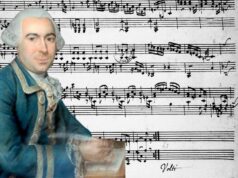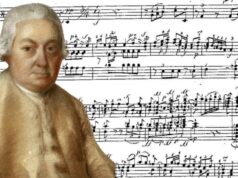
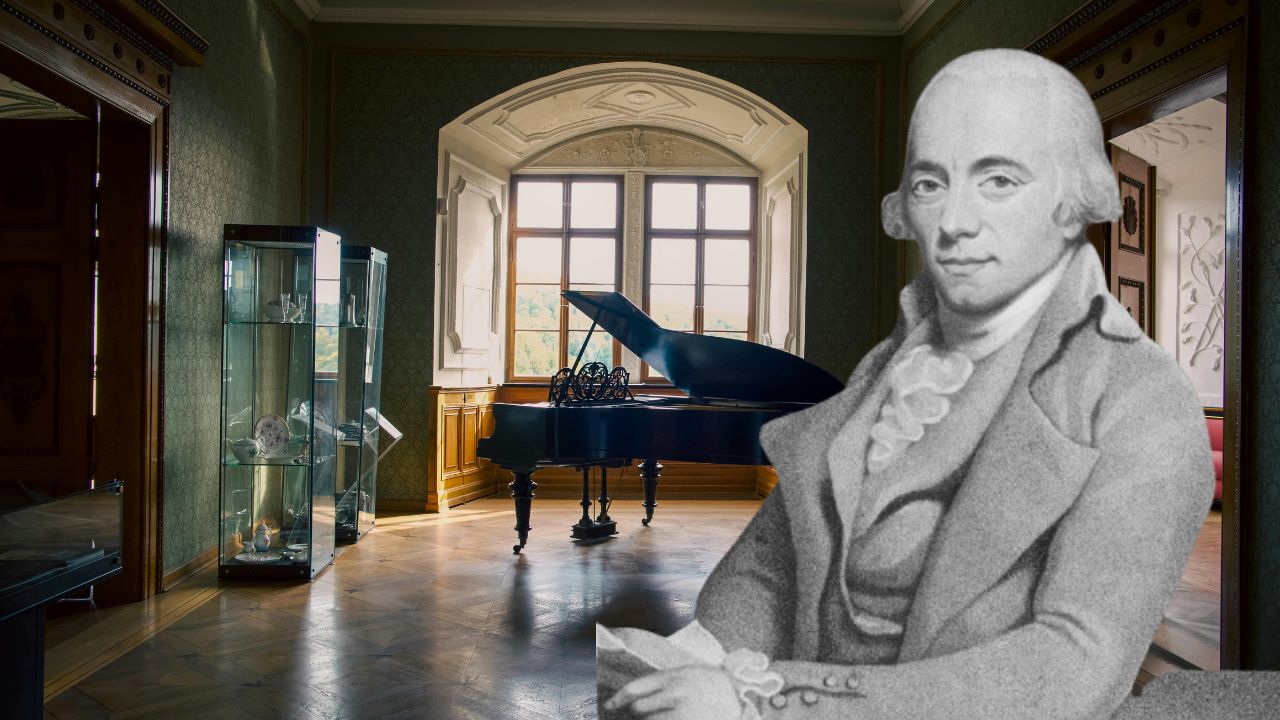
Muzio Clementi‘s sonatas are a turning point in the history of Western music. They are brilliant performance pieces, progressive teaching methods and a living chronicle of a new instrument, the piano, as it emerged at the end of the Enlightenment, poised to take its initial stride into the 19th century‘s Romanticism. Listen carefully and you can hear a world on the move: the bright luster of the harpsichord fading in the sound of the piano, the salon making room for the salon, the classic with the Romantic taking its turn. Muzio Clementi is the father of the pianoforte, and these sonatas are his narrative.
Clementi in Context: London, Vienna, and the Classical Era
Born in Rome in 1752, Clementi grew up at the end of the Enlightenment, and in the most important musical centers in Europe. After receiving piano and composition training in his native Italy, he moved to London, which he made his home, and where he spent the rest of his life. Given that London in the late eighteenth century was the center of European piano construction, instrument publishing, and bourgeois music making, it was perhaps an ideal place for a musician of his talents.
Clementi lived during the late Classical period (c. 1750–1820), when the sonata and the multi-movement sonata form emerged as the primary means of instrumental musical creation. Haydn and Mozart were contemporaries, and Clementi was a bit younger than they were but lived until the late Beethoven period (he passed away in 1832). He was involved in an anecdote a celebrated “contest” with Mozart in Vienna in 1781 orchestrated at the Vienna court of Emperor Joseph II which represents the virtuoso spirit of the day but also gives a clue into Clementi‘s unique pianistic language.
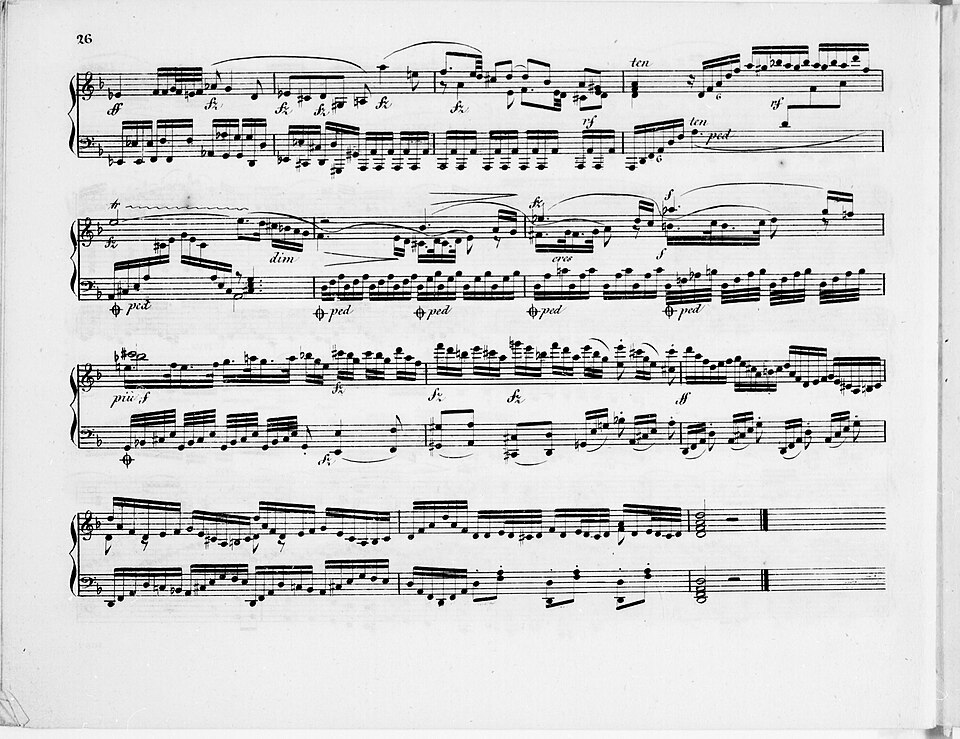
Institutions and settings were important: the concert life and publishing business in London helped circulate Clementi‘s sonatas and Viennese style defined the overarching concept of form and theme. The cultural capital of the instrument and its making is also important here, museums such as the Metropolitan Museum of Art in New York hold old keyboards and offer a historically rooted understanding of the piano the Clementi wrote for. So does the Victoria and Albert Museum, London, whose collection containsdecorative objects and instruments and so on and the manufacturing process itself and thus the piano-making, is not isolated from any others.
What Makes the Muzio Clementi Sonatas Distinctive
Clementi‘s sonatas reflect a keyboard-driven mindset. He used the piano as a dynamic engine, not a generic stand-in for harpsichord gestures. Fast-moving scales, arpeggiation, hand-crossing, rapid-fire repeated notes, and bold textures are not superficial fireworks but rather applications of his instrument‘s evolving touch and dynamics. In numerous sonatas, you encounter a dialogue between bravura writing, often florid, and a sharply defined Classical structure, which prefigure the concert pianism of the Romantics without sacrificing the proprieties of proportional design.
They‘re also extraordinarily diverse. Some sonatas were pitched at the cultivated amateur audience of modest difficulty, shapely melody, and serviceable for home music-making. Other sonatas were grand public pieces with stronger contrasts, longer developments, and rhetorical intensity. Clementi knew his market: the London middle and upper classes were voracious consumers of printed music, and he produced a body of work that acknowledged both pedagogical and commercial realities without ever failing in artistic integrity.
Nor is Clementi‘s fame anachronistic. He was respected by the great composers in his day. Beethoven wrote of him: “Clementi is the greatest pianist”. (Documented in the Beethoven-Haus Bonn, though always be suspicious of reported quotes; but the words fit what players experience: Clementi writes for his instrument with authority, control and vision.)
Key Characteristics of Clementi’s Sonatas (Summary Table)
| Aspect | Typical Clementi Traits | Why It Matters |
|---|---|---|
| Pianistic technique | Scales, arpeggios, repeated notes, hand crossings | Built for the pianoforte’s evolving action and power |
| Form | Clear sonata-allegro outlines, balanced phrases | Anchors virtuosity in Classical structure |
| Expressive range | Sudden dynamics, contrasting registers, cantabile lines | Explores the piano’s dynamic and singing potential |
| Intended users | From amateurs to virtuosi | Reflects London’s domestic and concert culture |
| Legacy | Influence on Beethoven-era keyboard writing | Bridges Classical clarity and Romantic pianism |
The Piano, Craft, and Sound: Why the Instrument Matters
To understand Clementi’s sonatas, you must take the late 18th-century piano seriously as a historical technology. Compared to modern concert grands, Clementi’s pianos had lighter actions, clearer attacks, and quicker decay, which makes rapid figurations and articulate passagework sparkle. Clementi not only wrote for the instrument; he also participated in its commercial world as a publisher and piano maker, linking composition to manufacturing in a way that foreshadows later composer-entrepreneurs.
Museum collections illuminate this relationship between music and material culture. The Metropolitan Museum of Art has curated and displayed historical keyboard instruments that demonstrate the diversity of actions, cases, and timbres available to composers and performers in Clementi’s era. Such objects are not decorative curiosities—they are evidence for tempo choices, articulation norms, and even how loud “forte” could realistically be. Similarly, the Smithsonian Institution has long documented how craftsmanship and technology shape artistic practice, offering broader context for how industrial and artisanal changes affected daily cultural life.
The European museum landscape also reinforces the period’s aesthetic environment. The Louvre Museum—though primarily known for visual art—preserves the broader material culture of 18th-century Europe that framed elite taste, patronage, and style. In London, the Victoria and Albert Museum connects the dots between design, craftsmanship, and the consumer culture that fueled printed music, domestic instruments, and the salon tradition. Clementi’s sonatas are thus not only “notes on a page,” but part of an ecosystem of objects, institutions, and markets.
Listening and Playing Guide: What to Notice in the Sonatas
When listening, start by tracing Clementi’s balance between melody and mechanism. Many movements open with crisp thematic statements that quickly unfold into virtuosic work—scales and broken-chord patterns that are structurally purposeful. Notice how he uses register: bass lines can be firm and orchestral, while treble passages sing with a kind of proto-Romantic lyricism. Pay attention, too, to cadence strategies; Clementi often heightens drama through delayed resolutions and brisk harmonic turns.
For performers, the technical demands should be approached as rhetoric rather than athletics. Clean articulation and controlled voicing are essential because the musical argument often depends on clarity—especially in passagework that can sound generic if not shaped. Clementi’s textures frequently require the right hand to sparkle while the left provides harmonic grounding and rhythmic propulsion. The interpretive challenge is to preserve Classical poise while allowing the music’s kinetic energy to register.
A practical historical note: editions and sources matter. Clementi’s works circulated widely in print, and modern performers should consider reputable scholarly editions when possible. The New Grove Dictionary of Music and Musicians (Oxford University Press) remains a standard reference for contextual reliability, while specialist recordings on period instruments can help modern ears recalibrate expectations about tempo, pedal use, and tonal blend.
Frequently Asked Questions (FAQ)
1) Why is Clementi called the “father of the pianoforte”?
Because he was among the first major composers to write extensively and idiomatically for the piano, and he helped shape pianistic technique through both compositions and pedagogy. His career also intersected with piano manufacturing and publishing, strengthening his role in the instrument’s rise.
2) Are Clementi’s sonatas closer to Mozart or Beethoven?
They are rooted in the Classical style shared with Mozart—clear phrasing and formal balance—but they often point toward Beethoven in their keyboard-driven power, expanded virtuosity, and dramatic contrasts. Many listeners hear Clementi as a bridge figure.
3) Are Clementi sonatas good for students?
Yes, but it depends on the sonata. Some are accessible to intermediate players and teach articulation, scale fluency, and Classical style. Others are genuinely demanding and better suited to advanced students or professionals.
4) What should I listen for if I’m new to Clementi?
Focus on clarity of form (themes, transitions, cadences) and the “pianistic” character—how the music seems designed for hands at a keyboard rather than for abstract counterpoint alone.
5) Where can I learn more through credible institutions?
Instrument collections and research materials from the Metropolitan Museum of Art, the Victoria and Albert Museum, and broader cultural documentation by the Smithsonian Institution can deepen your understanding of Clementi’s sound-world and the period’s
The Clementi sonatas have every reason to regain their currency: they are contextually important, pianistically instructive, and musically invigorating. Grounded in the Classical past but pushing onward into the future as piano repertoire, they show us how the piano graduated to become the voice of nineteenth-century musical society. To hear Clementi well is to hear the order of the Enlightenment at the advent of Romantic expression via the focused, dazzling genre of the sonata.