
Few historical periods feel as instantly recognizable as the Victorian era: soot-darkened factory skylines, crowded London streets, steam power, strict social codes, and an empire that touched nearly every map. Yet for all its vivid imagery, one simple question regularly sparks confusion in classrooms, museums, and family-history research alike: when did the Victorian era end? The answer is straightforward in one sense, but historically rich in another—because what ends on a calendar often continues in culture, politics, and design for years afterward.
The Short, Official Answer: 1901
The Victorian era ended on January 22, 1901, the day Queen Victoria died at Osborne House on the Isle of Wight. By convention, the Victorian era in the United Kingdom is defined by Victoria’s reign, which began on June 20, 1837. This is the clearest and most widely accepted definition in academic history, museum interpretation, and archival cataloging.
Institutions that interpret 19th-century Britain typically align “Victorian” with this reign-based framework. The Victoria and Albert Museum (V&A)—a major authority on British decorative arts and design—presents “Victorian” material culture within the boundaries of Victoria’s rule because the monarchy provides a stable historical marker for rapidly changing social and industrial conditions.
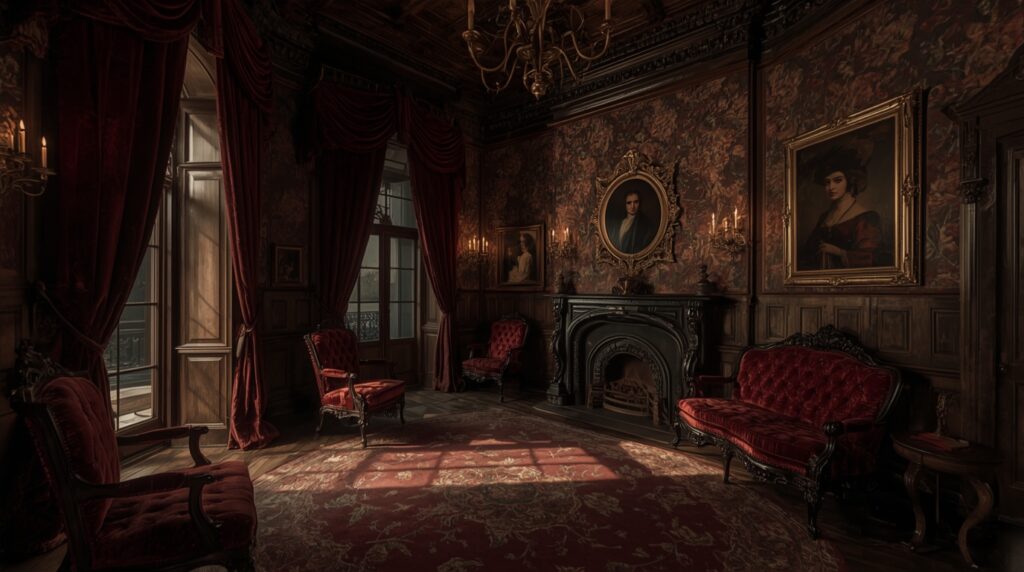
In other words, if your goal is a precise date for exams, citations, or periodization in British history, the correct answer is 1901. But that does not mean Victorian ideas abruptly vanished when the monarch died.
Why 1901 Is the Turning Point—But Not the Whole Story
So, a change of reign is a greathistorical watershed as it reflects changes in political rhetoric and the way a country views itself. Although not the only cause of change, Victoria‘s passing marked the dawn of new technologies and the growth of mass politics alongside international tension that would define the start of the 20th century.
The successor period that followed directly was the Edwardian era (1901–1910), during King Edward VII‘s reign. In cultural terms, “Edwardian” often invokes a lighter feel, new clothing styles, and shifting social habits though still in the Victorian framework: railways, industry, empire, and established class system.
Some historians have tried to make a distinction between the formal end (1901) and a very long tail of influence. There is often overlap with moralizing, industrial capitalism, empire and some ideas of the domestic extending into the Edwardian era, and even until World War I in some arguments.
Victorian vs. “Long Nineteenth Century”: How Scholars Frame the End
In universities and museums, you may also encounter the idea of the “long nineteenth century,” sometimes framed from the French Revolution (1789) or the end of the Napoleonic Wars (1815) through the outbreak of World War I (1914). This broader period helps scholars explain continuity in industrialization, imperial systems, and modern state formation.
This is where confusion about when did victorian era end often arises. People may conflate “Victorian” with “nineteenth-century” or “Industrial Revolution Britain,” which do not stop neatly at 1901. Urban reform, mass migration, and industrial labor conflicts continued well beyond that date.
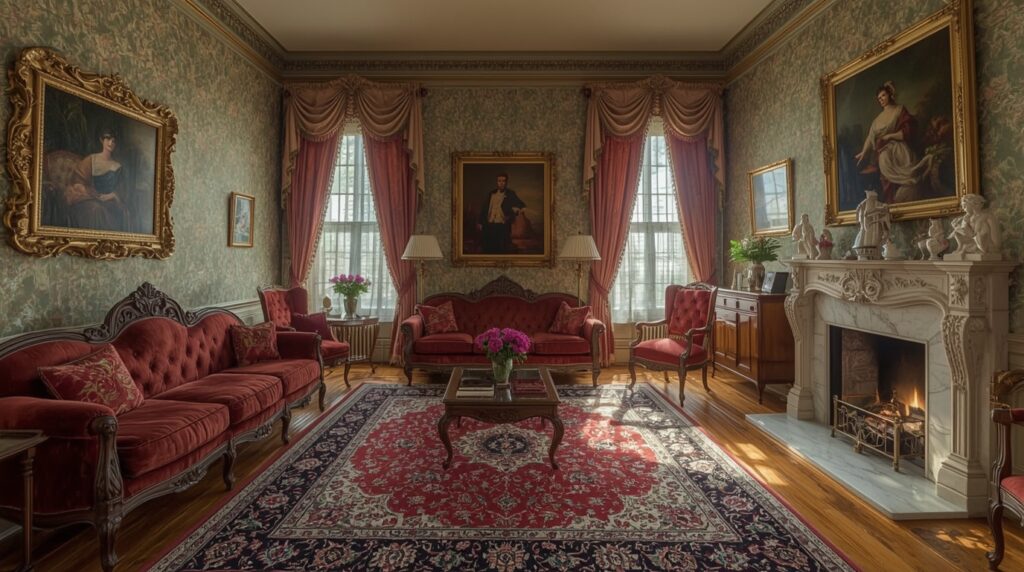
Museums also differ by collection focus. A fine-arts institution might group late-19th-century painting styles into movements that overlap 1901 (Realism, Symbolism, early Modernism), while a design museum might use monarchy-based labels for furniture, textiles, and interiors because consumer taste and domestic architecture map well onto those reign periods.
What Changed After 1901? Politics, Society, and the Mood of an Age
Despite building on Victorian foundations, the years after 1901 were dominated by transformative change. In Britain there was an urgent discourse around welfare, workers’ rights and the role of the state. The politics of suffrage and the changing conception of poverty in the Liberal reforms of the early century were part of a new political landscape compared to mid-Victorian confidence.
Across the globe, the British Empire was huge, but there was increasing competition for power. The geopolitical landscape that the Victorians had molded, and with it the trade routes and naval routes and the empires themselves, was turning to the shifting alliances and rivalries of the pre-WWI era and beyond. In a sense, 1901 is a hinge. The Victorian world hadn‘t blown up on 22nd January, but it was transitioning into a less certain chapter.
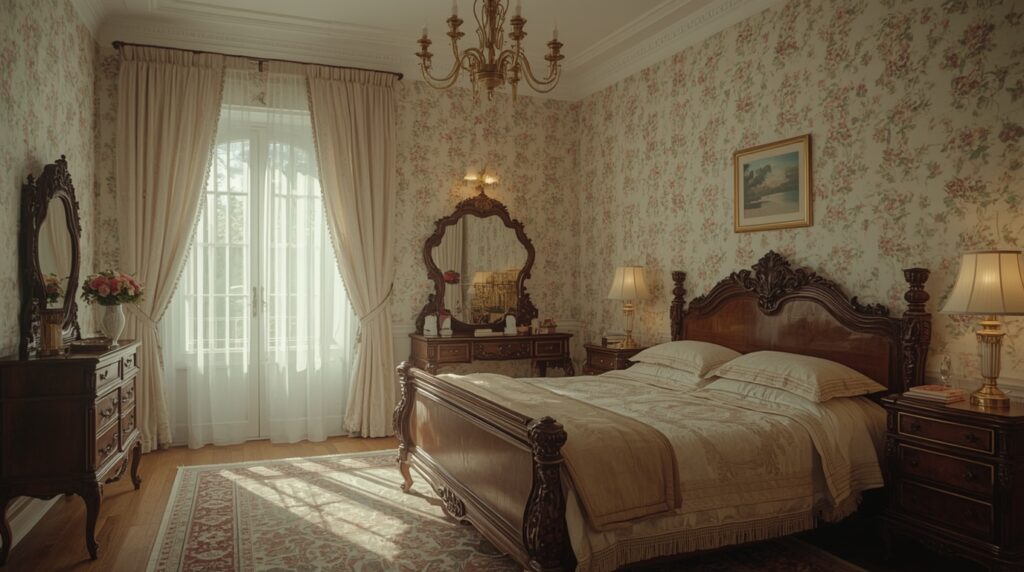
There was a cultural turn too in the arts, architecture and material living. Late Victorian times were not afraid of experiment, but the early 20th century stepped on the accelerator. The transition can be traced in art museum collections (particularly decorative art, posters, fashion and photography). The lines between late Victorian and early Edwardian are blurred.
Key Characteristics: Victorian Era vs. Early Post-Victorian Britain
| Category | Victorian Era (1837–1901) | Early Post-Victorian / Edwardian (1901–1910) |
|---|---|---|
| Head of state (UK) | Queen Victoria | King Edward VII |
| Economy | Industrial expansion; global trade dominance | Continued growth; rising labor politics and reform |
| Social structure | Strong class hierarchy; “respectability” culture | Gradual shifts in leisure, consumption, and social tone |
| Technology | Railways, telegraph, mass print, sanitation reform | Early automobiles, wider electrification, mass media expansion |
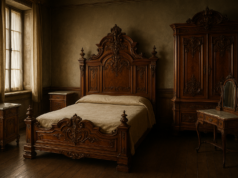
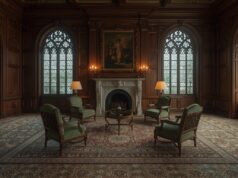
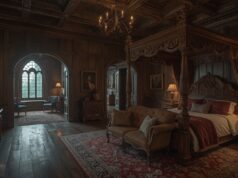
| Culture & design | Historicism, Gothic Revival, ornate interiors | Lighter aesthetics, new fashions; modernity emerging |
| Global context | High imperial confidence | Increasing international tension leading toward WWI |
What Major Institutions Say (Authoritative Quotes and Context)
Museums and scholarly institutions provide reliable framing for Victorian chronology and culture. The Victoria and Albert Museum—founded during Victoria’s reign—connects the era to the monarch not just symbolically but institutionally, as the period shaped modern design education and collecting practices in Britain.
A widely cited contemporary assessment of Victoria’s role comes from Prime Minister Benjamin Disraeli, who wrote in 1872: “The Queen is the most popular sovereign who ever reigned over England.” The statement captures how closely national identity and the monarchy were intertwined in the era that later took her name.
For the texture of Victorian daily life—especially urban conditions—historical commentary aligns with what many museum exhibitions emphasize: industrial growth paired with stark inequality. Friedrich Engels, writing about industrial Britain in The Condition of the Working Class in England (1845), observed: “In such dwellings only the most degraded, the most abandoned, could feel at home.” While polemical, it remains a frequently referenced primary source for understanding Victorian social critique.
Credible Sources to Consult (Museum and Research-Grade)
For readers who want evidence-based, collection-driven perspectives, these institutions offer high-quality essays and digitized objects that illuminate Victorian life and its transition after 1901:
- Victoria and Albert Museum (V&A): Decorative arts, fashion, design history, and British material culture of the 19th century.
- The Metropolitan Museum of Art (The Met): Essays and collections on 19th-century European art, British design, and global exchange.
- Smithsonian Institution: Industrialization, technology, social history, and transatlantic context for the 19th century.
- The Louvre Museum: European art context and the broader 19th-century shifts that intersect with Victorian Britain (Realism, Romanticism, and later movements).
These institutions help clarify that the Victorian era is both a British reign period and part of a wider European and global 19th-century transformation.
Frequently Asked Questions
1) When did the Victorian era end exactly?
January 22, 1901, the date of Queen Victoria’s death. This is the standard historical definition.
2) Did Victorian culture end in 1901 as well?
Not fully. Many Victorian social norms, institutions, and economic structures continued into the Edwardian era (1901–1910) and, in some interpretations, up to World War I (1914).
3) What came immediately after the Victorian era?
The Edwardian era, linked to the reign of King Edward VII (1901–1910). Some historians extend “Edwardian” in cultural terms slightly beyond 1910, but the reign dates are clear.
4) Why is the Victorian era tied to a monarch instead of a century?
Because British historical periodization often uses reigns as stable markers. Victoria’s reign coincided with rapid industrial and imperial change, making it a convenient and meaningful label.
5) How do museums label objects made around 1900–1910?
Many museums use nuanced labels such as “late Victorian,” “turn of the century,” or “Edwardian,” depending on design features, provenance, and the object’s cultural context.
So when did it all end? On paper, the answer is 1901 the year of Queen Victoria’s death. But in reality, epochs don‘t so much die as bleed into the next phase: victorian institutions and ethics persisted well into the Edwardian age and further into the next century, even as political, economic, and geopolitical realities changed the world after the turn of the 20th century. So the best way to get to grips with “Victorian” is to remember the date and the residue.