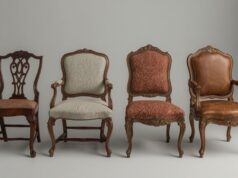
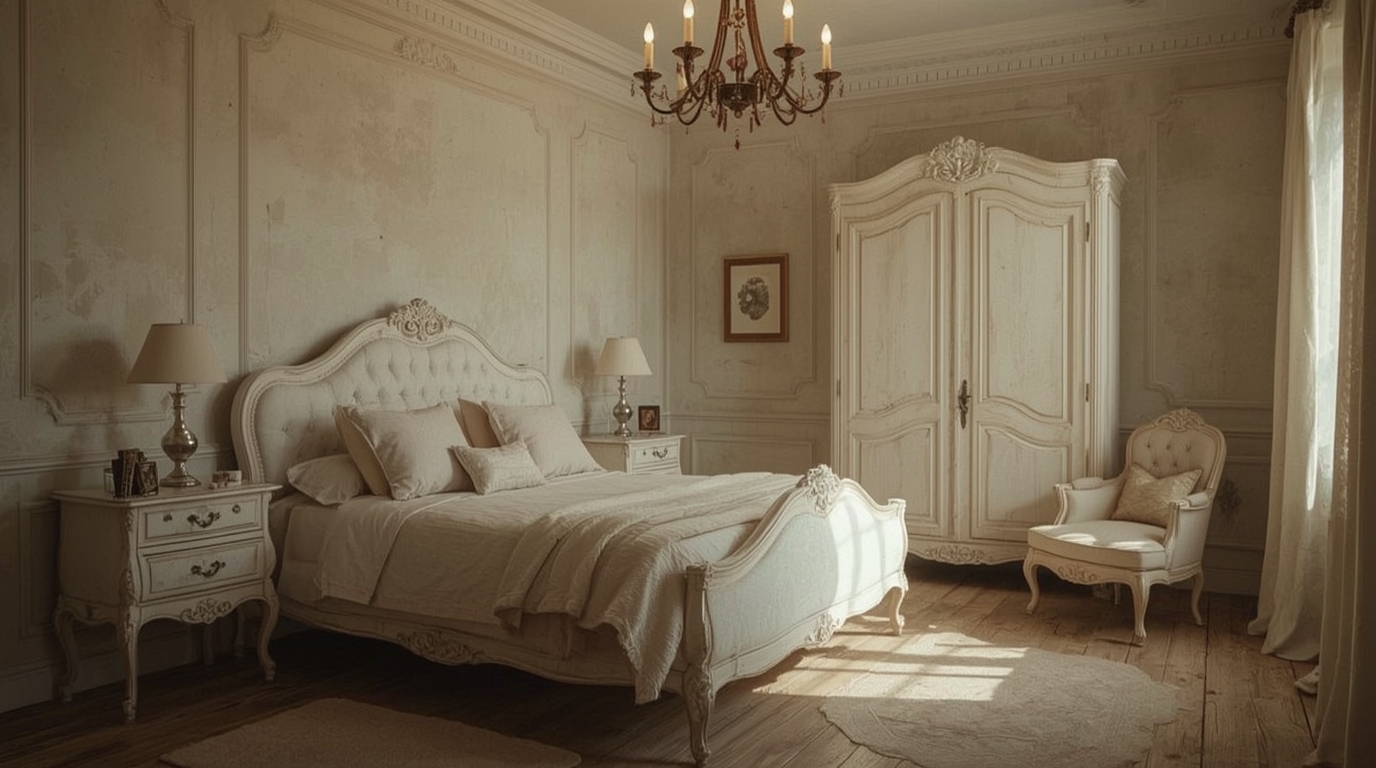
A vintage white bed can transform a room faster than almost any other piece of furniture: it brightens the space, signals calm, and instantly evokes a sense of lived-in elegance. But the real allure isn’t just the color—it’s the history embedded in carved posts, the patina beneath old paint, and the design language borrowed from centuries of European and American craftsmanship. When chosen well, a vintage white bed becomes both a functional centerpiece and a quiet artifact of decorative art.
Why a Vintage White Bed Endures Across Design Eras
The classic white iron bed frame survived for both functional and aesthetic reasons. White paint was an efficient way to bounce the light in a room. Back when bedrooms were lit by gas or early electric light fixtures, candles or windows, a white bedframe in a small room and you can bet they were the case in an apartment-sized room in a Victorian or Edwardian building made a room appear bigger and tidier, even with excess ornamentation.
They last also because “white” was never a monolith. In the late 18th century, painted furniture might connote neoclassical restraint; in Victorian times, white paints would feature elaborate carved work; in the early 20th century, white enamel and painted iron suggested hygiene and modernity. Such trends are clearly documented in the collections of major institutions such as the Metropolitan Museum of Art and the Victoria and Albert (V&A) Museums, with the classical urns, fluting, and acanthus leaf patterns they display having been echoed in successive decorative movements.
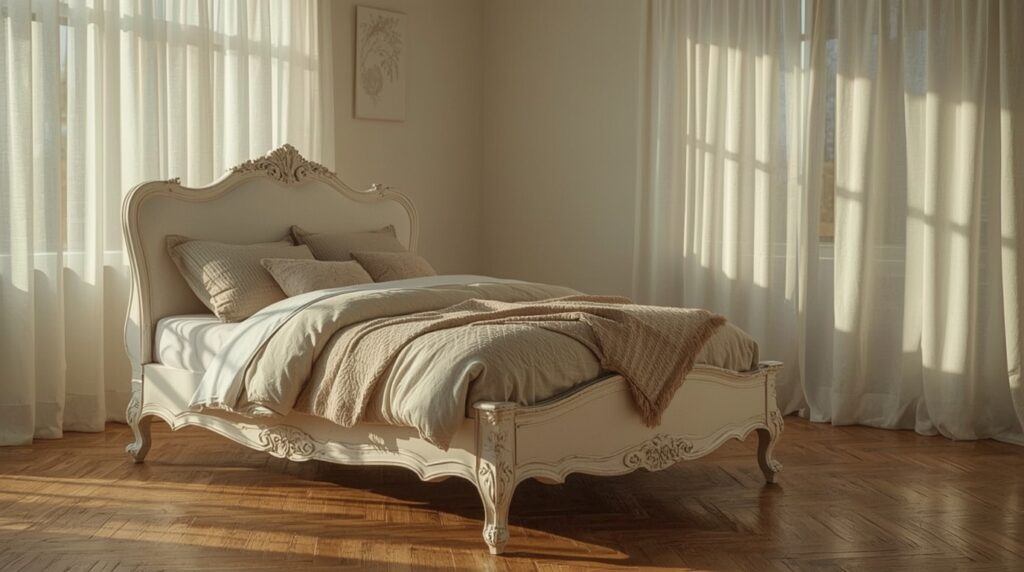
AndLastly, old white beds are versatile. If you have a Louis XVI-inspired frame, it can ground your classic bedroom. A brass or iron bed, painted white, can fit farmhouse, beach, or modern settings. The bed‘s frame is what embodies its era the white finish is your “neutral” that‘s going to make it easier to swap out accessories, art and fabrics to redefine the mood.
Historical Roots: From Rococo and Neoclassical to Victorian and Art Deco
To even have a concept of a vintage white bed, you need a context of some of the big trends in bedroom furniture of the time. In 18th-century France, Rococo preferences called for curvy, and excessively ornate forms, and then Neoclassical style, popular during the time of Louis XVI, leaned into symmetrical, Greco-Roman-esque designs. Examples can be seen throughout museum holdings such as the Louvre or V & A, as designers took inspiration from Greco-Roman art and excavations to create furniture.
During the Industrial Revolution of the 19th century, the production and purchasing of beds were rapidly reconfigured. Mass production and skilled craft went hand in hand in Victorian Britain and the United States, with painted and gilded effects used to highlight ornate carving, as iron and brass beds grew in popularity following advancements in production methods. Domestic values at the time comfort, privacy and specialized rooms all contributed to the bed transforming from mere furniture into an important statement in design, as can be seen by records in institutions like the Smithsonian.
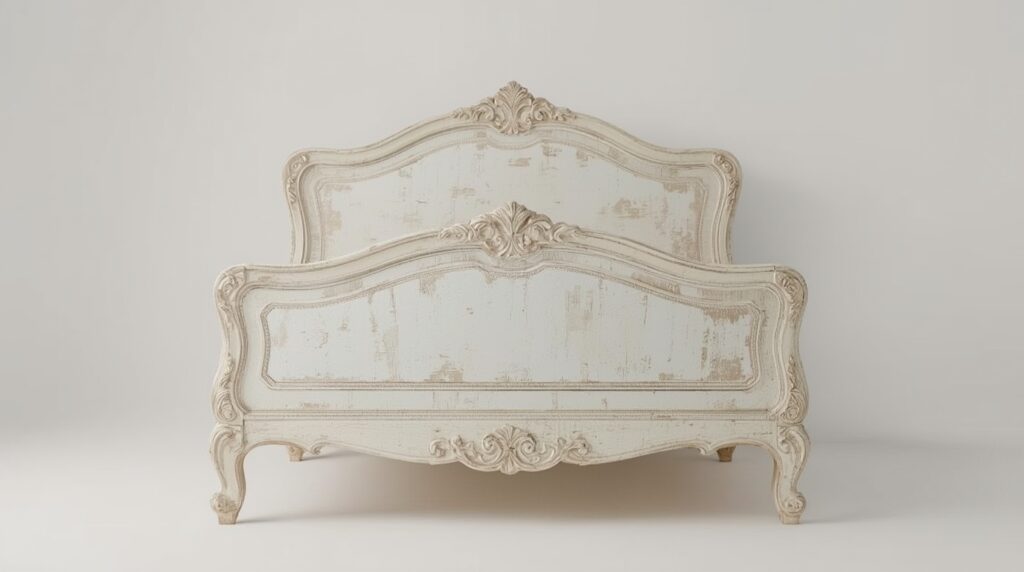
By the 1920s and 1930s, there was a turn toward more refined geometry and new materials in the Art Deco and modernist movements. But white finishes, in the form of enamel and lacquer, continued to feel clean and modern. So, even as beds streamlined into their post-war, mid-century forms, a white bed could still feel quite fresh and clean. And as the V&A has argued in its expansive view of decorative arts, styles seldom wipe the slate entirely clean; instead, they remix.
“The details are not the details. They make the design.” — Charles Eames
This idea applies directly to vintage beds: the turn of a spindle, the profile of a rail, or the way paint settles into carved channels is often what distinguishes the authentic from the merely “old-looking.”
Materials, Finishes, and Craft: What Makes One Truly Vintage
A “vintage white bed” may be wood, iron, brass, or a mix—and the material often reveals its age. Wooden beds from the 18th and 19th centuries were typically constructed with traditional joinery such as mortise-and-tenon, designed to be tightened and repaired. Iron beds, especially from the late 19th century into the early 20th, often feature cast components, threaded connections, and decorative motifs formed through industrial processes. The difference matters: authentic wear patterns tend to follow structural stress points, not random distressing.
The white finish is another clue. Older beds may show layers: an early paint coat beneath later repainting, sometimes with a warmer “milk paint” tone or chalky mineral feel. Enamel finishes became more common as industrial coatings developed, especially for metal beds associated with hygiene and easy cleaning. Museum conservation departments frequently emphasize finish as evidence—original surfaces and later alterations tell a “biography” of an object.

Condition and craftsmanship should be evaluated together. Hairline cracks in wood, slight wobble in joints, or patina around hardware can be normal for age, but structural weakness is not automatically “charm.” A reputable restorer can stabilize a bed without erasing its character by preserving tool marks, maintaining period-appropriate hardware, and avoiding overly glossy modern paint that flattens detail.
“Preservation is a conversation with the past, not a replacement of it.” — The Metropolitan Museum of Art (conservation perspective, broadly reflected in museum conservation practice)
This principle helps buyers avoid over-restored pieces that look new but lose the evidence that made them valuable.
How to Choose, Style, and Care for a Vintage White Bed Today
Selection begins with the right measurements and integrity. Measure carefully: some antiques were made to accommodate smaller mattresses than those that are standard on modern American beds, and even older American beds can vary. Make sure it has side rails, solid joinery, and hardware consistent with the period. Should an antique have been adjusted to accept a modern mattress, find out how it was done clean, reversible modifications are superior to crude drilling and shoddy rails.
Bedding should enhance rather than obscure the lines of the bed. A very ornate or carved white bed is usually better off with bedding that doesn‘t compete visually, so the shape shows up. Think of simple linens, matelasse quilts, or simple stripes. A plain spindle bed or iron bed will support a more patterned textile. To keep things cohesive and period-appropriate, take cues from the era of the bed: a neoclassical bed looks great with a pair of matching lamps and symmetrically framed prints, while an Art Deco bed might welcome an all-over-patterned throw and lacquered furnishings.
Cleaning is simple, but specific. Don‘t wash painted surfaces. If you must use soap and water, work with a soft cloth and a mild cleaner. Don‘t let humidity fluctuate too much, as wood shrinks and expands causing paint to crack and blister. For metal beds, look out for rust on joinery; clean any developing rust by using a mild acid with a soft brush and touch up the metal if you need. In case of any doubt, find a conservator or restoration specialist familiar with antique finishes. The philosophy behind most museum adjacent cleaning best practices is that less is more.
Key Characteristics at a Glance
| Feature | What to Look For | Why It Matters |
|---|---|---|
| Era indicators | Neoclassical symmetry, Victorian ornament, Art Deco geometry | Helps verify style and approximate date |
| Materials | Solid wood with joinery; iron/brass with period hardware | Authenticity and structural longevity |
| Finish | Layered paint, age-appropriate patina, non-plastic sheen | Suggests genuine age vs. recent “antiquing” |
| Construction | Tight rails, original fasteners, stable joints | Safety and day-to-day usability |
| Size compatibility | Adaptable rails or correct vintage dimensions | Ensures mattress fit without damaging the frame |
Frequently Asked Questions
Is a “vintage white bed” always antique?
Not necessarily. “Vintage” often means roughly 20–100 years old, while “antique” is commonly 100+ years. A white iron bed from the 1930s can be vintage without being antique.
How can I tell if the white paint is original?
Original finishes are hard to confirm without close inspection. Clues include multiple paint layers, wear consistent with handling, and paint settled into carvings naturally. When in doubt, ask for provenance or consult a restoration specialist.
Are vintage beds safe for daily use?
Many are, if structurally sound. Check side rails, joints, and hardware. If a bed wobbles or rails are cracked, it needs repair before regular use.
Can a vintage bed fit a modern mattress?
Sometimes. Many vintage frames can be adapted with new rails or discreet supports. The best adaptations are reversible and do not weaken original structure.
What museums can I consult for style reference?
For visual reference and historical context, explore online collections and decorative arts materials from the Metropolitan Museum of Art, the Victoria and Albert Museum, the Louvre Museum, and the Smithsonian Institution.
A vintage white bed is more than a bright focal point—it is a piece of design history shaped by neoclassical revivals, Victorian craft and industry, and modernist refinements. By understanding period cues, materials, and finishes—and by caring for the frame with conservation-minded restraint—you can choose a bed that feels authentic, functions well, and brings enduring character to the most personal room in the home.
Authoritative sources referenced: The Metropolitan Museum of Art; Victoria and Albert Museum; Louvre Museum; Smithsonian Institution.