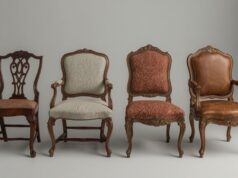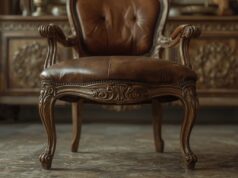

A vintage loveseat sofa is more than a compact seat for two—it is a small, highly expressive piece of design history. Whether you’re drawn to the poised symmetry of Neoclassicism, the botanical curves of Art Nouveau, or the clean geometry of Mid-Century Modern, a loveseat can anchor a room with a sense of time and place. Done well, buying vintage is not nostalgia; it is connoisseurship—recognizing craftsmanship, understanding provenance, and choosing materials that have already proved they can endure.
1) What Defines a Vintage Loveseat Sofa—and Why It Matters
A loveseat is a two-seat sofa (often designed for a more intimate relationship or at least smaller scale.) Other types of seating designed to be small also emerged as domestic practices evolved: in the 18th-century aristocratic drawing rooms of Europe and through “living room” culture of mid-20th-century American households. In essence, a vintage loveseat sofa is the functionality of a sofa in a furniture size more suited for small apartments, studies, and reading niches.
“Vintage” means all sorts of things, so let‘s get specific. The trade usually means vintage to be between 20 and 100 years old, and antique to be 100 years and older (definitions vary by country and by seller). More than the name, look for signs: joinery, upholstery style, springs, wood for the frame, and makers’ marks. Great vintage finds show natural wear not faux distress and an organic construction, not factory trims that were stapled onto a piece yesterday.
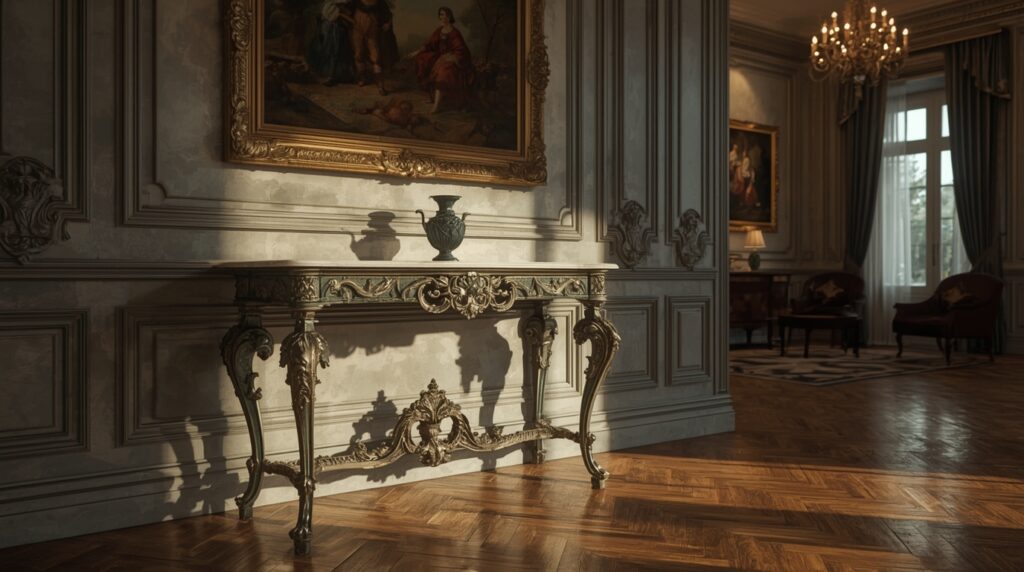
You can use museums to calibrate your own taste to identify true design. The Met, in New York, and the V&A, in London, feature furniture as part of decorative-arts presentations (how taste and technology determined the use of materials, ornaments, and shapes of any era). Viewing these collections shows you why cabriole legs fall into this tradition and tubular steel legs into that one.
2) A Brief History: From European Salons to Modern Apartments
Loveseat designs trace a line from the modest settees of Europe, places for the cozy intimacy of conversation. In 18th-century France, the sophisticated European salon, or living room, favored conversation groupings and the elegant small seating pieces designers created to meet the need. Those pieces range from ornate carved, gilt French Baroque forms and styles (think Louis XV and XVI) to more sober, Neoclassical forms. The decorative arts collections of the Louvre in Paris serve to demonstrate how furniture had become a status symbol, an integral part of aristocratic life.
The furniture industry transformed in the 19th century through industrialisation and the growing middle-class market: upholstery became ever more ornate, as coil springs and machine-made textiles came within reach, and British designers debated within an extensive collected and documented discourse at the V&A the merits of over-ornamentation vs. honest use of materials and structure.
The “vintage loveseat sofa” category really takes off in the 20th century. Art Deco (1920s–30s) featured dramatic geometry and plush materials. Mid-century Modern (c. 1945–69) championed simple forms, engineered woods, and foam, while the latter half of the century was all about postmodernism, with its historicism and bright colors. As the Smithsonian Institution‘s American Design and Material Culture collections shows, domestic furniture mirrored larger historical developments in home design, new technology and way of life especially as apartment living made the loveseat a viable option.
3) Identifying Authenticity: Craft, Materials, and Provenance
Authentic vintage loveseats reveal their age through construction details that are hard to fake convincingly. Look underneath: older frames often use solid hardwood and traditional joinery (mortise-and-tenon, dowels, corner blocks), whereas later mass-market frames may rely more heavily on staples and thin composites. Eight-way hand-tied springs, common in higher-quality upholstery, are a strong sign of skilled labor; later pieces may use sinuous (serpentine) springs, which can still be excellent when well made.
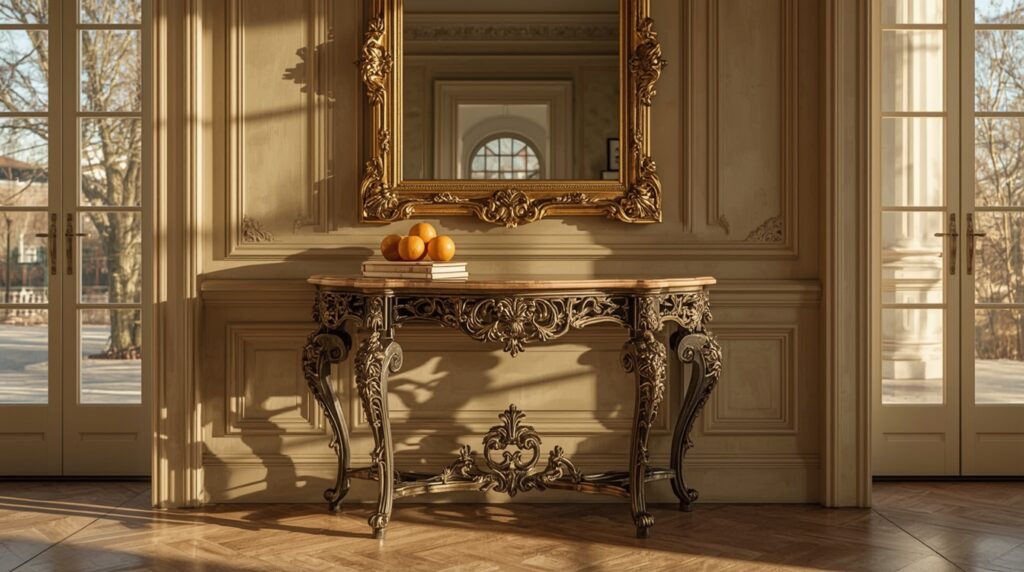
Materials tell a second story. True period upholstery fabrics might include wool, cotton, mohair, or early synthetics depending on era; leather develops patina in a way modern corrected-grain leather often does not. Wood species and finishes matter: walnut and mahogany appear frequently in earlier fine furniture; teak and rosewood are icons of Mid-Century. If a “1920s” loveseat has foam that looks too new or a finish that appears uniformly sprayed without age variation, you may be looking at a reproduction or a heavily modified piece.
Provenance—the documented history of ownership—adds credibility and value. Dealer invoices, original labels, manufacturer stamps, and even old photographs can support authenticity. Museums set the gold standard for documentation. As the Metropolitan Museum of Art notes in its curatorial work, careful attribution depends on materials, techniques, and comparative study—exactly the approach a serious buyer should emulate, scaled to the home market.
Key characteristics at a glance
| Era/Style | Typical Years | Visual Signatures | Common Materials | What to Check |
|---|---|---|---|---|
| Neoclassical-inspired | c. 1760–1820 | Symmetry, restrained carving, tapered legs | Mahogany, gilding, silk/wool | Carving quality, age-consistent wear, joinery |
| Victorian/19th c. | c. 1837–1901 | Deep tufting, curves, ornate trims | Walnut, rosewood, horsehair, coil springs | Spring integrity, frame soundness, reupholstery quality |
| Art Deco | c. 1920–1939 | Geometric forms, streamlined arms | Lacquer, exotic veneers, leather | Veneer condition, structural alignment |
| Mid-Century Modern | c. 1945–1969 | Clean lines, tapered legs, low profile | Teak, walnut, foam, wool blends | Foam deterioration, webbing/springs, maker marks |
4) Buying and Caring for a Vintage Loveseat Sofa (Without Regret)
Focus on scale and proportion. Don‘t just measure the length and width, but the height of the seat and whether the pieces will fit through the door frame (even “small” vintage frames can be chunky). A loveseat intended for a fancy sitting room might have a shallow seat, whereas a loungey 1960s chair might be lower and deeper. Comfort can‘t be assumed; it‘s a function of the period.
Then comes practical repair assessment. Upholstery tends to be the most expensive part; quality upholstery requires careful handwork and cannot be done overnight. A good upholsterer should talk about springs, layers of foam and filling, and the right silhouette for your chair. The Victoria and Albert‘s museum conservation philosophy – “where possible, use reversible techniques and respect original materials” translates to sensible home care: retain what‘s working, replace what‘s broken, and make a record of your interventions.
Lastly, the way you maintain a piece impacts its lifespan. Keep your antique fabrics from fading and fraying by not exposing them to direct sun, turn your cushions to share the wear, and preserve the integrity of wood joints and veneers by keeping humidity levels consistent. For wood, cleaning with a gentle touch is key; don‘t over-refinish. Refinishing too much can erase the tool marks and patina that signal an authentic antique.
There‘s a real authoritative voice in this argument. As the Smithsonian has put in its own argument about American material culture: “By the passage of time, everyday objects furniture included become historical documents. Retaining original surfaces and details of construction maintains the “documentary” nature.” Or in simple terms: A vintage loveseat couch has to be vintage.
Frequently Asked Questions
1) What is the difference between a vintage loveseat sofa and an antique settee?
A loveseat sofa typically implies a two-person upholstered seat sized like a small sofa. A “settee” is a broader historical term used for various small seating forms, sometimes with exposed wood frames. “Antique” generally means 100+ years old; “vintage” usually means roughly 20–100 years, though sellers may vary.
2) Is reupholstering a vintage loveseat a bad idea?
Not inherently. Reupholstery is often necessary for hygiene and comfort, especially if foam or fabric has degraded. The key is to use a skilled upholsterer who respects the original silhouette and construction, and to keep any labels or markings. If the piece is rare or museum-level, consult a conservation-minded specialist.
3) How can I tell if a “vintage” loveseat is actually a reproduction?
Check the underside and inside edges: modern staples everywhere, new-looking foam without older layers, uniformly sprayed finishes, and generic hardware can be red flags. Look for maker labels, period-appropriate joinery, consistent wear, and materials that match the claimed era.
4) Which vintage styles work best in small modern spaces?
Mid-Century Modern and some Art Deco loveseats often have compact footprints and exposed legs that visually “lighten” a room. Victorian pieces can be physically deep and visually heavy, but a well-chosen small tufted loveseat can still work if the room has adequate clearance.
5) What museum resources help me learn authentic design details?
The Metropolitan Museum of Art and the Victoria and Albert Museum publish collection entries and essays that show construction, ornament, and historical context. The Louvre Museum provides insight into French decorative traditions, and the Smithsonian Institution offers American design and social-history framing—useful for understanding why certain forms became popular.
A vintage loveseat sofa infuses the home with history. Real historical movements, real materials, and real craftsmanship you can physically touch. Shop smartly educating yourself on the craftsmanship, sourcing, and the type of informed design that museums do best and you won‘t just get a cute sofa. You‘ll get a sturdy, character-rich piece that you won‘t age out of and that gives any space a lived-in sensibility.
Authoritative sources referred to and suggested: The Metropolitan Museum of Art. The Victoria and Albert Museum. The Louvre Museum. The Smithsonian Institution.