
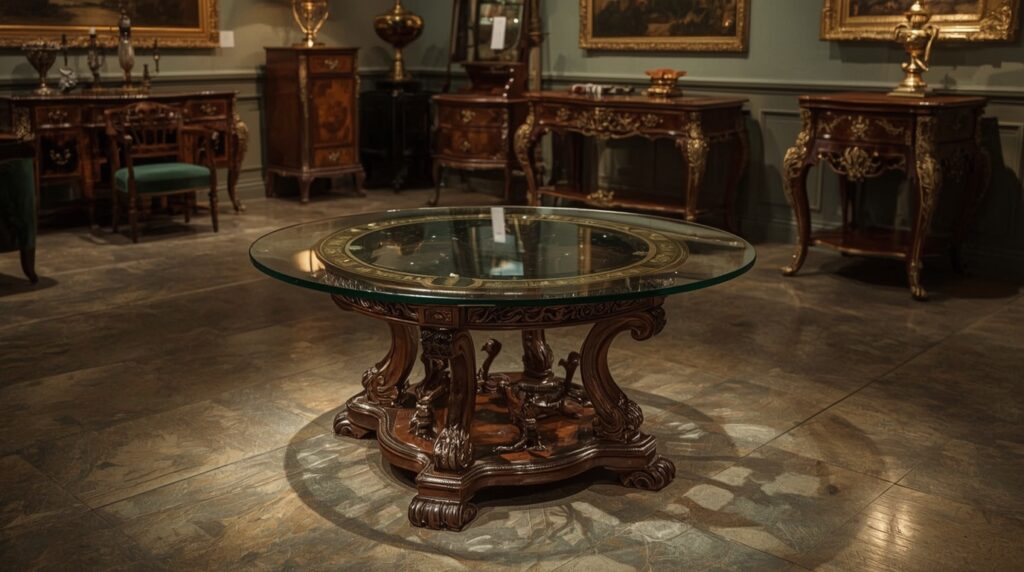
A vintage coffee table with a glass top can look deceptively simple—just a transparent surface on a base—but the best examples are miniature histories of design. The glass reveals the structure rather than hiding it, letting you see joinery, metalwork, or sculptural silhouettes the way museum display cases reveal artifacts. From the glamour of Art Deco Paris to the optimism of postwar American modernism, a vintage glass-top coffee table isn’t merely furniture; it’s a functional expression of its era’s materials, technologies, and taste.
What Defines a “Vintage Coffee Table Glass Top”?
“Vintage” is loosely 20 to 40 years old; many dealers use “antique” for anything over 100 years. If the strongest characteristic is a glass top, design-wise, the glass was placed there not to be an addition, but to highlight that it‘s light and to allow the eye to travel to the shape underneath.
Glass was always in furniture, of course, but its incidence rose with the expansion of industrial manufacturing, which produced plate glass and later safety tempered glass. In the early twentieth century, glass became an indicator of design modernity: clear surfaces and transparent spaces. The coffee table only grew as the living room took center stage with changing lifestyles, particular between the two World Wars and in the post–WWII decades of casual entertaining and interiors built for the mass market.
Museums help contextualize this material shift. The Victoria and Albert Museum (V&A) and The Metropolitan Museum of Art (The Met) both document how modern design embraced new materials and transparent surfaces to express the “machine age” aesthetic. In that lineage, a vintage coffee table glass top is best understood as part of the broader modern project: making interiors feel brighter, less cluttered, and more architectural.
Historical Styles and Periods That Shaped Glass-Top Coffee Tables
Art Deco (1920s–1930s) is one of the most collectible sources of glass-top forms. In Paris and across Europe, Deco emphasized symmetry, luxe materials, and bold geometry—often pairing glass with chrome, lacquer, and exotic woods. The glass top reinforced Deco’s fascination with sheen and reflection, and it allowed dramatic bases—sunbursts, stepped forms, or streamlined frames—to remain visible.
Mid-Century Modern (c. 1945–1969) made glass feel effortless rather than opulent. In the United States, design institutions and manufacturers promoted functional, airy furnishings that suited smaller postwar homes. The Smithsonian Institution has extensively documented American industrial design and the postwar embrace of new materials and manufacturing methods, which helps explain why glass-topped tables proliferated: they visually “open up” a room while celebrating engineered bases.
By the 1970s and 1980s, glass-top coffee tables became more sculptural and sometimes more glamorous—think smoked glass, brass or chrome bases, and bold silhouettes that echo late-modern and postmodern interiors. While not every piece from these decades is rare, high-quality examples with well-made metalwork and thick, well-finished glass are increasingly collected, particularly as interior design cycles back to warm metals and strong forms.
Materials, Construction, and Hallmarks of Quality
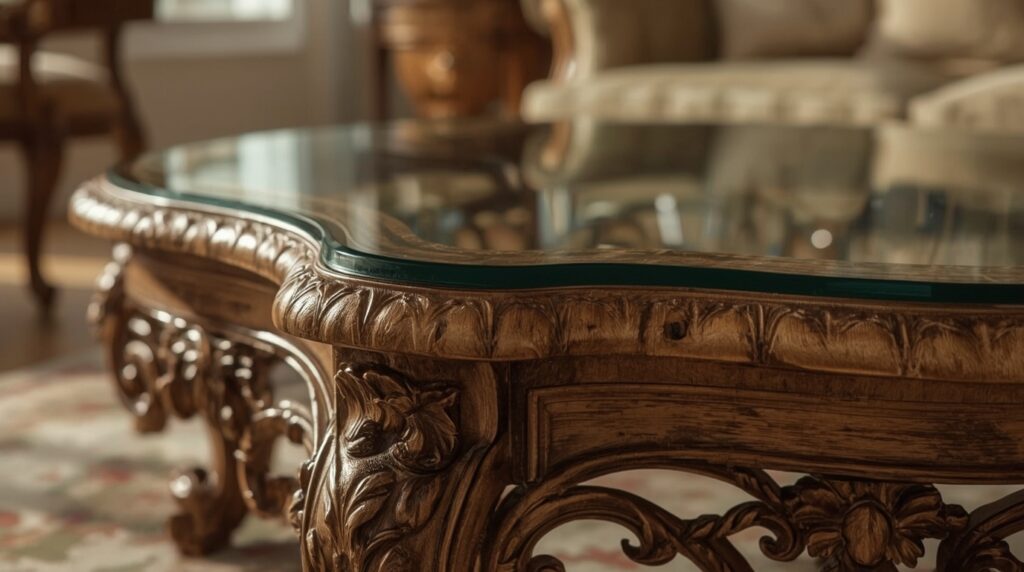
Original vintage glass tops are generally thicker than cheap modern replacements and the edges are usually deliberately finished polished, beveled, or otherwise shaped. Earlier pieces are often plate glass; later ones might have tempered safety glass. Again, the thickness, color and edge treatment is not purely aesthetic. They also tell you the cost, quality of construction and whether the glass was originally part of the base.
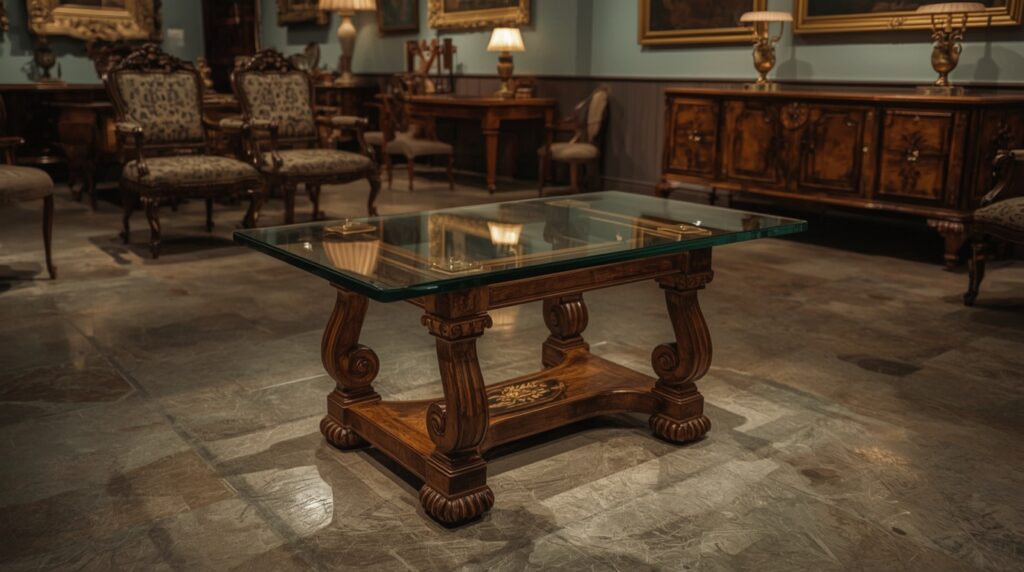
The base is usually where a lot of craftsmanship shows. Solid wood bases should have tightly fitted joints, good veneers, and maybe some carving or inlay work. Metal bases (steel, brass, or chrome) should be stable and seem well-built, with smoothly executed welds or joints that are perfectly aligned. Bolt or bracket fittings should look like they belong to the piece (not like they were installed later with hardware store bolts.) If the base is off-kilter or wobbly, there‘s a good chance it‘s been tampered with.
Designer integrity is another factor to consider. Design resources from V&A, for instance, explain that modernist furniture aimed to create visual clarity and purity of form, honest use of materials. You can apply that to table shopping. If it looks as though the glass is concealing bad carpentry instead of drawing attention to the legs, then you‘re likely to be looking at a knockoff or a refitted old table.
Collecting and Authentication: How to Buy with Confidence
Start with provenance and documentation where possible: dealer records, estate context, old receipts, or labels. While many legitimate vintage tables have no markings, original manufacturer labels, stamped metal plates, or period catalog references can add confidence. When assessing a purported “designer” piece, be cautious—misattribution is common, especially for mid-century styles that have been widely copied.
Inspect the glass carefully. Original tops often show age-appropriate wear: light surface scratches consistent with decades of use. What you do not want are red flags like a top that’s noticeably too small/large for the base, new-looking rubber bumpers that don’t match the table’s age, or a thickness inconsistent with the period. Replacement glass isn’t inherently bad, but it affects value and should be disclosed.
A useful mindset comes from museum practice: look closely, compare, and contextualize. The Met and Louvre Museum collections demonstrate how attribution relies on materials, technique, and stylistic comparanda rather than a single detail. Or, as the V&A often emphasizes through its curatorial framing of decorative arts, understanding an object’s design language and making is key to placing it accurately in time and place.
Key Characteristics at a Glance
| Feature | What to Look For | Why It Matters |
|---|---|---|
| Glass thickness | Substantial, period-appropriate thickness | Indicates quality; helps date and confirm originality |
| Edge finish | Polished or beveled edges; consistent workmanship | Better safety and craftsmanship; often era-specific |
| Base material | Solid wood, quality veneer, chrome/brass/steel | Strong correlation with durability and value |
| Joinery/metalwork | Clean joints, stable frame, neat welds | Signals original construction vs. later repairs |
| Proportions | Glass fits base precisely; balanced silhouette | Helps detect replaced tops or mismatched components |
| Wear pattern | Consistent patina; honest age | Supports authenticity; affects restoration choices |
Caring for and Styling a Vintage Glass-Top Coffee Table
Good care starts with knowing your table‘s vulnerabilities, namely the edges of the glass and the finish of the base. A pH-neutral glass cleaner applied very lightly is best, rather than steel wool, which will cause glass to fog up. Over-zealous polishing of old metal bases can strip off the patina that gives them character, especially brass. When in doubt, talk to a conservator museums like the Smithsonian recommend a minimalist, reversible approach.
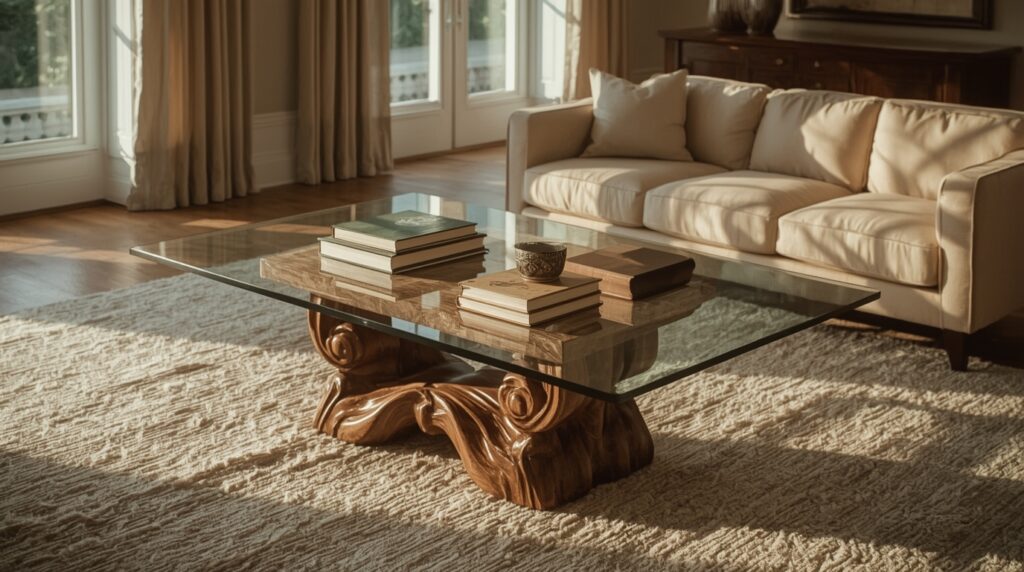
This is where glass tables make for the most styling opportunities! Since it‘s light visually, you can use heavier pieces think ceramics, coffee table books or a sculptured bowl without overwhelming your space. Glass also looks beautiful with textiles, use a wool rug or bouclé sofa to add a little extra contrast and warmth. The intention is to showcase the legs of the table not to drown them!
If your vintage coffee table glass is in daily use, aim for protection without being obvious: stick felt pads on things that set on the glass, always use coasters, and move the glass table top by sliding it from its stand never pull it from the top of a glass table! A great vintage coffee table glass top can be a working piece of furniture that also serves as a collectible.
Authoritative Perspectives (Selected Quotes)
Design institutions consistently link modern furniture to material innovation and clarity of form. The V&A’s approach to modern design emphasizes how objects reflect the technologies and aesthetics of their time, reinforcing why a glass top is such a telling feature in 20th-century tables.
The Met’s decorative arts framing similarly treats furniture as an intersection of craft, industry, and style—useful for collectors evaluating authenticity through construction and design language rather than trends alone.
And in the spirit of museum conservation, a widely held principle across institutions is to preserve original materials whenever possible and intervene minimally—guidance that applies directly when deciding whether to refinish a base or replace a worn glass top.
(For deeper reading, consult the online collections and design histories of The Metropolitan Museum of Art, the Victoria and Albert Museum, the Louvre Museum, and the Smithsonian Institution.)
Frequently Asked Questions
Is a vintage glass-top coffee table safe to use every day?
Usually, yes—if the base is stable and the glass is intact. If the glass is thin, chipped, or unsupported at key points, consider replacing it with tempered glass cut to the same dimensions and disclose the replacement for resale transparency.
How can I tell if the glass top is original?
Check fit, thickness, edge finishing, and wear patterns. A top that sits perfectly on original supports and shows consistent age is more likely original; a too-perfect, brand-new surface on a heavily worn base may indicate replacement.
Does replacing the glass reduce value?
Often it does, especially for collectible designer pieces. However, a high-quality, correctly sized replacement can be preferable to unsafe glass for practical use. Value impact depends on rarity, maker, and how well the replacement matches period specifications.
What eras are most collectible for vintage glass-top coffee tables?
Art Deco (1920s–1930s) and Mid-Century Modern (post-1945 through the 1960s) remain particularly desirable, though standout 1970s–1980s pieces—especially with strong metalwork—are gaining attention.
What’s the best way to move one?
Remove the glass top first if possible, carry it vertically with both hands, and protect edges with padding. Move the base separately to avoid stressing joints or brackets.
Conclusion
A vintage coffee table glass top is more than a transparent surface: it’s a lens onto design history, craftsmanship, and the evolving relationship between materials and modern living. By learning the signatures of key periods, inspecting construction with a collector’s eye, and caring for the piece with conservation-minded restraint, you can buy—and live with—an object that brings both elegance and authenticity into the center of your home.