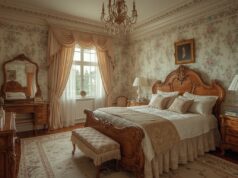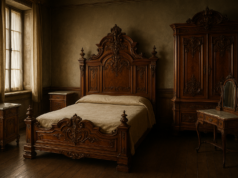

Comfort was not new in the 1800s, but the way people thought about it changed a lot. For a long time in European history, homes were meant to show that they were stable and prosperous.
Rooms were set up so that people could see them, furniture was set up so that people could recognize it, and decorations were used to show off social status.
But as life in factories sped up during the Victorian era, a new need arose. Families wanted places that protected their thoughts more than places that showed off their wealth.
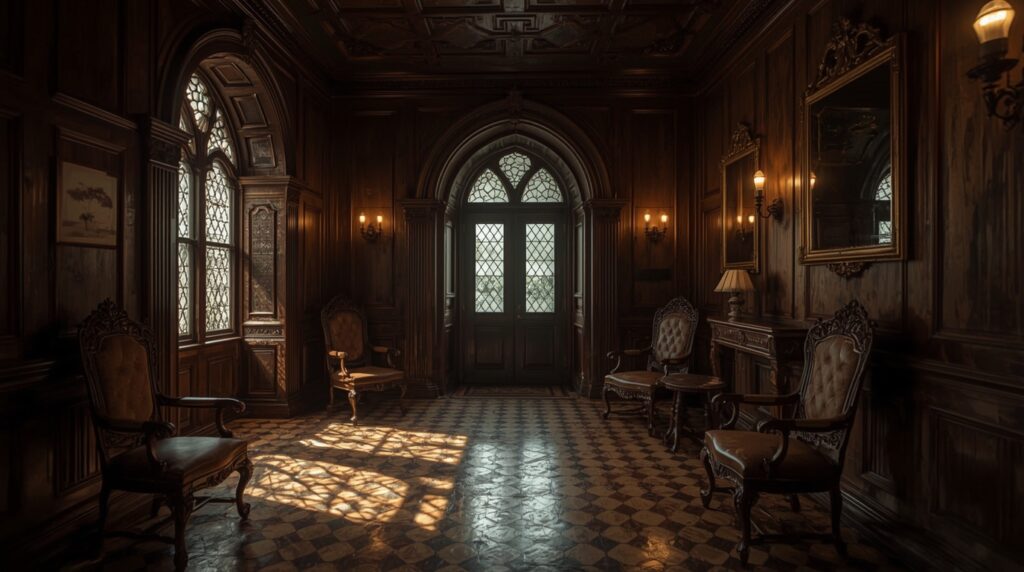
This desire for inwardness led to the Victorian gothic style of interior design.
Instead of making rooms brighter and more open, designers used enclosure, layered light, and material density. The goal was not to create a dark stage, but to keep the mind going.
In these kinds of rooms, life moved at a slower pace. The sound got softer, the movement became more purposeful, and the everyday things like reading, writing, or talking became very important.
The gothic victorian interior was more than just decoration; it also helped people figure out how to spend their time in the house.
The origins of gothic victorian interior design
The nineteenth-century reinterpretation of medieval architecture served as the foundation for Gothic Victorian interior design. Because structure and meaning were combined, writers and architects thought earlier structures had sincerity.
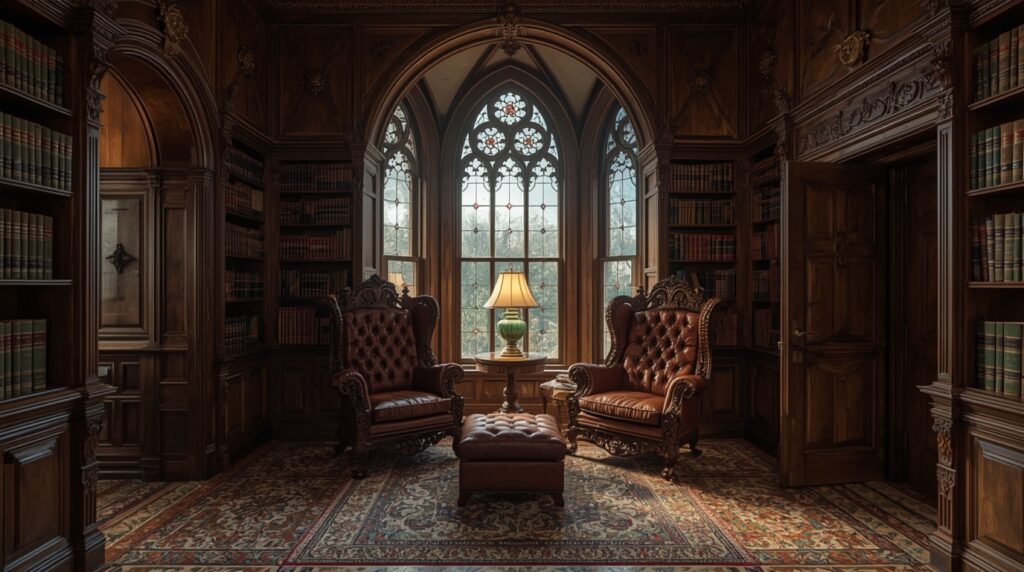
When these concepts made their way into domestic architecture, the objective was to bring coherence back into daily life rather than to replicate castles.
The method was adopted by urban households in Britain and later by those in Europe and North America. Pattern books demonstrated how to adapt textured materials, controlled lighting, and pointed forms to small homes.
As a cultural reaction to mechanization, the Victorian Gothic interior emerged. The home restored complexity where industry simplified things.
The interior therefore balanced external speed with internal duration.
| Social condition | Interior response |
|---|---|
| Mechanized production | Visible craftsmanship |
| Crowded cities | Defined private zones |
| Constant information | Quiet reading areas |
| Bright artificial light | Filtered illumination |
Spatial experience inside a gothic victorian interior
Behavior was influenced by the layout of the rooms. Open visibility was replaced by the slow unfolding of spaces.
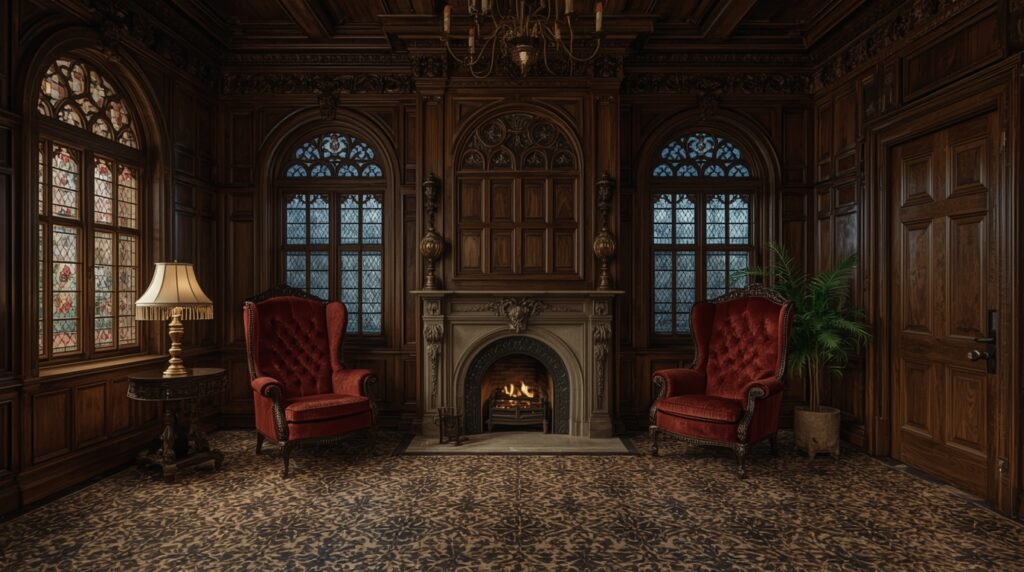
Corridors led from entry halls to parlors and, finally, to private rooms. Before the next activity started, each transition altered the mood.
High ceilings encouraged people to pause and look up, reinforcing vertical awareness. Alcoves and window seats made private havens in common areas. Reflection was encouraged rather than demanded by the Victorian Gothic interior design.
Movement was incorporated into household manners.
| Material | Sensory quality | Emotional impression |
|---|---|---|
| Oak paneling | Warm resonance | Stability |
| Iron fittings | Cool precision | Durability |
| Velvet curtains | Acoustic softness | Privacy |
| Patterned tiles | Tactile contrast | Continuity |
Recognizing authentic gothic victorian interior design
True atmosphere depends on the relationships between the elements, but modern reinterpretations frequently rely solely on dark paint. Light variation, material texture, and spatial sequencing are all balanced in a true Victorian Gothic interior.
The room’s behavior, not the decorations placed on it, is what gives it authenticity. Instead of replicating every detail, modern homes apply the principles of Victorian gothic interior design to reinterpret it.
In contemporary layouts, designers incorporate smaller conversational spaces, textured glass, and darker wood surfaces. Restoring attention is the goal, not reconstructing the past.
By making these changes, a contemporary home can attain the reflective quality that was previously associated with older homes.
| Historic feature | Modern adaptation |
|---|---|
| Heavy drapery | Acoustic curtains |
| Carved paneling | Textured wall finishes |
| Leaded windows | Diffused glazing |
| Layered rooms | Defined functional zones |
Restoration and collecting guidance
Excessive brightening frequently eliminates the character of an original space when it is being restored. Depth is broken by sanding wood to a consistent smoothness, switching out textured glass for clear panes, or adding bright overhead lighting.
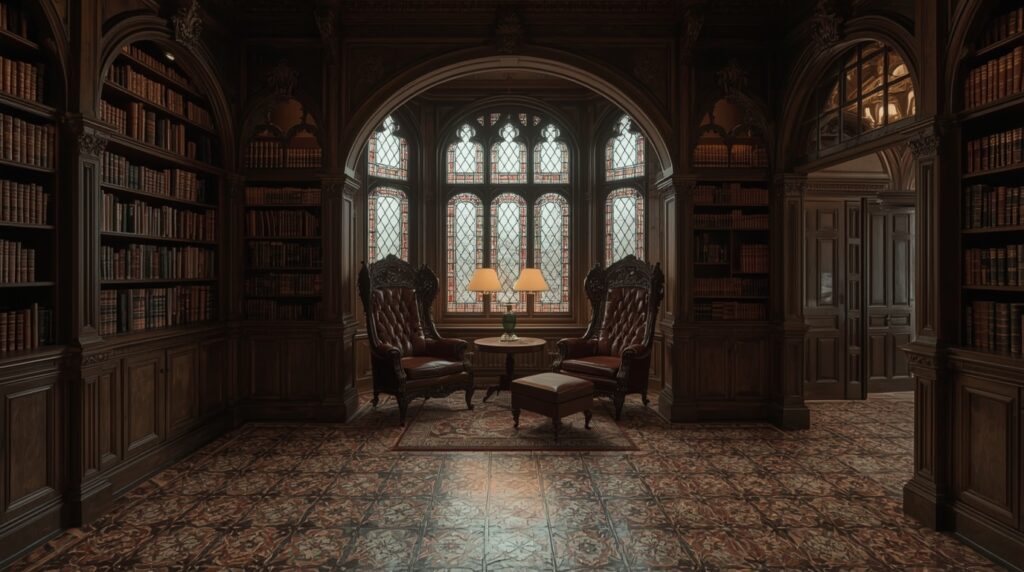
Contrast and obvious aging should be preserved.
It is not advisable for collectors to put together identical furniture sets. Historical interiors gradually accumulated artifacts. Continuity of material, not identical carving, is what creates harmony.
Generally speaking, repairing original hardware and keeping worn surfaces preserves atmosphere better than replacing it.
Difference between gothic revival and tudor interiors
Excessive brightening frequently eliminates the character of an original space when it is being restored. Depth is broken by sanding wood to a consistent smoothness, switching out textured glass for clear panes, or adding bright overhead lighting. Contrast and obvious aging should be preserved.
It is not advisable for collectors to put together identical furniture sets. Historical interiors gradually accumulated artifacts. Continuity of material, not identical carving, is what creates harmony.
Generally speaking, repairing original hardware and keeping worn surfaces preserves atmosphere better than replacing it.
In contrast, Gothic Revival interiors purposefully reached upward and backward in time: even in private homes, pointed arches, clustered columns, polychrome surfaces, stained glass, encaustic tiles, and ecclesiastical motifs were used to create a spiritualized setting that suggested moral seriousness rather than lineage stability.
Whereas Tudor architecture emphasized permanence and ownership—the home as the seat of ancestors—Gothic Revival architecture emphasized ideology and belief—the home as an immersive medieval story.
The Gothic Revival believed that modern life was meaningless and sought to restore it through aesthetic archaeology, whereas Tudor design assumed life was lived in the present and continuity came from inheritance.
As a result, Tudor interiors feel structurally inevitable, shaped by building method and climate, while Gothic Revival interiors feel curated, consciously composed to evoke a worldview rather than simply accommodate living.
How historic houses used layered lighting
Rather than being a decorative afterthought, layered lighting in historic homes evolved long before electricity as a sophisticated response to darkness, hierarchy, and daily rhythm.
Wall sconces raised light to eye level for movement and conversation, portable candles or oil lamps created private spaces for reading, writing, or sewing, and the hearth provided the basic glow for group activities.
This vertical and social arrangement of illumination allowed rooms to change constantly as people brought brightness with them.
In addition to being central fixtures, chandeliers served as status symbols, emphasizing tables, hosts, or ritual activities while purposefully keeping surrounding areas quiet to emphasize their ceremonial presence.
Pale plaster, glass vessels, polished metal, and sometimes mirrors redistributed flicker across ceilings to make spaces appear larger and more lively than they actually were.
Reflective materials magnified the limited amount of light. Darker edges protected privacy and saved fuel while directing the eye toward focal architecture like altars, portraits, or dining areas.
Shadows were even welcomed and even helpful. As a result, there was a dynamic gradient of illumination rather than a uniform one: late night shrank to tiny personal halos, evenings collected brightness inward toward social cores, and mornings relied on window light augmented by little flame.
Conclusion
Rather than being a fad for decoration, the Victorian gothic interior design reflects a domestic philosophy. In a time of rapid change, the home fostered awareness by influencing light, movement, and material presence.
Comfort can result from thoughtful enclosure just as much as from openness, as the gothic Victorian interior and its contemporary modifications continue to show.
Because it provides an enduring balance—a haven where everyday life slows down enough for meaning to accompany activity—the Victorian Gothic interior is still significant today.