Victorian era fashion for women was never just about clothing—it was a highly visible language of class, morality, industrial progress, and empire. From the moment Queen Victoria took the throne in 1837, women’s dress in Britain (and far beyond) became a public performance shaped by etiquette manuals, new textile technologies, shifting ideals of femininity, and the rapid growth of mass production. The silhouette alone could announce respectability, wealth, marital status, and even political allegiance—long before a word was spoken.
The Social Meaning of Victorian Women’s Dress (1837–1901)
Victorian era fashion female styles were governed by a powerful social logic: a “proper” woman’s appearance was expected to signal modesty, discipline, and domestic virtue. In Britain’s expanding middle class—especially in urban centers like London, Manchester, and Birmingham—dress became a tool for proving respectability in a society obsessed with status and moral standing. The more structured and “finished” the look, the more it implied leisure, self-control, and adherence to social norms.
Both institutions and commentators supported this: museums today maintain traces of how clothing communicated status. The V&A in London has excellent examples of time‘s obsession with silhouette; The Met‘s Costume Institute shows how Victorian sartorial habits were disseminated from Paris and London to America; clothing was intrinsically connected to the culture of etiquette, with very specific requirements for dress if you were making a morning call, or going to a promenade, or attending the theatre or mourning.
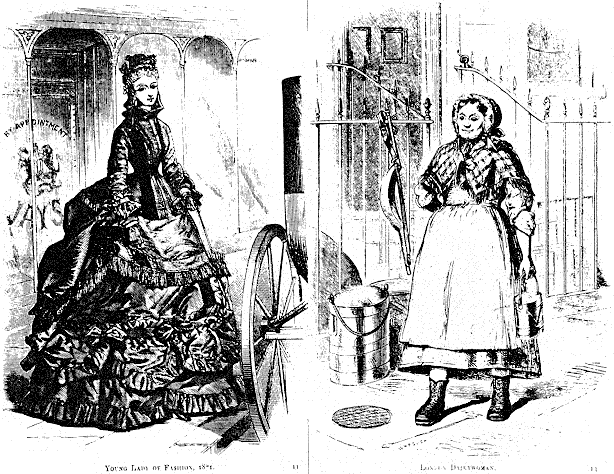
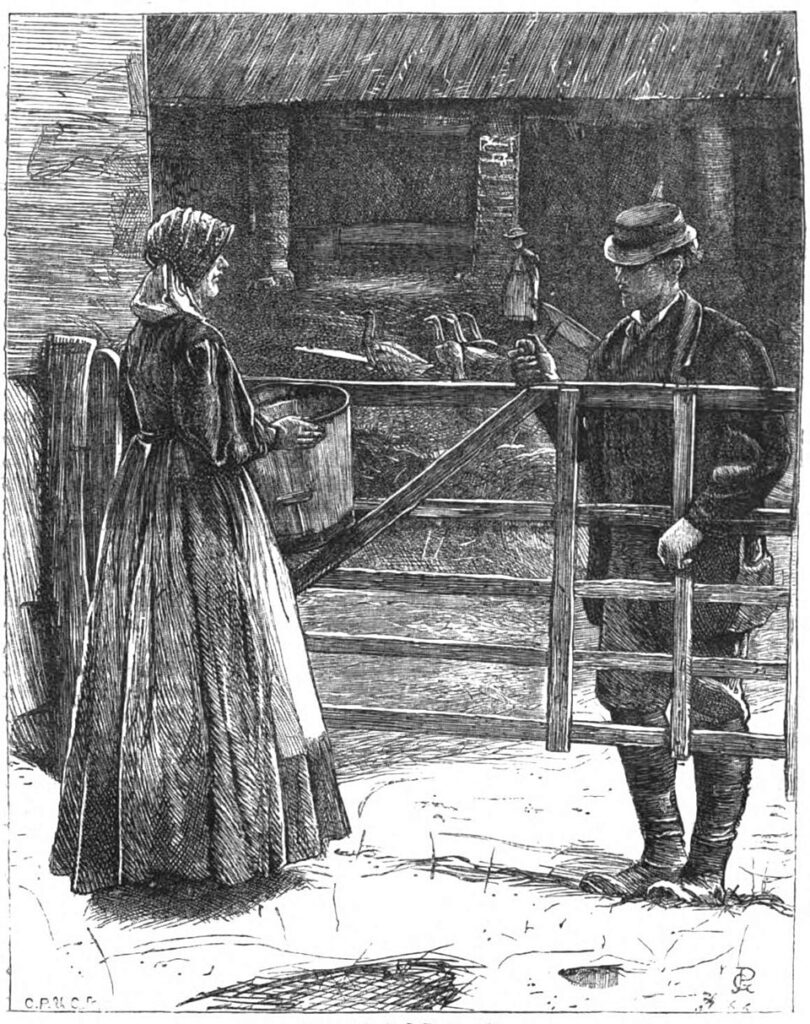
However, Victorian style wasn‘t uniform. Depending on where a woman lived, how rich she was, how old she was, and the work she did, she could interpret the many strictures in various ways. Working women often wore adapted and simplified styles using durable fabrics. Elite women, in contrast (especially in London‘s West End and Paris under the Second French Empire, 1852–70), wore fast-evolving trends enabled by specialized tailors and a budding fashion magazine industry.
Silhouettes and Construction: From Crinolines to Bustles
The most recognizable element of Victorian era fashion female dress is the dramatic silhouette, which changed markedly across the century. In the 1840s and early 1850s, wide skirts supported by layers of petticoats created a bell shape. By the mid-1850s, the cage crinoline—an engineering innovation using steel hoops—enabled huge skirts with reduced weight. As the century progressed, volume shifted backward into the bustle (especially prominent in the 1870s and mid-1880s), producing a pronounced rear projection and a comparatively flatter front.
Such shapes weren‘t a free-form expression; they were engineered. Bodices were constructed with seams, darts, and often innerboning. Corsets reshaped the body to suit the period‘s tastes. As the V&A website points out, “Nineteenth-century dresses relied upon an elaborate framework of corsets, crinolines and bustles.” The ideal shape was less a flow of fabric and more a wearable structure.
Fashion was also changing with industrialism. Victorian times saw the growth of textile production and the advent of machine lace, synthetic dyes, and ready-made trim. According to the Smithsonian‘s collections and work in nineteenth-century material culture, “The industrial revolution made it possible to produce things in unprecedented numbers at unprecedented speeds even as bespoke tailoring, handwork, and embellishment became a form of luxury and distinction.”
Fabrics, Color, and Decoration: Technology Meets Taste
Victorian women’s fashion depended on fabric choice as much as silhouette. Day dresses often used wool, cotton, and sturdy silks; evening gowns emphasized lustrous silks, gauze, tulle, and elaborate ornament. Decorative elements—ruching, flounces, braid, fringe, jet beading, and lace—could communicate both wealth and occasion. Even within the same silhouette, fabric and trimming distinguished a practical day look from a formal ensemble.
Color itself says a lot. Aniline dyes became more widely available from the mid-19th century, offering new and exciting if sometimes dangerous (some green dyes contained arsenic) shades like mauves, magentas, and brilliant greens. If you go to museums like the Met, you can see dresses that demonstrate not only the new technology of dye, but also the complex surface embellishment and ornamentation popular at the time. Black came into its own as well, serving a vital function for mourning (particularly after the death of Prince Albert in 1861), while being a symbol of taste when worked in fine fabric.
Paris continued to influence, especially with the Second Empire solidifying the practices of haute couture. Charles Frederick Worth, an Englishman working in Paris, formalized the couturier as a business model and changed how elite women bought fashion, as “models” rather than purely client commissions. The Louvre, with its wider framing of French decorative arts and courtly taste as material culture, provides a broader context to the ways French aesthetics and French luxury industries led fashion in 19th century Europe.
Daily Life, Etiquette, and the Wardrobe System
Victorian era fashion female wardrobes were organized around strict social rules. A well-appointed woman required different outfits for morning, visiting, walking, riding, dinner, and evening events. Accessories—gloves, parasols, hats or bonnets, fans, and boots—were not optional details but essential components of being “properly dressed.” Even hair was regulated: styles evolved from smooth center parts and low buns to more elaborate arrangements as the century progressed.
Mourning dress was a major wardrobe category with codified stages (deep mourning, half-mourning) and prescribed materials like matte black crepe, jet jewelry, and subdued trims. The practice was especially influential in Britain after 1861, when Queen Victoria’s extended mourning shaped social expectations for decades. The V&A and the Met both document mourning ensembles that show how grief and etiquette were materialized in clothing rules.
It is important, however, not to confuse etiquette ideals with everyone’s lived reality. Many women could not afford multiple outfits or frequent updates. Photographs from the later Victorian period (aided by advances in studio portraiture) reveal creative reuse, alteration, and careful mending. In this sense, Victorian fashion was also about resourcefulness—making garments last, adapting trimmings, and refashioning bodices as silhouettes changed.
Key Characteristics of Victorian Women’s Fashion (Summary Table)
| Aspect | Early Victorian (1837–1850) | Mid Victorian (1851–1870) | Late Victorian (1871–1901) |
|---|---|---|---|
| Dominant silhouette | Sloped shoulders, narrow waist, widening skirt | Crinoline with very wide skirt | Bustle and later slimmer skirt with emphasis on back |
| Understructures | Corset, multiple petticoats | Steel cage crinoline, corset | Bustle frames/pads, corset; later more tailored lines |
| Typical fabrics | Cotton, wool, silk taffeta | Silk, wool, novelty weaves; more trims | Richer textiles; tailored wool for day, ornate silks for evening |
| Color trends | Deeper, restrained tones | Brighter aniline dyes appear | More variety; black strongly associated with mourning and chic |
| Key influences | British court respectability | Industrialization + Paris leadership | Couture + tailoring; expanding mass fashion |
Authoritative Perspectives and Sources
Museum scholarship underscores that Victorian clothing must be interpreted as both art and social document. The Metropolitan Museum of Art emphasizes fashion’s close relationship to technology and social change, and its Costume Institute collections demonstrate how garment construction and materials reflect the era’s industrial transformation and international exchange. The V&A similarly frames Victorian dress as a product of design history, craft, and consumer culture, preserving undergarments and outerwear that reveal the engineering behind the silhouette.
A frequently cited maxim from dress historian C. Willett Cunnington captures the centrality of the corseted form to the period’s ideal: “Fashion… is a form of collective behavior” (Cunnington, History of Underclothes, 1951). While not a museum label, it remains an influential scholarly lens: Victorian women’s dress was less an individual whim than a social system. Meanwhile, the design reform movements associated with figures like William Morris (active especially from the 1860s onward in Britain) critiqued industrial ugliness and promoted craft values—showing that Victorian style was contested terrain, not a single unanimous taste.
For credible institutional grounding, consult:
- The Metropolitan Museum of Art (Costume Institute): collection essays and object records on 19th-century dress
- Victoria and Albert Museum (V&A): fashion collection highlights and research features on Victorian clothing and understructures
- Smithsonian Institution: research and collections related to 19th-century technology, textiles, and American dress culture
- The Louvre Museum: broader decorative-arts context for French luxury industries influencing 19th-century European taste
Frequently Asked Questions
What defined Victorian era fashion for women most strongly?
The defining feature was the engineered silhouette—corsets and understructures (crinolines, bustles) that shaped the body and skirt into period-ideal forms.
Did all women wear crinolines and bustles?
Not in the same way. Elite and middle-class women were more likely to adopt extreme silhouettes, while working women often wore simplified versions for practicality and cost.
Why was black so prominent in Victorian women’s fashion?
Black carried strong social meaning: it was required for mourning and also conveyed refinement, especially when made in high-quality fabrics with subtle decoration.
Was Victorian fashion only British?
No. While named for Queen Victoria’s reign (Britain, 1837–1901), the style ecosystem was international—especially influenced by Paris, and widely adopted across Europe and North America.
How do museums know how these garments were worn?
They study surviving clothing, photographs, fashion plates, diaries, tailoring marks, and period publications. Institutions like the Met and V&A combine object analysis with documentary evidence to reconstruct wear and context.
Victorian womenswear was an exercise in both control and intense expressiveness a synthesis of morality, technology, and art through which form both defined and redefined the female body and the social self. Whether crinolines, bustles, mourning crepe, or brilliant aniline-dyed fabrics, Victorian dress is a story of a nation grappling with the arrival of the modern in terms of cloth, shape, and etiquette. And as seen by collections at the Met, V&A, Smithsonian, and the Louvre, it‘s one of the richest, and most visually distinct, style periods in recent history.