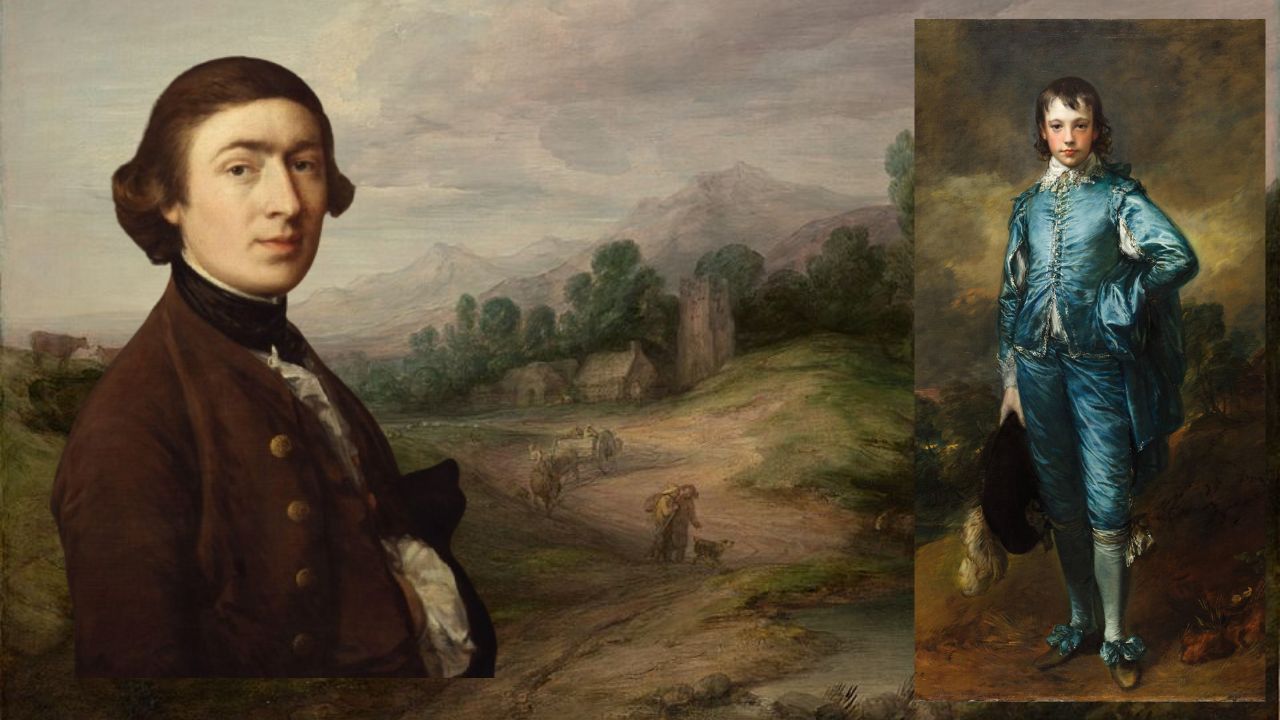
Thomas Gainsborough was not simply a portrait painter of 18 th-century Britain. He was a quiet revolutionary. As Joshua Reynolds turned portraiture into the intellectual complexity of the classical world, Thomas Gainsborough broke it down into airborne light and time. His sitters are alive.
Their silk glitters. Their landscapes surge on an emotional frontier.
This paper investigates Gainsborough not merely as a Rococo painter – but as a cultural signifier of identity shift in 18th century Britain.
Britain Between Aristocracy and Sensibility
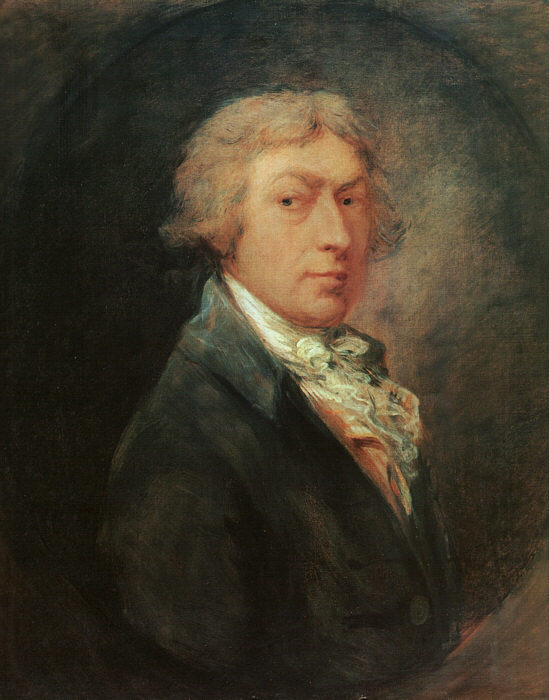
Gainsborough was born in 1727 in Sudbury in Suffolk, during a period when Britain was constructing and reinventing itself; both in economic, social and stylistic terms. Increasing amounts of wealth gave rise to the land-owners and merchants who commissioned portraits not as static affirmations of lineage, but of taste and breeding.
Founded of Royal Academy of Arts 1768 Gainsborough became founding member but he was never truly relaxed within the framework of a traditional art school.
Reynolds favored the “Grand Manner” (based on authoritative sources of the Renaissance) whereas Gainsborough admired an spontaneous atmospheric approach to painting.
He felt inspired by the fluidity of Anthony van Dyck, and Watteau‘s decorative elegance. However, neither, he imbued portraiture with English rustic charm. His landscapes are more than settings. They are psychic spaces.
What Was “Grand Manner”?
“Grand Manner” is a high style of painting first emergent in the 17 th century and thriving especially throughout the 18 th century which aimed to show a realistic subject (varying from portrait to history painting) in a way that sanctioned idealism and grandeur rather than commonplace authenticity.
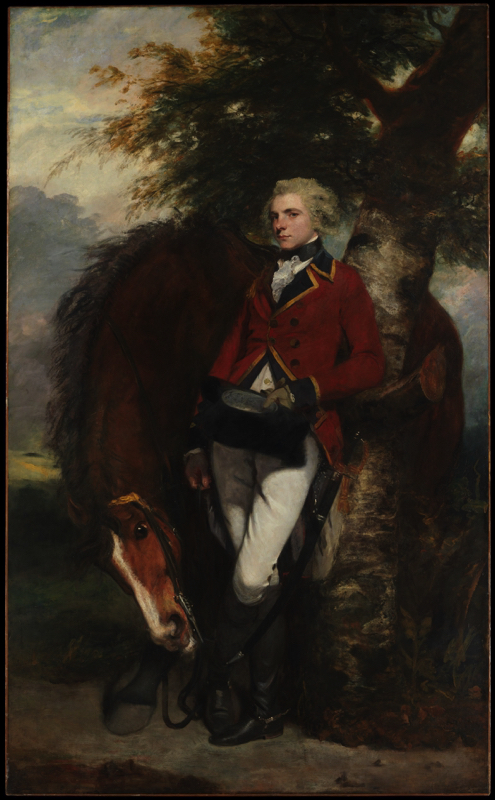
1782. The Metropolitan Museum of Art.
The Grand Manner is most heavily associated with the work of Reynolds, the first president of the Royal Academy of Arts, who codified public expectations of art in his Discourses by stating that great art should ‘transcend the appearance of things’ in favor of the way in which they exist in our minds and universally speaking, the intellect.
In portraiture that meant, instead of letting sitters simply resemble their true selves, that they be shown as they should be remembered – residing in niche-like rooms with the pillars of Greece and Rome surrounding them, clad in time-travelled robes, staring out with solemnity and enough repose to merit the label “noble.”
Reynolds borrowed from this grandiose style the aristocratic gestures of Van Dyck and other master portrait makers, who made the adorned, ennobled aristocratic figure whose art attained similar levels of comfort and composure. In history painting, the Grand Manner was expressed as (among other things) exaggerated gesture and bodily grace, perfect proportionality, balanced composition, larger-than-life size and moral sensibility; art was not merely made to flatter, but to enlighten.
Remembered is turned into idealized, ennobled, dignified idealism; existing is turned into monumental history. The essential belief underlying the Grand Manner is that art ought to elevate the individual it depicts, not show him or her in the most mundane possible light.
The Blue Boy (1770): Color as Defiance
Confused with being kept at the National Gallery (as it has been displayed there in the past), the Blue Boy is now in California. This painting was painted as somewhat of a response to Reynolds who promoted the idea that no picture should be painted blue.
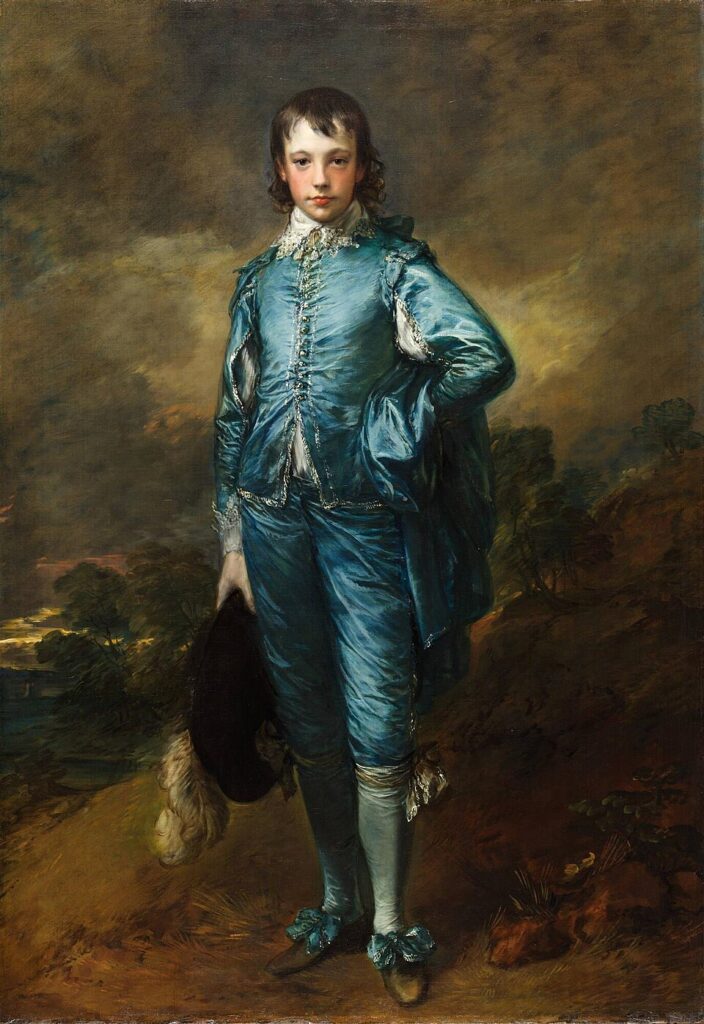
And Gainsborough did just that.
The satin suit shines out into an attenuated vista. The brushwork is loose but sure. The boy–though usually thought to be Jonathan Buttall–is frozen in a pose owed to Van Dyck but set in a contemporary register. It is not aristocratic dominion; it is youthful licencing set in an animate nature.
If The Blue Boy were sold today, it is estimated that it would fetch in excess of $100 million given similar Old Master sales.
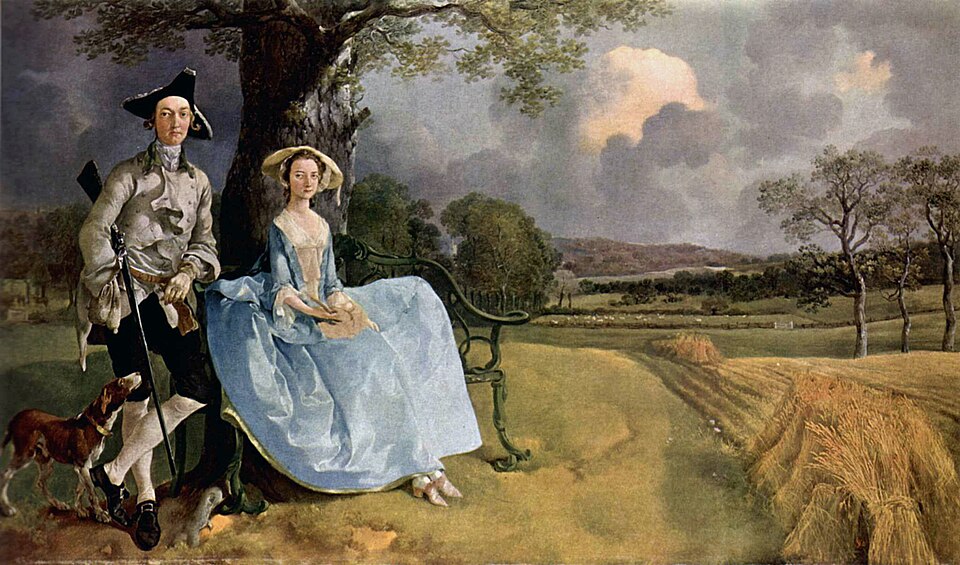
Mr and Mrs Andrews (1750): The Land as Identity
In ‘Double Portrait’ there‘s a radical mixture of portraiture and landscape. The whole image shows the couples estate in Suffolk. Beyond them there‘s a line of wheat filed disappears into the distance.
Key insight:
The painting epitomizes the Agricultural Revolution and of land ownership as a social currency.
In contrast to Reynolds, Gainsborough‘s sitters are set in their properties- nature traced by man.
The unfinished area of Mrs. Andrews’ lap would be suggestive of an intended game bird or fertility symbolism. The lack of specificity makes it more modern in appeal.
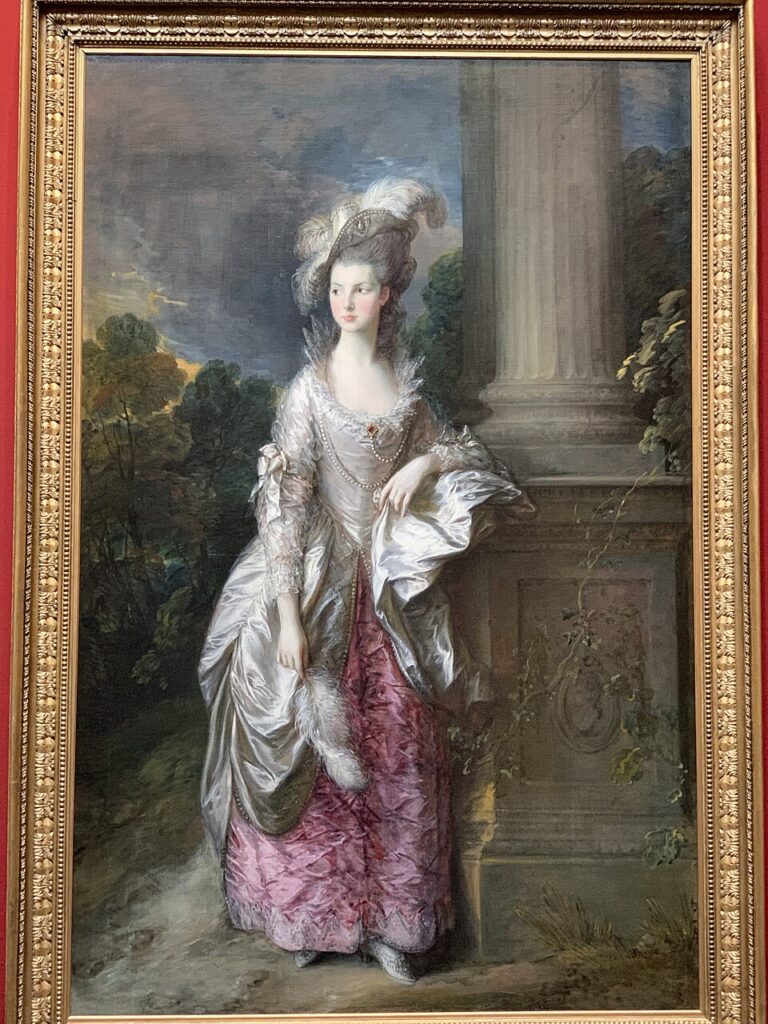
Portrait of Mrs Mary Graham (1777): Elegance in Motion
One of Gainsborough‘s most emotionally charged pieces. Mrs. Graham leaning lightly against a column base with an ominous storm brewing behind her.
The gown glitters with touches that could be mistaken for impressionism—fifty years before Impressionism.
Mary Graham, however, also died young and her husband apparently could not bring himself to show the picture when out in the world. That biography makes it all the more tragic.
Interpretive Thesis:
Gainsborough makes the portraiture an elen adelantamiento. The sky is not a background—it‘s a foreboding.
Thomas Gainsborough’s Marriage to Margaret Burr (1746)
In 1746, the 20-year-old Gainsborough married Margaret Burr, who allegedly was the illegitimate daughter of Henry Somerset, 3rd Duke of Beaufort. The precise nature of her birth is the subject of some speculation and debate but what is recorded is that she was given a GBP200 annuity—then a significant and capable sum—set out on her behalf by the Duke.
This symbolized a significant measure of security early on in his career when commissions were more irregular, since purely through patronage commissions then through patronage or the earnings of portraits, Gainsborough was cushioned by a steady domestic and artistic stability—the former affording him the leisure to dedicate himself to landscape experimentation and to perfect his portraiture.
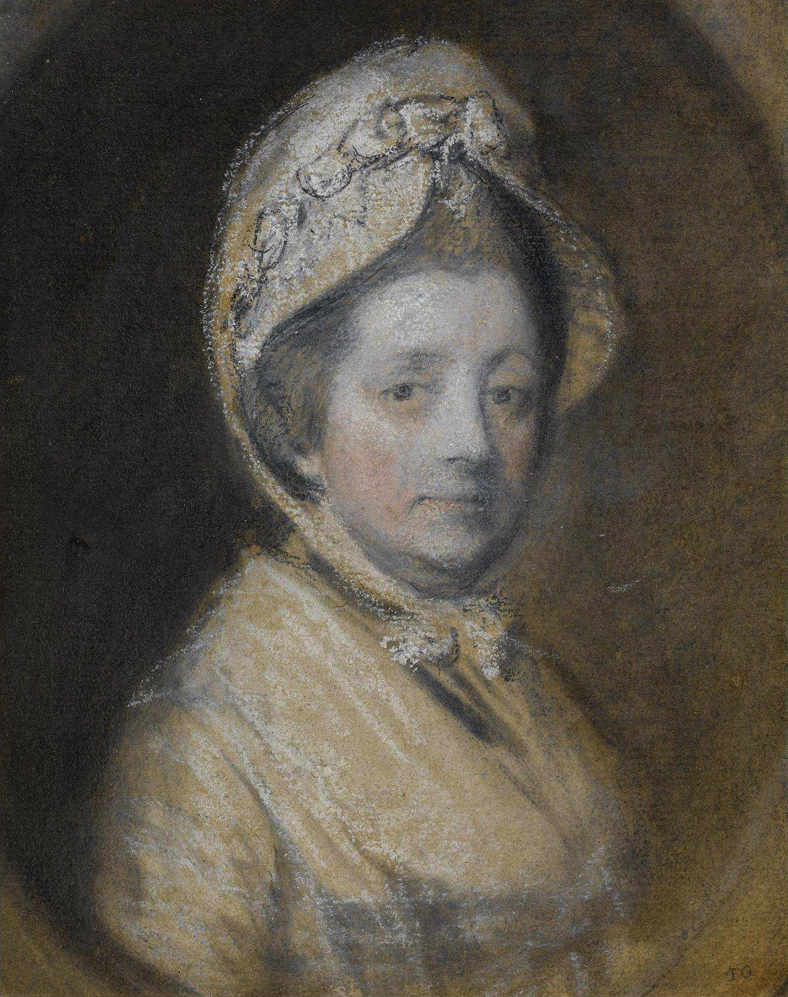
It seems that the marriage was a normal and affectionate one and Margaret managed the domestic realm while Gainsborough migrated between the art market in Ipswich, Bath and finally London; the fact that they were not expensive meant they were not particularly establishing them as bourgeois spectators of success but equally they were sure and gentle enough to make the early years in Gainsborough‘s career somewhat more comfortable than they might otherwise have been.
The marriage may not have made Gainsborough amass wealth but undoubtedly it made a significant contribution to offset the enormous professional risks with which he had to contend on entering his career during a particularly pivotal period in British artistic history.
MS in practical terms this signifies more than a mere biographical detail—it reveals the covert but significant powers behind the artists such as networks of social and aristocratic infrastructure that help shape and nurture artists into prominent figures.
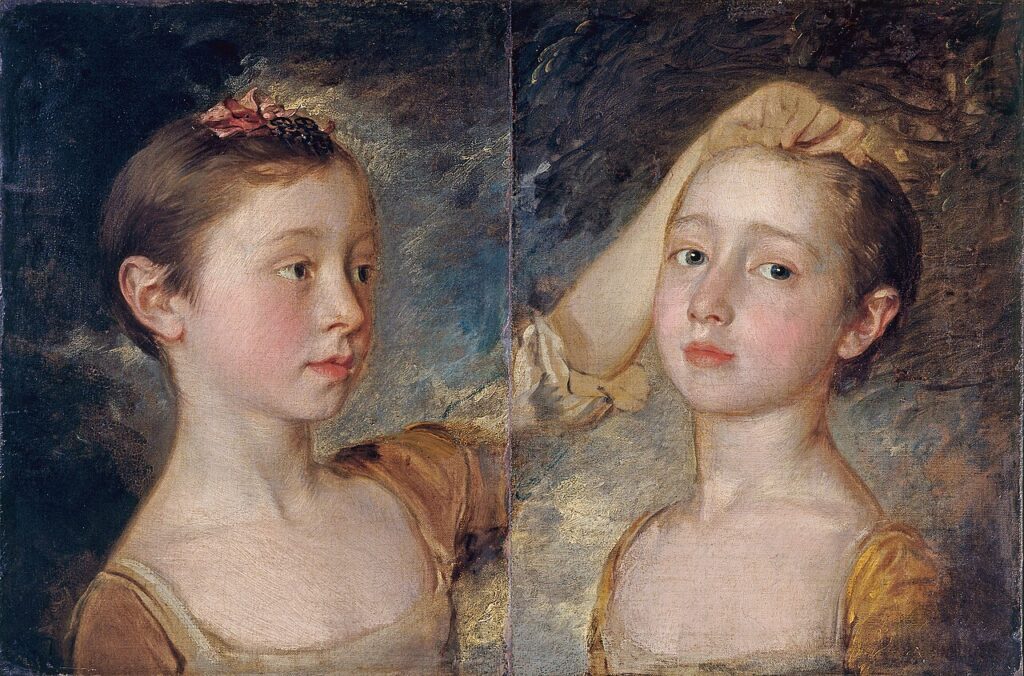
The Painter’s Daughters: Intimacy Beyond Commission
Unlike commissioned aristocratic works, these paintings reveal tenderness.
The Painter’s Daughters Chasing a Butterfly (c. 1759–1770)
Mary and Margaret, The Painter’s Daughters (c. 1770)
The butterfly symbolizes fragility and fleeting childhood. Brushwork becomes freer, almost trembling.
These works anticipate Romanticism.
Gainsborough vs Reynolds: Rivalry as Artistic Catalyst
Classical idealization was offered by Joshua Reynolds.
Gainsborough placed maxim emphasis on immediacy.
Was hypothesized by Reynolds. Was noted by Gainsborough.
This rivalry sharpened British portraiture into two poles:
Intellectual Grand Manner
Atmospheric Naturalism
This tension defined the first decades of the Royal Academy‘s existence.
Joshua Reynolds
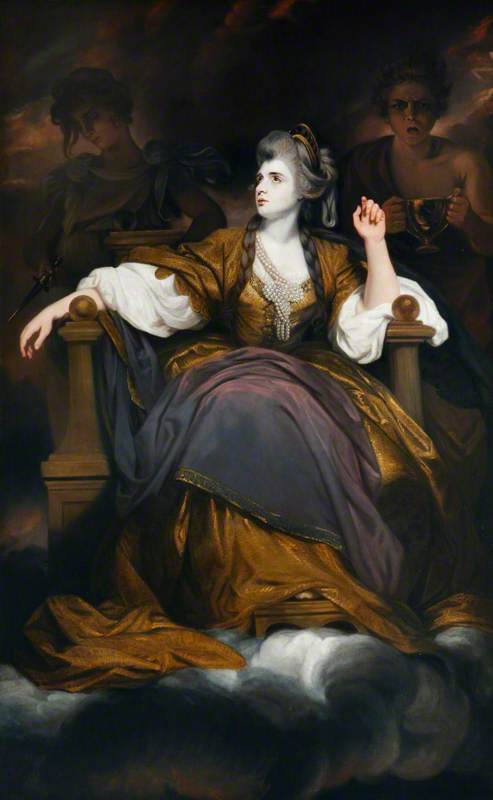
Sir Joshua Reynolds was the most influential portrait painter of 18th-century Britain and a prominent contributor to the ‘Grand Manner’ of British art. Born in 1723 in Devon, Reynolds achieved too much for the centre of the London art scene and, through a far-sighted melding of tradition with contemporary taste, radically transformed portraiture from reportage of a person‘s features into a high cultural statement. Instead of faithfully recording on canvas the eyes and nose of a sitter, Reynolds was more invested in the classical reading of the individual of aristocratic, intellectual or political power, frequently deriving compositions from Renaissance and Baroque models to lend his portraits the kind of dignity for which they had idiosyncratically not been known. His popular portrait Sarah Siddons as the Tragic Muse, for example, depicts the actress not in costume but as a pictorial symbol of the role herself.
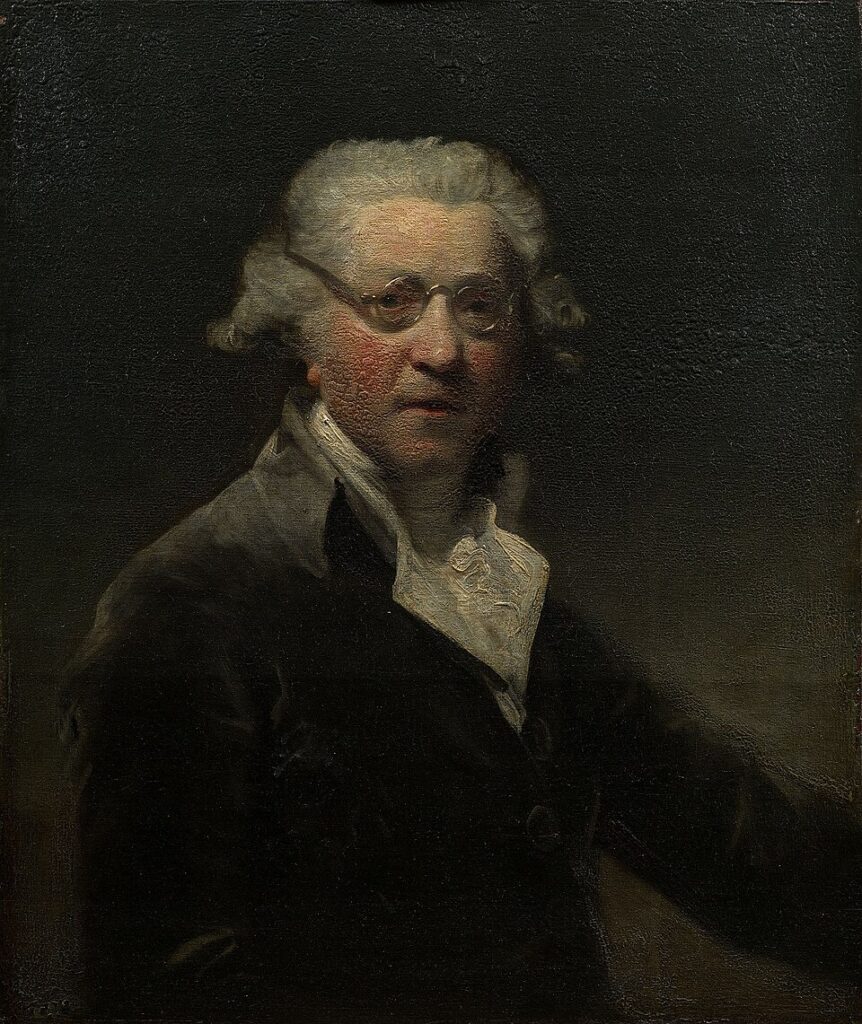
Founded in 1768, Reynolds was elected the first president of the Royal Academy of Arts, an influential and enduring voice in shaping the education of British artists for years to come. Over the course of his presidency he lectured a series called “Discourses on Art” to the Academy‘s students. They argued that great art should be broadly idealistic rather than narrowly detail oriented. To achieve this he suggested artists should study classical classics and the masters of the Italian Renaissance. Through his art and his writings, Reynolds established the artist as a moral-philosophic figure, and elevated the cultural position of painting in Britain.
While later critics have occasionally pointed to the fading colour of some paintings, Reynolds‘s enormous contribution to the history of painting in Britain cannot be questioned. He made portraiture a statement of Anglo-centric national identity and cultural pre-eminence, shaped a new era of artists, and cemented the values of invention and ‘truth to nature’ which were to oversee British art for most of the nineteenth century.
How did Thomas Gainsborough’s rivalry with Joshua Reynolds influence the evolution of British portraiture in the 18th century?
The stand-off between Thomas Gainsborough and Joshua Reynolds was not only a personal competition it was a debate about the core direction of British portraiture. It was whether portraiture should raise the sitter to a generic classical heroicness (represented by Reynolds’ idealised Grand Manner), or whether reality and ‘human’ presence should take precedence (as Gainsborough preferred).
Reynolds, the first president of the Royal Academy, advocated for a genre of intellectualized portraiture rooted in Renaissance and antique precedents. Reynolds’ sitters have a monumental feature, with statue-like poses and allegorical insinuations that elevate aristocrats to personifications of virtue, tragedy, or civic dignity. To Reynolds, portraiture was a moral undertaking requiring generalization and idealization to remove undesirable detail.
Gainsborough fought back against this of notion of academic doctrine. As often as equally celebrated in artistic circles and amongst aristocratic patrons, he added a sense of motion, flexibility and atmospheric effects to his portraits and through the use of color in works like The Blue Boy, fabric appears to shimmer, landscapes are alive behind the sitter, and the personality seems more real and spontaneous than staged. Nature was his preference over slavish devotion to classical rules of construction and readily sought to include it by merging the two forms of portraiture and his passion for the landscape. Where Reynolds archived a media; Gainsborough performed one. Where Reynolds manufactured a theory; the artist needed none.
They expressed their rivalry in the Royal Academy exhibitions and other public arenas, in patrons competing for these artists’ pictures and in stylistic opposition just beneath the surface. As a result, this tension worked for the good of British art. There was not one coherent style but two concurrent roads upon which portraiture traveled in the 18th Century:
Reynolds’ trajectory: intellectual brilliance, classical authority, institutional power.
Gainsborough‘s route: lyrical naturalism, psychological immediacy and painterly freedom.
Between them the painters increased the expressive scope of the portrait. No longer did British art merely copy continental examples, it acquired its own charge; an energetic and varied repertory of styles, combining a sense of Enlightenment sobriety with a sensitivity to emotional nuance. Competition heightened standards, broadened stylistic horizons and threw the genre into the very heart of culture. In the process, the art of the century was defined by its rivalries: the Grand Manner and poetic naturalism confronting each other in a creative war that resulted in the idiosyncratic stylistic stalemate of the period.
Original Thesis: Gainsborough as Emotional Meteorologist
Gainsborough did not paint faces alone. He painted climate—emotional weather systems around identity.
Where Reynolds monumentalized status, Gainsborough destabilized it—placing aristocrats within windswept landscapes, reminding viewers that identity is transient.
This is why his works feel modern.
Recommended Institutional References
- Royal Academy of Arts
- The Huntington Library, Art Museum, and Botanical Gardens
- National Gallery
- Scottish National Gallery
Why Did Thomas Gainsborough Prefer Landscapes and Outdoor Settings?
However Gainsborough preferred landscapes and outdoor settings as they suited his character and instincts better, and were a reaction against the formal classicism and rigid academic theory of the time. Gainsborough‘s contemporary Joshua Reynolds was of the school that all compositions should be carefully set out in the studio and laid down in “Grand Manner”, but Gainsborough was, as usual, interested in the informal and the poetic. From the beginning he expressed an extrovert love of the landscape and told audiences he painted portraits so that he could support himself, while he longed to go back into the country and paint trees. This gave him freedom from the strict expectations of the elite patrons and of the academic world.
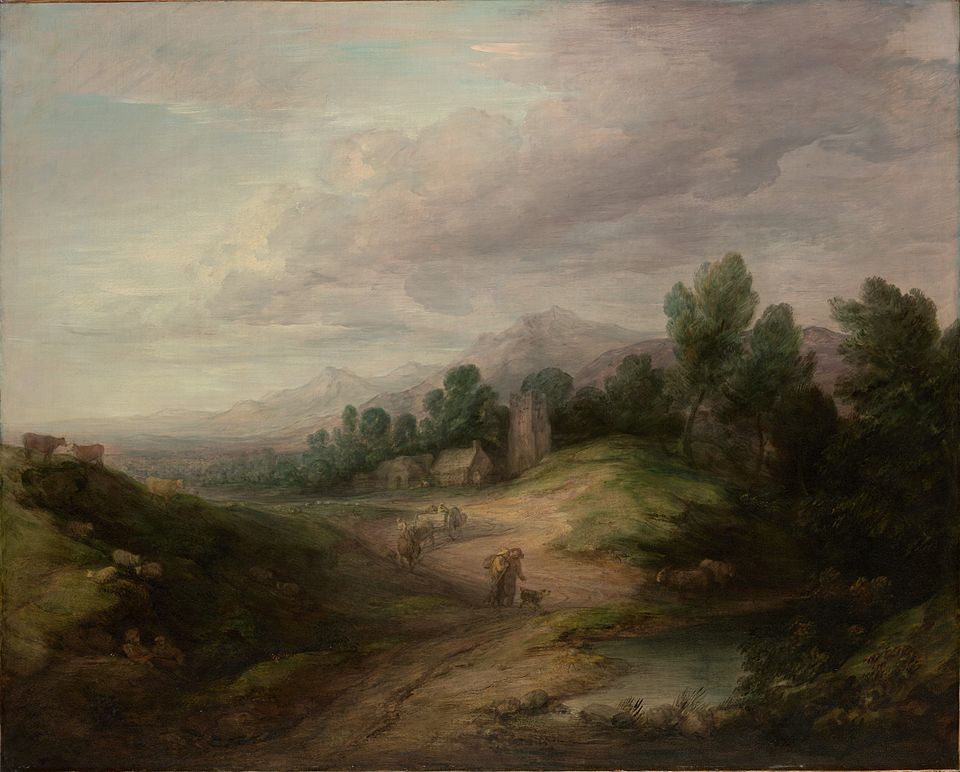
As a form of portraiture Gainsborough often integrated sitter and setting, presenting the figure within shimmering pastoral scenes instead of that standard studio imagery of columns and Classical drapery. The idyllic fields of Mr. And Mrs. Andrews are not purely ornamental but part of the couple‘s claim to history and hierarchy. Even partially invented, the painter‘s landscape suggested motion, with its lush brushwork, rounded contours, and sparkling light contrary to the directionless authority of studio sculpture.
Psychologically, the outdoor compositions freed Gainsborough from the need to subject the sitters to a theatrical stance. Portrait figures were presented in the context of a inhabited setting rather than raised to Roman-like sublime grandeur. They presented no formal, contrived pose; they suggested the unity of man and nature, unlike the classical idealization of the future.
Gainsborough‘s preference was driven by both artistic and philosophical considerations: land scape allowed him to explore immediacy of feeling, painterly invention and pure visual music. While the studio painting conveyed hierarchic, permanen views, the open air provided movement, breath and light – the elements of his signature style in 18th-century British art.
How much would an authentic Thomas Gainsborough painting be worth on today’s art market?
A genuine Gainsborough painting currently ranks as one of the most expensive works on the pre- 19 th century art market– but the price range is extremely broad as a genuine work is valued on quality, subject, size, condition and provenance. Genuine Gainsborough oils are increasingly rare and coveted by all major institutions and collectors, and recent records indicate:
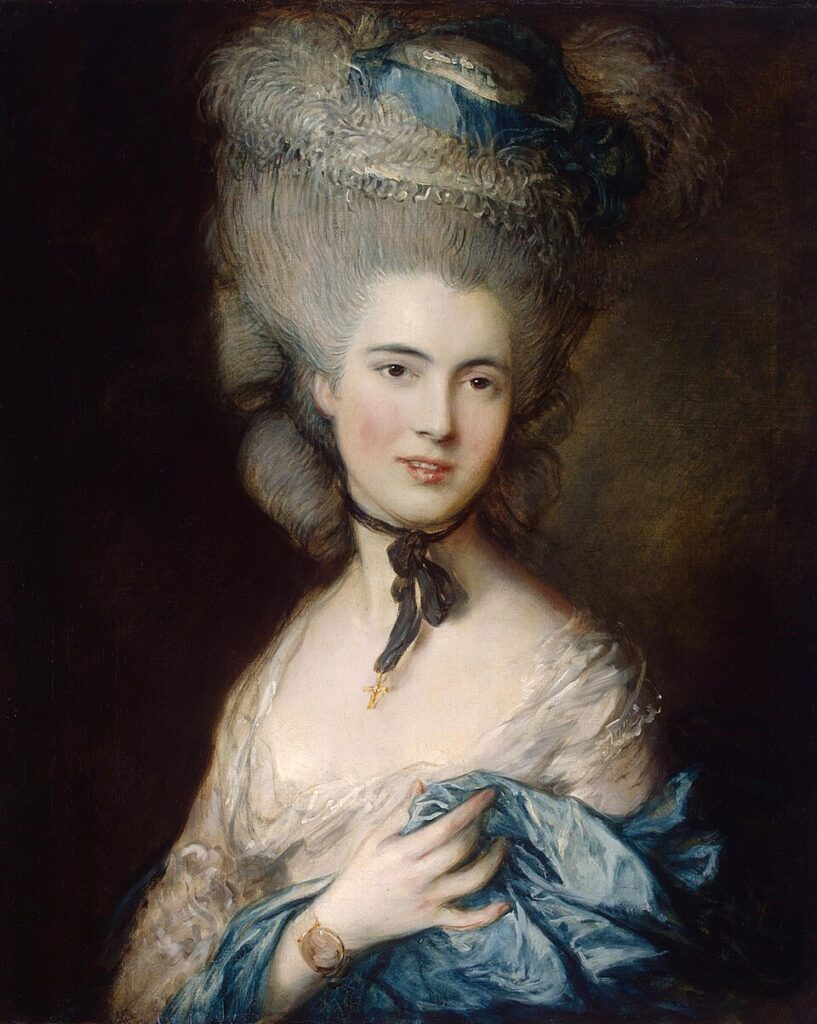
Auction databases show realized prices from less than $20,000 for modest sketches or small unattributed works to over $10m for a ‘masterpiece’.
According to the records, a large, fully authenticated landscape by Gainsborough was auctioned a major auction house for approximately EUR7.6 million and therefore the top works achieved multi-million EUR/$ figures.
Even a diminutive genuine Gainsborough portrait — when…
properly attributed and in good condition can reach hundreds of thousands, or into the low millions, at top houses such as Sothebys and Christies.
Contrastingly, prints and copies, and work by Gainsboroughs (19th-20th century) also made up part of this category can be found to sell at auction for very low prices, sometimes in the hundreds of $/GBP as they are not original work.
Conclusion
Thomas Gainsborough remains one of Britain’s defining artists not because he perfected Rococo elegance—but because he infused it with atmosphere, fragility, and motion.
His portraits are not static records of wealth. They are living environments where silk moves, clouds gather, and childhood vanishes like a butterfly in wind.
That is why he still feels contemporary.