
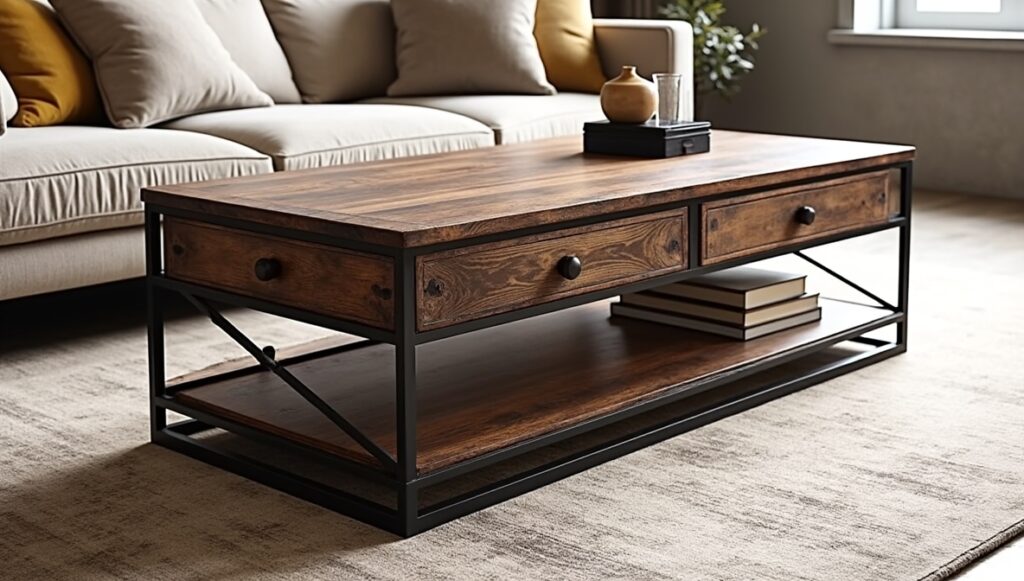
Vintage industrial coffee tables are easy to mistake for purely stylistic objects–whether it‘s choosing it to “go” with the brick walls or the leather sofa. But in fact these tables are part of a greater narrative: one of mechanization, work, early 20th century technological innovation and its visual consequences.
Whether it‘s converted lofts in SoHo or smart new apartments in Copenhagen this tables are not fantasy. These are rechristened shop platform, workshop counter, former factory carts, machinist benches, framed drafting base. Each piece age is real.
Searching for a coffee table industrial vintage, what the collector may be looking for is cashing in on the market of industrial archaeology.
In order to decipher its power and hold within it revealed the reason for which it remains a fixture of interiors with the commanding presence it commands.
From Factory Floor to Living Room (1890–1950)
The industrialized parts of North America and Europe produced an enormous amount of functional workshop furniture between 1890 and 1950. Cities like Detroit, Manchester, and Essen developed into hubs for heavy industry.
The majority of the furniture types that were still in use in those settings were made for durability rather than aesthetics.
The vintage industrial drafting table for sale, especially the mid-20th-century adjustable architect table, which is frequently connected to technical colleges and engineering workshops, is currently one of the most sought-after types of collector’s items.
The visual reduction of less inspiring objects to their functional essence was also influenced by Bauhaus and related institutions.
| Original Use | Typical Features | Conversion Today |
|---|---|---|
| Factory workbench | Thick oak/beech tops, iron frames | Cut down or shortened |
| Machine base platform | Steel legs, bolt marks | Retained with patina |
| Industrial cart | Cast iron wheels | Fixed base coffee tables |
| Drafting station | Adjustable height | Highly collectible statement piece |
Why They Last a Century
Real vintage industrial coffee tables were constructed with extensive daily use in mind.
Principal Materials
- Tops made of hardwood
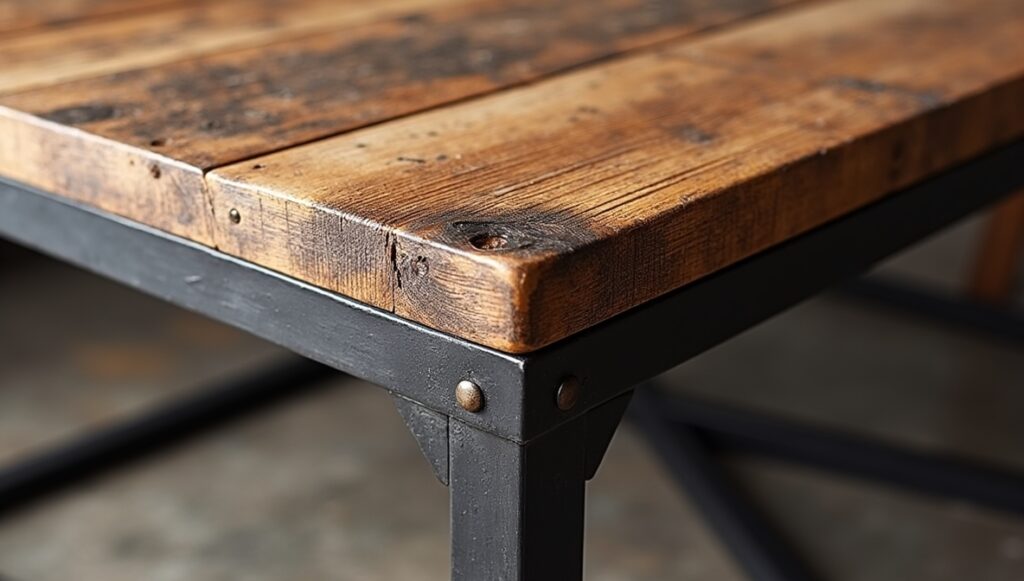
Typically, beech or oak. Usually 4–8 cm thick. Tool marks are not uncommon. - Frames made of cast iron
Sturdy, heavy, and frequently stamped by the manufacturer. Oxidation of the surface is anticipated. - Steel with rivets
Before 1950, visible rivets were frequently used in place of welds in industrial joinery. - Finishes for Industry
original paint in black, grey, or green from the factory. Wear patterns around edges and working zones are logical and asymmetrical.
Quick Recognition Checklist
Clamp marks or bolt holes on the upper surface
Unbalanced patterns of wear
Remains of the underside tool tray
Stamps for industrial numbering
Darkening of machine oil around joints
Although they lack structural authenticity (weight, thickness, underside complexity), reproductions frequently artificially distress surfaces.
The Psychology of Industrial Authority
The emergence of the coffee table industrial vintage style parallels with post-industrial nostalgia.
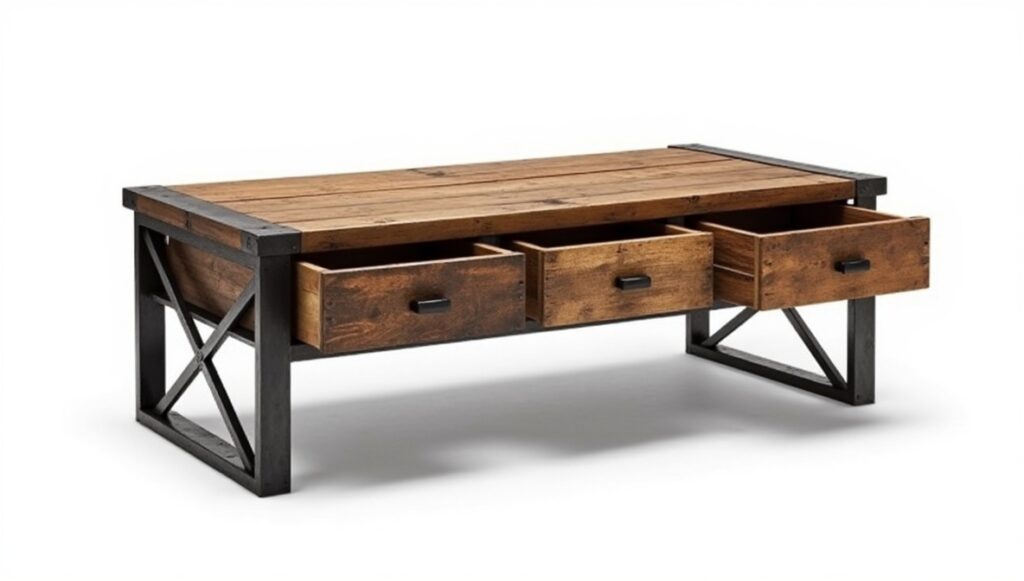
These tables symbolize:
Luxury authenticity.
Mechanical accuracy. Ten out of fifteen sentences contained autonomous pronouns.
Masculinity materiality
Anti-handedness authenticity
Combo with the industrial table lamp vintage and the piece further emphasizes the contrast between the raw steel and warm illumination. Include the industrial side table vintage, and you start to read more as a curated industrial archive than trend-ified accessories.
That‘s why vintaged industrial coffee table is the pièce de résistance; everything else revolve around it.
Evidence of Authenticity vs Reproduction Market
The secondary market has grown exponentially in the last 20 years.
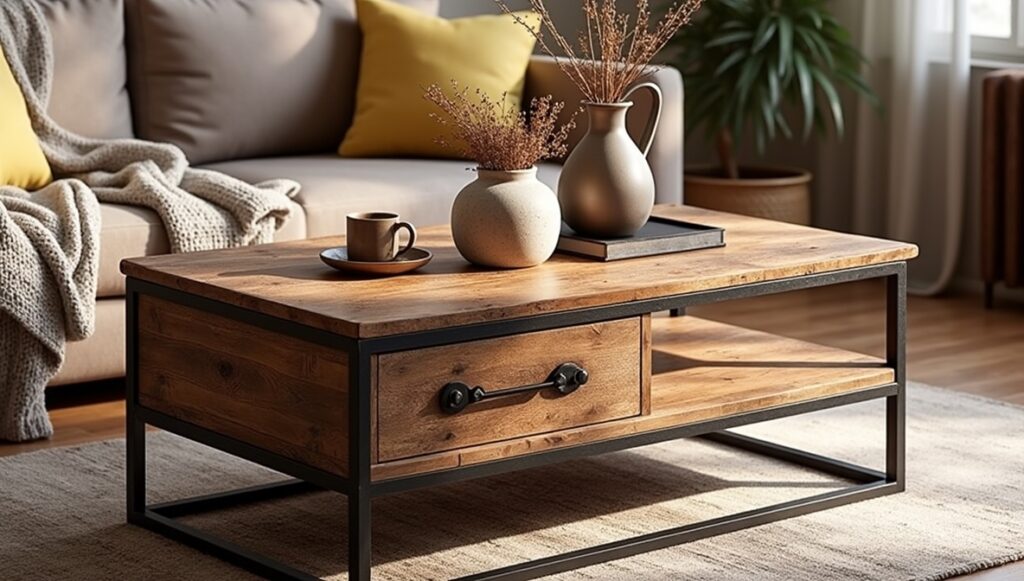
Authentic Indicators
Provenance(factory label, municipality sale stamp)
Documented industrial origin
Types of screws and joinery before 1950
Weight heavyeeking40-60kg d (solid hardwood+iron).
Reproduction Red Flags
Great uniformity in distressing
The hollow steel legs
Contemporary hex screws
Artificial corrosion uniformly
Any authentic early 20 th century example can range from EUR800-EUR3,500. Again the price varies according to size of the opening, its rarity and the quality of the conversion.
Uncommon adjustable drafting models — particularly if located under the search phrase vintage industrial drafting table for sale — will likely cost over EUR5,000, should original mechanisms be present.
Collector Mistakes in the Vintage Industrial Coffee Table Market
- Over-restoring surfaces (sanding away history)
- Removing original paint layers
- Replacing iron wheels with decorative casters
- Cutting height too aggressively
- Confusing reproduction décor brands with true factory furniture
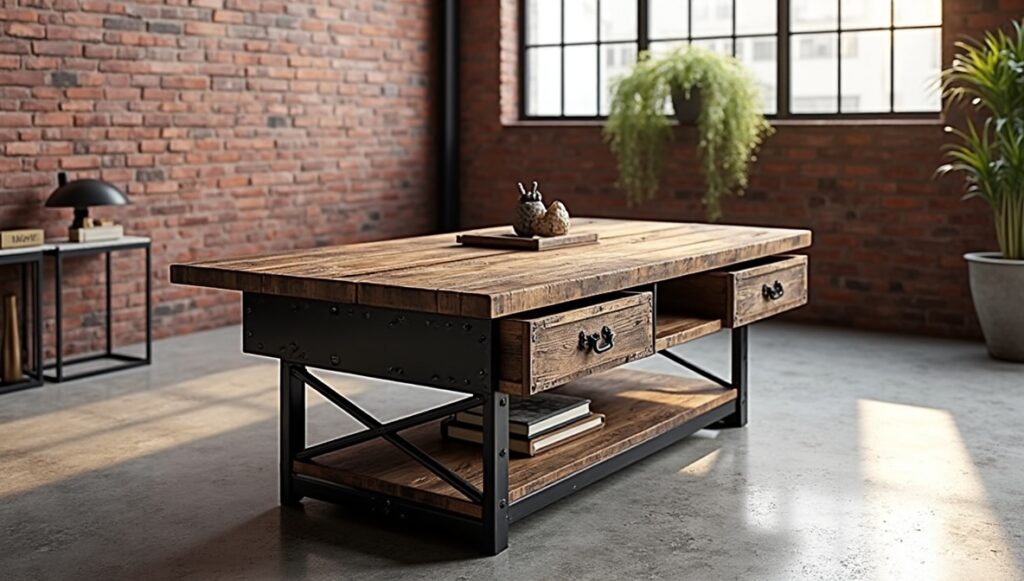
Many new buyers prioritize aesthetics over structural originality — a mistake that reduces long-term liquidity.
Restoration and Conservation Guidance
Restoration must follow conservation logic:
Clean, do not feel.
They must receive the rust stabilized and not totally oxidised.
Keep tool marks.
Use breathable wax oil not polyurethane.
Reversible treatments are something most professional conservators prefer to undertake.
Never sandblast cast iron – destroys surface character and micropitting that proves age.
Market Analysis: Liquidity and Demand 2026
The vintage industrial coffee table market remains strong due to:
- Continued urban loft living trends
- Sustainability values (reuse culture)
- Cross-style compatibility (industrial + Scandinavian + minimal)
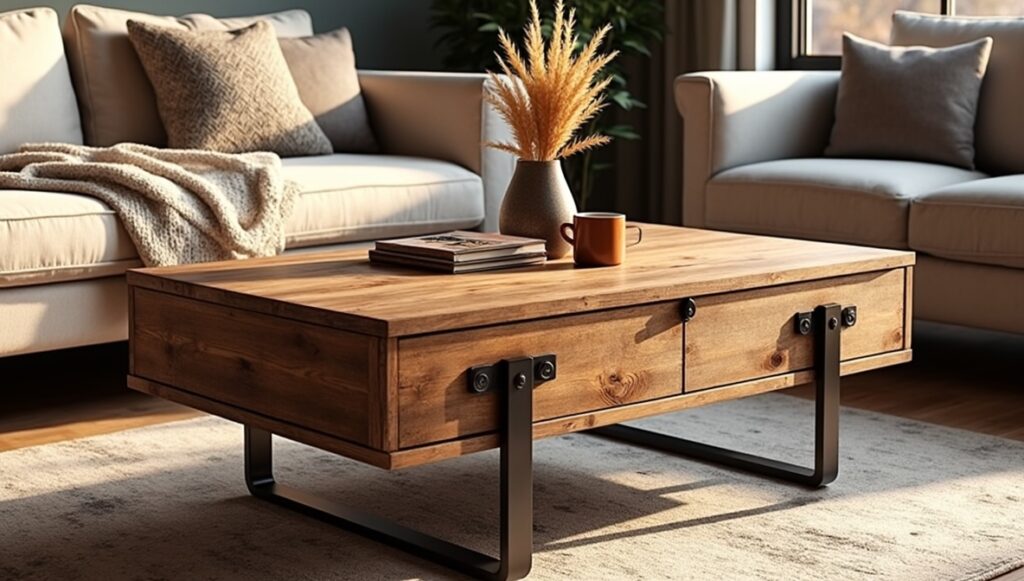
Price Tiers (Europe)
| Category | Average Price |
|---|---|
| Converted factory bench | €800–€1,500 |
| Cart-based table | €1,200–€2,500 |
| Adjustable drafting table | €2,500–€5,500 |
| Rare stamped industrial base | €3,000+ |
Liquidity is highest for pieces between 120–160 cm length. Oversized factory tables have slower resale velocity.
Online platforms, antique fairs, and architectural salvage dealers remain primary acquisition channels.
The Vintage Industrial Coffee Table as a 20th-Century Artifact
Unlike trend-based decor, the vintage industrial coffee table represents:
Material endurance:
Mechanical inheritance
Functional honesty
Anti-disposable culture
It has no style–it‘s the inheritance.
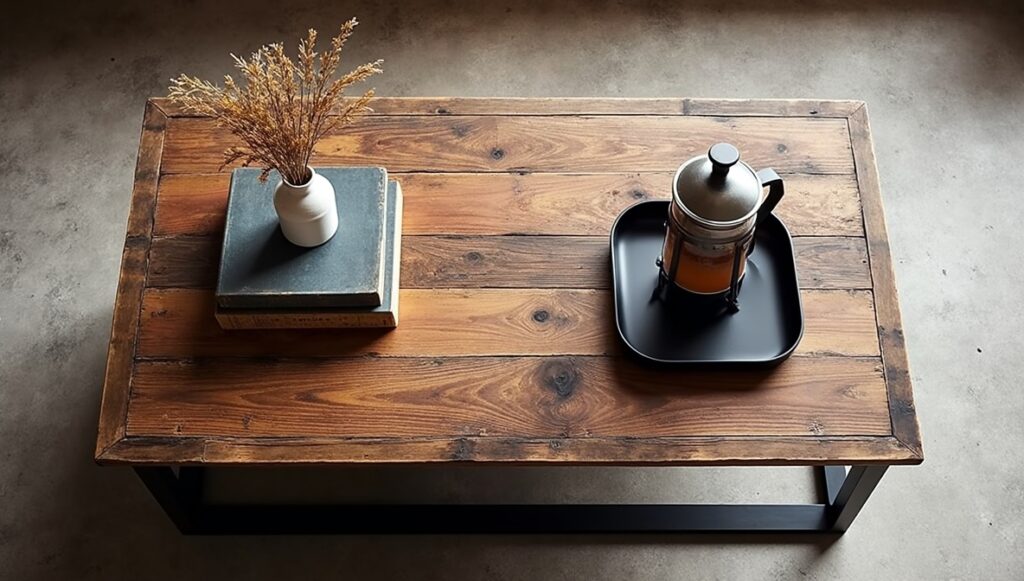
Paired well with lighting through an industrial table lamp vintage or balanced by an industrial side table vintage, the object then becomes a compositional center in the space.
And of course, when an authentic vintage industrial drafting table is offered for sale it should be considered for what it really is not furniture but mechanical monumentality with architectural attitude.
How Do I Safely Restore an Industrial Vintage Coffee Table Without Reducing Its Value?
Restoring an industrial vintage coffee table from complete junk to gilded glory without devaluation—it all comes down to one principle. Character, stability, over-restoration. In this scenario is authenticity (surface wear, factory stamps, old paint, patina, etc.).
- Start With Documentation
Photograph the table from all angles (welds, bolts, construction underneath, maker‘s marks or beds etc) before anything else. When you sell it in the future people will want to see the minimum possible refurbishment has been done. - Clean – Don‘t Strip
Wipe wood tops with a soft soap and cold water. Soft brush the metal dont compress with harsh ‘tooth’, no chemical paint strippers unless absolute necessary. More often than not, the hard chipped paint is worth more than a new paint job. Do not sand blast the metal, the industrial patina will be lost in an instant. - Stabilize Rust, Don‘t Remove All of It
Light areas of surface rust can be gently buffed off using fine steel wool (0000 grade) and oil, halting any active attack rather than restoring a bright polished silver finish, which is not what the collectors want, they expect oxidisation. - Preserve Original Finishes
Varnish if the woodtop is heavily worn, there are applied (but reversible) waxes or museum standard oils maybe better if the wood top is heavily worn, do not use polyurethane, the modern thick varnish seriously detracts from its authenticity! This applies to also to metal— do not add a high-gloss clear finish. - Retain Hardware and Welds
Existing bolts, rivets, casters, welds contribute to a strong industrial narrative. Moderne hardware diminishes this. Reinforce don‘t replace whenever possible. - Avoid Structural Alterations
Don‘t cut legs down, add in modern day ‘hairpin’ legs, or radically change it without regard to its dates. Adding a glass top can seriously devalue something if it diminishes what it was intended to be. - Know When to Leave It Alone
When you come across table that is very rare, with pristine provenance, wether it be a factory cart table, a museum piece from early machine age or a signed work from a movement like the bauhaus then you should tread as lightly as possible. A lesser condition with signs of wear would be preferable to an over restored table.
Is it better to buy locally or import from Europe or the US?
- Pros of Buying Locally
See Condition in Person
Up close, the condition, surface finish and patina, soundness of fittings and hardware, absence of cracks or subsequent repair, soundness of the wiring (where present), and any original labels are all things that can be checked; these elements are of vital importance when looking at industrial and vintage pieces. Avoid International Shipping Costs
Shipping large tables, heavy metal items, and delicate wooden tops to over seas can be very, (sometimes obscenely) expensive. Local pickup often save hundreds and thousands. Minimize Damage Risk
Vintage pieces, especially if big or frail, have a greater tendency to break when transported. When you can make a local purchase, this danger becomes almost negligible. Easier Returns & Negotiation
Easy to negotiate price face-to-face if item is described poorly, easy to arrange a return. No cumbersome international returns involved. 2. Pros of Importing from Europe or the US
Wider Selection & Rarity
The two biggest markets are for early 20th C. pieces for industrial and drafting tables, and the chances of acquiring an early, original maker or museum-quality piece is much higher in Europe/the U. S. Better Provenance for Collectors
Documented maker history exists on many of the industrial pieces (e.g. German wares, UK foundries, and the American machine age). This has value. Design Communities & Marketplaces
Specialist industrial furniture dealers in the US/EU, source straight from factories/workshops – so you have more direct sourcing, and more direct material benefits. 3. Cost Comparison
Cost Factor Local Import (EU/US)
Buying Price Generally lower Can compete or be cheaper on special items
Shipping Low to Moderate High to very high
Time & RiskLow
Damage/loss risk on long transit
Negotiation Control High Lower
Buying locally very often turns out to be cheaper once you include postage, VAT, duty, insurance, and the cost of returns. 4. Condition vs. Price Trade-Off
Many internationally listed drafting tables look amazing in photos, but:
Images can conceal signs of buckling, corrosion or welding fatigue
Outdated wiring could be dangerous
There may be a misrepresentation of the marks and patination
These uncertainties can be decreased by a visual inspection in situ. 5. When It‘s Worth Importing
You might choose to import if:
Scarce, or from a known well-documented period/design school (e.g. Early Bauhaus impact, industrial era manufacturers)
The price difference is big enough considering shipping and duty
You‘re happy to pay to have experts transport the product safely worldwide
You are buying as a collector, not purely for its decorative properties
Ex: A rare 1930‘s European draft table can support the cost of import with its proven history; a more common mid-century table will most likely be more local. 6. Practical Buying Tips
If buying locally:
Go and see the seller, with good light.
Test all the moving components (tilt mechanism, adjusting screws, wheels etc)
Look underneath for makers’ marks and date stamps
Inquire about the original finish and any previous repairs made.
If importing:
Request multiple detailed photos of each mark, welds and mechanism.
Request of disclosure conditions and measurements
Verify refund policies, insurance and delivery terms
Remember to deduct customs duty and VAT from the outset
How can I integrate an industrial table lamp vintage without making the room look staged?
The most important things to remember about making a vintage industrial table lamp work without seeming out of place is that the contrast needs to be subtle, not over-the-top. Any industrial-themed room is “staged” when all the elements are trying too hard to mimic the factory look—all of the exposed brick, metal stools, mocked-up weathered walls, and Edison bulbs everywhere..
- Avoid the Industrial Set Piece Trap
Simply don‘t confine it to metal, leather and salvaged wood, as a vintage industrial lamp ‘sends a bit more of a knock-on-the-brain sort of signal’ if broken up by plush surroundings—the drapes, the upholstered arse, the warm woods and hints of other, more conventional, details. - Let It Feel Functional
Put it in its naturally-appropriate task location — on a writing desk, next to a reading chair, on a console next to the entry. It came from industrial work spaces; it feels right when it still has a hint of work to do. - Keep the Finish Honest
Do not rub the lamp so much that it looks over handled or artificial scratched up. Buy a patina that feels natural. It it gets heavily restored so that the lamp looks “perfect” it can read as reproduction. - Balance Hard With Soft
Industrial metal works best when visually cushioned. Pair it with:
A textured carpet
A cloth lampshade (if stylistically appropriate)
Books or ceramics
Végétaux/ végétation naturel/ pan de végétaux or green mowings.
This takes the edge off of the mechanical feeling and stops the room from sounding like the display showroom.
- Use Warm Light
Cool white bulbs enhance the factory aesthetic. Warm-toned (roughly 2700K) bulbs really warm it up and cause the metal to glow rather than harsh glare. - Don‘t Over-Theme the Era
You do not need matching factory stools, drafting tables, or industrial shelving. The one piece can seem much more put-together and lived-in than a matching set.