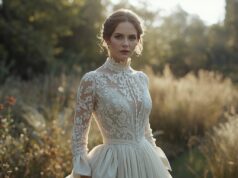
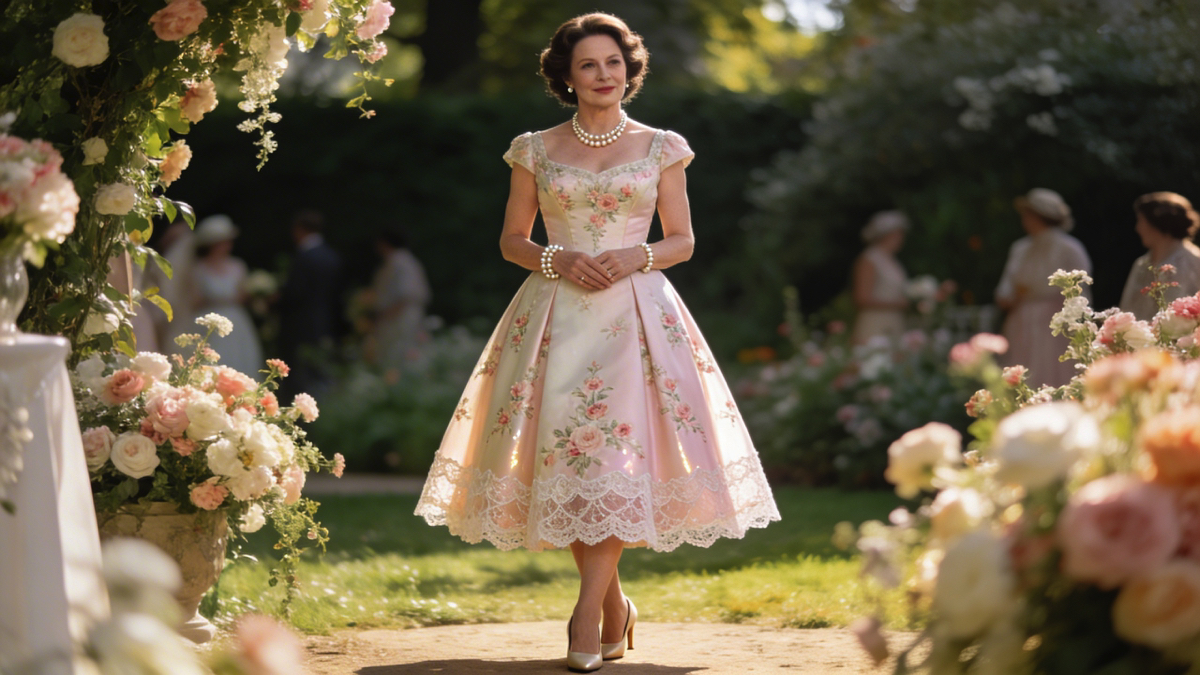
Tea length vintage mother of the bride dresses occupy a rare sweet spot in formalwear: polished enough for a wedding, comfortable enough for hours of hosting, and classic enough to look distinguished in photos for decades. The tea-length hem—typically falling between mid-calf and a few inches above the ankle—signals refinement without the sweep and weight of a full-length gown. When paired with vintage-inspired details drawn from real design history, it becomes a look that reads intentional, cultured, and enduring rather than “retro costume.”
What “Tea Length” Really Means—and Why It Flatters So Many Mothers of the Bride
Tea length emerged as a socially specific silhouette tied to mid-20th-century occasions—luncheons, afternoon receptions, and yes, “tea.” The hemline gained traction in the 1940s and 1950s as women sought dressy daywear that remained practical during changing social and economic conditions. Today, the same proportional logic applies: a tea-length skirt provides ease of movement, minimizes tripping risk, and works beautifully for venues where long trains feel excessive (garden ceremonies, historic inns, city halls, and country clubs).
The other reason it‘s such a winning option is one of proportion: tea length gives you height, emphasizes your waist and points the eye toward your feet, particularly if teamed with a structured top or an open blazer. You can also give your shoes the spotlight: think a killer pump, kitten heel or loafer, whatever you choose and you can make it work for winter and summer depending on your choice of fabric. Comfort and chic is vital to the mother of the bride who has to manage the ceremonial and the logistical.
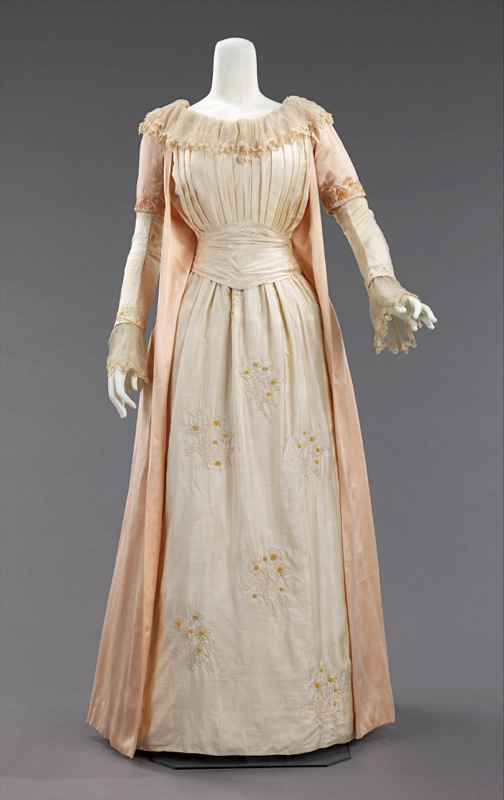
The best tea-length mother-of-the-bride dress will pay respect to the formality of the occasion but will never upstage the bride‘s dress. Consider your dress as “architectural support” for the wedding: it has to look good in pictures, work with wedding colors, and convey authority. Tea length does it all, especially in fabrics that will keep their shape (faille, mikado, taffeta, structured lace) or fall crisp (silk crepe, expertly structured chiffon with a firm liner).
Vintage Inspirations Grounded in Real Fashion History (Not Guesswork)
“Vintage” is most convincing when it references specific periods and construction details rather than vague nostalgia. For tea length, the most direct lineage is mid-century: the New Look era that followed World War II, associated with a renewed emphasis on waist definition and full skirts. Museums have documented how silhouette and textile innovation shaped this moment in fashion history; for example, collections and scholarship at major institutions such as The Metropolitan Museum of Art’s Costume Institute and London’s Victoria and Albert Museum (V&A) preserve garments that show how tailoring, understructures, and fabric choice create that unmistakable mid-century line.
The 1950s are the obvious reference point, but they are not the only one. Earlier influences—like 1930s bias-cut elegance—can be adapted into tea length through fluid skirts and refined sleeves, while the 1960s contribute cleaner, more architectural shapes (think bateau necklines, restrained embellishment, and minimalist jackets). These cues work especially well for mothers of the bride who prefer sophistication over sparkle yet still want a celebratory look.
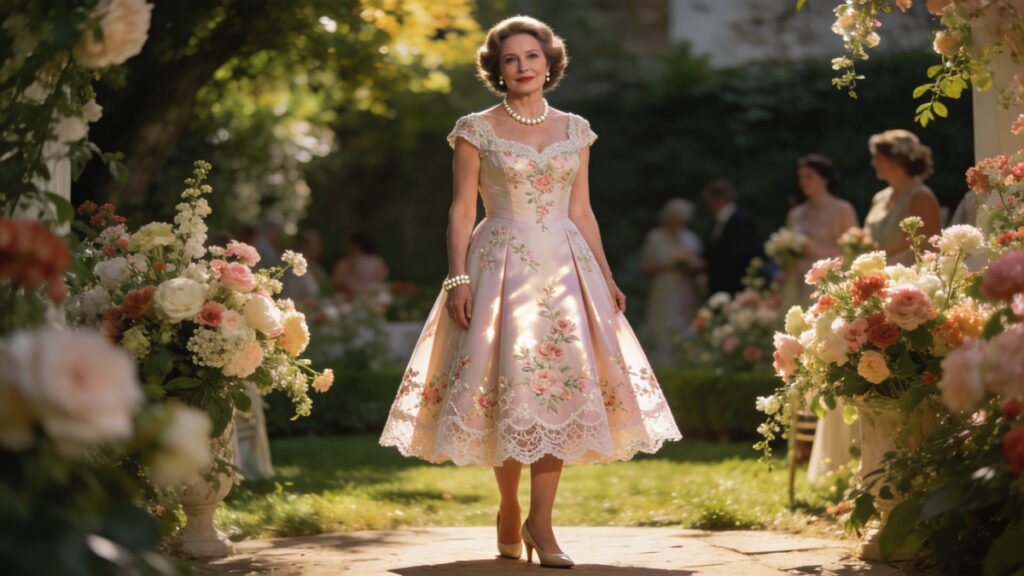
As curator-level guidance reminds us, authenticity lies in craft. The V&A describes fashion as a record of materials, making, and social change—an approach that translates directly into shopping criteria: prioritize fabric quality, interior finishing, and proportion. Or as the designer Miuccia Prada has famously observed, “What you wear is how you present yourself to the world, especially today, when human contacts are so quick.” A mother of the bride dress should present steadiness, taste, and confidence at a glance.
Choosing the Right Tea Length Vintage Dress: Fabric, Color, and Structure
Start with fabric, because that makes “vintage-inspired” either luxurious or silly. Silk shantung, mikado, faille, and taffeta will give you a genuine mid-century feel because they all hold a shape they were, by tradition, special event dresses, and need to have the weight for a nice A-line or a swirly skirt. If you want a looser feel, try chiffon in layers over a stable base, or lace over a structured base, so the dress actually holds its shape in photos and as you walk.
Color: Your choice will also need to work with the wedding palette and the setting/time of day. For daytime weddings: choose soft neutrals (champagne, dove), powdery pastels, subtle florals. For evening or black-tie-optional occasions: use deeper colors (navy, emerald, wine, deep plum) to make a tea-length dress unquestionably formal. Stay away from white/ivory and overly bride-like beads; try to look more like the “distinguished guest of honor.” If you‘d like metallics, brush off the high glitter for brushed silver or antique gold woven into the fabric.
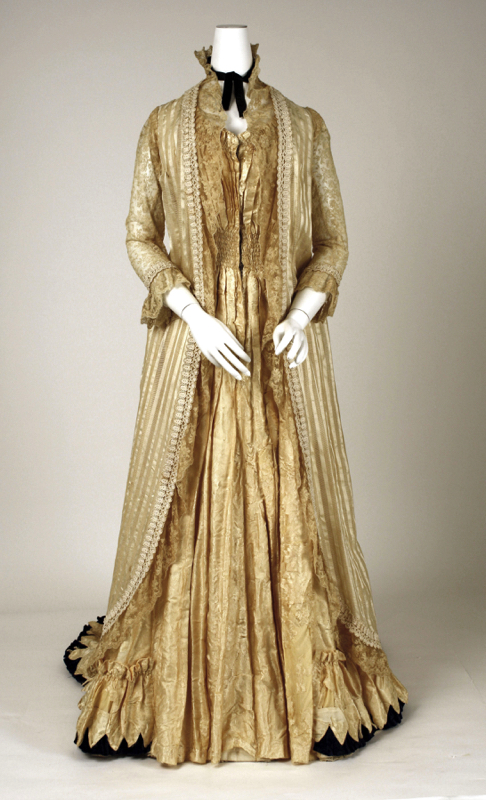
Structure is what makes tea length look intentional. A defined waist, princess seams, a tailored bodice, or a well-cut bolero can provide the authority mothers often want. Supportive underpinnings (modern shapewear, a proper bra solution, or light skirt structure) can recreate the clean lines seen in museum-preserved garments without discomfort. The Smithsonian Institution emphasizes material culture—how objects are made and used—an idea that applies here: the best dress is the one whose construction supports the role you’ll play all day.
Key Characteristics at a Glance
| Feature | Hallmark of Tea Length Vintage MOB Dresses | Why It Works for Weddings |
|---|---|---|
| Hemline | Mid-calf to above ankle | Elegant, walkable, great for mingling |
| Silhouette | Defined waist, A-line/full skirt or refined sheath | Photographs well; balanced proportions |
| Fabrics | Mikado, taffeta, faille, lace, silk crepe, chiffon layers | Holds shape; reads formal without heaviness |
| Necklines/Sleeves | Bateau, V-neck, illusion lace, cap sleeves, 3/4 sleeves | Offers coverage options; timeless framing |
| Details | Covered buttons, subtle bows, lace appliqué, restrained beading | Vintage feel without costume effect |
| Outerwear | Cropped jacket, bolero, tailored coat | Ceremony-appropriate; practical for churches |
| Footwear | Pumps, kitten heels, dressy sandals | Comfort + polish; complements visible hem |
Styling with Authority: Accessories, Etiquette, and Venue Context
Accessories should reinforce period cues without overpowering. Think structured clutches, pearl or crystal studs, a single-strand necklace, or a small vintage-style brooch—especially for church ceremonies or historic venues. Fascinators and small hats can work beautifully for daytime weddings, particularly those with a British-inspired tone, but keep scale modest. If you wear gloves, choose short, refined versions (and remove them for eating and greeting, following traditional etiquette).
Venue matters. A cathedral wedding may call for sleeves, a matching jacket, or a tasteful wrap; a garden venue favors breathable fabrics and secure heels; a city evening reception supports deeper colors and more structured shine. When in doubt, align with the formality of the bridal party and the architectural tone of the space. Museums such as the Louvre and the Met remind us that clothing has always been contextual—designed for specific interiors, rituals, and social moments. Your dress should look “right” in the room as well as on you.
Finally, tailor everything. Vintage-inspired design depends on precise proportion: hem placement, waist position, sleeve length, and neckline depth. A great tailor can transform an almost-right dress into a definitive one—especially with tea length, where a one-inch hem change can shift the entire silhouette. As fashion editor Diana Vreeland famously put it, “The eye has to travel.” A well-tailored tea-length dress guides the eye smoothly from neckline to waist to hem, creating calm elegance in photos.
Frequently Asked Questions
1) Is tea length formal enough for a mother of the bride?
Yes—when made in formal fabrics (mikado, taffeta, silk crepe, lace) and finished with structured tailoring. Tea length can read as formal as a long gown, especially for daytime and semi-formal weddings.
2) What vintage era is best for a tea-length mother-of-the-bride dress?
The 1950s are the most direct reference (waist definition and full skirts), but 1930s-inspired drape (in a shorter hem) and 1960s minimalism (clean lines, bateau necklines) also translate beautifully.
3) Can I wear a tea-length dress to a black-tie-optional wedding?
Often yes, provided the dress is elevated: darker color, luxurious fabric, refined embellishment, and formal accessories. If the invitation specifies black tie, confirm expectations with the couple.
4) What shoes look best with tea length?
Closed-toe pumps and kitten heels are the most timeless, but dressy sandals can work in warm weather. Since the hem reveals the shoes, choose a pair that is comfortable and impeccably finished.
5) How do I avoid looking “costumey” in a vintage style?
Limit period details to one or two focal points (e.g., neckline + buttons, or full skirt + belt). Use modern fit standards, high-quality fabric, and understated jewelry.
Tea length vintage mother of the bride dresses endure because they solve real wedding-day needs—comfort, authority, and elegance—while drawing on historically grounded design principles preserved in institutions like the Met, the V&A, the Louvre, and the Smithsonian. Choose quality fabric, disciplined structure, and thoughtful accessories, and you’ll achieve a look that feels both celebratory and timeless.