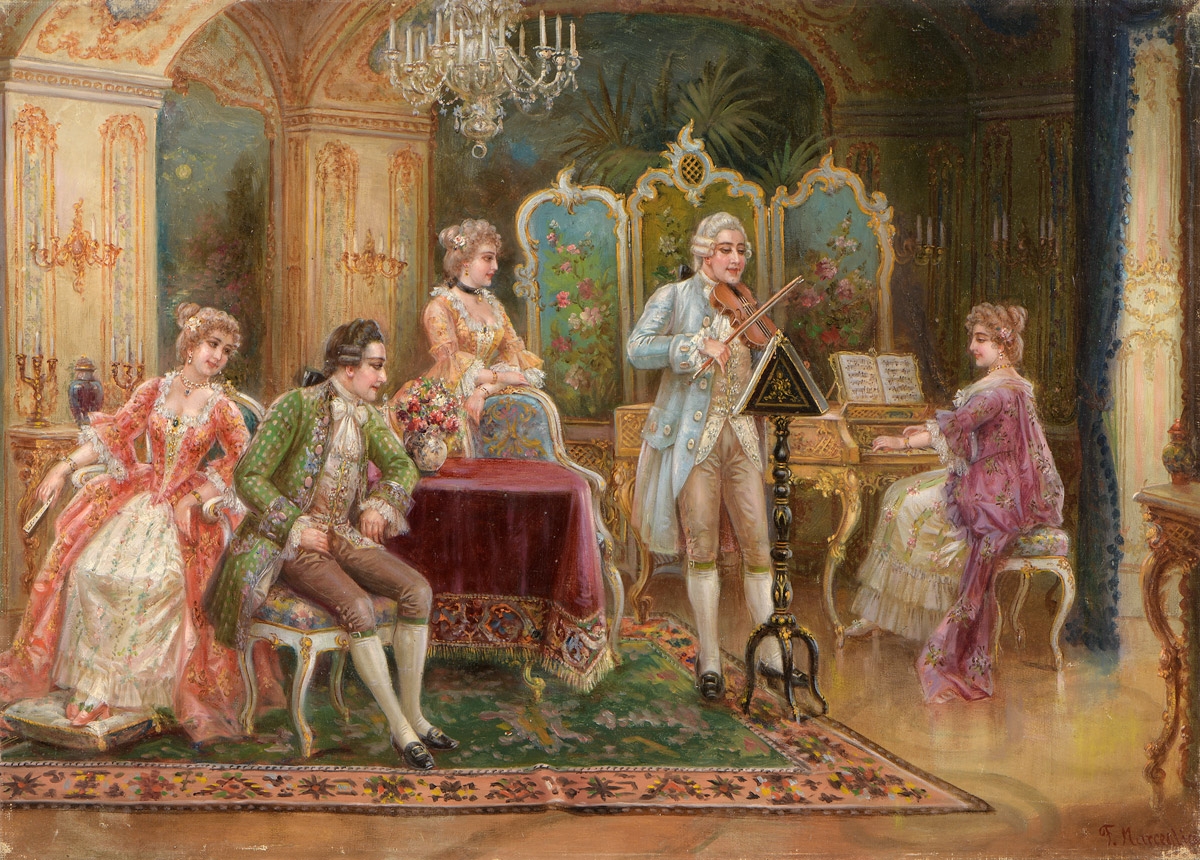
Rococo art can look like pure pleasure—pastel clouds, gilded curves, flirtatious glances, and rooms that seem to ripple with light. But beneath its sweetness lies a serious story about power, taste, and social performance in early 18th‑century Europe. Emerging in France after the death of Louis XIV (1715), Rococo transformed the grand, state-focused language of Baroque into an intimate, salon-centered aesthetic. Understanding Rococo art characteristics means seeing how style became a social instrument—crafted for aristocratic interiors, urban elites, and institutions that shaped modern ideas of decoration, luxury, and artistic refinement.
Origins and Historical Context of Rococo
Rococo developed during the French Régence (1715–1723) and flourished under Louis XV. As court life shifted away from Versailles toward Parisian hôtels particuliers (townhouses), art followed: paintings, furniture, and interior decoration became lighter, more conversational, and designed for smaller rooms used for sociability rather than ceremony. Rococo’s rise is inseparable from the culture of salons, where elites—often hosted by influential women—performed wit, taste, and status.
Its geographical range stretched from Paris to Bavaria, Austria, Northern Italy and further, becoming localized in France associated with intimate domestic interiors, in the German-speaking countries (particularly Bavaria) more exuberantly theatrical as found in churches and monasteries. And this range is key Rococo is far from being a purely French ‘pretty’ style, but a Europe-wide visual culture encompassing the secular and religious.
Our interpretation of the rococo is thus anchored by several significant repositories of art, as well as research centres. The Metropolitan Museum of Art (New York) houses rococo paintings, decorative arts and interiors illustrating the full potential of the stylistic system as the construction of a complete world. The Victoria and Albert Museum (London) is equally important forrococo furniture, textiles and design history, whereas the Louvre Museum (Paris) offers a grounding of rococo within the context of French royal art and eighteenth-century painting. The institutions leave little room for doubt regarding the intellectual and aesthetic credentials of rococo as more than just superficial decoration.
Rococo Art Characteristics: Visual Language and Themes
At its core, Rococo favors asymmetry, movement, and ornament derived from nature. Curving “S” and “C” scrolls, shell forms, foliage, flowers, and watery motifs animate frames, paneling, furniture, and metalwork. The palette typically shifts toward pastels—pale pinks, powder blues, creamy whites—often set against gilded highlights. Surfaces appear to shimmer rather than overwhelm; the effect is buoyant, airy, and tactile.
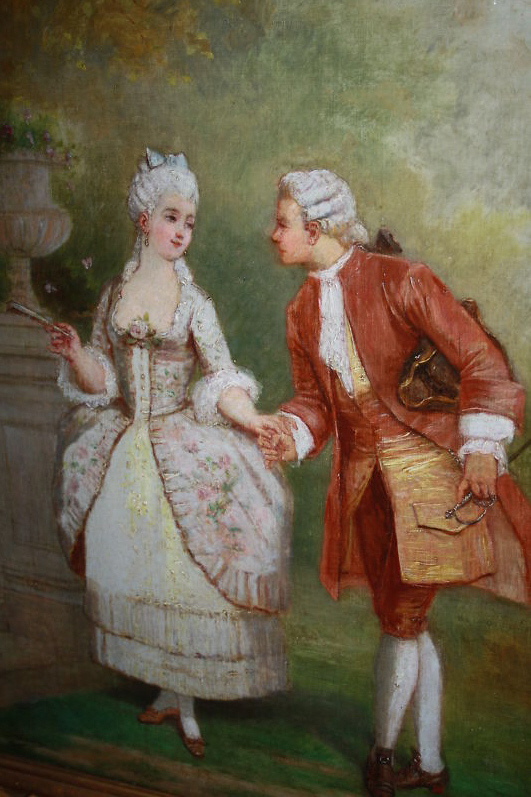
In painting, Rococo is evinced by loose and airy brushwork, delicate gradations of color, and a stagey atmosphere. Antoine Watteau, Francois Boucher, and Jean-Honore Fragonard, among others, rendered scenes of leisure and entertainment, involving music and gardens and the amours of lovers these images are also known as fetes galantes. In contrast to the moral weight of history painting, Rococo narrative is often suggestive, capricious, and atmospheric. As evinced by the collections of 18th-century paintings in the Louvre, Rococo painting is closely linked to the social and economic structures of Parisian collecting.
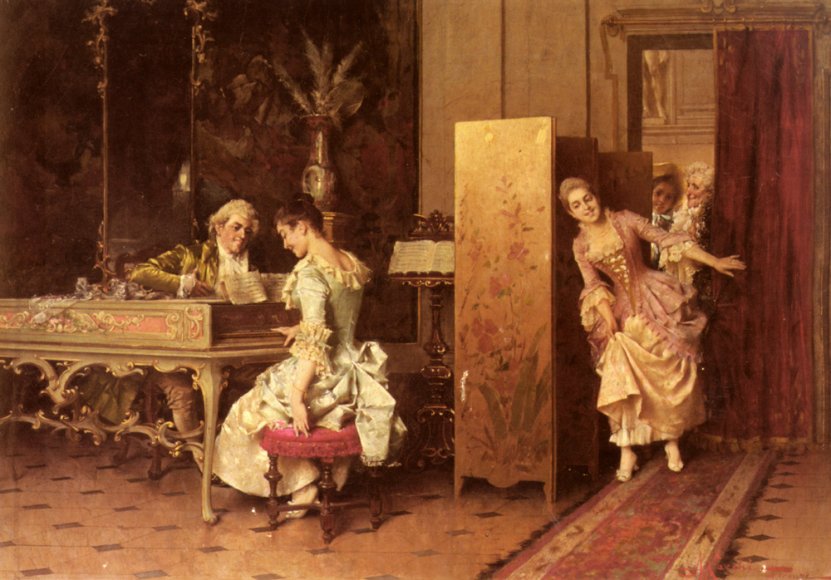
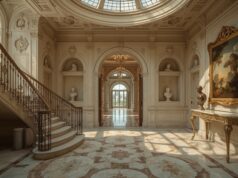
Another characteristic is how Rococo achieved interior unity: painting, sculpture, carving, mirrors, furniture all designed to create a unified whole. This immersive experience is very much part of the Met‘s presentation of its period rooms and decorative arts. Here you see how ornament structures experience. It directs your gaze, from the boiserie (carved wall paneling) to the gilded moldings to the ceiling paintings. This kind of “total design” is central to the Rococo. It‘s all about the milieu, just as much as it is about the single object.
Table: Key Rococo Art Characteristics (Summary)
| Characteristic | How it appears | Typical examples |
|---|---|---|
| Asymmetry and curves | “C” and “S” scrolls, irregular cartouches, swirling lines | Frames, boiserie, furniture legs |
| Pastel palette + gilding | Light colors, creamy whites, gold accents | Interiors, painted decoration, portraiture |
| Nature-derived ornament | Shells, flowers, vines, rocailles (rock/shell motifs) | Stucco, metalwork, ceramics |
| Intimacy and leisure themes | Courtship, music, gardens, playful mythology | Watteau fêtes galantes, Fragonard scenes |
| Lightness and surface shimmer | Delicate brushwork, airy compositions, reflective mirrors | Salon interiors, ceiling paintings |
| Decorative unity (“total interior”) | Coordinated wall panels, furniture, textiles, painting | Parisian hôtels particuliers, Bavarian churches |
Media, Techniques, and Signature Motifs
Rococo is inseparable from decorative arts—furniture, porcelain, gilt bronze mounts, lacquer, and textiles. Craftsmen and designers pushed technical refinement: carved and gilded wood, marquetry (inlaid wood), and complex upholstery patterns supported interiors designed for comfort and display. The V&A’s strengths in furniture and textiles help document how Rococo aesthetics shaped everyday elite life through material culture.
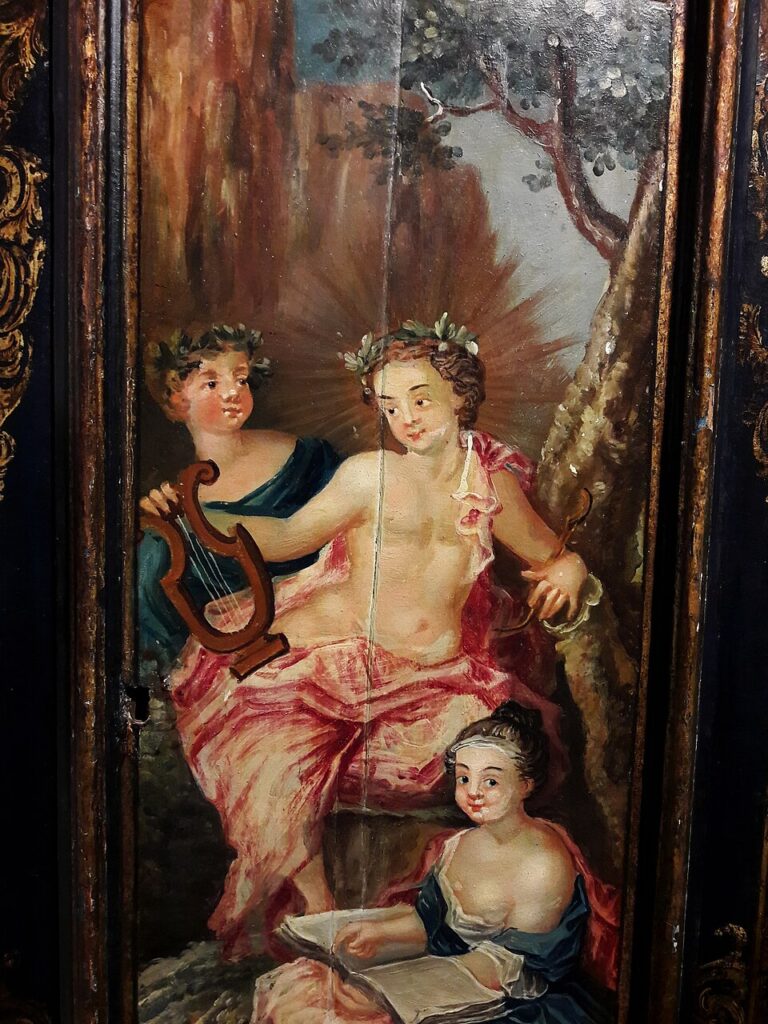
In architecture and decoration, rococo tends to use relief sculptures, mirrors and stucco to make the distinction between wall and decoration disappear. Nowhere is this more clear than in Central Europe, where rococo, along with late baroque, interiors can take on an almost fluid quality to their forms. Churches and monasteries made rococo into light-filled sensory experiences, and for that reason, we should remember it was secular. In the spiritual rococo, we see a new kind of power spiritual feeling expressed through light, motion, and decoration.
Common motifs: shells (rocaille), putti (cherubs), garlands, merry mythological creatures, pastoral vistas. These served as a common language for patrons and public. “Decorative arts” interpretive panels at the Smithsonian are usually at pains to describe ornament not as “mere decoration” but as a carrier of meaning (taste, literacy, class, wealth), which could be read by anyone who looked. Rococo‘s motifs transmit culturally.
Patronage, Social Meaning, and Critical Reception
Rococo was shaped by elite patronage—aristocrats, wealthy financiers, and court-connected networks—who used art to stage refinement. Small-scale paintings for private rooms, porcelain services for entertaining, and luxurious interiors all supported a culture where identity was performed through objects. Rococo’s intimate scale is therefore not accidental; it corresponds to social spaces designed for conversation, flirtation, and self-fashioning.
The style also attracted criticism—both in its own time and later. Enlightenment-era observers sometimes saw Rococo as frivolous or morally suspect, especially when contrasted with the later rise of Neoclassicism in the mid-to-late 18th century. Yet the persistence of Rococo in museum collections and scholarship shows that its artistic intelligence lies in precisely what critics attacked: its mastery of pleasure, surface, and social nuance.
Authoritative voices from the period and from modern institutions help clarify Rococo’s meaning. The writer and critic Denis Diderot, reviewing Paris Salons in the 18th century, famously demanded moral and intellectual seriousness in art—an outlook often opposed to Rococo’s sensual appeal. Meanwhile, museum scholarship frames Rococo as a rigorous design system. As the Metropolitan Museum of Art notes in its art-historical essays on the period, Rococo is distinguished by ornamental asymmetry, curving forms, and a taste for lightness and intimacy—features that connect painting to interiors and objects. These are not casual effects but deliberate aesthetic choices embedded in social history.
Frequently Asked Questions (FAQ)
What are the main Rococo art characteristics?
The main characteristics are asymmetrical curves, rocaille (shell/rock) ornament, pastel palettes with gilding, light brushwork, intimate or playful themes (often leisure and courtship), and a strong emphasis on decorative unity across interiors, painting, and objects.
When and where did Rococo begin?
Rococo began in France in the early 18th century, especially in Paris during the Régence and the reign of Louis XV, then spread across Europe, including regions of present-day Germany, Austria, and Italy.
How is Rococo different from Baroque?
Baroque art (17th century) tends to be more monumental, symmetrical, and dramatic—often tied to state or church grandeur. Rococo shifts toward smaller-scale, intimate settings, lighter color, more playful subject matter, and ornament that emphasizes delicacy and movement rather than power and awe.
Which museums are best for studying Rococo?
The Louvre Museum (Paris) is essential for French Rococo painting and context. The Metropolitan Museum of Art (New York) and the Victoria and Albert Museum (London) are outstanding for Rococo decorative arts, interiors, and design. The Smithsonian Institution provides strong interpretive resources on material culture and decorative traditions.
Did Rococo only depict romance and leisure?
No. While leisure and courtship are common themes, Rococo also appears in religious interiors (especially in parts of Central Europe) and in portraiture and decorative programs that communicate status, education, and political affiliation through taste.
Sources and Further Reading (Authoritative)
- The Metropolitan Museum of Art (Heilbrunn Timeline of Art History), essays on Rococo and 18th‑century European art: https://www.metmuseum.org/toah/
- Victoria and Albert Museum, collections and research on 18th‑century decorative arts and design: https://www.vam.ac.uk/
- The Louvre Museum, collections database and curatorial context for 18th‑century French painting: https://www.louvre.fr/en
- Smithsonian Institution, decorative arts and material culture resources: https://www.si.edu/
Rococo art characteristics—curving asymmetry, pastel luminosity, nature-inspired ornament, intimate themes, and unified interiors—form a coherent visual language born from early 18th‑century social life. Far from being “just decorative,” Rococo is a sophisticated system that connects painting, architecture, and objects to the performance of taste and identity. Studied through the holdings and scholarship of institutions like the Met, the V&A, the Louvre, and the Smithsonian, Rococo emerges as one of Europe’s most influential and revealing artistic languages.