Nicolas Poussin’s paintings do not dazzle by accident or overwhelm by spectacle—they persuade. In an age when Baroque Europe prized theatrical effects and sensory intensity, Poussin (1594–1665) built images that feel inevitable: measured, intellectual, and morally charged. His canvases can look calm at first glance, yet they stage some of the most enduring questions of the seventeenth century—about reason and passion, order and violence, fate and virtue—through stories drawn from the Bible, Greco-Roman antiquity, and classical poetry. To understand Nicolas Poussin paintings is to step into the cultural ambitions of Rome and Paris in the early modern period, when artists and patrons believed art could shape the mind as much as it pleased the eye.
Poussin’s World: Rome, Classicism, and the Seventeenth Century
A native of Normandy but active mainly in Rome (the main hub of antiquarian interests and papal commissions of Baroque Rome), Poussin operated within a world of collectors, cardinals, and learned elites where antique principles of order and balance, and models of virtue for the viewers to emulate, were in vogue. As the Metropolitan Museum of Art writes in their entry on Poussin, he was “the leading painter of the classical tradition in seventeenth-century France” a role that he earned in Rome, thanks in part to his considered engagement with topic matter and formulation.
But his classicism wasn‘t about antiquity in itself, it was a practice. He learned from antiquity (sculptures, relief, ornaments) and Renaissance masters (Raphael in particular) within an urban landscape of collections and ruins in Rome. He found his place at the centre of French classical painting and thus taste in a museum with one of the most impressive collections of his work in the world. So Nicolas Poussin paintings are tied to places. The intellectual life of Rome as well as to the French court and academies that tried to impose order as a civic value.
That ordering is also why Poussin turned into something of an oracle for later art historians and theorists. His pictures were studied by academics for the clarity of their narratives la belle ordonnance and lauded for their intellectual orderliness. This perception has continued into museum culture: when you see Poussin today, at the Met or the Louvre, you‘re looking at a painter who codified what it means to be “classical” in European painting restrained emotion, controlled perspective, legible narrative.
What Defines Nicolas Poussin Paintings: Style, Technique, and Themes
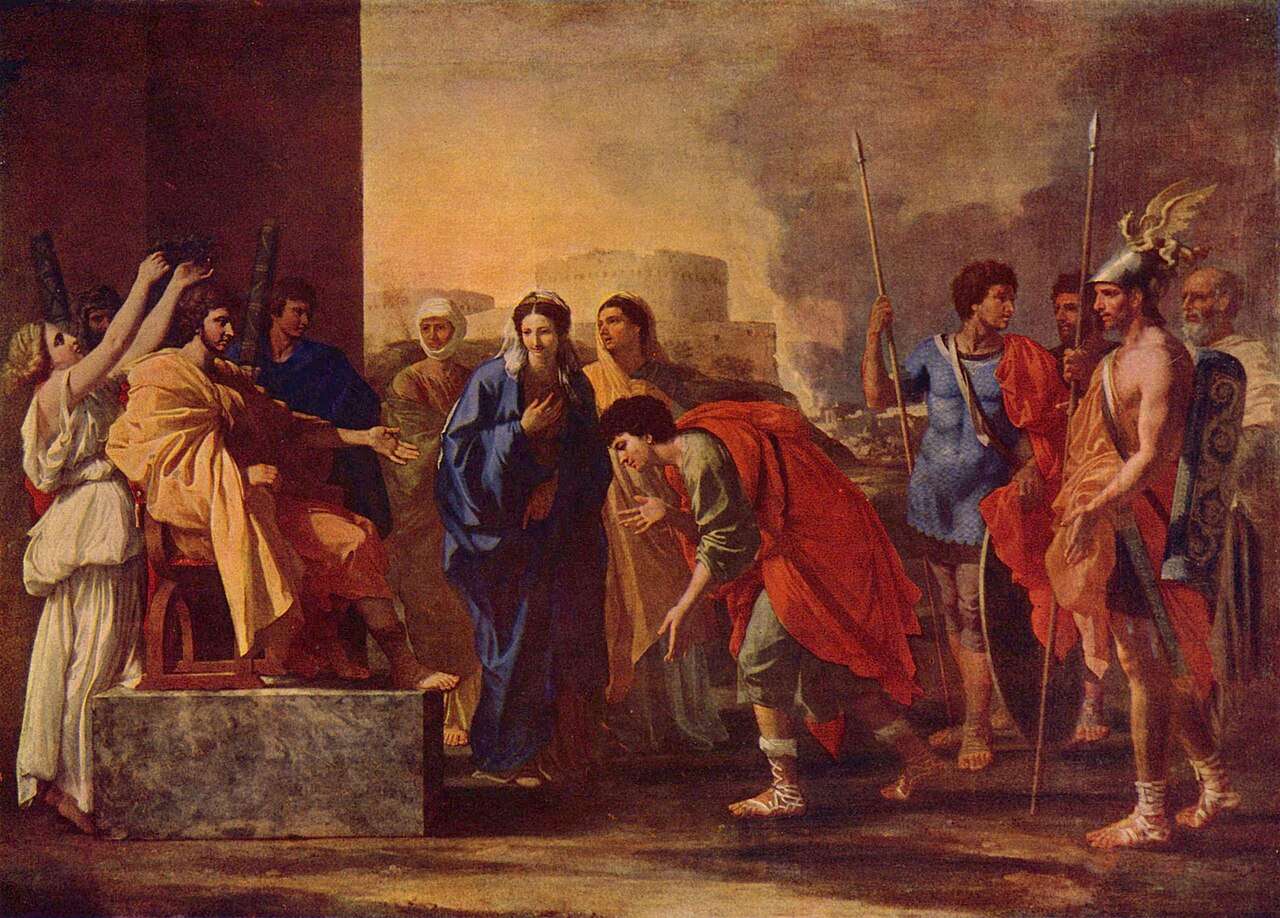
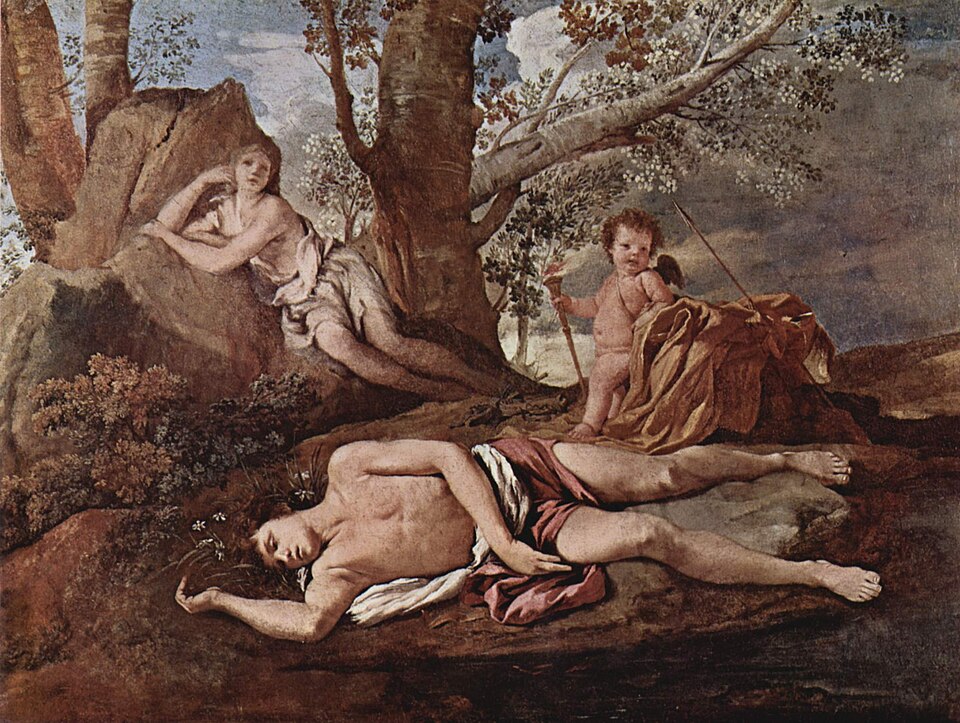
The most notorious characteristic of Poussin is composition; architecture of arrangement. Characters line up like a speech, stances, gestures, gazes point out the narrative with a rhetorical exactness. As opposed to the more spontaneous spark of some of his Baroque counterparts, Poussin‘s images look like constructions; stages built up, separated by space and plane. He also tends to paint for clarity, controlled contours and smooth color, not energetic brushstrokes.
He also has a singular way of approaching emotion. Poussin is not anti-emotion but anti-indulgence. The violent, tragic, ecstatic, and mourning are there, but in a configuration that is legible. A helpful critical digest comes from the French painter Paul Cezanne, who referenced Poussin frequently as an example: “We must make of Impressionism something solid and durable like the art in the museums.” Cezanne’s interest in Poussin reveals how, even for painters seeking to overthrow the masters, Poussin’s density and ability to hold an image were standards.
Poussin’s subject matter further evidences the intellectual life of his patrons. The Bible provided moral inspiration and drama. Mythology did the same, but in more worldly tales of heroes with foibles. Poussin found it an endless source for paintings depicting ethical trials (piety, justice, chastity) and political conundrums (authority, citizenship, civil harmony). How did European artists reinterpret and retell ancient texts and Bible stories as templates of virtue or as moral lessons? This question underpins many of the Smithsonian‘s art resources. As noted, for Poussin, the story is never just dressing. It is power.
Table: Key Characteristics of Nicolas Poussin Paintings
| Characteristic | What it looks like in Poussin | Why it matters |
|---|---|---|
| Classical composition | Balanced grouping, clear focal points, geometric order | Supports legible storytelling and intellectual clarity |
| Narrative priority | Gestures and gazes “explain” the story | Aligns painting with rhetoric and moral instruction |
| Controlled emotion | Passion shown through structured poses and expressions | Creates psychological intensity without chaos |
| Antiquarian detail | Roman architecture, classical dress, sculptural poses | Signals learned culture and engagement with antiquity |
| Landscape as meaning | Nature organized to reflect theme or mood | Moves landscape beyond background into moral/cosmic setting |
Major Works and Where to See Them: Museums, Periods, and Patronage
Many of the most studied Nicolas Poussin paintings are concentrated in major European collections, especially in Paris. The Louvre Museum is central: its holdings allow viewers to track his development across decades—from early narrative complexity to later, more meditative syntheses of figure and landscape. Seeing Poussin at the Louvre also clarifies how deeply his art became part of France’s cultural identity, particularly from the reign of Louis XIII into the era when French classicism was systematized in institutions like the Royal Academy of Painting and Sculpture (founded 1648).
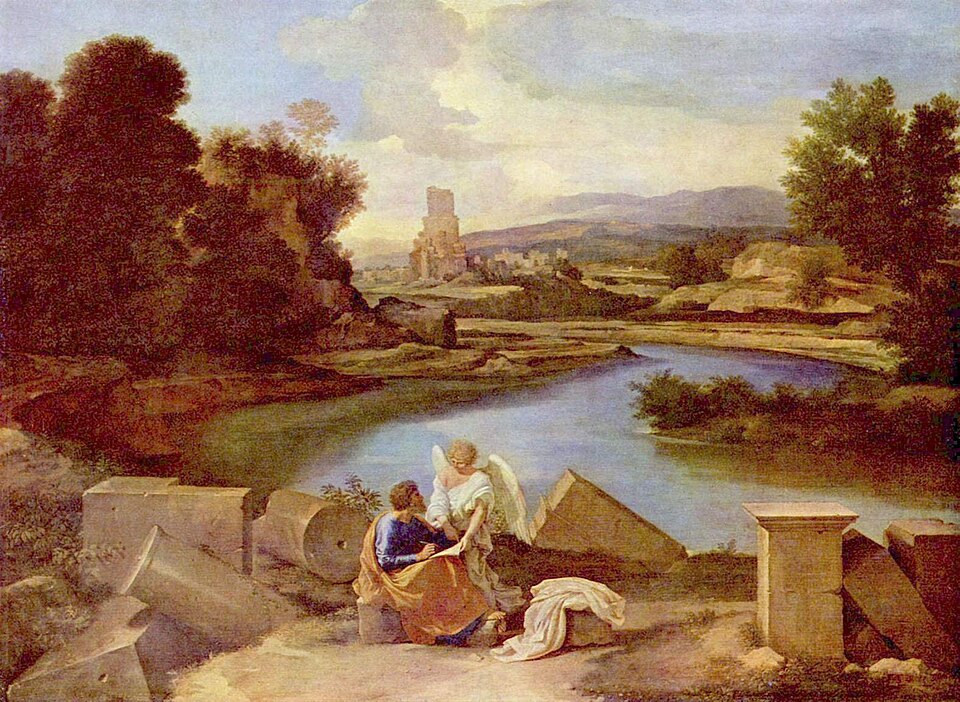
In the United States, The Metropolitan Museum of Art provides an essential window into Poussin’s achievement and reception. The Met’s art-historical framing emphasizes his role in shaping the “classical tradition” and his influence on later European painting. This matters because Poussin is often misunderstood as merely “academic.” In person, his pictures reveal subtle complexities—color harmonies, poignant narrative pauses, and landscapes that feel both idealized and psychologically charged.
In the United Kingdom, institutions such as the Victoria and Albert Museum help situate Poussin within a broader material and design culture. While the V&A is especially known for decorative arts, its scholarship and displays illuminate how seventeenth-century classicism traveled across media—painting, prints, textiles, and interior design—shaping taste and iconography. This wider context strengthens how we read Nicolas Poussin paintings: not as isolated masterpieces, but as influential nodes in a European network of collecting, scholarship, and visual culture.
Frequently Asked Questions (FAQ)
What is Nicolas Poussin best known for?
He is best known for classical history painting—biblical and mythological narratives organized with rigorous composition, clear storytelling, and restrained but powerful emotion. Major museums such as the Louvre and The Metropolitan Museum of Art present him as a defining figure of seventeenth-century classicism.
Was Poussin a Baroque painter or a Classical painter?
Chronologically he belongs to the Baroque period (1600s), but stylistically he is the leading representative of classical tendencies within that era: order, clarity, and intellectual structure rather than theatrical excess.
Why do Nicolas Poussin paintings look “staged”?
Because Poussin built compositions deliberately to guide interpretation. Figures are placed to clarify cause-and-effect in the narrative, much like characters arranged in a well-constructed drama.
Where can I see Nicolas Poussin paintings today?
The Louvre Museum (Paris) is the key destination. Significant works are also held and interpreted by major institutions such as The Metropolitan Museum of Art (New York). Scholarship and contextual resources relevant to his period can also be found through the Smithsonian Institution and the Victoria and Albert Museum.
What should I look for when viewing a Poussin painting?
Follow the gestures and sightlines first; they often form the “grammar” of the story. Then observe how architecture and landscape reinforce meaning—Poussin frequently uses setting to express moral order, threat, or transcendence.
Authoritative Sources (Selected)
- The Metropolitan Museum of Art (Heilbrunn Timeline / collection essays on Poussin and 17th-century classicism)
- The Louvre Museum (collection entries and curatorial texts on Poussin and French classical painting)
- Victoria and Albert Museum (resources on 17th-century European art, classicism, and related visual culture)
- Smithsonian Institution (art-history resources and contextual scholarship on European painting and its themes)
Poussin works because there is a synthesis of beauty and intelligence at play: the paintings, established in 17th-century Rome and later consecrated in France, argue, instruct, and move, but without falling into disorder. From Paris to New York, from the V&A to the Smithsonian, Poussin is a painter of serene intensity: someone who was able to make the very act of ordering come to life.