
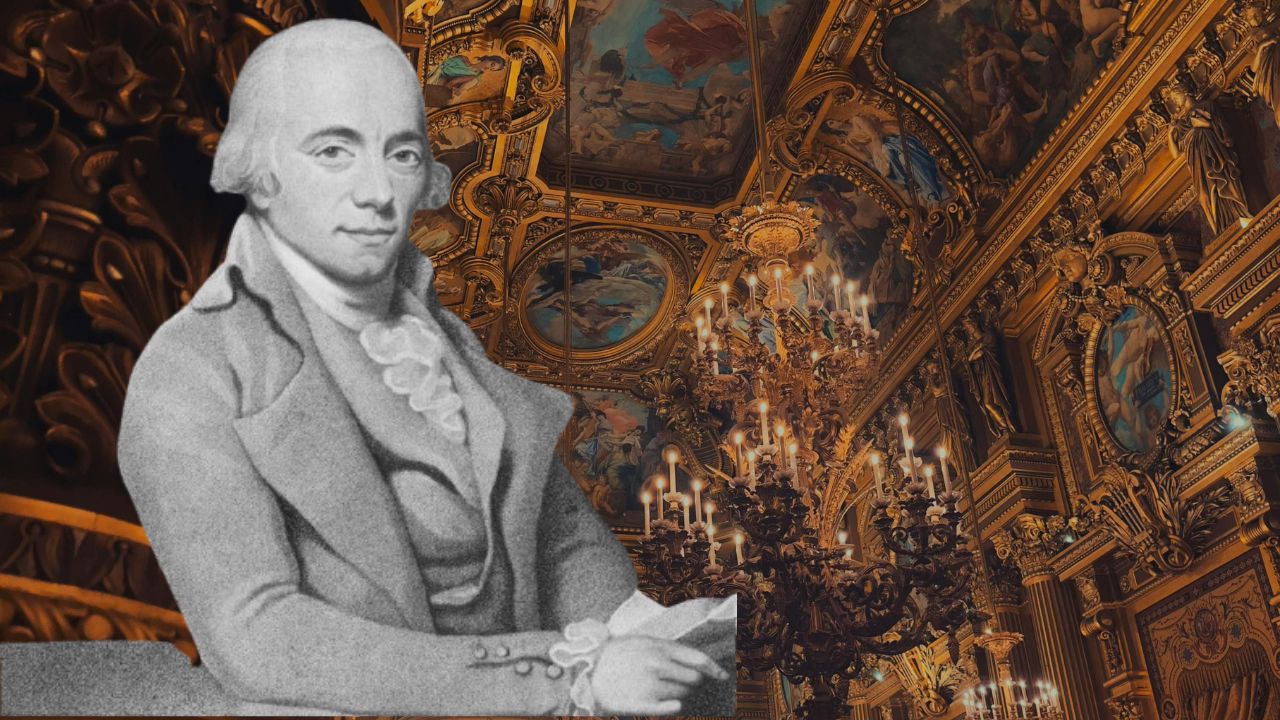
Muzio Clementi (1752–1832) occupies an unusual position in cultural history: celebrated as composer and pedagogue, yet equally consequential as a manufacturer and broker of musical instruments at the very moment when the piano became the emblematic domestic object of European modernity. Any “lost legacy” connected to Clementi is rarely a matter of a missing manuscript alone; it often concerns the decorative-arts infrastructure—workshops, suppliers, patent practices, and collecting institutions—through which his name circulated. Clementi’s productive decades align with the late Enlightenment and the long transition into the early Romantic period, a time when taste moved from Rococo lightness to Neoclassical restraint and then toward the darker woods and stronger silhouettes associated with Regency and Biedermeier interiors. The piano, as both instrument and furniture, participated directly in these shifts.
The most significant “museum secret” in Clementi studies has tended to be the separation—by curatorial categories—between “music history” and “decorative arts.” Keyboard instruments that were central to Clementi’s enterprise were historically documented as tools of performance rather than as objects of material culture with their own typological and stylistic lineages. Over the last several decades, cataloguing projects in major collections have quietly reunited these strands: shop labels, trade cards, and serial marks have been cross-referenced with surviving instruments, and piano cases have been studied as works of cabinetmaking, veneer work, and brass founding. In such work, Clementi reappears not only as a musician but as a figure embedded in London’s commercial and artisanal networks.
Clementi’s London years are especially decisive. By the 1790s, the English square piano and the emerging grand piano were fixtures in middling and elite homes, and London was a major center for instrument manufacture. Clementi’s name became linked to the firm that would trade under “Clementi & Co.” and later “Clementi, Collard & Collard,” reflecting the period’s fluid partnerships and successions. The “lost legacy” unearthed by museum research is often the paper trail of this industrial-artisanal world: lease agreements for premises, correspondence about timber and hardware supply, and evidence of export markets that complicate older narratives of Clementi as merely an Italian composer in England.
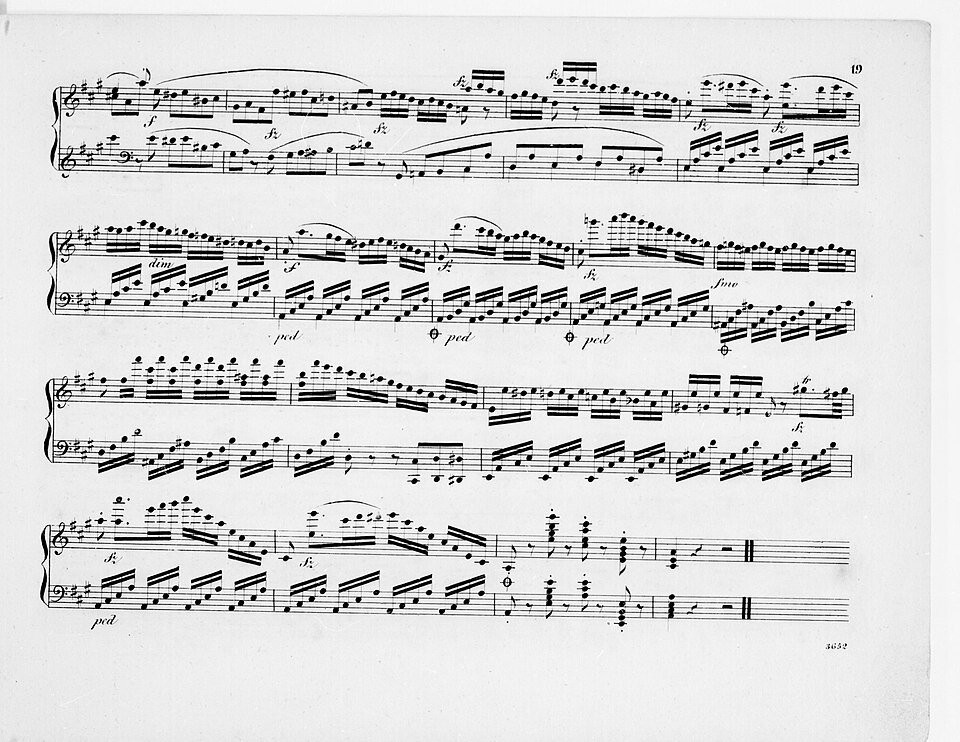
The time period also matters because it was an era of intense technological change. The piano’s action was repeatedly modified; stringing and scaling evolved; and casework adapted to the instrument’s expanding compass and increasing tension. That technical evolution left material traces—altered wrestplanks, replaced dampers, later soundboard repairs—that museums increasingly interpret as historical strata rather than as “damage.” When conservators and curators examine a keyboard instrument associated with Clementi, they are reading it as a layered document of use, repair, and taste, situating it within the period’s broader history of domestic display and the politics of polite accomplishment.
“The piano is not merely an instrument; it is a room’s argument about taste, education, and the proper ordering of leisure.”
—Paraphrased from recurring themes in late-eighteenth-century conduct literature and modern decorative-arts scholarship
Muzio Clementi: Cultural and symbolic meaning
Muzio Clementi’s cultural significance lies in the intersection of the ascending professional virtuoso, the formalization of music instruction, and the domestication of the public stage. For late Georgian Britain, the piano was an object of self-disciplining acculturation a symbol of feminized excellence, according to the didactic literature as well as an instrument of professional and compositional aspirations especially for men. His pedagogical prestige, buttressed by his innovations in keyboard playing and teaching repertoire, facilitated the naturalization of the instrument as an educational prerequisite. Thus, a piano labeled with a “Clementi” association was not just another product: it was participation in a global, if domestic, musical public.
The piano case, visually, had its own associations. Museums are now reading these more closely. Neoclassical decoration reeding, stringing, subtle gilt mounts evoked an antique sensibility and the gravitas attached to classical learning. Then, as Regency tastes ran to mahogany and incrusted gilt mounts, the piano acquired more visual presence, to match its increasing sonic presence. Muzio Clementi’s “legacy”, then, is a history of visual rhetoric: how sound became decor, and decor became status.
The “museum secret” unearthed in recent scholarship often concerns the instrument’s social biography: who purchased it, where it stood, what repertory was played, and how it moved across borders. A Clementi-linked instrument in a provincial British house, a Baltic merchant’s townhouse, or an Iberian salon speaks to networks of trade and taste that exceed national narratives. Such objects were frequently acquired as aspirational goods, signaling participation in a shared European culture of music printing, public concerts, and domestic performance.
One must also consider how Muzio Clementi’s reputation interacted with collecting practices. Nineteenth-century narratives often elevated “great composers” while relegating manufacture to a secondary role. Yet in the decorative arts, maker’s names—whether cabinetmaker, founder, or instrument firm—carry interpretive authority. The rediscovery of Clementi’s commercial and material imprint allows museums to treat him not as an abstract genius but as a historical actor whose name mediated between art and industry. It is precisely in this mediation that the “lost legacy” becomes legible.
Craftsmanship and materials
If we approach Clementi from the perspective of the decorative arts, it means we must deal with the piano as a hybrid artifact. A piano from the late 18th or early 19th century incorporates cabinet work, the selection of woods, veneering, marquetry, metal work, leather work, and intricate design of mechanics. The case was usually made of mahogony (for stability and color), or secondary woods such as pine or deal in the case of structural components. Ebony or boxwood would have been used for some decorative covering, brass for the hinges or name-plates and sometimes inlay. It would be visually evident (the case) and covert (the action), and increasingly, museums consider both equally meaningful to Interpretation.
This instrument was fitted for interiors. The mahogany veneer could be bookmatched; the strings might surround the lid and fallboard; the thin inlays could follow fashionable table-top shapes. And the better instruments are designed to echo contemporary sideboards and commodes: this synchronisation was no coincidence. Furniture and piano workshops frequently shared techniques, and occasionally staff. The Clementi attribution is thus not just an empty signature, but an indication of a source of timber and veneer merchants, brass founders and polishers who turned out an instrument which satisfied both musical and decorative criteria.
On a mechanical level, there were conflicting processes English and Viennese editions that had differing feel and sound. The action English action was typically heavier and so lent itself to a fuller sound for bigger spaces, and for public performance. The action in Vienna was lighter, for the most part, lending itself to clarity and faster articulation. As a public performer and teacher, Clementi was part of all that. If a museum is considering an instrument from his circle, they‘d ask: did the mechanism match the music Clementi performed and commissioned? Does the case speak to an audience of the elite, or to a middle-class customer? These are material, but ultimately cultural, questions.
Comparative snapshot (typical materials and features, c. 1790–1825)
| Component | Common materials | Decorative-arts significance | Conservation sensitivity |
|---|---|---|---|
| Case & lid | Mahogany veneer over softwood | Furniture-like presence; aligned with interior fashion | Veneer lifting; UV fading; French polish later additions |
| Keys | Ebony/boxwood, sometimes ivory historically | Tactile luxury and visual contrast | Ethical/legal restrictions on ivory; cracks; shrinkage |
| Action | Wood, leather, cloth, metal springs | Hidden craftsmanship; defines touch | Leather desiccation; moth damage to cloth; corrosion |
| Hardware | Brass hinges, escutcheons, sometimes nameplates | Stylistic dating via profiles and engraving | Stress fractures; later replacements |
| Soundboard | Spruce/fir | Acoustic “heart,” often repaired | Cracks; rib separations; earlier patch repairs |
Historical locations, museums, and archives
And, the “museum secret” unearthed here is not really a single shock revelation, but a constellation of data scattered across various museum and archive records and instrument catalogues. Muzio Clementi and his contemporaries were based in London for a good proportion of their careers, and the city has commercial directories, insurance documents, workshop inventories and other such records in which firms can be reliably cross-referenced with existing instruments. These permit curators to go beyond name-board inscriptions and position instruments in a sequence of partnerships to allow a clearer interpretative focus than, say, “Clementi, early nineteenth century”.
Museums have also re-framed keyboard instruments from technology objects to furniture, housing them in their decorative-arts, not music-history, departments. The Victoria and Albert Museum (London) has also modelled the instrument object-course; that instruments should be studied for their design ornamentation, cases, and social usage as much as for their musical qualities. Similarly, the Metropolitan Museum of Art (New York) is undertaking object-centered cataloguing of the European decorative arts, and whilst particular Clementi-related objects will be found distributed across different institutions and departments, the methodology of the excavation is in common: interdisciplinary cataloguing, conservation science, and provenance.
Archival repositories underpin this work. The British Library is indispensable for printed music, trade ephemera, and period commentary that ties Clementi’s name to the spread of piano culture. In parallel, local archives and record offices often preserve commercial records that illuminate workshop operations, apprenticeships, and property leases. Such documents rarely make dramatic headlines, yet they transform interpretation: they explain why certain design choices appear, how materials were sourced, and how quickly models were updated to meet market demand.
Finally, one must include the “distributed museum” of private collections, whose documentation sometimes predates institutional catalogues. Collectors have preserved receipts, family letters, and early photographs that show instruments in situ—valuable evidence for original finishes and domestic contexts. When such materials enter public archives, they function as corrective lenses, revealing what earlier curatorial categories obscured: that Clementi’s world was not solely a concert platform or a printed page, but an interlocking system of objects, rooms, and trades.
“Provenance is not a pedigree alone; it is an interpretive tool that restores the object to history.”
—A standard principle in decorative-arts cataloguing practice
Collector perspective
On a collector‘s perspective, Clementi-related instruments are liminal objects machines as well as furniture, and historical artifacts. The primary collector dilemma is how to handle a dichotomy, wherein the farther away an instrument is kept from its original state, the further away it drifts from being playable, while the more it is rebuilt for the sake of playability, the more historical “fabric” is lost. This is more than an aesthetic compromise. It is a moral one, and it has led to collecting trends ranging from those that respect cabinetry untouched and actions “in situ”, to those that condone careful restoration. Both can be historically justified, but they should be documented.
The questions of authenticity are magnified. The named makers on many pianos were in essence brand names and the brands could be used by firms set up to buy the business. It‘s through cabinet proportions, action characteristics, workshop labels and hardware forms in addition to documentation that collectors date and attribute instruments to workshops. A simple label saying “Clementi” doesn‘t cut it; proper collecting treat the piano as a forensic object in which each component needs to be read back in line with accepted forms and maker collaborations.
Also, there‘s collecting according to the history of the interior. A Clementi square with careful stringing and little decoration would be attractive to Neoclassical room collectors. A later grand with more elaborate Regency flourishes might be bought by collectors of Regency mahogany furniture. In other words, these Clementi-connected objects can attract decorative-arts collectors who aren‘t musicians. The instrument is a bridge object, connecting the history of furniture, the history of music, and the history of making.
Another trend of recent years: “contextual collecting” gathering not only the instrument itself but “connected paraphernalia” such as “music books, trade cards, bench, design, candle stands, and covers.” These “ensembles,” by showing use and upkeep, make the piano into a small museum and domestic archive. For Clementi, whose legacy is so tightly woven from pedagogy and commerce and style, these collections might make the instrument more clearly visible than a single object alone.
Restoration insights
Restoration of Clementi-era pianos demands a conservation approach grounded in reversibility, documentation, and respect for historical evidence. The first task is diagnostic: identifying which layers are original, which are period repairs, and which are later interventions that obscure the object’s legibility. Case finishes are a common challenge. Many instruments were later French-polished in the Victorian period, producing a high gloss inconsistent with earlier surface aesthetics. Removing such layers can risk damaging veneer and patina; leaving them can distort interpretation. Conservators typically prefer minimal intervention paired with clear interpretive labeling rather than aggressive “return to new.”
Structural and mechanical conservation likewise requires careful triage. Soundboards often develop cracks; bridges may lift; wrestplanks can fail under string tension. In some cases, instruments are stabilized for display rather than restrung, especially when original components would be endangered by full tension. When the goal includes historically informed performance, restorers must decide whether to use period-appropriate stringing and leather, and whether to replicate missing parts. Each choice affects sound, touch, and historical integrity—and each should be recorded in a treatment report accessible to future scholars.
A particularly delicate issue is the replacement of key coverings and other materials now ethically or legally restricted, such as ivory. Museums and responsible restorers increasingly avoid replacement with prohibited materials, opting for alternatives that are visually discreet and clearly documented. The objective is not to create an illusion of untouched originality but to maintain the object’s stability and interpretive honesty. In this context, Clementi-associated instruments become case studies in how heritage practice navigates evolving legal frameworks and ethical standards.
Finally, restoration can “unearth” secrets in the literal sense. Opening an instrument often reveals pencil inscriptions by workmen, stamps on internal parts, old paper shims, or fragments of trade labels. These traces are easily lost if treated as debris. The best practice is to treat them as archival material: photograph, map, and preserve them when feasible. It is through such minute survivals that the broader Clementi legacy—its workshops, repairs, and user communities—can be reconstructed with confidence.
Market interest and collector demand
Market interest in Clementi-related objects has historically been uneven because it sits at the intersection of several collecting fields: musical instruments, Georgian and Regency furniture, and composer-associated memorabilia. Unlike certain marquee makers whose names are tightly tied to a single workshop identity, “Clementi” can indicate a complex succession of partnerships and later brand continuations. This complexity can suppress speculative demand while attracting connoisseurship-driven collecting, where value is anchored in careful attribution, condition assessment, and documentary support.
Demand also reflects a broader shift in taste toward historically informed performance and the material culture of music-making. As scholars and performers have explored period technique, the interest in earlier keyboard instruments has grown—though the market typically distinguishes between instruments suitable for restoration to playing condition and those best preserved as historic artifacts. Museums, when acquiring, may prioritize provenance, rarity, and representativeness within a typological sequence; private collectors may prioritize sound potential and the aesthetic compatibility with historic interiors.
Yet another aspect is the global spread of surviving instruments. Because of the export market at the end of the 18th and beginning of the 19th century Clementi pianos can show up far from London and with local repairs to boot. The market has to grapple with the assessment of “hybrid” histories, or at least instruments with an English center but Baltic or Iberian workshops responsible for repairs, for example. Hybridity can be a hindrance in determining market value, or can be of interest to scholarship (depending on the collector‘s view of instruments with hybrid biographies).
The more secure demand is often linked to the object with the best provenance (the documentation of purchase or family ownership or object trails), but without this provenance the market depends on expert reports and comparison and in this realm museum catalogs and collection databases published on-line have a silent voice in the market‘s understanding of attribution and historic importance.
If Muzio Clementi persists today and it‘s easy to say he doesn‘t it‘s because his career defies present-day hierarchies that distinguish “high” art from material production. Beyond the music he wrote and the students he taught, his name is inseparable from the history of things: pianos as things designed, as objects of domestic ambition, as indexes of London‘s intricate craft economies. What has been “lost” (and what museum research will surely keep rediscovering) is the entire material and institutional context in which Clementi‘s name meant something to his contemporaries: the manufactories, the networks of trade, the technologies of sound, and the rooms that gave music a visual social existence.
This is important now because cultural history is becoming more aware of the processes by which artworks are created, distributed, and used. Clementi’s world is a reminder that value can be found not just in musical notation and live performances, but in finishes and joints, in repairs and restorations, in the accumulation of touch on the working surfaces of instruments. This legacy is one that needs restoring a less tarnished history of a world where sound, skill, commerce, and taste are linked together, and where museums and collectors may be, at their best, guardians of records rather than judges of quality.