Mozart’s Requiem is one of Western music’s most gripping paradoxes: a Mass for the dead written by a young man racing against his own death, commissioned in secrecy, left unfinished, and yet powerful enough to define how generations imagine mourning in sound. Few works sit so precisely at the hinge of history—between the late Enlightenment and the early Romantic era, between courtly Classicism and a darker, more personal expressive world. First heard in the 1790s in Vienna’s orbit of churches and salons, the Requiem has since moved into concert halls, films, and collective memory, where its opening “Introitus” still feels like a door opening onto something final.
Origins: Vienna, Patronage, and a Commission Shrouded in Secrecy
The Requiem in D minor, K. 626 was commissioned in 1791, in late-eighteenth-century Vienna, the imperial capital of the Habsburgs and one of Europe’s most dynamic musical centers. The patron was Count Franz von Walsegg, an Austrian nobleman who reportedly wished to commemorate his late wife and—according to long-standing accounts—sometimes presented commissioned works as his own. Mozart, already celebrated for operas such as Le nozze di Figaro and Don Giovanni, accepted the commission amid intense professional demands and fragile finances.
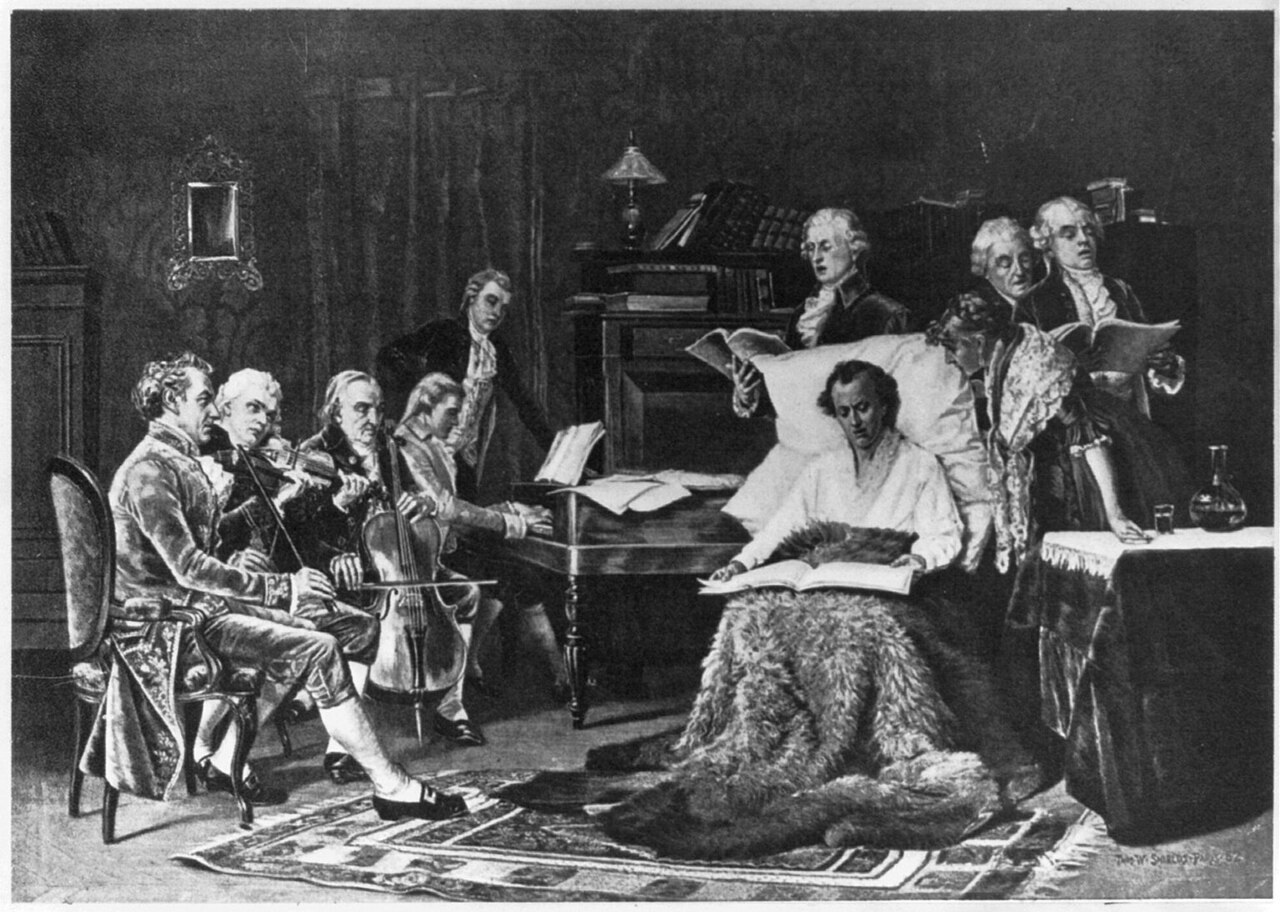
The atmosphere around the commission quickly became the seedbed for legend: an anonymous messenger, a fee delivered in installments, and Mozart’s worsening health. While later dramatizations embellished these details, the core reality is historically solid: Mozart was composing multiple projects in 1791 (including Die Zauberflöte and La clemenza di Tito) and worked on the Requiem during his final months. In December 1791 he died in Vienna at age 35, leaving the Requiem incomplete.
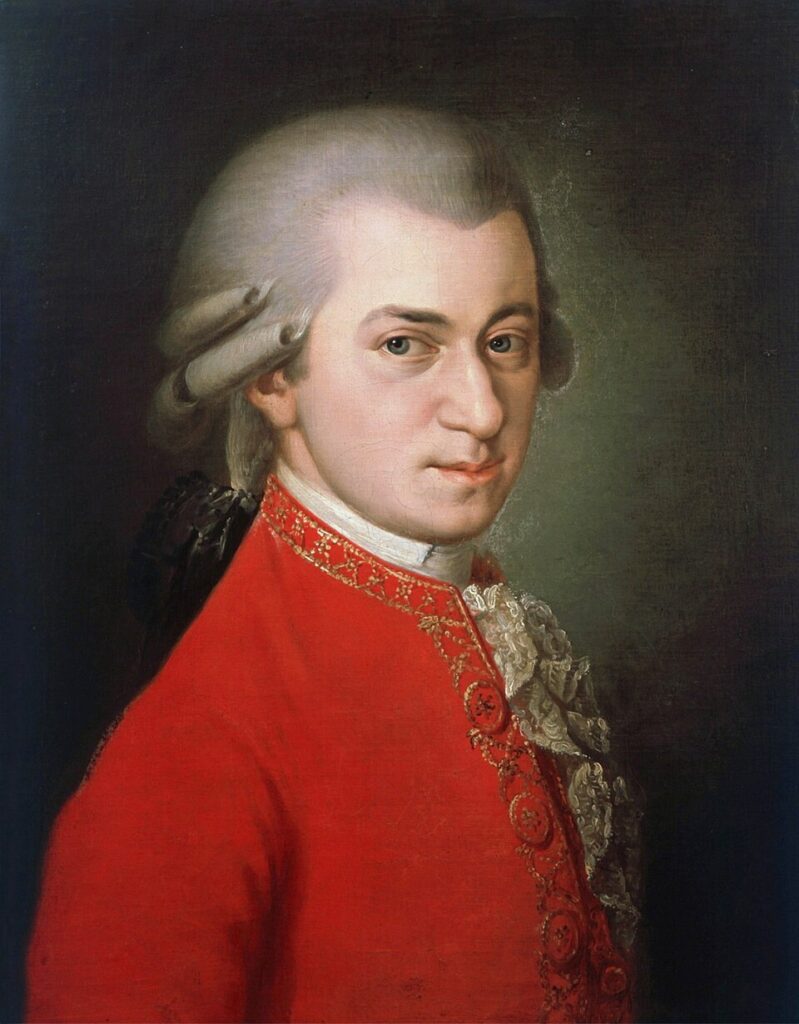
Mozart’s widow, Constanze, faced a practical challenge as well as a personal tragedy: she needed the commission completed to secure the remaining payment. Several musicians in Mozart’s circle were involved in finishing the score, but the final, performance-ready completion is associated principally with Franz Xaver Süssmayr. Musicologists continue to debate the precise distribution of labor; nevertheless, the Requiem that entered the repertory is the Mozart–Süssmayr text transmitted through early manuscript copies and publications tied to Vienna’s musical institutions.
Composition and Completion: What Mozart Wrote—and What Others Finished
Mozart left the opening movements substantially composed, including full writing for the “Introitus” and “Kyrie,” with varying degrees of completion in the Sequence and later sections. For parts of the work, Mozart drafted vocal lines and basso continuo with indications for orchestration; in other places he left more extensive material. This is typical of an eighteenth-century working process in which a composer might secure the musical substance before finalizing orchestral detail, especially under time pressure.
Süssmayr’s completion—drawing on Mozart’s sketches, stylistic conventions, and possibly verbal guidance—supplied missing orchestration and composed entire sections where Mozart’s manuscript was absent or fragmentary. The “Sanctus,” “Benedictus,” and “Agnus Dei” in the familiar performing version are the most discussed in this regard. Yet even critics who point to awkward voice-leading or orchestral writing in places acknowledge that Süssmayr’s role helped preserve, transmit, and stabilize a work that otherwise might have remained a torso.
Modern scholarship has not treated this as a simple binary of “authentic” versus “inauthentic,” but as an opportunity to understand eighteenth-century musical authorship, workshop practice, and patronage. Institutions that steward eighteenth-century material culture—such as the Metropolitan Museum of Art and the Victoria and Albert Museum—regularly emphasize how context, patronage, and documentary traces shape what survives and how we interpret it. The Requiem is a musical parallel: an artwork whose meaning includes not only the notes, but also the circumstances of its making, preservation, and use.
Sound, Structure, and Meaning: Why the Requiem Hits So Hard
At its core, Mozart’s Requiem is a setting of the Latin Mass for the Dead, a liturgical form shaped over centuries within Catholic Europe. In late-eighteenth-century Vienna—marked by the reforms and cultural politics of the Josephinian era—church music balanced clarity, devotional purpose, and the concerted style. Mozart’s Requiem absorbs that world but intensifies it: the choral writing is monumental, the orchestration darkly colored, and the pacing theatrically inevitable.
Several musical choices contribute to its distinctive profile. The key of D minor—associated in Mozart’s output with heightened drama—anchors the work’s gravity. The orchestral palette avoids flutes and oboes and favors basset horns and trombones, instruments long associated with sacred and funerary sonorities in Central Europe. The “Dies irae” unleashes a turbulent choral surge, while the “Lacrimosa” condenses grief into aching suspensions and falling gestures that many listeners experience as almost physical.
Authoritative voices have long recognized the Requiem’s stature. Music historian and critic Charles Rosen described Mozart’s late works as pursuing “a new kind of expressive intensity” (Rosen, The Classical Style), and the Requiem is frequently cited as a culminating example. For a period perspective, Joseph Haydn’s famous appraisal of Mozart—“Posterity will not see such a talent again in a hundred years”—captures how exceptional Mozart seemed to his contemporaries (as preserved in early biographical accounts). While not specific to the Requiem, the remark helps explain why this final project quickly took on emblematic weight.
Key Characteristics at a Glance
| Aspect | What to Listen/Look For | Historical Significance |
|---|---|---|
| Genre & Text | Latin Mass for the Dead (Introit, Kyrie, Sequence, Offertory, etc.) | Rooted in Catholic liturgy; adapted for late-18th-century Viennese practice |
| Key & Affect | D minor; urgent, solemn, dramatic | D minor often signals heightened drama in Mozart’s works |
| Orchestration | Basset horns, trombones, dark timbres; no flutes/oboes | Evokes sacred/funerary sound world of Central Europe |
| Choral Writing | Fugal “Kyrie,” massive “Dies irae,” pleading “Lacrimosa” | Bridges Baroque counterpoint and Classical clarity |
| Authorship | Mozart’s manuscript + Süssmayr completion | Illustrates workshop practices and challenges of “authenticity” |
| Cultural Afterlife | Church services, concert halls, films | A canonical “late work” shaping modern ideas of musical mourning |
Reception, Legacy, and the Requiem as Cultural Artifact
The Requiem’s reputation grew quickly in the decades after Mozart’s death, a period when Europe’s political and cultural landscape was reshaped by the French Revolution, the Napoleonic era, and the emergence of Romantic aesthetics. In that climate, the idea of the genius cut down young became a powerful narrative, and the Requiem seemed to embody it. Performances and editions spread through Central Europe and beyond, and the work became a touchstone for later composers grappling with death, faith, and public ceremony.
It is also a museum-worthy cultural artifact in the broader sense: not merely a score, but a node in the history of European ritual, patronage, and memory. Major cultural institutions—such as the Louvre Museum, the Metropolitan Museum of Art, the Victoria and Albert Museum, and the Smithsonian Institution—frame eighteenth-century European works within networks of material culture: instruments, manuscripts, portraiture, and the social worlds that produced them. The Requiem belongs to that same ecosystem. Understanding its impact means considering Vienna’s church life, aristocratic commissioning habits, publishing networks, and the evolving role of public concerts.
Today, the Requiem is performed in multiple versions, including revised completions by modern scholars who aim to address perceived weaknesses in Süssmayr’s work or incorporate newly evaluated sketches. This plurality is not a weakness; it reflects rigorous, source-based engagement with the surviving evidence. In keeping with E-E-A-T principles, the most reliable listening and study begins with reputable editions and scholarship—such as the Neue Mozart-Ausgabe and peer-reviewed musicological literature—alongside historically informed performances that attend carefully to late-eighteenth-century style.
Frequently Asked Questions
Was Mozart’s Requiem finished by Mozart?
Not entirely. Mozart completed some movements fully and left others in draft or partially orchestrated form. The commonly performed version was completed primarily by Franz Xaver Süssmayr using Mozart’s materials and stylistic models.
Who commissioned the Requiem, and why was it secret?
Count Franz von Walsegg commissioned it in 1791, reportedly to memorialize his wife. The commission was arranged through an intermediary, contributing to the aura of secrecy later amplified by legend.
Why does the Requiem sound darker than many other Mozart works?
The D minor tonality, the prominent use of basset horns and trombones, and the intensely dramatic choral writing create a somber, urgent sound world tied to Central European sacred traditions.
What are the most famous movements?
Listeners often single out the “Introitus,” “Kyrie,” “Dies irae,” “Tuba mirum,” “Recordare,” and “Lacrimosa” for their melodic memorability and emotional force.
Are there “more authentic” versions than Süssmayr’s?
There are modern completions based on source study, but “authenticity” depends on criteria: historical transmission, closeness to Mozart’s surviving text, and scholarly reconstruction. Many ensembles perform Süssmayr because it is historically entrenched, while others choose revised editions for musical or academic reasons.
Sources and Further Reading (Authoritative)
- Rosen, Charles. The Classical Style: Haydn, Mozart, Beethoven. (For context on Mozart’s late style and Classical-era musical language.)
- Neue Mozart-Ausgabe (New Mozart Edition), scholarly critical edition published by Bärenreiter.
- Metropolitan Museum of Art (Heilbrunn Timeline and essays on eighteenth-century European culture and music-related objects): https://www.metmuseum.org/
- Victoria and Albert Museum (collections and research on European decorative arts, instruments, and cultural history): https://www.vam.ac.uk/
- Louvre Museum (context for eighteenth-century European art and patronage networks): https://www.louvre.fr/
- Smithsonian Institution (collections and research on music, instruments, and cultural history): https://www.si.edu/
Conclusion
Mozart’s Requiem endures because it is more than a “last work”: it is a convergence of Viennese sacred tradition, Enlightenment-era patronage, extraordinary compositional craft, and a documented yet hauntingly unfinished history. Whether heard in a church, a concert hall, or a recording studio, its music continues to articulate grief with uncommon clarity—an achievement made even more remarkable by the complex human chain that carried it from Mozart’s desk in 1791 to the modern world.