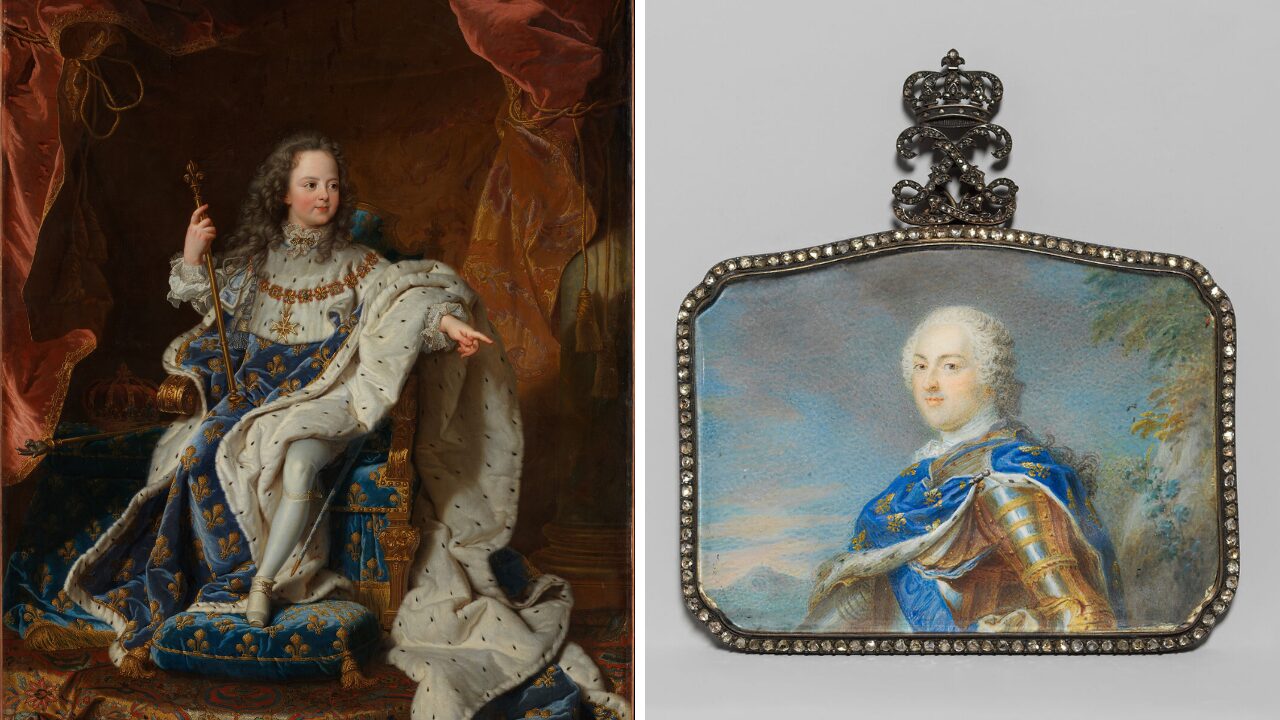
Little did France know, when five-year-old Louis XV took the throne in 1715, a child on the crown meant more than just youth – it brought a rule tangled in legal contradiction.
Louis XIV, his great-grandfather, built the clearest example of total royal power anywhere in Europe. Still, its flawless design stiffened every attempt to change course.
When Louis XV came into full rule, old structures stayed fixed – shaped long ago for a 1600s vision of politics: noble rights untouched, belief in divine rulers, one man at the center.
Life outside court walls had shifted – trade grew louder, people read more, debates spread wide, connections thinned.
Louis XV ruled from 1715 to 1774, yet his time on the throne wasn’t just about personal weakness. Behind the scenes, deeper forces were at work – administration kept running, even as belief in royal authority faded. The machinery of rule stayed intact, though respect for it slipped away.
Authority remained visible, but trust behind it had already disappeared. Few now see his rule as falling apart. Instead, something else stands out: a gap grew. Not collapse – distance.
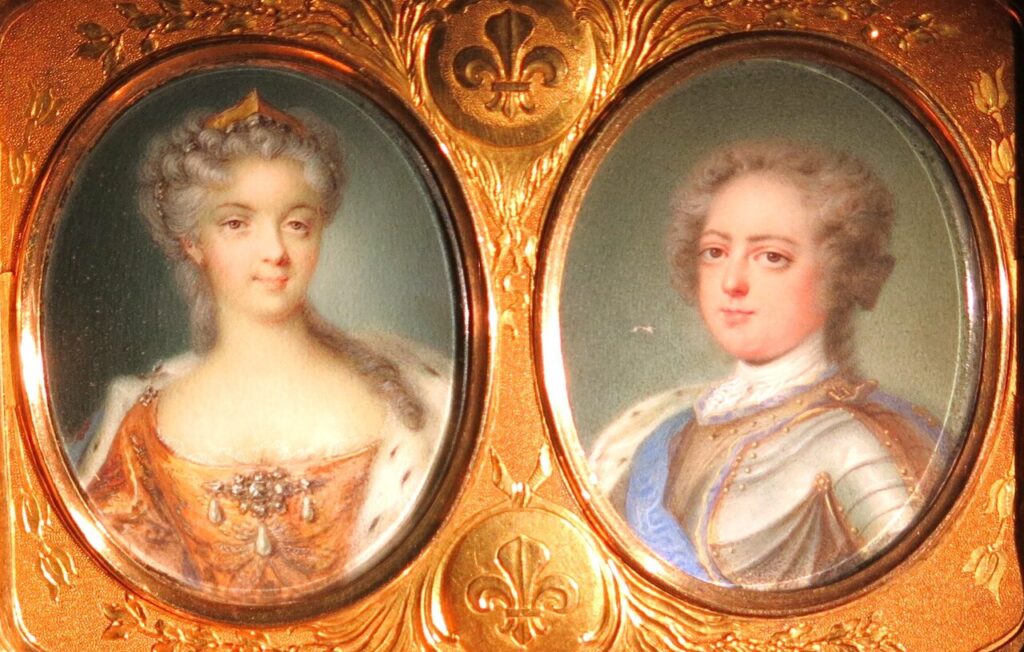
The rulers acted one way. People living under them saw it differently. Power moved here. Meaning formed there. Never quite meeting. One world making decisions. Another trying to understand them. Separate tracks. Same time.
I. The Inherited Machine: A State Designed for a Different Century
At Louis XIV’s death, France possessed the strongest bureaucratic monarchy in Europe. Yet it was not a modern state. It was a personal monarchy administered by offices that could be bought, inherited, and defended as property.
The young king ruled through regencies and ministers long before he ruled personally. Crucially, he learned government as observation, not participation.
Structural contradiction of Bourbon absolutism
| Element | Intended Function (17th c.) | Reality by 18th c. |
|---|---|---|
| Sacred kingship | Religious obedience | Public opinion questioned authority |
| Noble privilege | Political stability | Fiscal inequality |
| Venal offices | Administrative continuity | Institutional rigidity |
| Court ritual | Political integration | Social theater without control |
| Royal secrecy | Authority | Suspicion |
France did not lack governance capacity — it lacked adaptability.
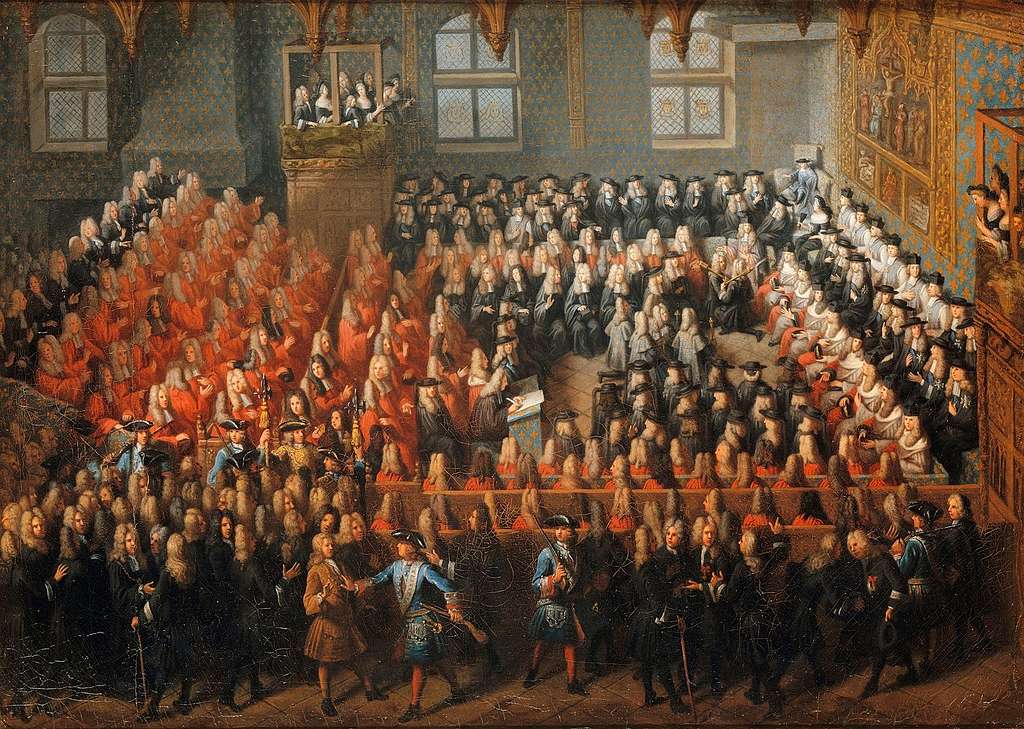
The monarchy could collect taxes, wage wars, appoint ministers, and police dissent. But it could no longer convincingly explain why it alone should rule.
II. The Education of a Withdrawn King
Louis XV did not build power through deliberate design like Louis XIV. Instead, withdrawal shaped his rule. Separation became his method of governance.
Intelligence marked his character, followed by a solid education, fluency in several languages, along with deep understanding of scientific and geographic matters. Officials serving at the time frequently remarked on how exact he could be during talks, particularly impressed by his sharp recall of bureaucratic specifics.
Still, his rule unfolded behind closed doors. Focused on private influence rather than open rule, his power flowed through tight-knit groups, hidden negotiations, and closed rooms within Versailles. Efficiency rose under this system – yet its imagery faded.
| Model | Louis XIV | Louis XV |
|---|---|---|
| Authority style | Performative | Confidential |
| Political theater | Central | Avoided |
| Relationship with elites | Integration | Circumvention |
| Visibility | Continuous | Selective |
| Legitimacy source | Presence | Function |
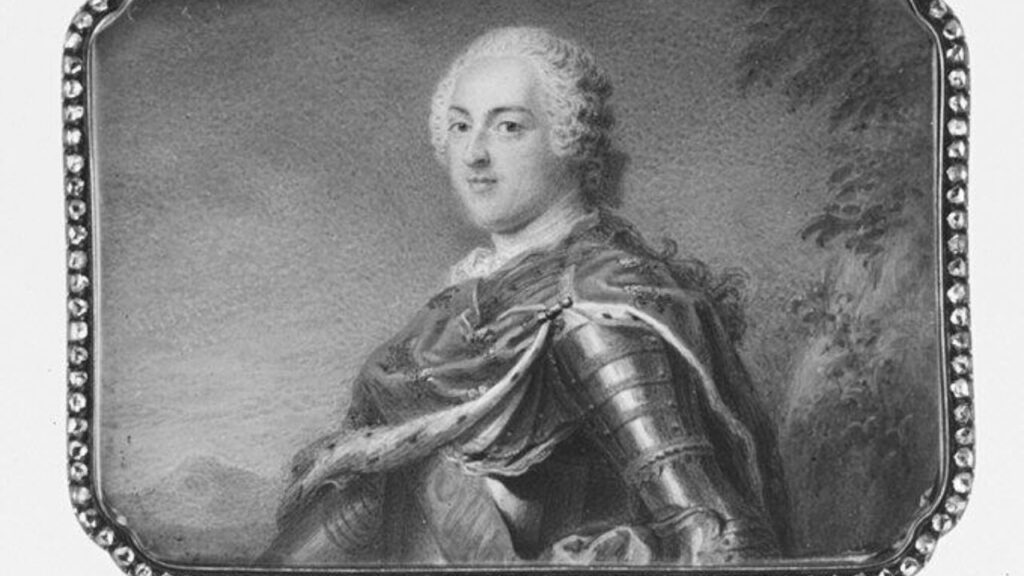
The crown carried on, yet lost its sense of purpose. Few noticed his presence among artists, though officials followed his rulings closely.
In times when reading and talking grew widespread, being unseen meant being overlooked.
III. Public Opinion Is Invented
During the reign of Louis XV, a new political force appeared in Europe: public opinion as a political actor.
Writers associated with the Enlightenment — including Voltaire, Montesquieu, and Denis Diderot — did not initially seek revolution. Their critique targeted arbitrariness rather than monarchy itself. They attacked the logic of authority, not the existence of a king.
This distinction proved fatal.
Earlier rebellions opposed taxes or ministers. Eighteenth-century criticism opposed legitimacy.
Pamphlets, salons, academies, and clandestine presses created a sphere where government actions were judged independently of royal intention.
The monarchy could silence protest — but not interpretation.
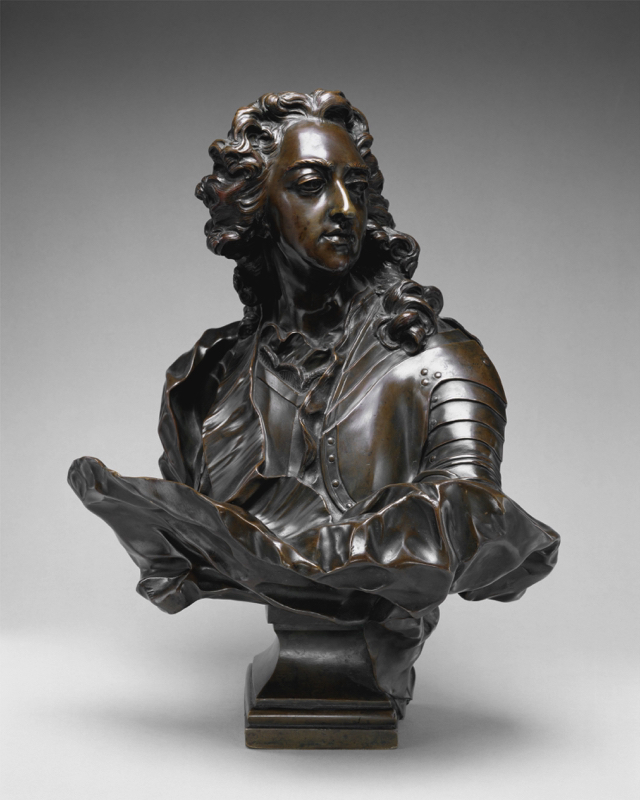
IV. The Parlements Conflict — Law Against Authority
Within courtrooms, not public squares, did the central legal battle of the era unfold. Not merely judges, the parlements began acting as watchdogs over royal power.
Though created to settle disputes, they slowly took on a new role – challenging decrees they deemed unlawful. Registration of edicts was their leverage; without it, enforcement stalled.
Their stance hardened over time, rooted in old customs said to bind even the monarch. What started as legal procedure turned into resistance framed as duty.
By appealing to tradition, these courts positioned themselves as guardians of limits on kingship. What began as defiance slowly took shape within legal bounds.
| Crown | Parlements |
|---|---|
| Authority from divine right | Authority from law |
| Law issued by king | Law precedes king |
| Obedience required | Consent implied |
| Administration | Constitution (implicit) |
From behind closed doors, change came by way of minister René Nicolas de Maupeou. In 1771, the king’s authority took shape when he dismantled the traditional parlements. Instead, fresh judicial bodies emerged – aligned firmly with royal power. Loyalty to the crown now shaped the law’s path.
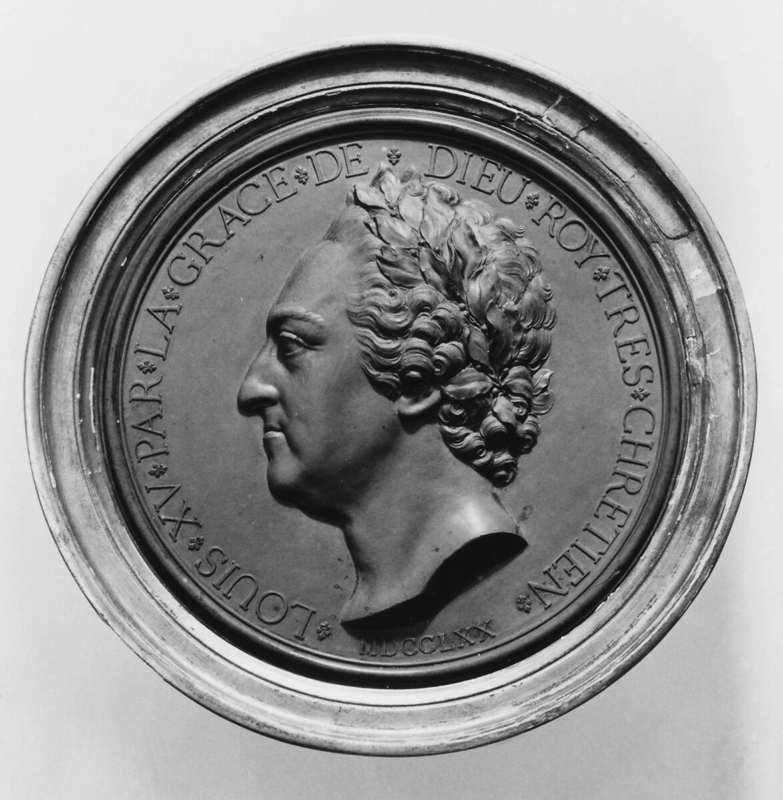
Still, the changes held together on paper. From a political standpoint, disaster unfolded without warning. A single misstep spiraled beyond control.
Now it became clear to thinking people: rule by kings served power, not fairness. Justice took a back seat when crowns held sway. Opinion shifted among scholars – loyalty to throne no longer meant loyalty to right.
What once stood beyond dispute now faced doubt. Authority cracked under new scrutiny. Belief in impartial reign faded fast.
V. War and the Loss of Meaning
The Seven Years’ War (1756–1763) altered the symbolic position of the monarchy more than its territorial losses.
France lost Canada and influence in India. But more important was perception: the state remained powerful domestically yet appeared ineffective internationally.
Previously, military success validated authority. Now, governance appeared disconnected from national prestige.
Political consequences of defeat
| Earlier wars | Seven Years’ War |
|---|---|
| Dynastic conflicts | Global conflict |
| Elite concern | Public concern |
| Limited news | Mass reporting |
| Royal glory | Administrative failure |
The monarchy could still rule — but no longer represent national destiny.
VI. The Court Without Function
Under Louis XV, Versailles kept its grandeur yet shifted function. Power took shape through ritual during the reign of Louis XIV.
During the reign of Louis XV, rituals continued even though they no longer held political importance. What made royal mistresses like Madame de Pompadour and then Madame du Barry stand out was never just power – they mattered more when it seemed hidden.
Though often seen at court, their sway gained weight through quiet moments behind closed doors. While kings held public authority, these women shaped decisions where records rarely reached. Because influence unfolded in whispers rather than decrees, perception shifted.
Not official roles, but personal access gave them prominence. Seen less as advisors and more as confidantes, they occupied a space that laws could not define. Their presence blurred lines between affection and politics. With status rooted in intimacy, scrutiny followed just as closely as favor.
Beyond royal courts, preference often meant proximity to power. Today, randomness seemed to echo through its actions. What counted wasn’t the uproar itself but how people understood it: closeness to the monarch now meant little about real influence.
VII. Fiscal Reality — The State That Could Not Explain Taxes
France in the eighteenth century was not uniquely poor nor uniquely taxed.
Its crisis was rationality.
The crown needed revenue for administration, army, navy, and debt from wars. Reform required taxing privileged estates. But privilege formed the social contract of the monarchy.
Thus the state faced a permanent contradiction:
| Requirement | Obstacle |
|---|---|
| Equal taxation | Privileged society |
| Central authority | Legal pluralism |
| Reform | Tradition |
| Modern state | Feudal legitimacy |
Ministers repeatedly attempted reform — Machault, Turgot, Maupeou — but every solution attacked the ideological basis of monarchy itself.
The crown was trapped in a system where survival required destroying its own foundations.
VIII. The King Nobody Hated — Then Nobody Defended
Starting out, Louis XV was called le Bien-Aimé – “the Beloved” – as he took the throne. A silence followed, unnoticed by most. The moment passed without comment.
It wasn’t his rule that failed, yet the throne lost its grip on people’s hearts. Some past rulers earned affection. Others inspired dread.
Louis XV faded into irrelevance. Fleeing public anger, the court departed Versailles soon after his death from smallpox in 1774. Still, people responded not with uprising but a subdued sense of ease.
Imagination slipped away long before loyalty did. Power held on tight – yet vision vanished quietly.
IX. Historical Interpretation — Not Failure but Transition
Modern historiography increasingly rejects the idea that Louis XV “caused” the French Revolution.
Instead, his reign represents a structural transition:
The monarchy evolved administratively toward a modern state
while society evolved intellectually toward political participation.
The two movements were incompatible.
Structural timeline
| Period | Monarchy | Society |
|---|---|---|
| Louis XIV | Personal | Hierarchical |
| Louis XV | Bureaucratic | Critical |
| Louis XVI | Constitutional crisis | Political nation |
The revolution did not begin in 1789. It began when authority required explanation.
Bridging two worlds, Louis XV’s reign connected the towering absolutism of his predecessor’s age to the crumbling monarchy that followed under his grandson.
Though dismissed during the Revolution as the height of excess and despotism, its role was structural rather than merely symbolic. Shifting slowly, it carried royal authority from sun-king spectacle toward revolutionary rupture.
Not ridicule alone defines it, but transformation masked by courtly routine. Underneath mockery lay a system adapting – too late – to pressures building across decades.
Far from a mere patron of the arts, he presided over a kingdom where thought flourished amid flourishing books, paintings, and discoveries. While not driven by deep personal interest, his reign saw Paris rise as the continent’s intellectual heart.
Lightness defined the age’s look – delicate curves, soft tones, an elegance that swept away the heavy grandeur of earlier decades. This fresh aesthetic, later named Louis XV style, spread quietly yet firmly into palaces beyond French borders.
Inside Versailles, he shaped the intimate Petits Appartements – his personal retreat – while also supporting large-scale projects such as the Panthéon, Trianon, École Militaire, and what is now known as Place de la Concorde.
Though thinkers like Montesquieu, Denis Diderot, Voltaire, and Jean-Jacques Rousseau advanced bold ideas during rapid cultural and scientific shifts, Louis XV remains recalled not for upheaval but quiet patronage.
His role during the Enlightenment, often understated, carried influence through calm support rather than spectacle; transformation unfolded quietly under his watch.
History holds him less as a driver of change and more as someone who allowed it space to grow. The era remade Europe’s intellectual landscape – even if his name does not lead the narrative.