
The Louis XV style of furniture is not only the expression of a decorative language but the physical embodiment of a new mode of existence: a society that has turned inward.
While the court of Louis XIV had dramatized the concept of power, the world of Louis XV had sought comfort, conversation, seduction, and psychological ease.
While Louis XIV furniture had imposed the concept of hierarchy through the use of geometry, Louis XV furniture had eliminated the concept of hierarchy through the use of fluid movement.
If we look at the winter inventories of the Palace of Versailles from the 1740s, we see the almost radical shift: the number of rooms increases, the size of the rooms decreases.
Instead of grand spaces designed to display the grandeur of the aristocracy, we see the invention of the concept of the cabinet, the petit appartement, the boudoir, the writing room, the conversation area, and the furniture that fits this new mode of behavior: chairs are lighter, tables are more curved, and the surfaces are designed to be touched rather than gazed at.
The change is not in the craftsmanship but in the function of the aristocracy.
From throne room to salon: the social revolution behind the curve
After 1715, French elite society was confronted with a paradox: absolutism was alive and well, but everyday life was no longer compatible with perpetual theatricality. Attendance at court was exhausting and had become overly theatrical. The French elite wanted intimacy, but not rebellion; they wanted relief.
Architecture was first to stimulate this desire. In Paris, mansions replaced enfilade interiors with modular space, curved walls, and soft corners, where movement was fluid rather than axial.
Furniture design was next to evolve in response to these new conditions.
Bilateral symmetry, so characteristic of Baroque-era furniture like the armchair, was socially impractical. It required a specific body position and forced speakers to rearrange seating. Flexibility, the capacity to adjust body position to angle, lean, whisper, and lounge, was highly valued by the emerging elite.
The answer had both practical and psychological components:
Curvature was key to behavior.
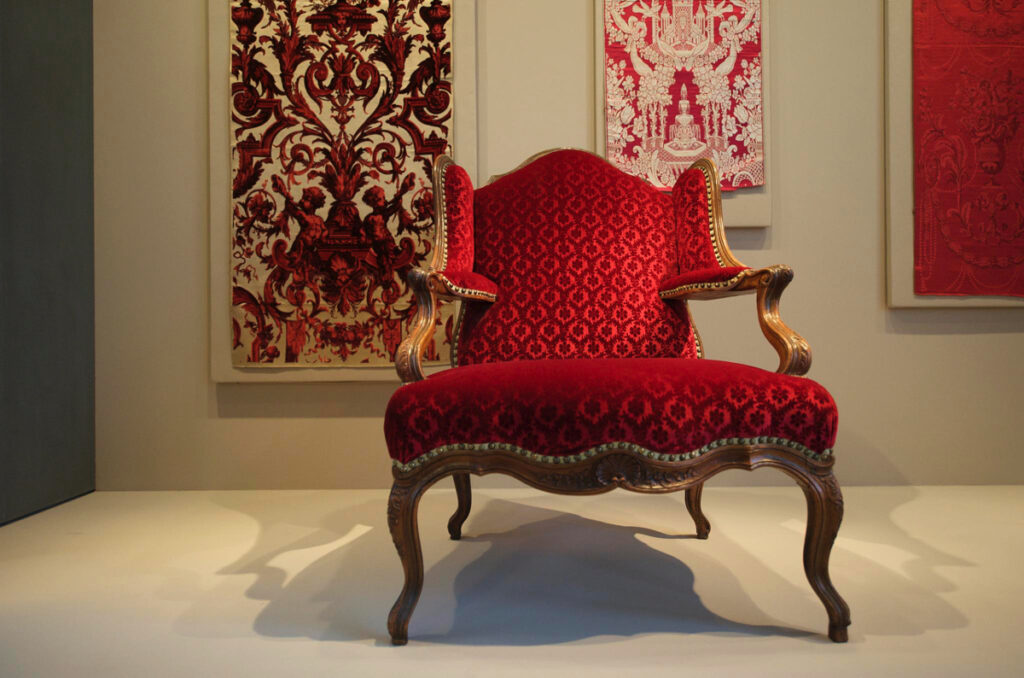
It was therefore no coincidence that the most distinctive feature of Louis XV furniture—the cabriole leg—appeared not as a cosmetic innovation but as a philosophy of furniture design. It was to accommodate movement in a society obsessed with ease. André-Jacob Roubo was to describe this new form of joinery as having been crafted to “follow the natural disposition of the body.”
Furniture was no longer subordinate to architecture but had become a partner to body position.
Louis XV furniture is particularly conspicuous to those who are interested in classical interior design and antiquarian appreciation, given its unique features such as irregularity of lines, dynamism of forms, and ornateness of motifs that are derived from nature.
To fully comprehend the unique features of this design movement, it is first important to place this movement within its general historical context.
This design movement began in France under the regency of King Louis XV of the Bourbon dynasty, which covered the period between 1720 and 1760. It was a movement that represented a revolution in interior design and decorative arts, a revolution that was so drastic that it defined subsequent design movements and started a movement in furniture design that has remained identifiable to this day.
Furthermore, the whimsical quality of this movement of interior design and furniture has an intimate connection to the period’s courtly manners, given that the fall of the aristocracy prompted the upper classes to seek solace from the harsh realities of the world through the pursuit of whimsy.
During the early to mid-eighteenth century, French nobles lived a “salon lifestyle,” and the furniture of this period was a reflection of their desires, wishes, and worldview: it was lavish and elegant with intricate details and an undertone of impermanence.
The disappearance of the straight line
One can identify louis xv furniture immediately by the absence of straight authority. Horizontal lines soften. Vertical dominance dissolves. Symmetry loosens without collapsing into chaos.
The aristocracy still valued order — but now organic order.
This aesthetic mirrored Enlightenment natural philosophy. Nature, in mid-18th century thought, was not wild but harmonious. Designers therefore imitated living growth rather than geometry. Wood appeared to sprout, stretch, and relax. Ornament resembled vegetation rather than military structure.
This is why contemporaries called the style goût moderne — modern taste — rather than Rococo, a later term derived from rocaille (shellwork).
The shell motif mattered because it symbolized irregular perfection:
structured asymmetry.
In louis xv furniture, decoration avoided domination. Ornament flowed around structure rather than covering it. Unlike Baroque furniture, where carving proclaimed power, here carving suggested ease.
Power was still present — but disguised as comfort.
The body enters design
Previous furniture designs were based on set etiquette, while Louis XV designs allowed for individuality.
The bergère armchair featured upholstered sides, which signified a major innovation. The piece enabled a person to sit comfortably while maintaining conversation without getting tired. The marquise chair also featured a wider seat to allow for elaborate dresses, which acknowledged the needs that courtly fashion presented.
These changes were quite substantial. They suggest that furniture makers were beginning to observe how humans behaved.
In other words, furniture came to be seen as a behavioral technology.
The development of various specialized tables also supports this transformation:
- Writing tables for letter writing
- Gaming tables for social interaction
- Dressing tables for intimate rituals
- Bedside tables for personal rituals
Each piece of furniture seems to reveal a new social activity. The boudoir table suggests a moment of solitary reflection, while the card table suggests a controlled competition. The toilette table suggests a construction of self.
Louis XV furniture is therefore a better reflection of a psychological history of aristocratic culture than any official records.
Women and the authority of comfort
One cannot understand Louis xv furniture without understanding female patronage.
Madame de Pompadour did not merely commission objects — she reshaped domestic space. Her apartments required furniture that allowed prolonged conversation and reading rather than display. Comfort became a marker of refinement rather than laziness.
Diderot later complained that modern interiors encouraged moral softness. His critique unintentionally reveals the cultural significance: interiors had become environments of thought, not ceremony.
Female sociability demanded flexibility. Chairs needed to move easily; tables had to serve multiple purposes; cabinets protected private correspondence. Furniture began supporting intellectual exchange rather than hierarchical observation.
In this sense, Louis xv furniture functioned as infrastructure for Enlightenment culture.
Ideas require seating.
Craftsmanship and illusion
The technical demands of this style required great skill. It was not possible to obtain sufficient pieces of wood from which curves could be cut without wastage. The craftsmen therefore developed new techniques in joinery, laminated bending, complex mortise work, and hidden supports. The apparent softness concealed a science of engineering.
Another style that was equally influential in its impact was the use of veneering.
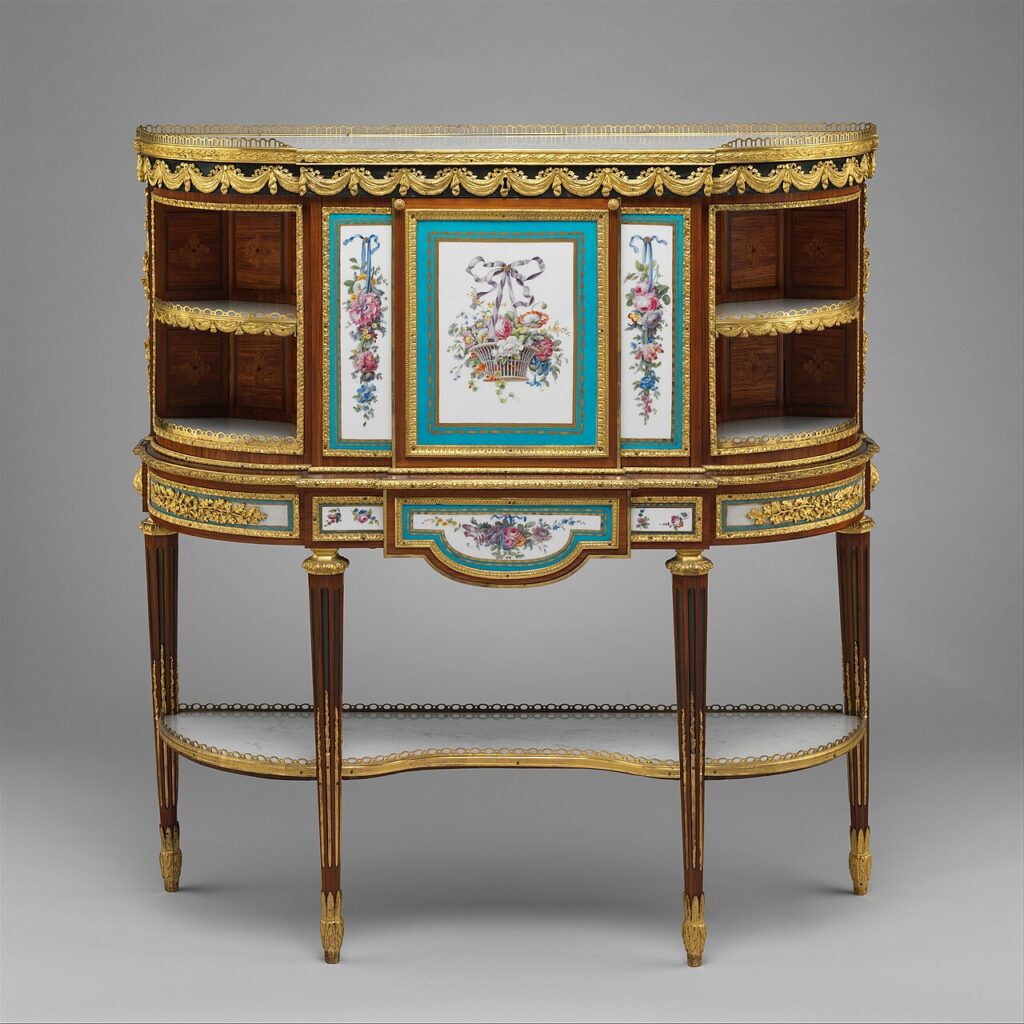
The use of exotic timbers, such as tulip wood, king wood, and amaranth, started the movement across surfaces, with the grain itself being used for decoration. The craftsmen did not attempt to impose any design on the wood, but rather left it in its natural state.
This resulted in the philosophical use of natural elements, where nature was domesticated and at the same time full of life.
The use of flowers or scenes in the marquetry work on Louis XV furniture reflected the ideal of the aristocracy, where civilization was tempered with comfort.
It is in this context that the cultural significance of Louis XV furniture is appreciated, where control is expressed in terms of natural movement.
Mobility and the theater of conversation
Earlier rooms organized people around rank. Louis XV interiors organized people around interaction.
Light chairs could be repositioned instantly. Guests formed conversational clusters. Seating orientation changed according to topic rather than hierarchy. The room became dynamic.
Furniture enabled social improvisation.
Memoirs of the Duc de Croÿ describe evenings where chairs were rearranged repeatedly as discussions shifted from politics to literature to gossip. The room behaved like a living organism.
Without louis xv furniture, such fluid sociability would have been physically impossible.
Furniture reshaped communication patterns — a rarely acknowledged but profound cultural transformation.
The pastoral illusion inside the city
Some of the furniture also has imagery that is rustic, such as carved leaves, caning, and light colors. This imagery did not represent rural living; instead, it represented a desire for its conceptualization.
As the aristocracy began living in Paris, surrounded by the complexity of the city, interior design responded with an illusion of peace. The furniture, therefore, became a portable countryside, an emotional haven.
The pastoral fantasy also functioned to reduce moral conflicts. The opulence of the furniture would be seen as harmless when associated with nature. The golden commode with floral patterns would imply relaxation, not domination.
Therefore, the furniture of Louis XV functioned on a psychological level, justifying privilege with harmony.
Criticism and moral anxiety
By the 1760s critics began attacking the very qualities once admired.
Diderot accused contemporary interiors of encouraging superficiality. The fluid forms appeared morally unstable compared to antique severity. Comfort suggested decadence; softness implied weakness.
Neoclassicism’s rise was therefore not just aesthetic but ethical. Straight lines returned as symbols of civic virtue. Geometry replaced intimacy.
The rejection of louis xv furniture marked a new political psychology: citizens rather than courtiers.
Furniture again reveals ideology. The shift from curve to column parallels the shift from aristocratic conversation to republican seriousness.
The sudden obsolescence of pleasure
What is remarkable is the speed of the change. Around 1770, elite taste pivots dramatically. Workshops adapt almost overnight. Cabriole legs straighten. Ornament becomes archaeological.
This abruptness indicates that the earlier style depended on a fragile social consensus. Once aristocratic legitimacy weakened, its furniture language lost meaning.
Louis xv furniture required belief in graceful hierarchy. Without that belief, curves appeared frivolous.
Objects rarely disappear because of aesthetics alone.
They disappear because the society that understood them dissolves.
Rediscovery and misunderstanding
The 19th century revived the style as nostalgic decoration. Yet revivalists misunderstood its purpose. They copied forms but not behavior. In bourgeois apartments, the furniture became ornamental rather than social.
Only modern social history restored its meaning: it was not decorative luxury but behavioral architecture.
Museums today display louis xv furniture under glass — ironically preventing the very interaction it was designed for. These objects demand presence: movement, conversation, touch. Seen statically, they appear delicate; used dynamically, they reveal intelligence.
They belong less to art history than to anthropology.
The psychology of softness
Ultimately, the style reveals a civilization negotiating contradiction:
Absolute monarchy with private individuality
Rigid hierarchy with conversational equality
Luxury with natural simplicity
Furniture resolved these tensions physically. The curved leg mediated authority and freedom. Upholstery softened rank without abolishing it. Ornament disguised structure without hiding it.
Louis xv furniture was therefore not excess but compromise — a society teaching itself gentleness.
Thus, the inhabitants of homes that utilize this design strategy combine the unique qualities of each piece of furniture with functionality, thereby creating elegant and durable spaces where each piece is made with exceptional craftsmanship.
The main areas in a Louis XV-style home feature the essential pieces previously discussed, namely the desks, dressing tables, and commodes, which are the building blocks of this style.
These pieces also have the ability to fit in well in multiple locations. The desk, for example, will fit well in a study or home office, but its airy design also allows it to fit well in a living room or entryway.
The dressing table is most appropriate in the bedroom, where it will serve the function of a vanity, but also serve as a space where private activities like writing letters will take place. The commode, originally intended for the bedroom, will fit well in any space, thereby becoming the quintessential versatile storage space.
Conclusion: a civilization seated comfortably before its crisis
By the eve of the Revolution, France possessed the most sophisticated domestic culture in Europe. People knew how to inhabit rooms with ease, elegance, and intellectual vitality. Ironically, the same refinement that enriched conversation weakened theatrical authority.
When politics demanded severity, comfort lost legitimacy.
The graceful curve of louis xv furniture thus marks a moment when power preferred persuasion to display — a fragile equilibrium that history would soon shatter.
Furniture rarely predicts revolutions.
Yet here, in carved wood and woven cane, one can feel the final decades of a world convinced civilization meant living beautifully together.
Furniture in the Louis XV style is noticeable to fans of classic interior design and lovers of antiquity because of characteristics such as uneven lines, lively shapes, and the use of ornate designs inspired by the wild forms of nature.
In order to really understand its special features, however, it is necessary to go back a bit and explore the background first.
This design movement originated in France during the regency of King Louis XV of the Bourbon dynasty. This period lasted from 1720 to 1760. This period marked a revolution in the history of interior design and the world of decoration in general—a revolution so radical that it defined the whole of what followed and launched a furniture design movement that is still immediately recognizable today.
One should also note the way the whimsical atmosphere of these works relates directly to the courtly attitude of the period: the aristocracy being out of favor, the upper class escaped the harsh realities of the world through the pursuit of whimsy.
In the early to mid-1700s, French nobles adopted a “salon lifestyle,” and the furniture of this period reflected their desires, tastes, and worldview: luxurious and elegant with intricate touches, but with a hint of impermanence.