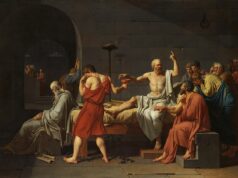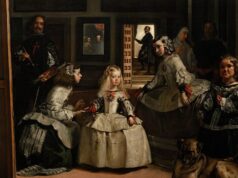

Built for display, the 1700s bedchamber began life far from secluded. At Versailles under Louis XIV, it thrived as spectacle – a stage where morning routines and nightly rest transformed into acts of power.
Yet by the early years of his successor, quiet shifts remade its role in ways barely noticed, though deeply felt. Rooms closed. Doors multiplied.
Furniture started holding quiet, rather than drawing eyes. Inside the Louis XV bedroom, a bed was never just furniture.
Privacy shaped how rooms were arranged. Every piece – like the bed, small cabinet beside it, low table near the wall, or even a writing desk – showed a shift. Aristocrats began valuing quiet moments more than public view. Today’s ornament was then a tool for living differently.
The bed: from stage to shelter
Earlier royal beds stood on platforms beneath canopies, visible to visitors and court officials. The eighteenth-century version shifts position. The louis xv bed becomes smaller, lighter, and angled into corners rather than centered like a throne.
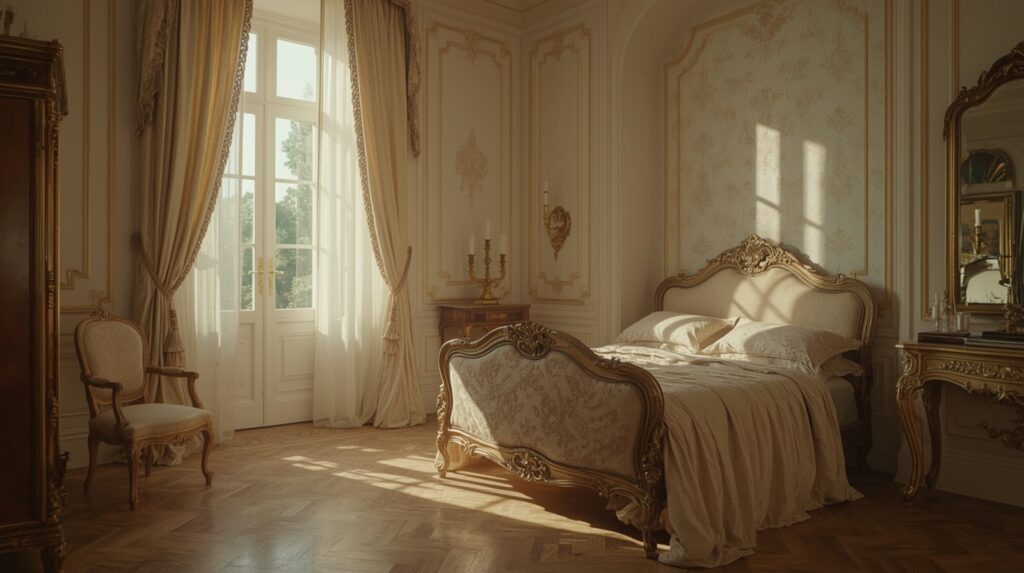
This change tells us more than any diary entry: sleep was no longer a spectacle.
Forms of Louis XV beds
| Type | Description | Social Meaning |
|---|---|---|
| Lit à la duchesse | Full canopy attached to wall | Semi-private ritual |
| Lit en alcôve | Recessed into niche | Protected intimacy |
| Lit de repos | Daybed for reading | Rest without ceremony |
The curve of the headboard mirrors chairs of the same era — the body now dictates furniture, not etiquette. The louis xv bed does not elevate the sleeper; it encloses them.
Nightstands: the invention of personal routine
A quiet shift marks the emergence of the Louis XV nightstand. Only after nighttime routines turn personal does it appear. Not before.
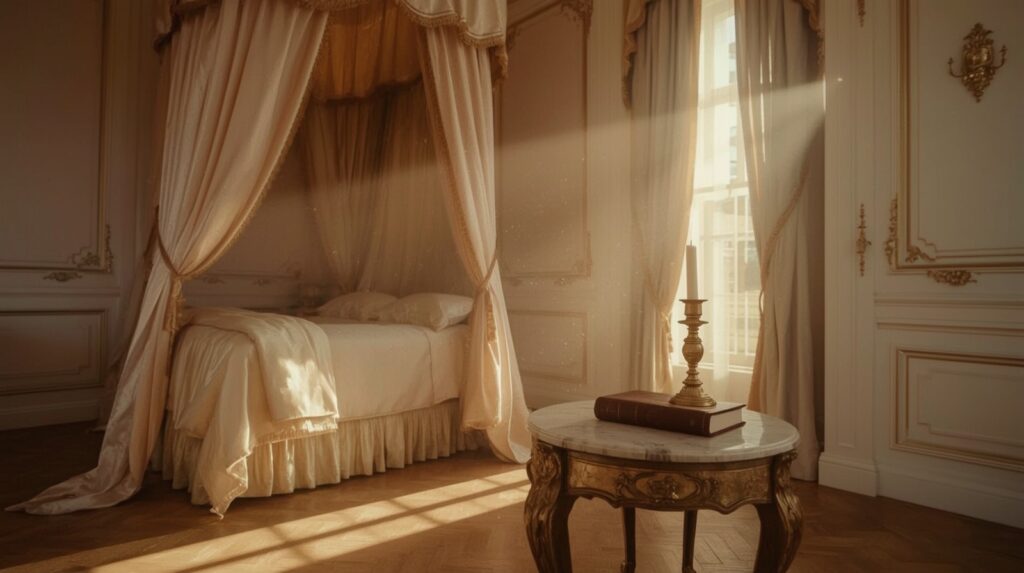
Items like candles, books, water, and letters begin to gather nearby – each suggesting time alone. Solitude becomes tangible through such things.
Back then, helpers took care of these tasks. Today, everything stays just a hand away.
| Feature | Practical Function | Cultural Meaning |
|---|---|---|
| Small drawer | Personal items | Ownership of routine |
| Marble top | Candle safety | Nighttime autonomy |
| Compact height | Reach from bed | Comfort prioritized |
The emergence of the louis xv bedside table marks the acceptance of uninterrupted sleep — a surprisingly modern idea.
The dressing table: identity under construction
Becoming central during the 1700s, the dressing table reflects a change – appearance turns inward, less about display, more about self-making. Rather than rely on attendants to finish their look, people take part directly in getting ready.
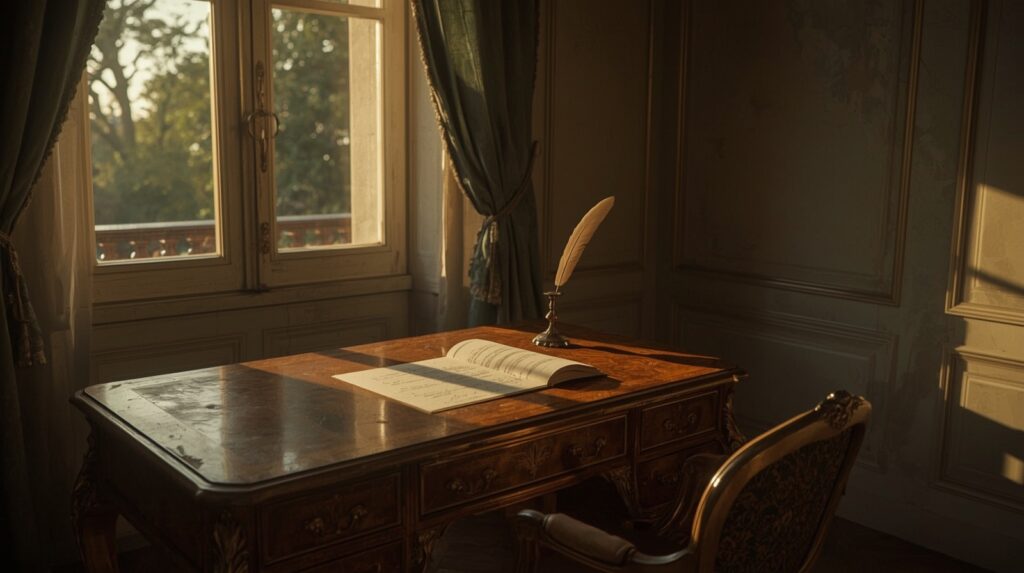
Space feels wider because of mirrors. Inside, storage hides in layers – each tucked beyond the next. Materials give slightly when touched.
The bedroom becomes workshop of the self.
Layered powders sit beside letters, makeup next to rings, all arranged on one surface. Identity stacks up like objects on a dresser. This piece of furniture holds more than items – it shapes who we see in the mirror.
Not about pride, but choosing what parts show. Each object placed there adjusts the version presented to the world.
Writing in private: the louis xv desk
Perhaps the most radical object in the bedroom is the louis xv desk. Writing moves from administrative duty to private reflection. Letters, thoughts, and drafts belong to the individual.
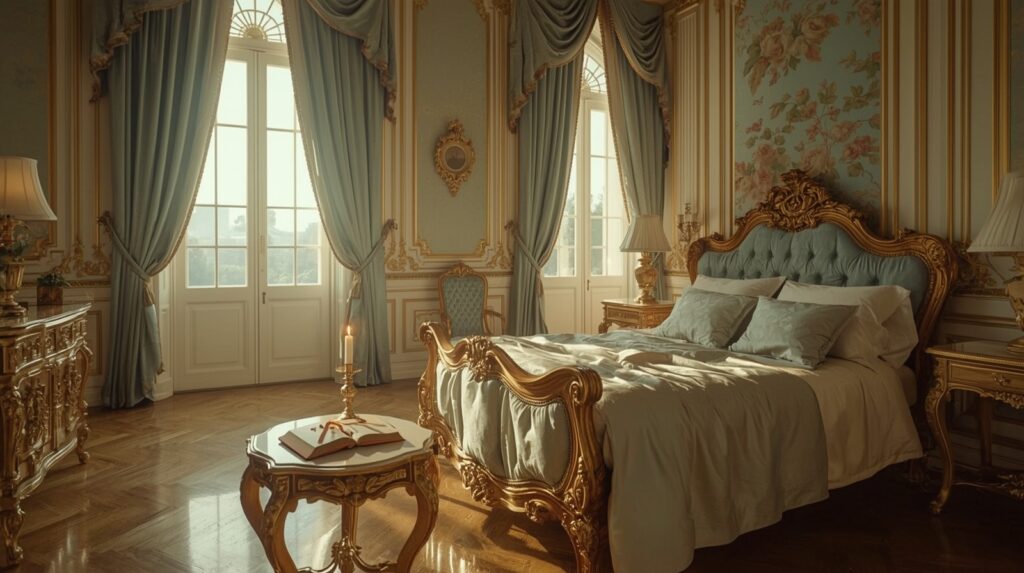
Small desks appear beside windows rather than halls of administration. The body turns away from the room and toward paper.
Types of writing furniture
| Desk Form | Purpose | Behavioral Change |
|---|---|---|
| Bonheur-du-jour | Personal correspondence | Private communication |
| Secrétaire abattant | Hidden compartments | Confidentiality |
| Small writing table | Casual notes | Everyday thought |
The presence of a louis xv desk in a bedroom suggests a society discovering interior dialogue — thinking without audience.
Coordination rather than sets
Later on, spaces grew more consistent – yet earlier ones stayed uneven by design. Instead of sameness, pieces connected through balance and subtle echoes.
Though a bed could feature distinct carving work compared to its nearby table, their shapes bent along similar lines.
This openness mirrors how people adjusted their lives. Instead of rigid rituals, daily patterns bent easily as needed.
Materials and atmosphere
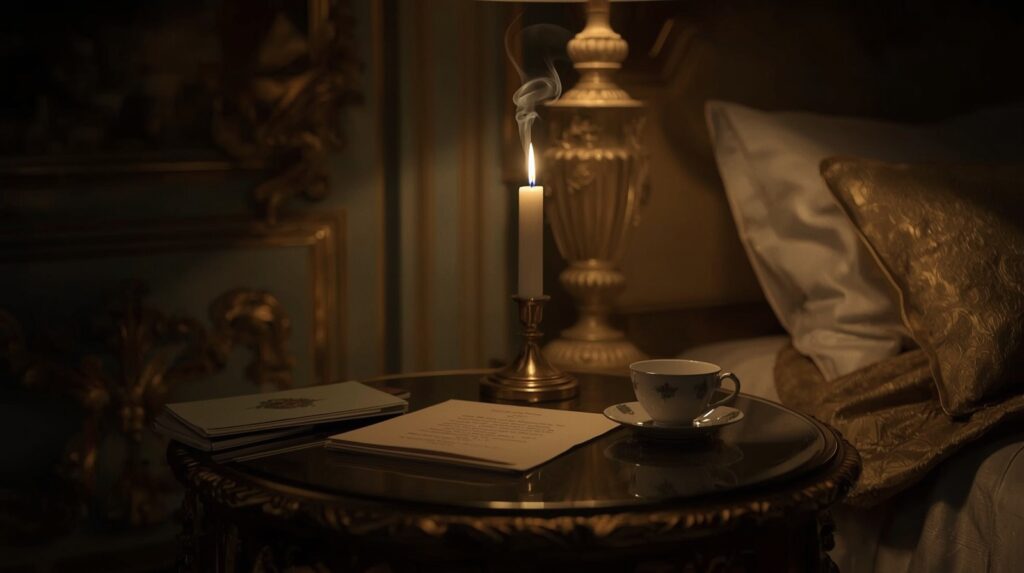
Bedroom furniture used lighter woods and softer finishes than reception rooms. The aim was calm continuity rather than brilliance.
| Material | Effect in Bedroom |
|---|---|
| Fruitwood | Warmth |
| Light walnut | Quiet elegance |
| Upholstery | Acoustic softness |
Decoration withdrew from authority and approached comfort.
A room invented around the individual
The louis xv bed pairs with the louis xv nightstand, while the bedside table stands close to the desk, shaping a space that feels whole. When sleeping flows into reading, then writing follows without disruption, each act recognizes the other as part of one life, not fragments managed by different hands.
What you get isn’t stated; it’s provided. Privacy shows up through delivery, never announcement.
Inside these walls, routine unfolds unseen by others. A room sets the pattern for private living spaces today.
This space marks a shift – life happens here quietly, away from watching eyes.
Beyond mere function, sleeping chambers gained a new grace under Louis XV’s influence. Furniture ensembles emerged, each piece shaped by delicate curves and quiet charm.
These groupings flowed together through refined detail rather than rigid symmetry. A softer rhythm defined the room’s character, shifting away from formality. Elegance arrived not in grand statements but in subtle balance and gentle lines.
Built-in cabinets, low chests, or writing desks – when grouped thoughtfully – shape a quiet cohesion within the sleeping space. A sense of closeness emerges through matching forms, drawing the room inward.
Instead of scattered furniture, deliberate pairings invite calm. These items, aligned by design, soften boundaries between function and comfort. The result feels tucked away, almost private, like a personal retreat shaped slowly.
From stiff frames, beds transformed – taking shape as flowing forms swathed in rich cloth. During this time emerged a lifestyle shaped by beauty, where homes, furnishings, ornaments, yet materials blend seamlessly, offering ease alongside pleasing sight.
Among those who shaped ornate design, Charles Cressent led with fluid curves while Jean-François Oeben brought precision through intricate marquetry. Though differing in method, Juste-Aurèle Meissonnier unified form and flourish in equal measure. Across borders, this aesthetic found echo – its essence lived in swirling rock-like patterns rather than symmetry.
Instead of balance, it favored whimsy: scenes of imagined Chinese courts appeared on cabinets and walls. Even quiet countryside vignettes gained prominence, rendered with gentle lines. Not rigid order but movement gave it voice.
Boucher, known for his ornate flair, brought fresh intensity to decorative painting through bold hues. Meanwhile, Oudry – master of still life – pushed boundaries by redefining texture and tone in everyday scenes. Together, their innovations shifted how color functioned within functional art forms.
Vibrancy became central, not just an accent. Their work echoed beyond canvas into design and craft realms. Influence spread quietly, without fanfare, altering visual expectations.
A blend of Far Eastern elegance took root in French tradition, reshaping European forms through subtle intricacy instead of bold repetition. While old patterns faded, new details emerged – quietly at first – drawing lines from distant shores into familiar silhouettes.
Fueled by bronze artisans such as the Caffieri, furniture craftsmanship advanced rapidly – Saint-Antoine’s wood ateliers shaping pieces of quiet refinement. While metal experts laid foundations, carpenters elevated form with subtlety and precision.
Their combined efforts birthed designs where material dialogue defined elegance. From workshop clusters emerged objects both sturdy and graceful. These makers favored balance over spectacle, letting proportion speak.
Each creation reflected collaboration, yet stood distinct in its calm authority.
Louis XV bedroom furniture does not simply represent Rococo taste. It records the birth of personal time. Each object reduces dependence on ceremony and increases independence of routine.
When doors close and objects remain within reach, society has quietly changed.
The eighteenth century did not invent individuality — it gave it furniture.