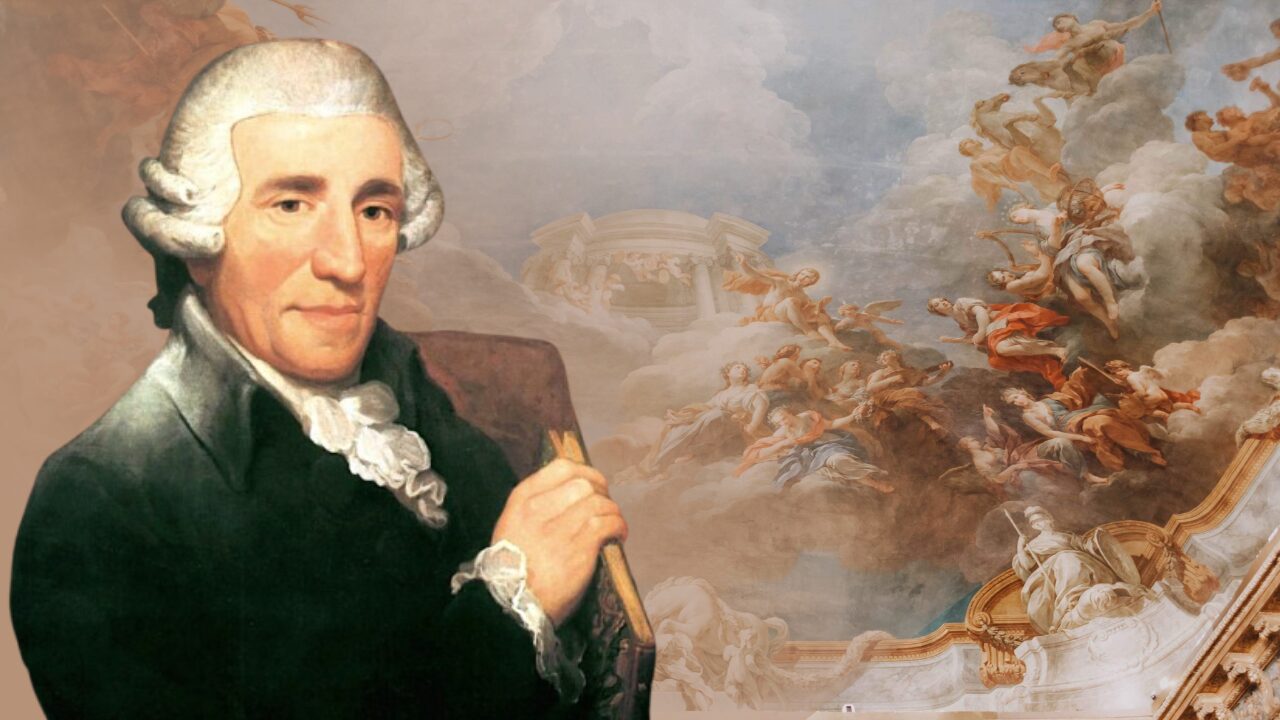
When we talk about Joseph Haydn in recent music history, we tend to scold him inside the narrative of sound: the symphonies, the quartets, form, structure, the father of the quartet, the architect of the symphony. But in his own century he was not most heard of in public concert halls. He was most lived with.
He was in interiors.
His music was not born in the democratic ticket stock culture that would come to define Beethoven’s age. It lived in rooms , salons, chambers, private theaters, galleries, libraries, and reception halls , spaces configured to stabilize the aristocratic life after the emotional chaos of the Baroque.
The Classical era was not just the simplification of musical order after Baroque complexity.
It was also a spatial simplification.
Music, architecture, furniture, etiquette and light were now reorganized for legibility.
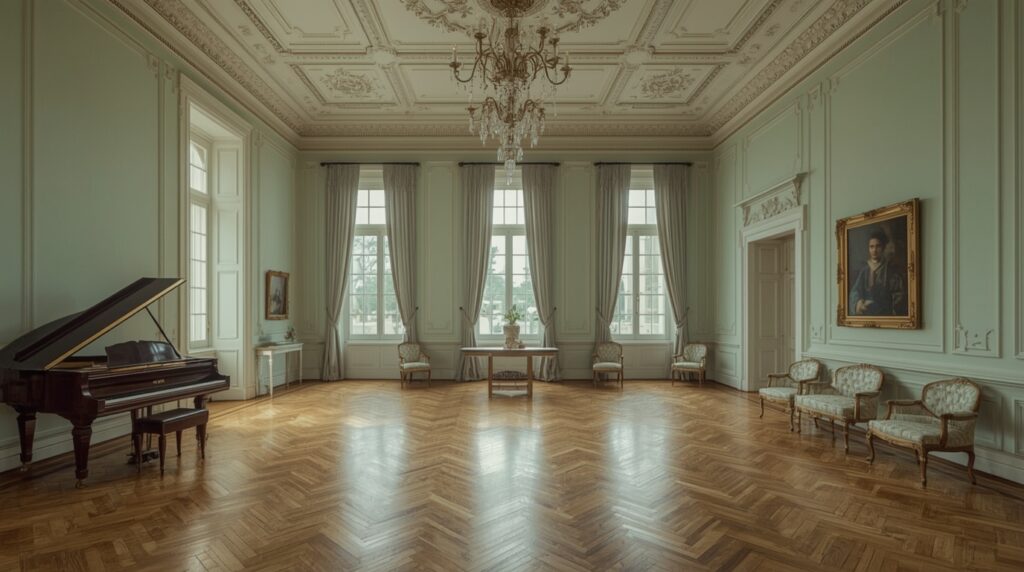
So, in that sense, Haydn’s music was not just the sonic expression of the late 18th-century interior: the pale wall, the symmetrical moldings, the orderly placement of furniture, the polished parquet floor and the hierarchical order of rooms that governed both movement and feeling.
The sonata form was not made up in abstraction. It reflects the layout of an Enlightenment house.
The Esterházy Palace as a Laboratory of Classicism
Haydn worked for the Esterházy family for almost 30 years—at their main estate in Hungary, Schloss Esterháza. The estate was, essentially, a first-of-its-kind, controlled ecosystem, in which architecture, manners, music and daily cycle were harmonized.
Later composers might have traveled from patron to patron, but Haydn dwelled within one aesthetic system. The palace itself was a practice space.
The Enlightenment elite feared turmoil more than beggarliness.
It all had to be knowable in a glance.
A Haydn movement is exactly like a visitor visiting a well-designed home:
recognition, exploration, return.
That’s why Haydn’s music feels “comfortable” rather than confrontational. It’s not trying to overwhelm. It’s trying to manage perception.
| Architectural Feature | Social Function | Musical Equivalent in Haydn |
|---|---|---|
| Entrance hall | Orientation and introduction | Exposition theme |
| Central gallery | Social circulation | Development section |
| Private chamber | Reflection and intimacy | Second theme |
| Ballroom | Formal resolution | Recapitulation |
| Garden axis | Perspective and closure | Final cadence |
Classicism as Emotional Temperature Control
The curtain was raised as you entered a Baroque interior, and you were plunged into a theater of heavy drapes, violent contrasts, deep shadows.
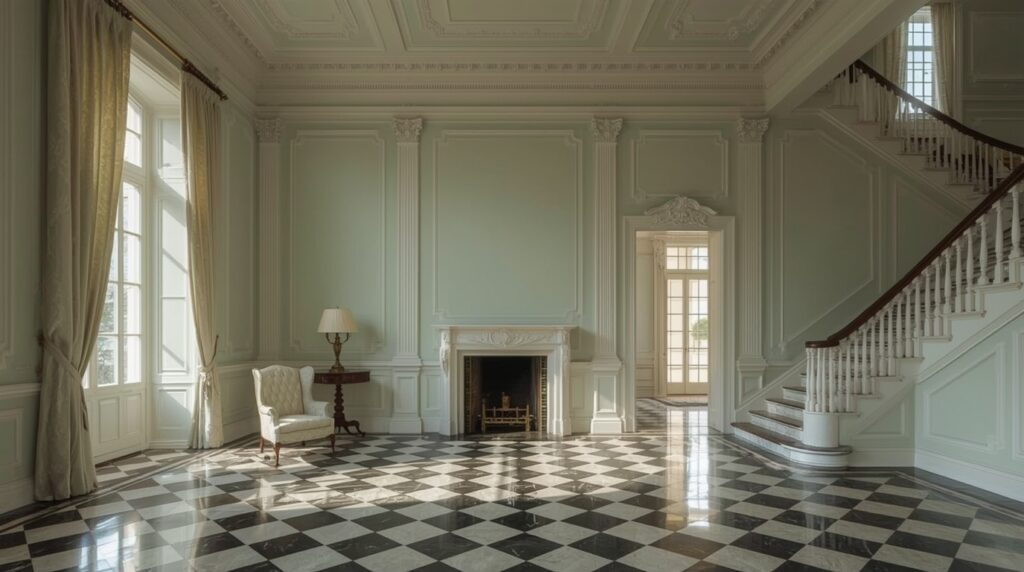
A Classical interior cooled emotion.
You were not to be excited but balanced.
Haydn’s harmonic language reflects the same psychological intent: a sea of predictability with tiny waves. The listener’s cognitive self-esteem should be raised, not threatened.
The Enlightenment aristocracy wanted to believe the world was a rational place. Haydn offered them proof they could hear. Haydn’s musical jokes — the sudden silences, the false endings — work because they happen inside a system the listener trusts. The house is stable; therefore, a door slamming becomes funny rather than frightening.
| Element | Description | Psychological Effect |
|---|---|---|
| Pale wall panels | Cream, light green, pearl gray | Mental clarity |
| Symmetry | Mirrored doors and windows | Stability |
| Lightweight furniture | Cabriole legs, small scale | Social flexibility |
| Daylight emphasis | Tall windows, minimal drapery | Transparency |
| Measured ornament | Decorative but repetitive | Predictability |
The Piano Sonata as Domestic Technology
Fortepiano popularity turned the home into a venue. Haydn’s piano sonatas were not written for virtuosic display but for educated participation.
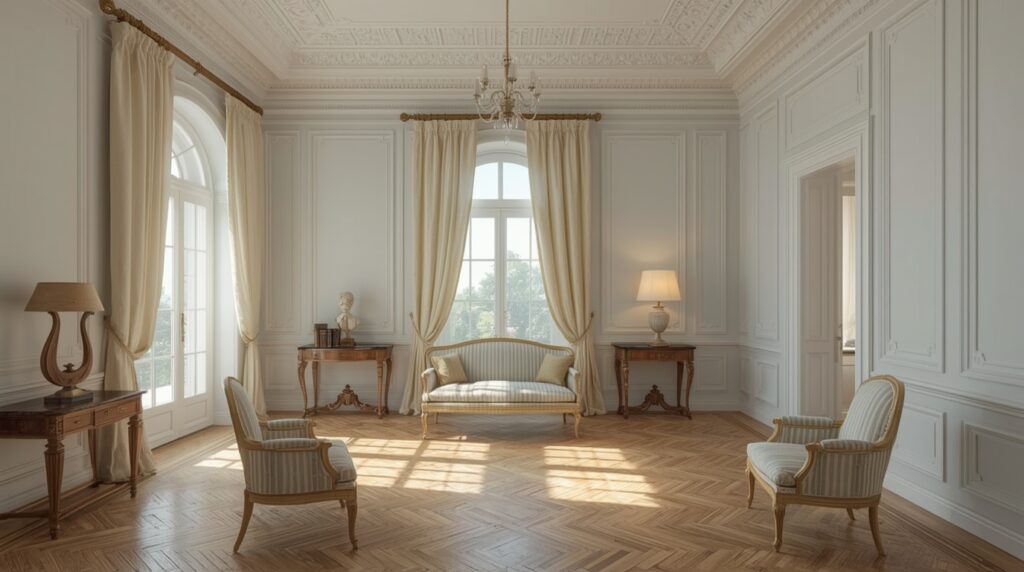
Late 18th-century salon performance demanded music that was:
Not too hard
Not too easy
Formally sophisticated enough to impress
Playable enough for the average musician
The piano sonata was soon to become furniture.
Having a keyboard in one’s home meant owning a piece of cultural legitimacy. Playing Haydn on that keyboard was an exercise in intellectual discipline, not emotional exhibitionism.
Early fortepianos’ dynamic range corresponded to the dimensions of the room. The sound decayed rapidly, encouraging separated and clear phrases. Textures avoided excessive density, which would be muddied in a small acoustic.
The music obeyed the architecture.
Whereas Romantic piano writing strains to expand beyond the room, Haydn accepts the spatial constraints and writes within them.
Joseph Haydn and The Creation: Cosmic Order Indoors
At the beginning, The Creation oratorio seems to be completely different from Haydn’s style. It talks about big themes such as universe, chaos and God.
But the work actually became well-known not from being played in a religious setting, but from being performed in the tidy indoor venues that were common in Enlightenment concert societies.
The oratorio doesn’t focus on the chaos. It focuses on the arrangement. After chaos, everything is made into their own categories: light, water, animals, humans and rank.
So at that time, the listener probably didn’t see it as a religion piece, but saw it as a sign that proved the universe was actually logical. Like a detailed gallery exhibit, where every panel inside shows the universe has a structure.
Just as big paintings from a myth story that telling the truth hung on the wall in a room at the palace, Haydn made the sound organized in a way to comfort the audience’s mind.
| Stage in The Creation | Narrative Meaning | Cultural Meaning |
|---|---|---|
| Chaos | Unknown world | Pre-scientific fear |
| Light | Knowledge | Enlightenment reason |
| Animals | Taxonomy | Classification culture |
| Humans | Social order | Hierarchy legitimized |
| Praise | Stability | Political reassurance |
Social Behavior Inside Haydn’s Sound World
Music zipped lips. In Haydn’s era, people didn’t just listen. They chatted, strolled, and watched. The music set the rhythm for how one acted, not a vision of how one ought to worship. Too earth-shattering a composition would have breached etiquette, if not faith.
Haydn mastered neutral engagement—fixated, but never invasive.
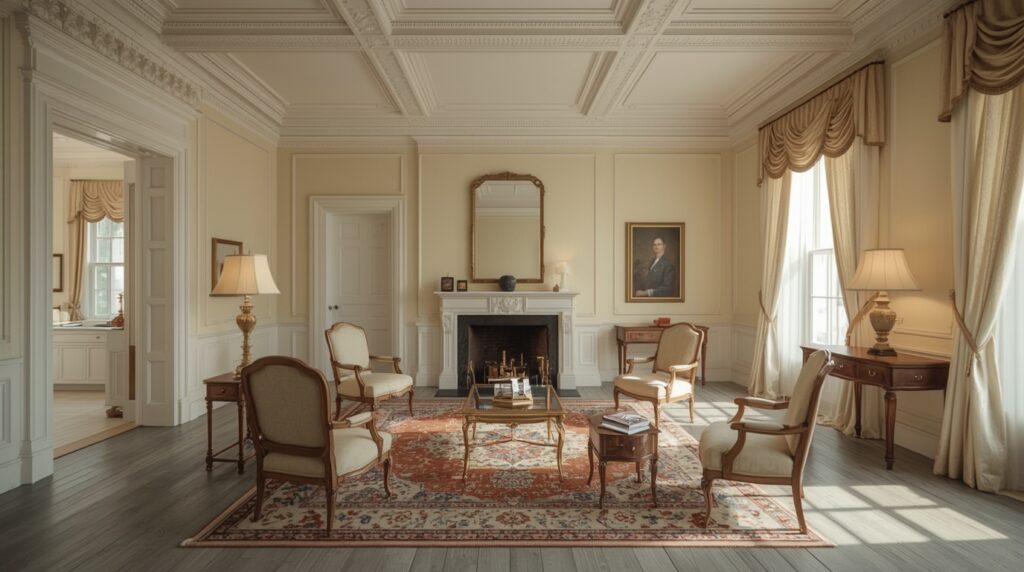
That explains the speed of his music: seldom too fast or too slow, rarely unwavering or stagnant. It’s always on the move, but rarely in a hurry. It’s conversation, not conversion. Confounding, but true: the point of it all was not to get blissed out.
It was to get along. When trying to identify a bona fide Classical-era interior, as in ancient or connected to Haydn’s culture sphere, collectors and restorers should look at proportional reasoning, not decorative content.
Clues to look for:
Wall panels that reflect the rhythm of the windows
Ornament that’s repeated rather than escalated
Furniture scaled for conversational, not subservient, distances
Paint colors paler than natural wood tone
Mirrors used to create symmetry, not illusionistic grandeur
Ceiling height: moderate, not theatrical
Musical instruments integral to the furniture plan
Baroque rooms perform power.
Classical rooms perform reason.
Haydn has business only in the latter.
Restoration and Collector Guidance
Haydn-period interior restoration involves not succumbing to the Romantic urge to dim the lights, add mystery, and splash gold leaf around – typical modern restoration errors that actually undermine authenticity.
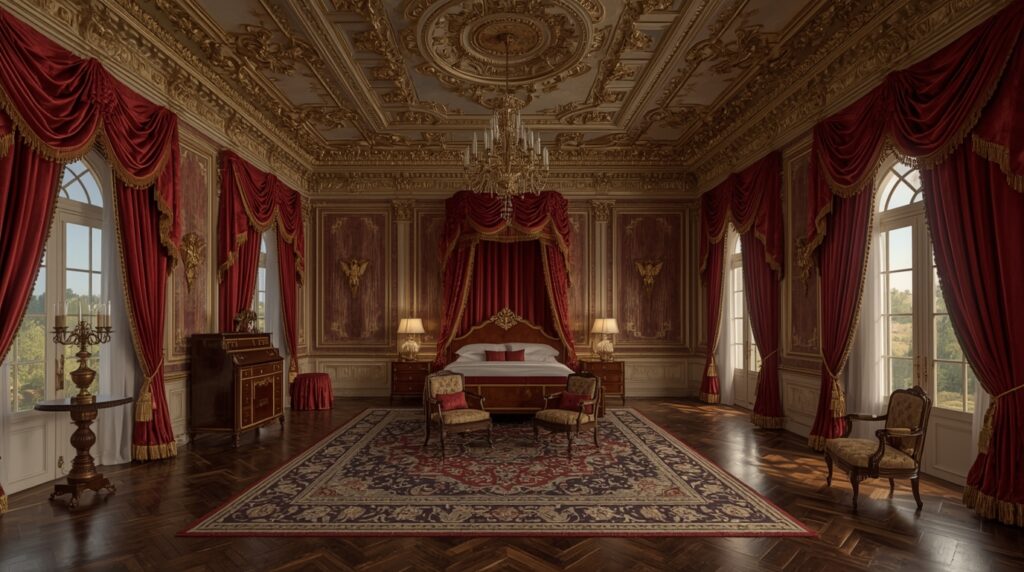
A true Classical space rests on a foundation of visual serenity.
Restoration recipe:
let daylight reign
eschew high-contrast upholstery
choose matte over gloss
respect acoustic clarity (wood underfoot, few carpets)
avoid putting the piano on the room’s central axis; honor the window wall
The room and the music have to get along. A plush, textile-heavy environment stifles the rhythmic transparency that makes Classical phrases work. The function of a composer is fundamentally altered by Beethoven: composer as hero.
Haydn: composer as function.
His role was environmental, not autobiographical.
The Enlightenment wasn’t yet interested in confession. It wanted to believe that society could be understood, predicted.
Haydn’s triumph is rooted in serving a collective psychological need: the reassurance that order is possible, and pleasurable.
The home, not the stage, was this theory’s proving ground.
| Indicator | Authentic Period | Later Revival |
|---|---|---|
| Ornament depth | Shallow | Deep carving |
| Wall color | Pastel mineral | Dark oil paint |
| Musical stand wear | Functional scratches | Decorative unused |
| Room acoustics | Bright | Dampened |
| Furniture spacing | Conversational | Display oriented |