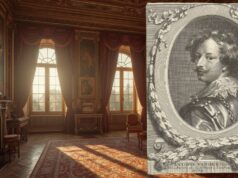
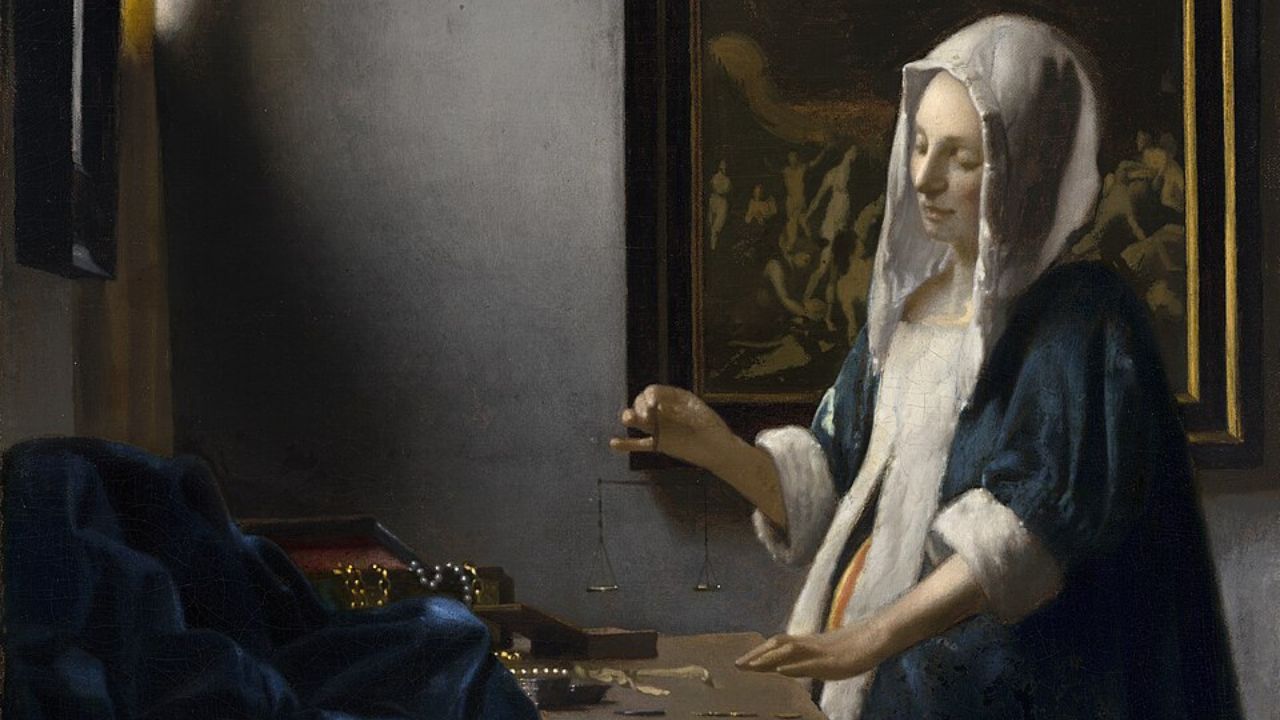
Perhaps not incidentally, Johannes Vermeer feels frighteningly contemporary: an indoor tableau of quiet dark-of-light broken by a spotlight; the figure lost in thought. The 1660s cannot be very far away. But the intimacy only intensifies. During the Dutch Republic‘s Golden Age, Vermeer painted sparsely but gave the world some of the most beloved paintings to be found, shimmering with inner life and light. Vermeer‘s paintings are no snapshots of comfy homemakers but masterfully composed meditations on light, place and purpose, grounded in 17th century Delft, studied and preserved by the world‘s most respected institutions and conservators.
Vermeer in the Dutch Golden Age: Delft, Patronage, and Reputation
Johannes Vermeer (1632–1675) came from Delft, a bustling metropolis in the Province of Holland, during the Dutch Golden Age when global trade was blossoming, scientific exploration was in full swing, and the art market was booming. The city‘s society influenced Vermeer‘s subject matter. His paintings depict domestic scenes of home, letter-writing, music-making, and the everyday practices of an affluent merchant class. In contrast to their counterparts elsewhere in Europe who worked for royal patrons, Dutch painters often produced works for private buyers. Vermeer painted for this class, producing art that was deliberate in its composition, morally ambiguous, and precisely detailed.
Vermeer became a member of Saint Luke‘s Guild of Delft the professional guild for painters and others who work with paint. Being a member was important: the guild regulated the process of artist‘s education and the sale of artwork. It also introduced painters to wealthy art patrons, and Vermeer‘s career seems to be built on relationships with local patrons. Pieter van Ruijven is usually cited by historians as the most significant patron, potentially purchasing a large portion of Vermeer‘s work. This access to patronage might have helped Vermeer paint very slowly and carefully he was only able to complete about three dozen works accepted today.
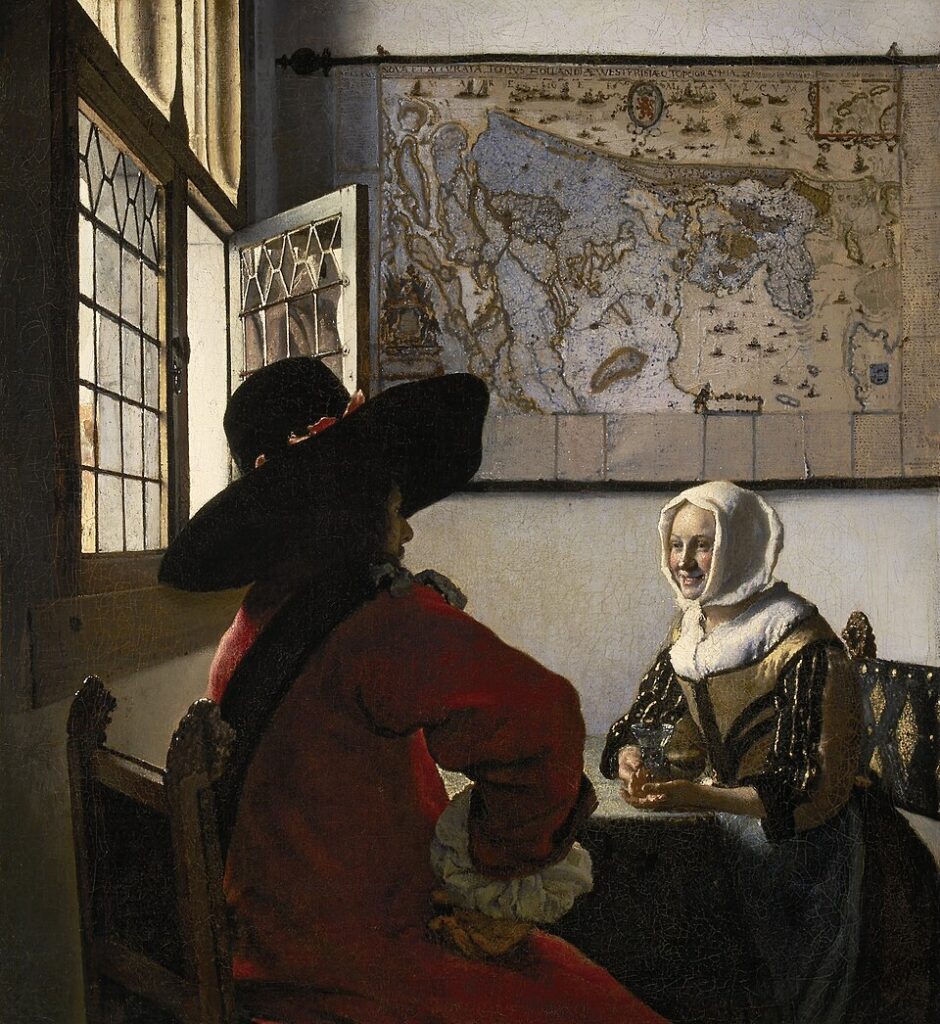
While talented, Vermeer wasn‘t the Rembrandt-like household name “brand” in his lifetime. After his death, economic hardship within the home and changing taste led to him being forgotten and eventually “rediscovered” 19th-century scholarship and collecting. Museums like the Metropolitan Museum of Art (New York), the Louvre Museum (Paris), and Dutch museums continue to shore up Vermeer‘s status with exhibitions and extensive cataloging/conservation research clarifying attribution and technique.
Light, Composition, and Technique: What Defines Johannes Vermeer Art
The signature of Johannes Vermeer art is light—specifically, daylight entering from a side window and dissolving edges into a soft, optical shimmer. He orchestrated tonal transitions so that surfaces feel both exact and alive: satin glints, bread crusts scatter crumbs, pearls catch a tiny highlight. The Metropolitan Museum of Art, which houses Young Woman with a Water Pitcher (c. 1662), emphasizes Vermeer’s “extraordinary sensitivity to light and atmosphere” in his interiors—an effect built from layered paint handling and careful tonal relationships rather than showy brushwork.
Vermeer’s compositions are equally deliberate. He often places a figure near a table in the foreground, with a map, painting, or mirror on the back wall to create depth and thematic resonance. The geometry feels stable—rectangular windows, tiled floors, framed pictures—yet never rigid, because light and texture soften the structure. His frequent use of ultramarine (derived from lapis lazuli, an expensive imported pigment) is a technical and economic clue: even in modest scenes, Vermeer invested in materials that amplified chromatic depth, especially in blues and cool shadows.
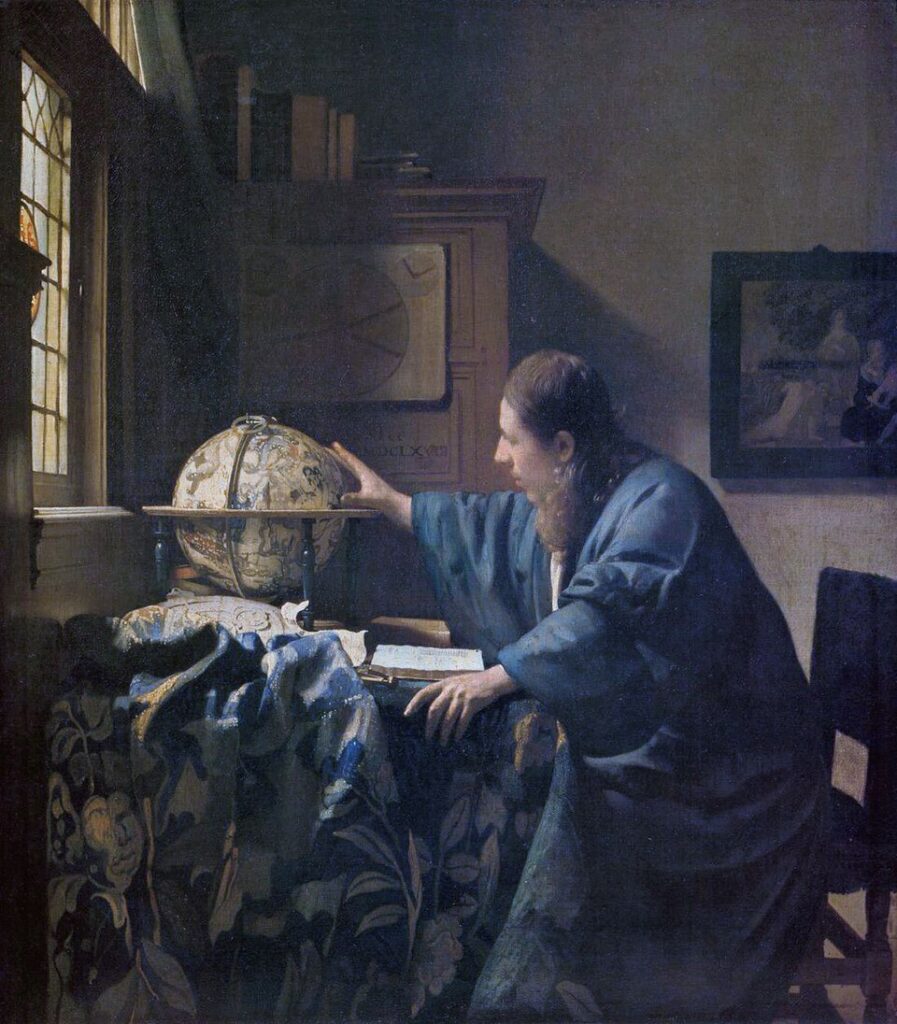
A recurring scholarly question is whether Vermeer used a camera obscura—a device that projects an image onto a surface—to study optical effects. Many specialists consider it plausible that he used such tools as aids, not replacements for skill. The look of “circles of confusion” (soft, lens-like highlights) in passages of his paint has fueled this debate. However, the broader consensus in museum contexts is cautious: optical devices may have informed his seeing, but the artistry lies in how he translated observation into a composed, meaningful image.
Key characteristics of Johannes Vermeer art (summary table)
| Characteristic | What it looks like | Why it matters |
|---|---|---|
| Controlled daylight | Window light from the left; soft gradients | Creates psychological calm and realism |
| Domestic interiors | Middle-class rooms, everyday actions | Reflects Dutch Golden Age private life |
| Geometric composition | Tiles, frames, tables, maps | Builds depth and narrative structure |
| Rich pigments (e.g., ultramarine) | Saturated blues, cool shadows | Signals material investment and color mastery |
| Quiet narrative | Letter reading, music, household tasks | Invites interpretation without overt drama |
| Meticulous surface | Textures of bread, cloth, metal, pearls | Shows technical precision and optical sensitivity |
Masterpieces and Where to See Them: Museums, Provenance, and Scholarship
Because Vermeer produced so few paintings, each surviving work carries outsized importance—and institutions treat them as keystones of 17th-century European art. The Metropolitan Museum of Art’s Vermeer holdings provide direct access to his interior world, while the Louvre Museum preserves The Lacemaker (c. 1669–1670), a small canvas celebrated for its astonishing intimacy and concentration. That painting’s scale is part of its power: viewers must step close, mirroring the absorbed attention of the sitter.
Museum scholarship adds authority not only through labels but through technical study—x-radiography, infrared reflectography, pigment analysis, and conservation history. These methods reveal changes in composition (pentimenti), underlayers, and material choices, helping establish attribution and workshop context. Such research is essential because Vermeer’s rarity has historically encouraged misattributions and forgeries. Today, museums and research consortia use shared technical standards to refine catalogues raisonnés and ensure reliable public knowledge.
Vermeer’s place in art history is also clarified through comparison. The Victoria and Albert Museum (London), while not primarily a Vermeer-holding institution, contextualizes Dutch domestic culture and material life—textiles, maps, instruments—that appear in Vermeer’s scenes. Similarly, Smithsonian Institution resources on scientific instruments and optics illuminate the 17th-century environment in which devices like the camera obscura were known. This institutional ecosystem—fine art museums, decorative arts collections, and scientific archives—helps explain how Vermeer’s “quiet” pictures are deeply connected to a broader historical world.
Quotes and Credible Sources (for further reading)
The Metropolitan Museum of Art (Heilbrunn Timeline of Art History and object entries): research on Dutch Golden Age painting and Vermeer’s technique and context.
Source: https://www.metmuseum.org/Louvre Museum (collection entry for The Lacemaker and Dutch painting context).
Source: https://www.louvre.fr/Victoria and Albert Museum: Dutch decorative arts and domestic interiors that contextualize Vermeer’s objects and settings.
Source: https://www.vam.ac.uk/Smithsonian Institution: background on optics, instruments, and 17th-century scientific culture relevant to camera obscura discussions.
Source: https://www.si.edu/
Authoritative quote (museum-based framing of Vermeer’s significance):
- The Metropolitan Museum of Art describes Vermeer’s interiors as distinguished by exceptional subtlety of light and atmosphere (see the Met’s collection and essays on Vermeer and Dutch genre painting).
- The Louvre Museum presents The Lacemaker as a pinnacle of intimate genre painting, emphasizing its concentration and refined execution (see Louvre collection materials).
Frequently Asked Questions (FAQ)
1) What is Johannes Vermeer best known for in art?
Vermeer is best known for serene domestic interior scenes painted in the Dutch Golden Age, defined by controlled daylight, meticulous texture, and quiet psychological presence—seen in works such as Girl with a Pearl Earring (in The Hague), The Milkmaid (Amsterdam), and The Lacemaker (Louvre).
2) How many paintings did Vermeer make?
Only a small number survive—commonly around 34–36 works accepted by many scholars—making each painting unusually significant for museums and collectors.
3) Did Vermeer use a camera obscura?
It is plausible he used optical aids, and some visual effects in his paintings resemble lens phenomena. However, museum and scholarly discussions generally treat the camera obscura as a possible tool rather than a proven explanation for his artistry.
4) Why is Vermeer’s use of blue so striking?
Vermeer often used ultramarine, an expensive pigment made from lapis lazuli imported into Europe. Its depth and clarity contribute to the cool luminosity of his shadows and garments.
5) Where can I see Johannes Vermeer art in major museums?
Notable works can be seen at The Metropolitan Museum of Art (New York) and the Louvre Museum (Paris), among other international collections. Institutions such as the Victoria and Albert Museum and the Smithsonian provide rich contextual material on the objects, interiors, and scientific culture reflected in his paintings.
Johannes Vermeer art endures because it transforms ordinary life into a disciplined study of light, perception, and human interiority. Rooted in 17th-century Delft and refined through exceptional technique, his paintings reward slow looking—exactly the kind of attention they depict. Thanks to ongoing museum research at institutions like The Metropolitan Museum of Art and the Louvre, Vermeer’s small oeuvre continues to yield large insights into the Dutch Golden Age and the timeless craft of seeing.