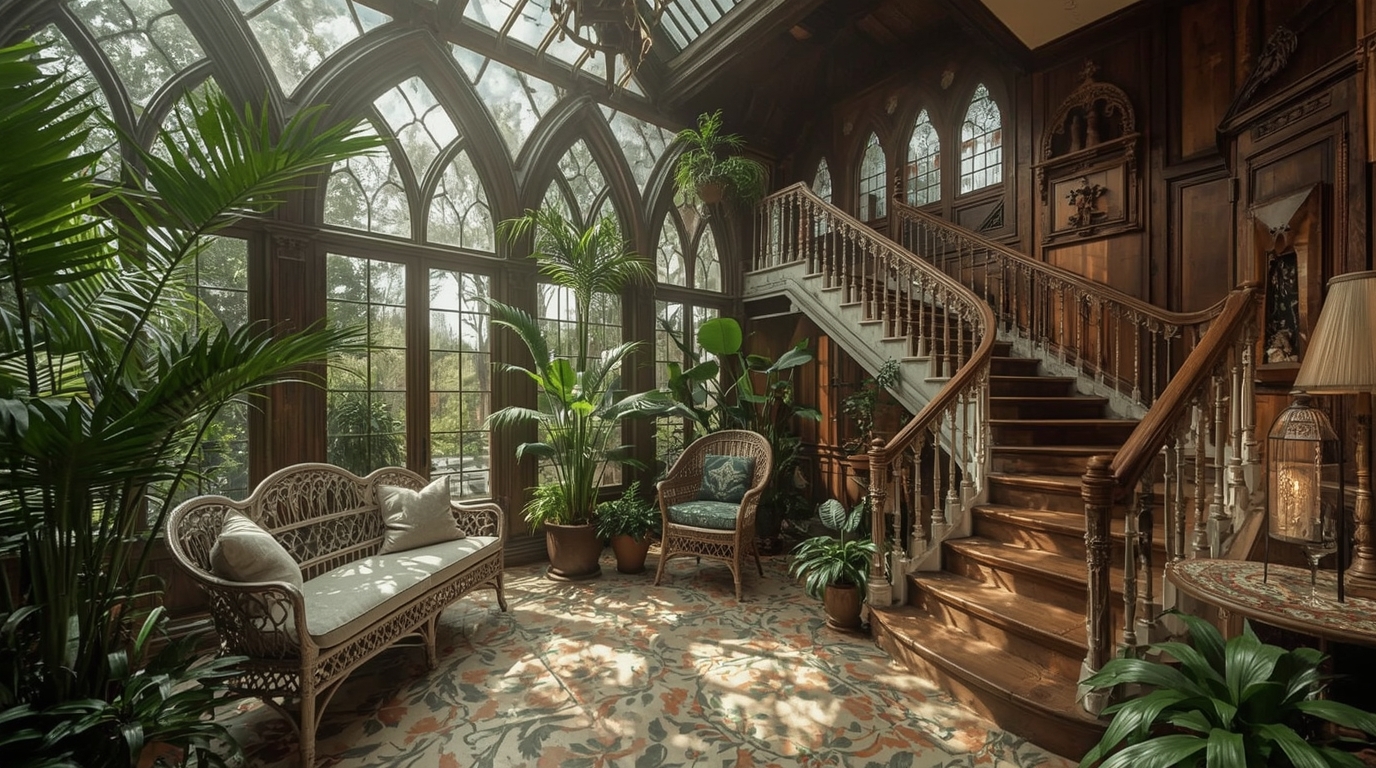
Buildings were constructed more quickly in the nineteenth century than in any other period, but many of its residents were afraid that speed would erode meaning.
New cities grew mindlessly, factories standardized items, and railroads reduced distance. As a result, some households opted for an alternative architectural language that rejected immediacy instead of embracing it.
This cultural hesitancy gave rise to the gothic Victorian-style home, which offered a residence that seemed older than its own construction and, thus, more stable than the surroundings.
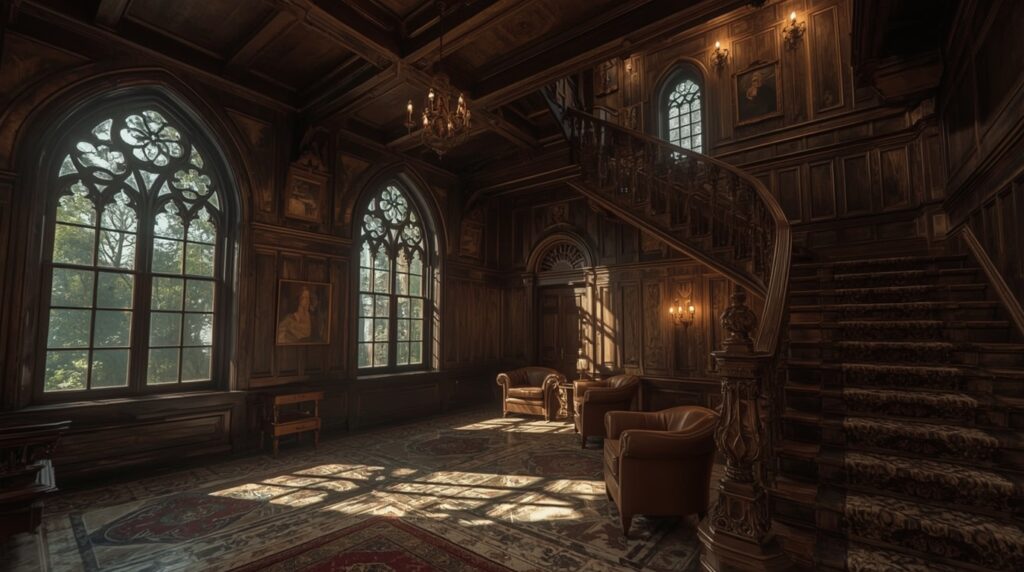
It was the atmosphere, not the size, that overwhelmed when one entered such a home.
Windows appeared narrower than anticipated, walls thicker than necessary, and rooms arranged for progression rather than visibility. The design promoted deliberate movement.
The goal was not nostalgia but psychological balance. If industrial life accelerated action, the home would restore reflection.
Origins of the Gothic Victorian Style House
In the nineteenth century, a reimagining of medieval architecture gave rise to the gothic style Victorian home. Previous buildings, according to writers and designers, combined structure and meaning.
The focus changed from historical accuracy to moral continuity when these concepts were incorporated into domestic architecture. A home should serve as a reminder to its residents that life is more than just practical needs.
With the widespread circulation of pattern books, families were able to add vertical proportions, textured materials, and pointed gables to their modest homes.
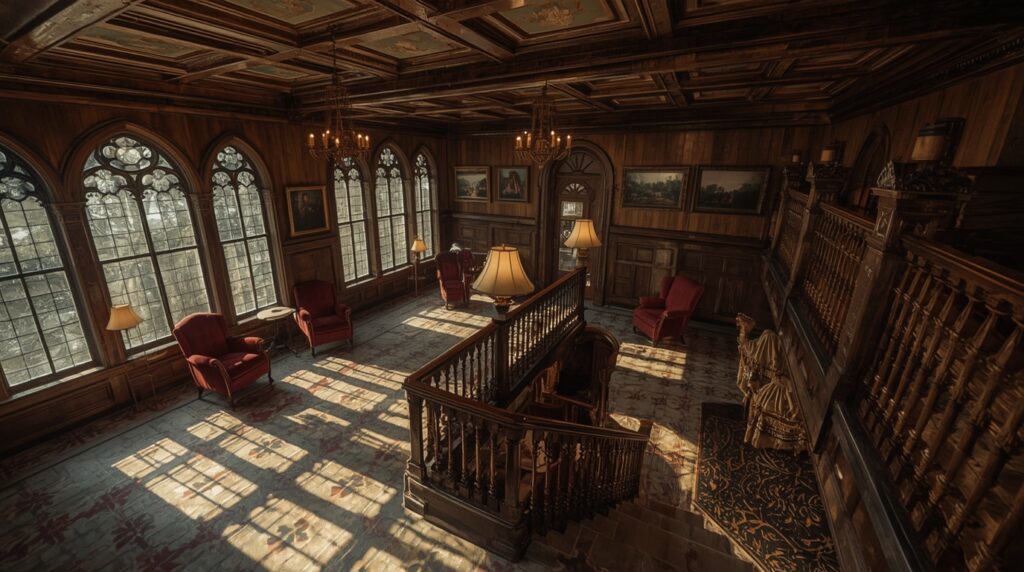
The end effect was a universal architectural language that could be used in suburban villas as well as on urban terraces. Instead of replicating castles, builders designed spaces that suggested perseverance and attention to detail. In an unstable time, the house turned into a stabilizing structure.
| Social change | Architectural response |
|---|---|
| Mechanized production | Visible craftsmanship |
| Rapid communication | Quiet interior zones |
| Expanding cities | Defined private rooms |
| Bright artificial light | Filtered natural illumination |
Structure and movement in a victorian gothic house style
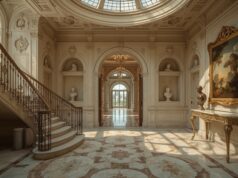
The Victorian Gothic house style arranged rooms in a sequential fashion, in contrast to later open plans. The visitor was gradually introduced in the entry halls. Public and private activities were divided by corridors. In the household, staircases served as symbolic transitions between social levels.
Behavioral awareness was developed by the arrangement. Studies felt different from bedrooms, and conversation rooms different from study spaces. Without specific guidance, architecture itself promoted proper behavior. Spatial design gave daily routines a sense of rhythm.
| Element | Experience created |
|---|---|
| Vestibule | Pause before entry |
| Corridor | Adjustment between activities |
| Bay window | Reflective observation |
| Stair landing | Mental transition |
Materials and the language of permanence
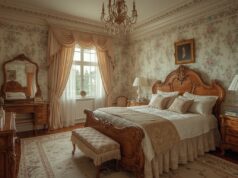
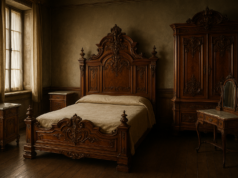
Time-recording materials were used in the gothic Victorian-style home. Uniform brightness was resisted by heavy textiles, patterned tile, dark timber, and iron fittings.
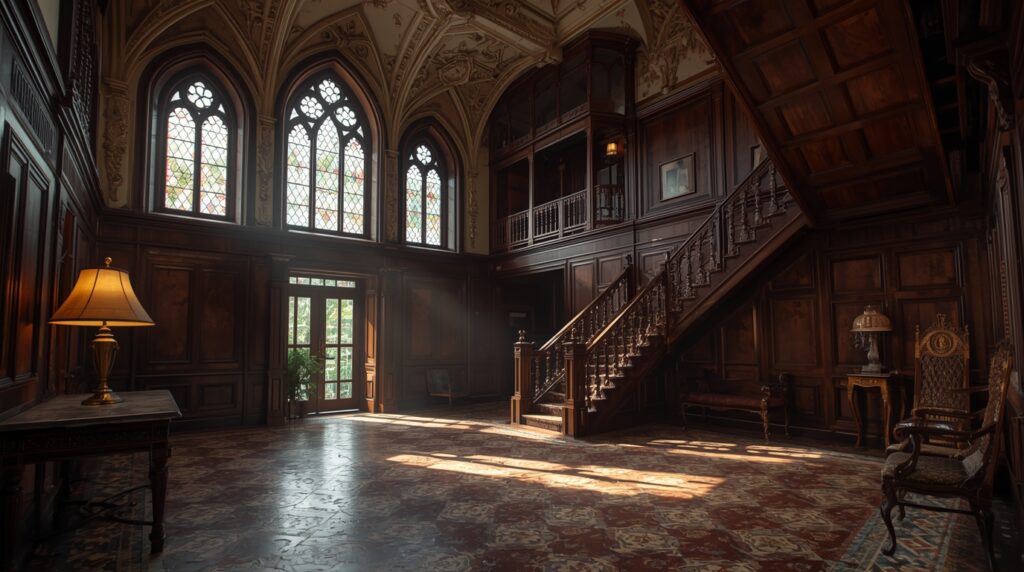
Rather, they absorbed light, creating layered perception all day long. Instead of being brand-new, the interior seemed timeless, allowing residents to feel like they were a part of a continuous story.
The focus of contemporary reproductions is frequently solely on decoration. Real-world examples show structural connections. Circulation directs movement, light fluctuates gradually, and materials exhibit depth as opposed to a consistent finish.
Experience, not ornament density, is what defines authenticity.
| Indicator | Authentic example | Decorative imitation |
|---|---|---|
| Lighting | Graduated brightness | Even dimness |
| Layout | Layered progression | Single open space |
| Materials | Natural texture variation | Painted uniformity |
| Furnishing | Functional grouping | Display arrangement |
Adapting the victorian gothic house style today
Don’t over-brighten historic properties. Preserve contrast and visible age. Don’t remove patina, replace textured glass or uniform overhead lighting.
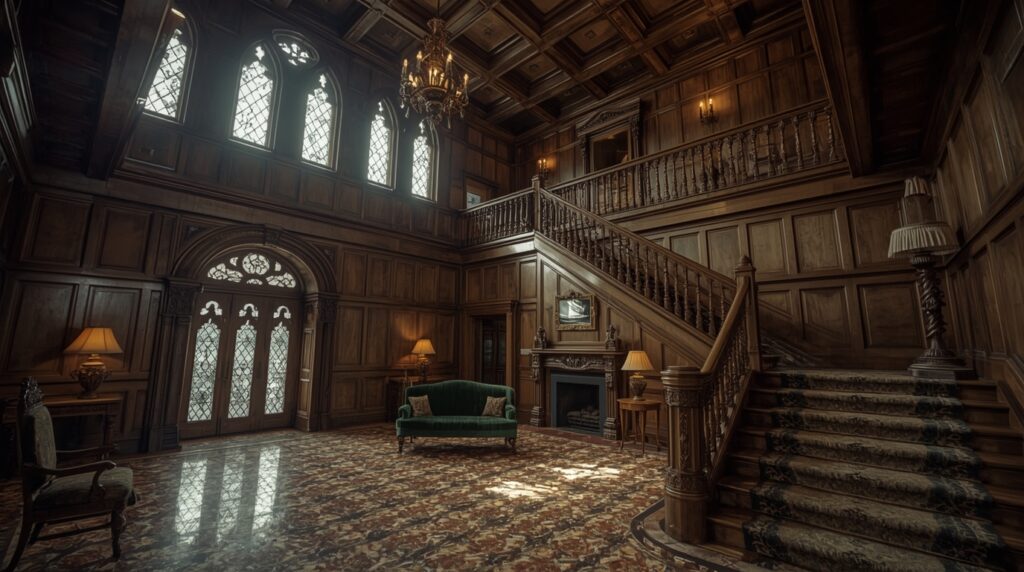
Once you erase the character of the space you erase the spatial experience. Don’t create furniture sets that match perfectly if you can help it. Traditional interiors developed over time. The key is joint materials, not joint designs. Replacing original hardware is often less conclusive than repairing.
How historic houses used layered lighting?
In historic houses, layered lighting acted as a sophisticated adaptive system that reflected practical concerns of economy and safety but also signified social meaning, so interiors were not simply illuminated but transformed through the day.
From the flame , railways, and lamp light , hearths and kitchen ranges produced low, warm illumination that underscored communal life and artfully anchored its center.
Fixed lights, placed in wall sconces and candelabra lifted light to standing height, so dwellers could move through corridors and encounter architectural features, such as doorways, staircases, and likenesses upon which the like the great man were painted, perfectly lit.
The third layer of light was supplied by handheld candles, chambersticks, and oil lamps, which individually could be crated to produce temporary private zones of illumination, for reading, prayer and bookkeeping, or holding pleasure-courts: in effect, light followed activity and status. Chandeliers were more ceremonial than functional; they lit dinners, receptions, and other gatherings but left the surrounding space relatively dim, attracting attention to people rather than objects.
This careful use of light illuminated surfaces that extended scarce brightness in many ways. Polished pewter, glassware, and pale limewash reflected flicker, creating movement in the room without excessive fuel consumption, and mirrors multiplied firelight, lending an animated character to spaces.
And darkness was also a feature of interior life: it maintained ratio, hidden unfinished corners, prevented the hazards and costs of maintaining flame everywhere, and nevertheless signified intimacy.
Private spaces in nineteenth century homes
Nineteenth-century homes saw a significant change in the concept of private spaces, signalling a dramatic contrast between what existed previously and what was emerging in terms of the importance of self-identity and individualism.

This allowed for parallel shifts in the morality of the bourgeois and the demarcation between public and personal worlds and as such, unlike the homes of previous centuries that boasted large rooms that could be used for multiple activities and dominated the daily existence of the home, the nineteenth-century ushered in interiors that had specialized spaces according to the activity they were associated with, such as the study, boudoir, nursery, dressing room and personal bedroom,with the specialized spaces evolving their own meaning.
With the idea of privacy being both a comfort and a sign of social status and etiquette, corridors replaced enfilades, doors acquired locks, and service circulation routes were separated from the main living areas, so that the domestic order could seem effortless.
Gender roles dictated the specialized meaning that was attached to the spaces, and while the study of a gentleman was associated with authority and withdrawal, reasoning and intellectual labour, it also evolved into a space that was highly individualized with the personal effects of its occupant. Books, papers and specialized instruments could be found alongside heavy desks and chairs, wall mounted collectibles and abject memorabilia.
The study was also differentiated from the rest of the house with darker colors, heavier finishes, books and art-filled built-ins and more masculine materials such as leather, stained wood, and bronze or gilded metal hardware and accessories.The boudoir on the other hand suggested a controlled personal domain of a different kind, associated with the lady of the house.
A private area in which to write letters, play music, attend to self-presentation and hold private conversations–often with intimate friends of the same gender and class–the boudoir retained as much of its association with sensuality as was possible in an age preoccupied by rigid sexual codes and moral respectability.
But it too transformed, following the example of bedrooms, into psychological interiors filled with photographs, memorabilia collections, and reading material, as well as the clothing, furniture, and specialized accessories that typified the late nineteenth-century obsession with the accumulation of personal property.
Conclusion
The gothic victorian style house is a domestic philosophy made of a rapid social change. Through a vertical composition, a sequential order and durable material it nurtured a sensitivity at daily life.
The gothic style victorian house and its derivatives offer a counterbalance of the speed of the new day, even if architecture can guide perception as it does shelter activity.
The victorian gothic house style is mainly significant not only for its decoration but because it is still powerful to change the routine life into a reflective experience.