
Clarity often seems guaranteed by a house. With windows stretching sightlines, lighter wall colors, also reduced clutter guiding movement – routine slips smoothly inside such rooms.
Still, during the 1800s, an alternate vision held ground beside it: comfort drawn from closeness instead of airiness. Gothic interiors emerged less as defiance of elegance, more like shelter built for lives growing restless, hurried, too visible.
Then again, certainty rarely fits one shape. Light poured from factories and workshops, yet purpose did not follow.
Night vanished under gaslight, quiet gave way to printed pages, while machinery hid how things were made. In response, homes began to change shape.
Spaces grew dimmer, textures turned dense, layouts unfolded slowly. Stepping inside felt like pausing time just beyond the door.
This wasn’t just dramatic shadow.
Inside, the gothic design shaped how one moved through days. Steps slowed, voices dropped, routines deepened. Instead of comfort, it offered attention – a home where small acts felt charged.
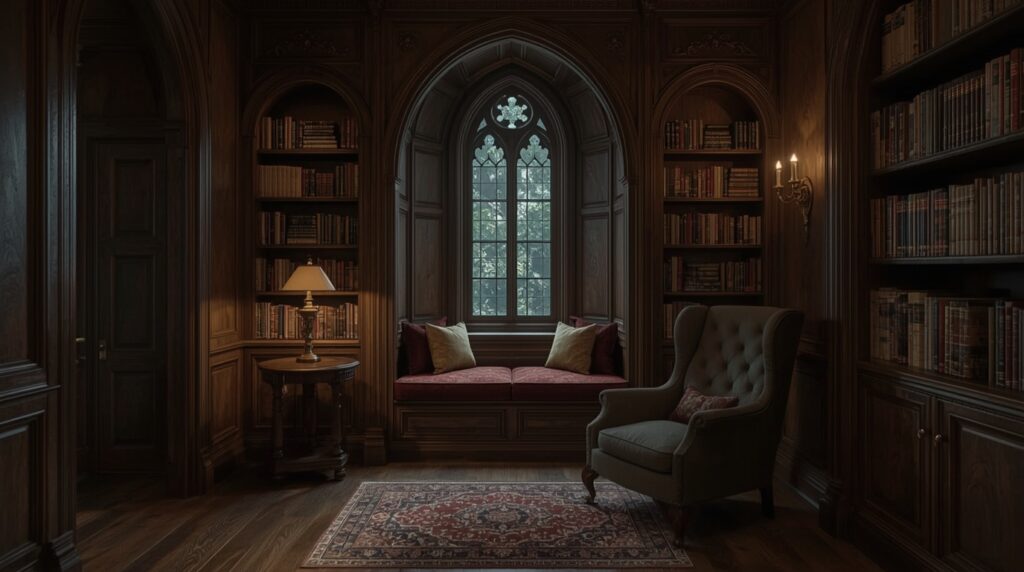
What appeared austere actually tuned perception.
Origins of the domestic gothic atmosphere
The domestic gothic did not originate in horror literature, though novels later borrowed its imagery. It grew from a philosophical movement that feared the moral consequences of speed. Architects and designers believed architecture could guide behavior. A carefully shaped room could encourage thought, patience, and restraint.
The early dark gothic victorian house interior therefore combined historical references with practical psychology. Medieval motifs suggested continuity, while material solidity countered the instability of industrial production. Residents were not pretending to live in the past; they were protecting themselves from a present that felt too immediate.
| Modern condition | Interior response |
|---|---|
| Constant noise | Acoustic absorption through textiles |
| Rapid communication | Secluded reading spaces |
| Artificial brightness | Filtered daylight |
| Social exposure | Layered privacy |
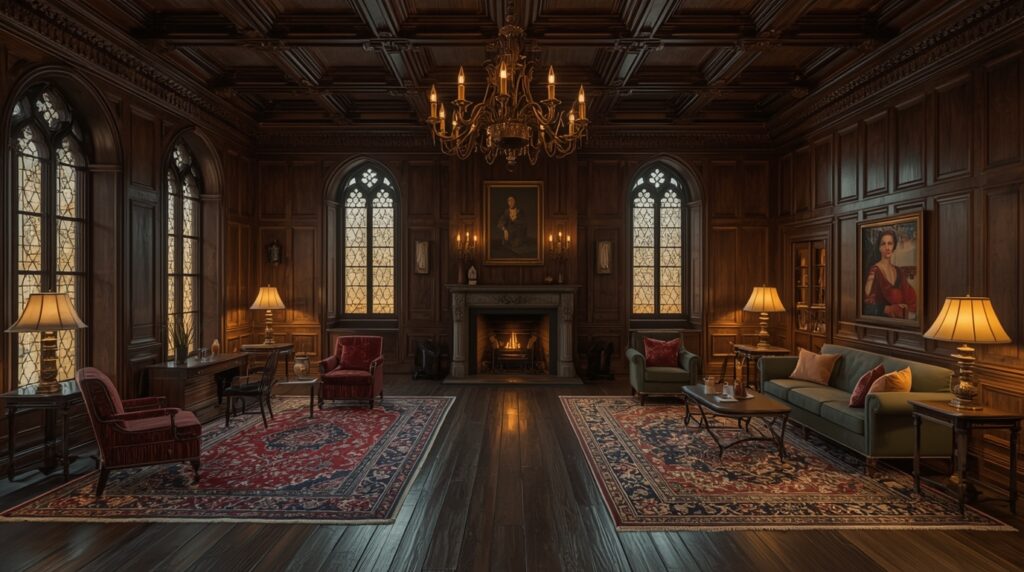
The interior became a tool for managing attention.
Structure of the interior gothic victorian house
Inside an ordinary Gothic Victorian home, space unfolded slowly. Moving forward meant passing through entry halls first. These opened into hallways – hallways that guided people onward. Transitional zones followed, acting as pauses between movements. Only after such sequences did main chambers appear.
The progression allowed minds to adjust before arrival. Direct exposure was avoided deliberately. Engagement came step by step, never all at once.
Upward sightlines emerged where ceilings climbed above tightly spaced walls, making compact homes feel taller. Light entered through elongated windows – slender by design – highlighting specific areas instead of flooding rooms evenly.
Chairs followed suit, built to lift the spine; storage units stretched close to ceiling moldings. Fireplaces stood central, grounding spaces without relying on ornamentation.
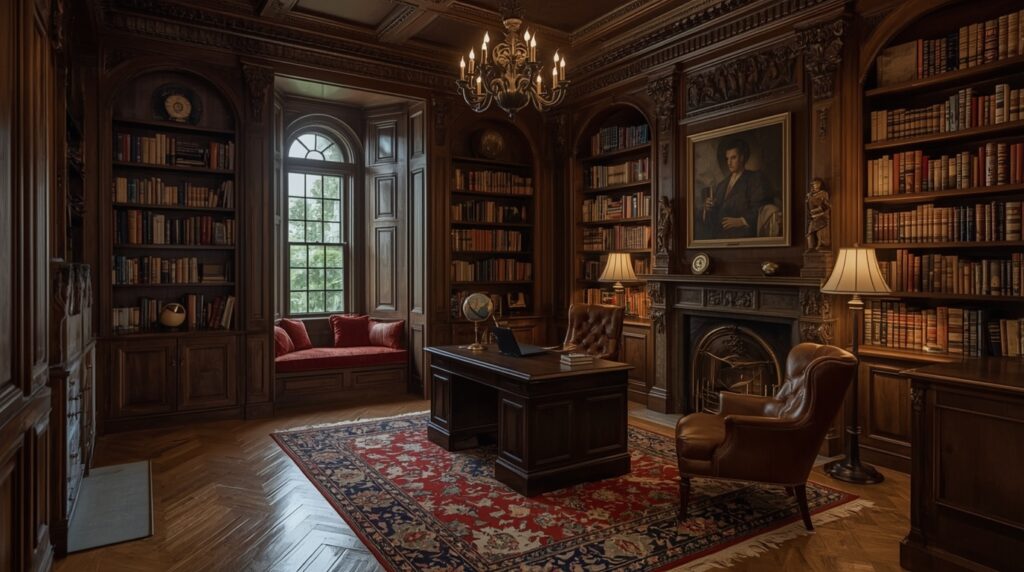
| Spatial feature | Behavioral effect |
|---|---|
| Corridors | Pause between roles |
| Alcoves | Personal retreat |
| Elevated ceilings | Reflective mood |
| Defined seating zones | Structured conversation |
The arrangement disciplined the rhythm of living without requiring rules.
Materials and the language of permanence
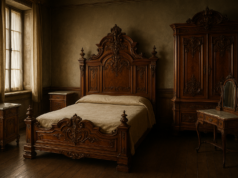
Older marks found a place within gothic interiors, welcome instead of hidden. Surfaces made from heavy timber, cold metal fixtures, textured cloth weavings, or intricate floor tiles shifted subtly across years.
Rather than weaken charm, use added layers to its presence. What looked like harm – a cut, a dent – read more like record than ruin.
Over time, age shaped the aesthetic in ways separate from mere ornamentation.
Traces of daily life gave spaces their depth. Familiarity replaced constant change as people settled into lasting patterns.
| Material | Perceptual quality | Emotional association |
|---|---|---|
| Oak paneling | Sound absorption | Stability |
| Iron fixtures | Cool texture | Durability |
| Leaded glass | Fragmented light | Reflection |
| Velvet upholstery | Soft acoustics | Quietness |
The environment cultivated patience simply by existing.
Light and shadow as daily guidance
Clear light shaped how people used space. Near the window, brightness made pages easier to follow. In a far corner, dimmer tones blurred edges, slowing thought. Rather than spread evenly, illumination carved areas where focus could settle.
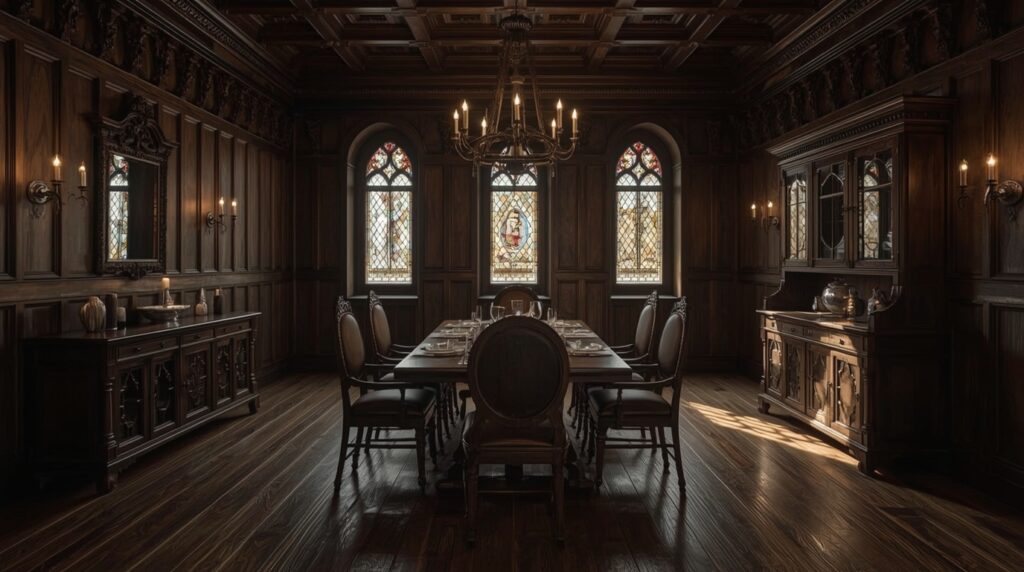
Brightness after dusk held the design together. Where small circles of lamplight fell, groups naturally drew near, drawn into talk instead of drifting apart.
Darkened zones did not fade away – they framed moments, quietly guiding how people moved and stayed.
What lay inside stayed visible – not everything, just chosen pieces.
Transition toward the modern gothic house interior
Contemporary designers have rediscovered the psychological power of controlled darkness. The modern gothic house interior rarely imitates historic ornament exactly. Instead it adopts principles: layered lighting, tactile materials, and defined spatial sequences.
Today’s version often combines neutral architecture with concentrated gothic accents — dark wood furniture against pale walls, metal fixtures in simplified forms, and textiles used to shape acoustics rather than decorate surfaces. The goal remains similar: slowing perception within a fast environment.
| Historic element | Modern interpretation |
|---|---|
| Carved paneling | Matte wood surfaces |
| Stained glass | Textured glazing |
| Heavy drapery | Acoustic curtains |
| Stone fireplaces | Dark focal walls |
Rather than nostalgia, this adaptation reflects continuing human need for interior refuge.
Recognizing a genuine gothic interior atmosphere
Many contemporary spaces use dark colors but fail to achieve the intended effect. Authentic atmosphere depends on relationship between elements rather than single features.
| Indicator | True atmosphere | Decorative imitation |
|---|---|---|
| Lighting | Graduated brightness | Uniform dimness |
| Furniture placement | Functional grouping | Random ornament display |
| Materials | Textural variety | Painted surfaces only |
| Circulation | Sequential movement | Open uninterrupted plan |
The difference lies in spatial behavior rather than appearance.
Restoration and collecting considerations
What gives old buildings character sometimes disappears during renovation. Smooth finishes replace grainy surfaces when floors get sanded too much. Clear windows go in where wavy glass once filtered light unevenly.
Lighting becomes flat after upgrades wipe out shadow patterns. Keeping difference alive matters more than achieving consistency.
One reason collectors might reconsider full furniture suites: older interiors rarely featured uniform pieces. Objects entered rooms slowly, over time. Differences among them often signal genuine age.
What ties things together is shared substance – not copied form. Though aged surfaces may seem flawed, their irregular tones often shape character better than new finishes ever could.
Instead of swapping out old materials, fixing what remains tends to preserve authenticity far longer. Even so, it is the wear itself – the chipped wood, the faded paint – that sets mood more deeply than any added ornament. Not only does gothic design emphasize structure, but it also shapes how people experience space within four walls.
Whether 19th-century Victorian layouts or today’s reinterpretations follow similar paths – fostering spaces where routine moments feel weightier simply through shadow and form.
While trends shift, one purpose stays steady: building rooms that let ordinary actions breathe slower. Avoiding rejection of advancement, these areas instead temper it. Through the guidance of light, motion, and physical substance, a sense emerges – comfort may come less from expansiveness than from considered containment.