
Home design today often aims at reducing work. Smooth finishes make upkeep easier, room arrangements clear paths through spaces, while brightness fills each area – leaving little hidden. Still, a different impulse runs parallel: wanting rooms that do not wipe out intricacy, yet frame it deliberately.
Gothic interiors follow this subtler path. Their essence lies less in shadowed ceilings, pointed forms, or aged wood, more in seeing household walls as guides for thought – not just backdrops masked by ease.
During the 1800s, this concept reappeared amid waves of transformation. As urban areas grew rapidly, so did new ways of staying connected through faster communication tools. Manufacturing shifted toward faceless systems, altering how people related to goods.
Faced with such shifts, households began sensing a loss – routine improved, yet meaning seemed thinner.
In response, spaces shaped by gothic revival design emerged, aiming to quiet the rush through deliberate visual slowness. A shift occurred – not just passage, but movement shaped by awareness. Where light dimmed, stillness grew naturally. Surfaces with grain softened sound, while spaces built within spaces divided tasks into distinct moods.
Each zone breathed differently because of how they were arranged Instead of filling houses with old-fashioned shapes, Gothic Revival interiors brought a sense of time back into daily life.
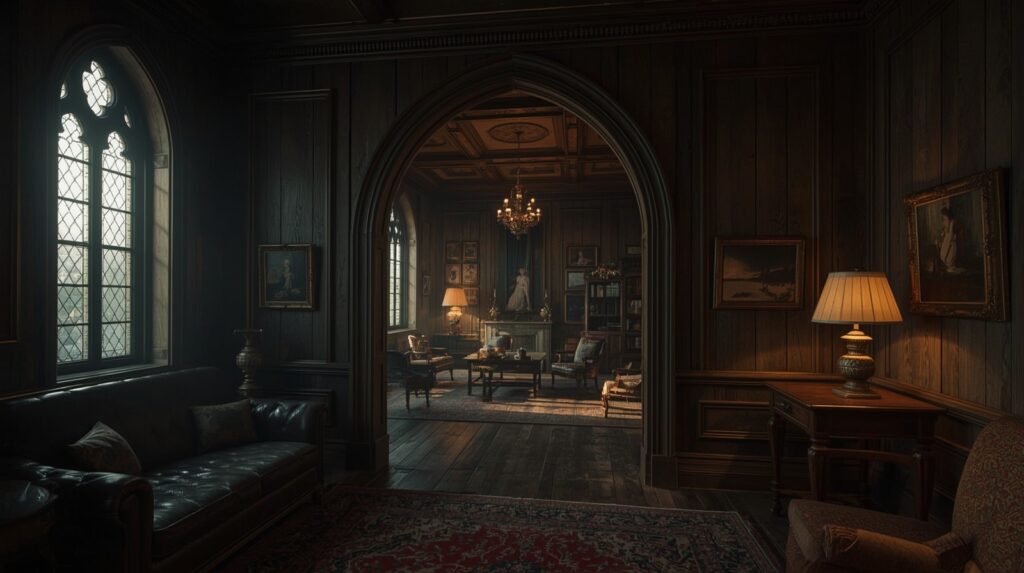
Though newly bought, things looked aged; finishes showed how they were crafted, while motion gained a steady pulse. Because of this shift, the house did more than sit still – it moved alongside its inhabitants.
The historical roots of the gothic revival interior design
The revival emerged from literature, religion, and craftsmanship rather than nostalgia alone. Writers described medieval buildings as sincere environments where structure and meaning coincided. Designers adopted this interpretation and translated it into domestic architecture. They believed a house could guide conduct through spatial character.
Early examples appeared in England, where educated households began introducing pointed forms and dark woods not to imitate castles but to evoke stability. Pattern books spread these ideas widely, allowing urban families to recreate symbolic continuity within modest residences. Over time, the gothic revival interior became less about historical accuracy and more about psychological effect.
| Social concern | Interior response |
|---|---|
| Rapid modernization | Visual connection to past |
| Urban noise | Sound-absorbing materials |
| Social exposure | Gradual privacy |
| Mechanical production | Visible craftsmanship |
The style therefore functioned as a form of cultural balance.
Structure and movement inside a gothic home interior
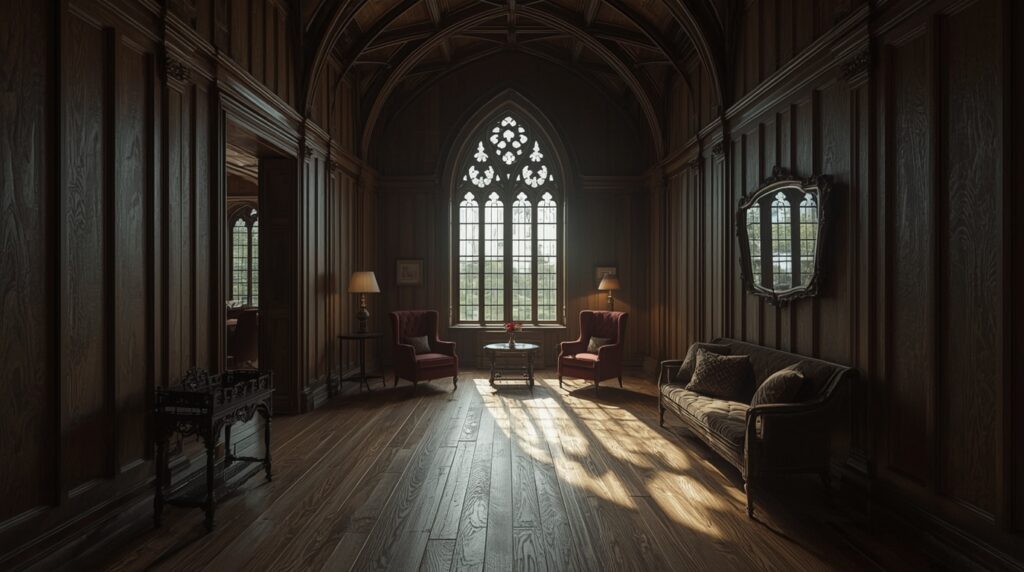
What you feel comes from how you move, not what you see. Though doors opened wide, old homes often hid their depths behind first impressions. Through narrow passages, small recesses, corners where steps paused – people adjusted before entering.
Each function settled into its own mood: meals unfolded here, words were absorbed there, stillness held elsewhere. This setup made people more aware of how their tasks shifted throughout the day. Since the structure shaped movement, talking felt distinct from focusing on reading. Open plans today favor clear sightlines.
Back then, gothic-style spaces were built to support purposeful actions.
| Spatial element | Effect on behavior |
|---|---|
| Narrow passage | Slower walking pace |
| Bay window seat | Reflective activity |
| Elevated ceiling | Psychological uplift |
| Defined seating group | Focused conversation |
The house subtly instructed conduct without rules.
Materials and atmosphere
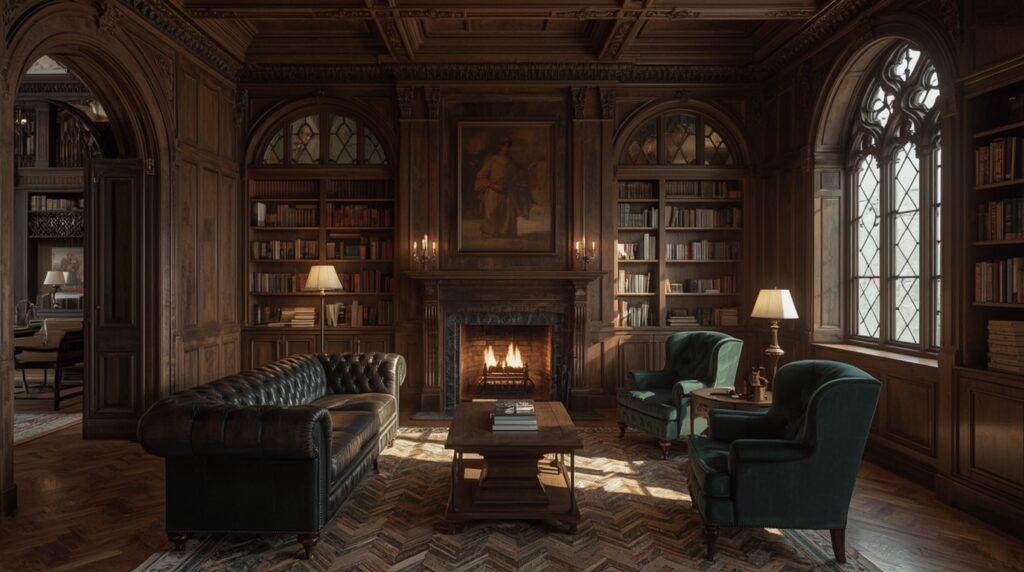
Over time, the substances inside a Gothic-style home matter more for how they endure than how they look. Though dark wood, metal fixtures, fabric weavings, and tiled floors may begin simply, wear marks them distinctly.
As these elements shift slowly, the dwelling begins to mirror the lives within it. History settles not in grand gestures but in subtle shifts across surface and grain.
Where light meets these materials, depth begins to form. Clarity finds its place beside calm, shaped by shifts in brightness rather than sameness. In spots meant for reading, light arrives without barrier, yet nearby planes hold back, dimmer by design.
What emerges isn’t absence of light – but a stacking of what can be seen.
| Material | Sensory quality | Emotional impression |
|---|---|---|
| Walnut or oak | Warm absorption | Permanence |
| Leaded glass | Filtered daylight | Calm attention |
| Heavy fabric | Acoustic softness | Privacy |
| Stone or tile floor | Cool contrast | Grounded stability |
Together they establish a space that rewards patience.
Recognizing authentic gothic revival interior design
Many contemporary rooms adopt dark colors yet lack genuine atmosphere. Authentic environments depend on relationships among elements rather than isolated features.
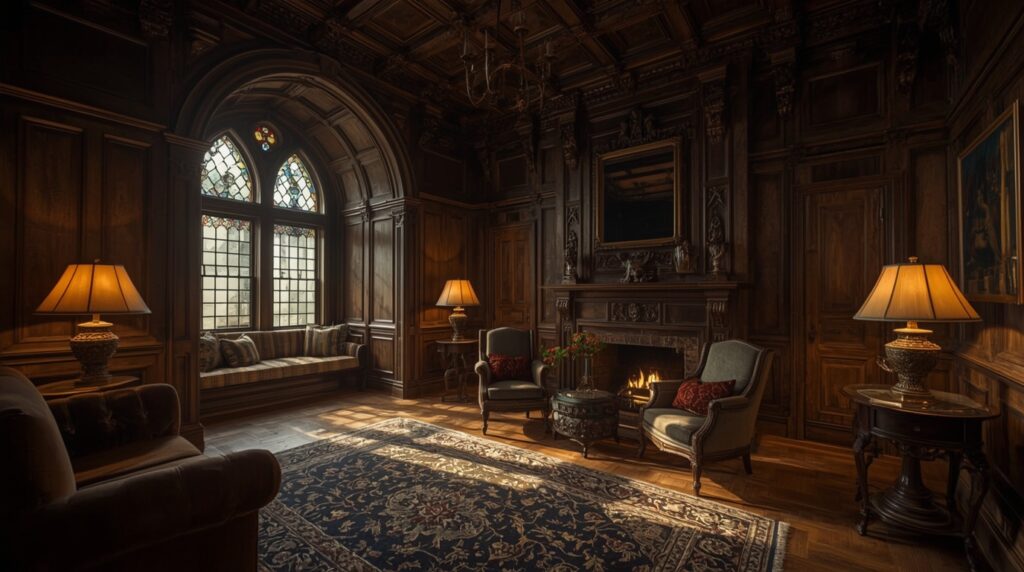
Recognition relies on observing how light, movement, and material interact.
| Indicator | Authentic atmosphere | Decorative imitation |
|---|---|---|
| Lighting pattern | Gradual variation | Even dimness |
| Furniture placement | Functional grouping | Display arrangement |
| Circulation | Sequential experience | Open exposure |
| Material variety | Natural textures | Painted uniformity |
The difference lies in behavior rather than appearance.
Adapting the gothic revival interior today
Nowadays, fascination with this aesthetic tends to reflect a desire for stillness amid endless noise. Though rooted in tradition, today’s interpretation might pair understated structures with deliberate nods to the past.
Instead of copying old designs precisely, spaces rely on deep-toned timber, layered glazing, and carefully placed light. These choices echo mood more than form.
Nowadays, sound-absorbing textiles appear alongside flat-sheen surfaces in many open layouts. Still, these subtle shifts do more than look calm – they help minds reset. So, what seems like decoration turns out to support concentration instead.
| Historic principle | Contemporary translation |
|---|---|
| Layered rooms | Defined activity zones |
| Heavy drapery | Sound-softening textiles |
| Ornamented paneling | Textured surfaces |
| Narrow windows | Filtered glazing |
The goal remains continuity of experience rather than reproduction of form.
Restoration and collecting considerations
Though brightness might seem appealing, contrast matters more when reviving an old room. Instead of stripping wood bare, let its worn layers remain – they hold history.
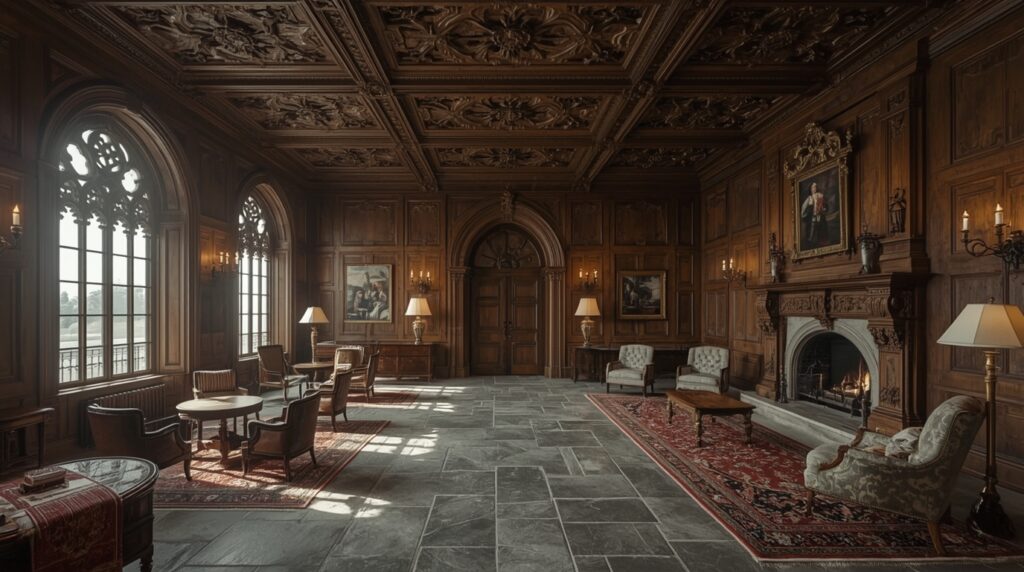
Swapping rough glass for smooth diminishes texture, flattening the space. Over time, surfaces gain identity through subtle flaws. These imperfections shape how light moves and feels within walls.
Start with mismatched furniture – perfection isn’t the goal. Over time, classic rooms gathered objects across decades, linked by material, not design. A steady color rhythm matters more than uniform decoration.
Worn surfaces often add depth that new copies can’t match. Restored hinges and aged pulls hold character factory-new versions lack.
Difference between gothic revival and medieval interiors
What set Gothic Revival spaces apart from real medieval ones wasn’t so much how they looked but why they existed. Back then, rooms weren’t trying to recall anything – life unfolded within them directly, constrained by weather, tools at hand, and rigid class lines.
Thick stone walls stayed undecorated not by choice but necessity; tapestries moved where warmth was needed most. Furniture rarely accumulated since nobles traveled constantly, great halls shifted purpose daily. Light entered sparingly, casting long shadows that made buildings feel sheltering, solemn, inward-facing.
Decoration clustered only around holy spots – altars, screens, cases holding relics – simply because costly materials demanded deeper meaning than pleasing eyesight. Later on, Victorian-era versions of these styles emerged from minds far removed from such hardship, equipped instead with steam-heated homes, factory-made fabrics, permanent floor plans, and middle-class ideals of seclusion.
Every chair, wallpaper pattern, hinge detail, and bookcase in these spaces joined a seamless story shaped by 19th-century imagination – though nothing like it ever stood in actual medieval rooms. Pugin and Viollet-le-Duc saw the Middle Ages not just as history but as moral clarity made visible through design.
Richer palettes emerged, far beyond what real medieval constraints permitted, while objects filled rooms instead of leaving them spare. Decoration once centered on altars now soaked every surface, wrapping occupants in atmosphere. A true medieval great hall used emptiness and height to project power; its revival counterpart used books and carvings to signal learned belonging.
Survival, ceremony, social rank – that was how earlier people lived inside buildings. By contrast, those who furnished Gothic Revival interiors dwelled less in continuity than in reflection: their homes became stages for debating belief, labor, and yearning amid industrial change.
Conclusion
A quiet belief shapes gothic interiors – that homes might sharpen how we notice things. Light builds slowly, shadows shift across surfaces, while footsteps follow paths shaped by history.
Materials age openly, showing wear like memories carved into walls. Movement through rooms feels measured, almost deliberate. Perception stretches here, unlike elsewhere.
Daily acts gain weight without effort. Old Victorian houses first carried this idea forward. Modern versions keep it alive today. Instead of noise and rush, these spaces choose depth over speed.
Instead of resisting today’s world, this approach enhances it – showing people that ease arises not just through access and efficiency, yet also through boundaries and care.