
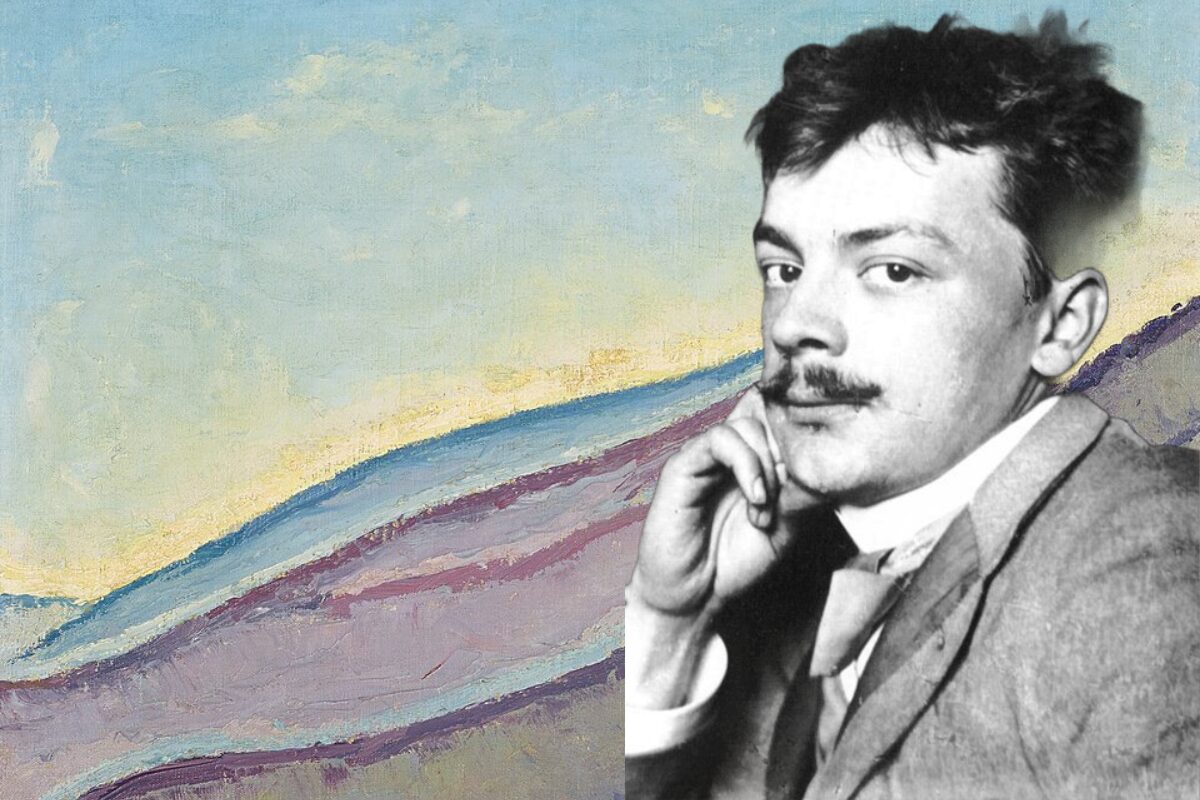
Koloman Moser
Koloman Moser (1868–1918) stands as one of the defining figures of early twentieth-century Austrian art and design. A painter, graphic artist, and prolific designer of furniture, textiles, glass, jewelry and printed matter, Moser was central to the movement that sought to dissolve the boundaries between fine arts and applied arts. As a co‑founder of both the Vienna Secession (1897) and the Wiener Werkstätte (1903), his work helped articulate an aesthetic language that married meticulous craftsmanship with modern geometric clarity and decorative restraint. This article examines Moser’s life, training, career, major works, stylistic approach, market presence, and enduring legacy for collectors, curators and enthusiasts of European art and antiques.
Early Life
Can You Name the Masterpiece?
Ten masterpieces. Ten questions. How well do you know the history of art?
Koloman Moser was born in Vienna in 1868 into a cultural environment that was undergoing rapid transformation. Growing up in the Austro‑Hungarian capital exposed him early to the competing currents of historicism, academic painting and emergent modernist ideas. Vienna at the turn of the century was a crucible for reformist aesthetics – an atmosphere in which a young artist committed to both the visual and the functional could find opportunity. Moser’s early exposure to book illustrations, applied ornament and craft techniques predisposed him toward a career that would bridge disciplines rather than remain confined to easel painting.
Education and Training
Moser received formal artistic training in Vienna, where he studied both fine art and applied arts disciplines. His education combined academic instruction in drawing and composition with vocational training in craft and design. He undertook study trips to other European centers, absorbing influences from Munich and Paris, and he cultivated a broad technical vocabulary that included painting, printmaking, textile design, metalwork and ceramics. This eclectic training enabled Moser to move fluently between media and to design across scales, from postage stamps and posters to room interiors.
Career Development
Can You Guess the Artist?
Three clues. One artist. How quickly can you identify the painter?
Moser’s professional career accelerated in the 1890s as he began to exhibit with other forward‑looking artists and to contribute to reformist journals. He became a founding member of the Vienna Secession in 1897, a collective that sought to break free from academic canons and to promote modern art and design. With the Secession came editorial work and graphic commissions that showcased his talent for linear composition and surface ornament.
In 1903 Moser co‑founded the Wiener Werkstätte with architect Josef Hoffmann and patron Fritz Waerndorfer. The Wiener Werkstätte was established as a workshop and cooperative that promoted the production of high‑quality, artist‑designed objects made by skilled craftsmen. Within this environment Moser produced furniture, interiors, household objects, textiles and graphic material that exemplified the Werkstätte’s principles: unity of design, integrated interiors and the elevation of daily life through well‑made, aesthetically rigorous objects.
Throughout his career Moser exhibited widely, contributed to magazines such as Ver Sacrum, and collaborated with architects and patrons on interior commissions. While he remained committed to artisanal production, he also helped set the stage for later modernist developments by insisting on clarity, simplified form and the integration of ornament with structure.
Artistic Style
Koloman Moser’s style is distinguished by a combination of ornamental richness and geometric discipline. Key characteristics include:
– Emphasis on flat planes and linear clarity rather than illusionistic depth.
– Use of simplified, recurring motifs and pattern systems that can be adapted across media.
– A restrained but sophisticated palette, often favoring strong, flat colors or controlled metallic accents in applied objects.
– Synthesis of historic decorative vocabularies with contemporary influences such as Japonisme and Art Nouveau, articulated through a rectilinear, modular sensibility.
– Integration of function and form: ornament is designed as part of an object’s structure rather than as superfluous embellishment.

Moser’s work frequently explores repetition and variation—ornamental modules are recombined to produce textiles, wallpapers, and painted surfaces while the same conceptual logic informs his furniture and metalwork. His graphic work demonstrates a keen understanding of typography and layout, anticipating modernist approaches to visual communication.
Influences and Inspirations
Moser’s artistic outlook drew on multiple sources:
– The Arts and Crafts movement: the emphasis on craftsmanship, integrated design and the moral value of handmade objects was central to Moser’s practice.
– Japonisme: the flattened perspective, compositional economy and stylized natural motifs of Japanese prints influenced his approach to surface design.
– Viennese historicist craft traditions: Moser selectively reworked historical decorative forms, abstracting and ordering them into modern patterns.
– Colleagues within the Vienna Secession: collaborative dialogues with artists such as Gustav Klimt, Josef Hoffmann and Otto Wagner helped shape Moser’s aesthetic priorities, particularly the desire to create Gesamtkunstwerk (total works of art).
– Industrial and technological developments: while committed to artisanal production, Moser was attentive to new materials and production techniques that could expand the repertoire of designers.

Famous Works
Koloman Moser produced an extensive and multidisciplinary oeuvre. The following five works exemplify the range of his production and his importance to modern design. Where possible, the current collection or museum indicated reflects the institutions known for housing Moser’s work; many of his designs are held in multiple public and private collections.
1) Artwork name: Poster for the Wiener Werkstätte
Year: c. 1903–1905
Medium: Lithograph / Poster
Current Museum or Collection: Cooper Hewitt, Smithsonian Design Museum (and other international collections)
Explanation: Moser’s posters for the Wiener Werkstätte are emblematic of his graphic clarity and typographic sensitivity. These lithographs employ bold, flat areas of color, simplified motifs and carefully balanced text to advertise the Werkstätte’s commitment to unified design. The poster functioned both as advertisement and manifesto, communicating an aesthetic of refined modernity. Moser’s graphic work helped define the visual identity of Vienna’s reformist art scene.
2) Artwork name: Tea and Coffee Service (design)
Year: c. 1903
Medium: Silver and/or porcelain service (designed ensemble)
Current Museum or Collection: Museum für angewandte Kunst (MAK), Vienna (and various collections)
Explanation: Moser’s designs for table services epitomize his fusion of utility and ornament. The tea and coffee services designed for the Wiener Werkstätte are characterized by clear silhouettes, minimal applied ornament and repeated geometric motifs. These ensembles sought to bring formal coherence to the domestic interior, demonstrating how everyday rituals could be elevated through integrated design.
3) Artwork name: Textile Patterns (catalog designs)
Year: c. 1903–1910
Medium: Gouache on paper / printed textile repeats
Current Museum or Collection: MAK, Vienna; Cooper Hewitt; Wien Museum (representative holdings)
Explanation: Moser’s textile designs translate his modular graphic vocabulary into cloth: repeating patterns of stylized florals, foliated arabesques and geometric medallions rendered in a disciplined, planar style. Many of these patterns were produced by the Wiener Werkstätte and used in interiors and fashion, illustrating Moser’s role in shaping the visual language of modern domestic ornament.
4) Artwork name: Furniture and Interior Designs (e.g., salon ensembles)
Year: c. 1902–1910
Medium: Wood, upholstery, inlaid surfaces (designed interiors and individual furniture pieces)
Current Museum or Collection: MAK, Vienna; Leopold Museum (collections include examples and archival materials)
Explanation: Moser’s furniture designs emphasize proportion, surface patterning and an economical approach to ornament. Often executed in collaboration with cabinetmakers of the Wiener Werkstätte, these pieces foreground planar surfaces and integrated decorative motifs. His interiors—where furniture, textiles and wall treatments are conceived as a unit—demonstrate his belief in Gesamtkunstwerk and influenced modernist thinking about coordinated environments.
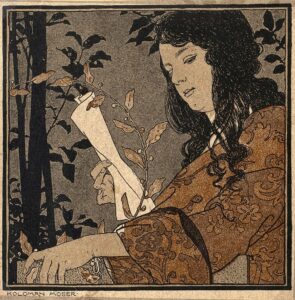
5) Artwork name: Stained Glass and Decorative Glass Designs
Year: c. 1901–1910
Medium: Stained glass, painted glass designs
Current Museum or Collection: MAK, Vienna; Wien Museum (holds designs and examples)
Explanation: Moser’s stained glass designs show how he adapted his flat, linear style to the demands of light and architectural setting. Using stylized plant motifs, geometric patterns and controlled color fields, these windows and glass panels integrate ornamental design with structural clarity. His glasswork highlights a sensitivity to material qualities—translucency, color and the play of light—that complements his work in textiles and metalwork.
Note: Because Moser was a prolific designer whose works were produced in multiple editions, patterns and ensembles, many of his designs are represented in numerous institutional collections worldwide. The Museum für angewandte Kunst (MAK) in Vienna is the principal repository for a broad cross‑section of his output; Cooper Hewitt and other design museums also house significant works and archival materials.
Legacy and Influence
Koloman Moser’s achievements are measured not only by the aesthetic quality of his individual objects but by his systemic influence on how art and design are conceived. His insistence on high standards of craftsmanship, his integration of multiple media, and his clarifying approach to ornament all helped reshape modern design in several ways:
– Establishing the principle that visual coherence and design unity could be applied across an entire living environment, anticipating later modernist interiors.
– Demonstrating that graphic design, poster art and typography could be vehicles for a modern visual identity—his layouts and print work influenced graphic practice beyond Austria.
– Promoting the role of the designer as both artist and organizer of production, an approach that informed later design education and the structure of studio workshops.
– Contributing to the international reputation of Viennese applied arts and validating the idea that functional objects can embody sophisticated aesthetic ideas.
Artists and designers from the Bauhaus to mid‑century modernists drew on the precedents established by Moser and his contemporaries—particularly the emphasis on form following function, but interpreted through a decorative intelligence that remained attentive to surface and pattern.
Market Value and Collectibility
Objects designed by Koloman Moser and attributed to the Wiener Werkstätte are sought after by collectors, museums and decorators because they represent an important moment in the history of design. Market considerations include:
– Rarity: Unique, signed or documented works—especially large furniture ensembles, complete table services, or architecturally integrated interiors—are rarer and command higher prices.
– Condition and provenance: Well‑preserved pieces with clear provenance, ideally with association to important commissions or early exhibition history, attract premium bids.
– Medium: Silver, furniture and large textiles can be highly collectible; graphic works and small decorative objects also have an active market. Metalwork and signed silver pieces frequently perform well at auction.
– Auction houses and dealers: Wiener Werkstätte and Moser items appear regularly at specialist auctions (e.g., Dorotheum in Vienna) and at international houses; dealers in European decorative arts and design cultivate the market.
Price ranges can vary widely. Smaller graphic works and textiles may be obtainable for modest sums in the secondary market, while rare furniture ensembles, large silver services or complete interiors have achieved substantial prices when offered through major auction channels. For serious collectors, documented pieces with museum‑quality provenance are the most desirable.
Museums and Collections
Koloman Moser’s work is represented in numerous public collections worldwide. Major institutions where his designs and archival materials can be found include:
– Museum für angewandte Kunst (MAK), Vienna — principal collection of Moser’s applied arts, furniture and design archives.
– Wien Museum (formerly Vienna Museum) — holdings of Secessionist materials and Moser designs.
– Leopold Museum (Vienna) — collections that include Secession and applied arts materials.
– Cooper Hewitt, Smithsonian Design Museum (New York) — examples of posters, textiles and design drawings.
– Museum of Modern Art (MoMA) and other international design museums — holdings of Wiener Werkstätte exemplars.
– Various national and regional museums with strong decorative arts departments in Europe and North America.
Because he worked across media and often in collaborative workshop contexts, Moser’s work is dispersed across institutional collections; catalogues raisonnés and museum databases are the best routes for confirming specific holdings.
Interesting Facts
– Koloman Moser was as comfortable designing a postage stamp as he was creating a salon interior; he practised across a very wide technical range.
– He was a founder of two institutional frameworks—the Vienna Secession and the Wiener Werkstätte—that continue to be central reference points in design history.
– Moser often produced series of patterns that could be scaled and adapted for wallpaper, textiles, ceramics and furniture surfaces, anticipating modular design strategies.
– His work for the Wiener Werkstätte aimed to integrate artist, craftsman and client in production, reflecting ideals of social as well as aesthetic reform.
– Moser’s graphic work for periodicals like Ver Sacrum helped shape the visual rhetoric of the Vienna Secession and disseminated its ideas across Europe.
FAQ
Who was Koloman Moser and why is he important?
Koloman Moser was an Austrian artist and designer (1868–1918) who co‑founded the Vienna Secession and the Wiener Werkstätte. He is important because he advocated for the integration of fine and applied arts, produced influential designs across multiple media, and helped define a modern aesthetic that influenced later movements in architecture and design.
What are the defining characteristics of Moser’s style?
Moser’s style is characterized by linear clarity, planar surfaces, modular repetition, simplified natural motifs, and a restrained approach to ornament. He balanced decorative richness with geometric discipline, creating objects that were both functional and visually coherent.
Where can I see Koloman Moser’s work in person?
The best places to see Moser’s work include the Museum für angewandte Kunst (MAK) in Vienna, the Wien Museum, the Leopold Museum and design collections such as Cooper Hewitt. Major exhibitions of Secession and Wiener Werkstätte material often feature multiple Moser designs.
How do I identify an authentic Koloman Moser design?
Authenticity is established through provenance, signatures or workshop marks, stylistic analysis, and documentation (catalogue entries, exhibition records, period publications). Because Moser’s designs were sometimes produced in editions by the Wiener Werkstätte, it is important to confirm material, construction methods and any workshop stamps or archival records.
Are Koloman Moser’s works a good investment?
Moser’s works are regarded as significant in the history of design and have a steady collector base. Market values vary by medium, rarity and condition; furniture ensembles, complete interiors, and early silver services with solid provenance tend to perform best. Collectors should seek documentation and expert advice before acquiring high‑value pieces.
—
Koloman Moser’s œuvre remains a touchstone for anyone interested in the dialogue between ornament and function, craft and industry. His aesthetic rigor, interdisciplinary practice and institutional leadership helped define an era of Austrian design that still resonates in contemporary approaches to integrated interiors and product design. For collectors, curators and students of design history, Moser’s legacy offers both elegant objects and a principled methodology for thinking about the role of the designer in modern life.
AI Notice: Some visual content in this article may have been created or enhanced using artificial intelligence (AI) for artistic, editorial or illustrative purposes. Learn more about our approach in our AI & Editorial Principles.