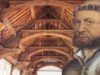
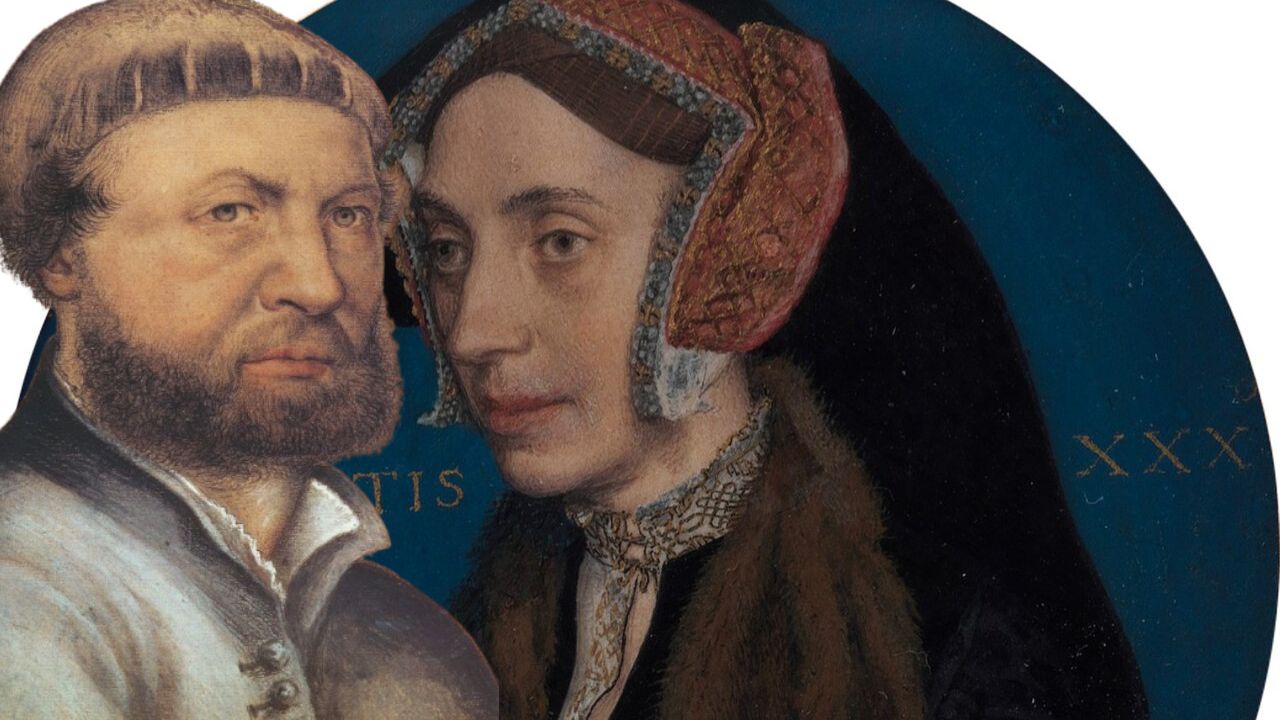
Artist Hans Holbein the Younger (c. 1497–1543) was a German-Swiss painter whose portraits defined the visual image of Tudor England. If you picture Henry VIII as a formidable monarch in broad shoulders and steely certainty, you are, in many ways, seeing Holbein’s invention as much as the king’s reality. Yet Holbein was more than a court painter: he was an acute observer of power, faith, and identity during the Reformation. His work combines forensic realism with subtle symbolism, inviting viewers to look past satin sleeves and jeweled chains to the fragile politics beneath.
Early life and background
Artist Hans Holbein the Younger was born in Augsburg, a thriving imperial city where trade, banking, and humanist learning shaped cultural life. He trained in a family workshop under his father, Artist Hans Holbein the Elder, absorbing late Gothic precision while the Italian Renaissance was transforming ideas of perspective, anatomy, and classical form. That combination—Northern attention to detail and Renaissance clarity—became a hallmark of his mature style.
In the early 1510s he moved to Basel, a major center of printing and scholarship. Basel’s atmosphere mattered: it was a city where books, images, and ideas circulated quickly, and where debates about Church reform were increasingly public. Artist Hans Holbein didn’t grow up in a quiet atelier; he matured amid the new media ecosystem of woodcuts, pamphlets, and illustrated texts that trained him to communicate powerfully in small, readable images as well as grand paintings.
Artistic style and techniques
Holbein’s art is often described as “realistic,” but its realism is strategic rather than merely mimetic. He had an exceptional ability to model faces with restrained color and crisp contour, making skin appear tangible without losing composure. His portraits balance immediacy with control: sitters feel present, yet their emotions are calibrated—an aesthetic perfectly suited to courts and diplomats where too much feeling could be politically dangerous.
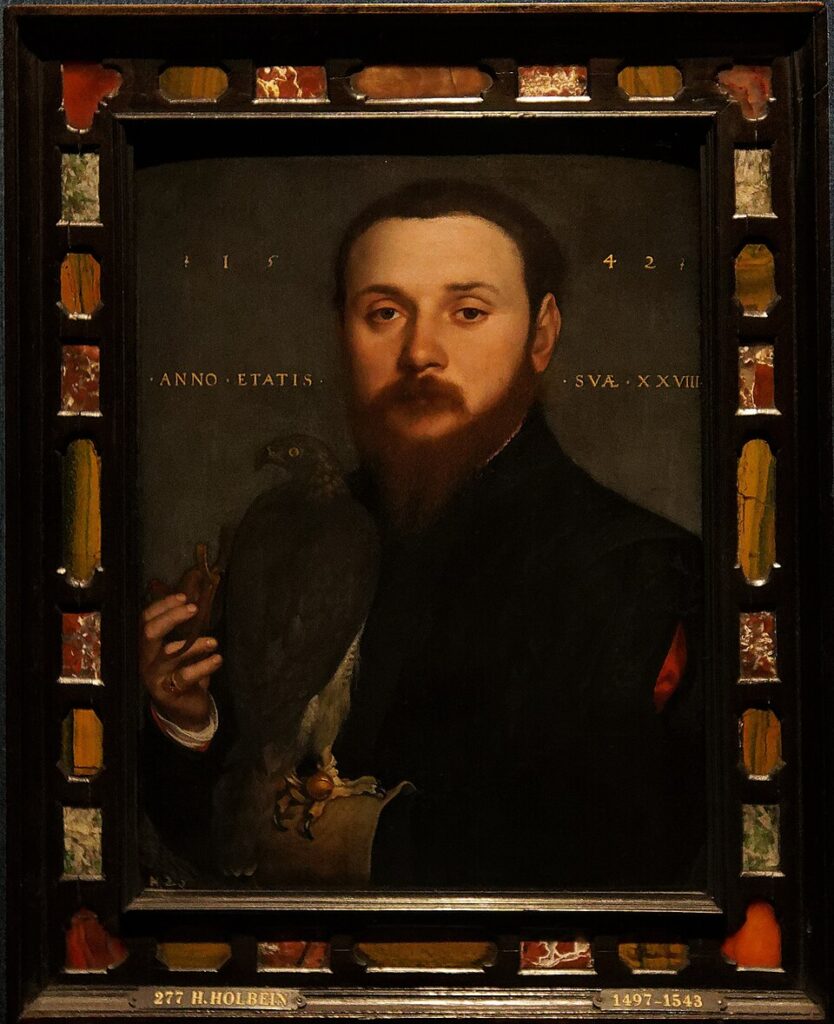
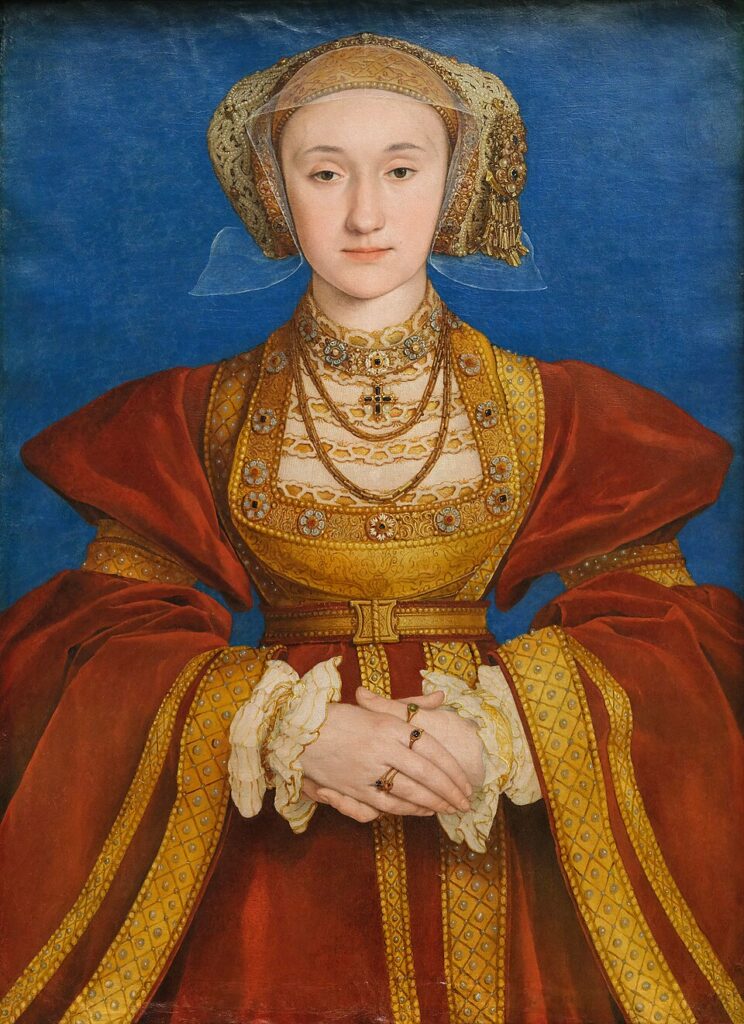
Technically, Artist Hans Holbein was a master draughtsman. His preparatory drawings—especially in colored chalks—capture the architecture of a face with astonishing economy, then translate into paintings where fabrics, jewels, and fur are rendered with near-microscopic care. That descriptive precision is not decorative excess; it functions like a visual document, turning clothing and objects into evidence of rank, wealth, allegiance, and education.
Major works and masterpieces
Among Holbein’s most celebrated works is “The Ambassadors” (1533), a double portrait that seems straightforward until you notice its complexities: the meticulously painted instruments, globes, and books signal intellectual ambition and global reach, while the famous anamorphic skull cuts across the foreground like a warning. The painting is both a display of worldly achievement and a reminder that mortality interrupts even the most curated public image.
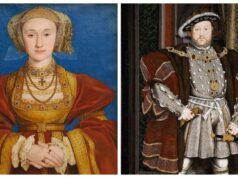
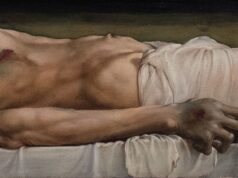
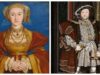
Equally influential are Holbein’s portraits for the Tudor court, including the iconic image of Henry VIII that cemented the king’s public persona as unshakeable and dominant. Holbein’s likenesses of figures such as Thomas More, Thomas Cromwell, and Jane Seymour do more than record appearances; they construct political visibility. In a volatile period of shifting loyalties, a portrait could legitimize authority, broadcast stability, or quietly signal proximity to power.
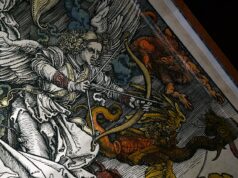
Artist Hans Holbein also produced significant religious and graphic work, including designs for book illustrations and the renowned woodcut series “The Dance of Death.” These images distill moral and social critique into sharp scenes where Death visits every class—from pope to peasant—reflecting a Europe unsettled by plague memory, religious rupture, and anxieties about corruption. The immediacy of print helped Holbein’s ideas travel far beyond elite patrons.
Meaning behind his work
Holbein’s portraits often appear coolly objective, but their meaning is embedded in choices: posture, props, and the exact degree of psychological access granted to the viewer. He understood that identity in the 16th century was performed through surfaces—cloth, heraldry, inscriptions—yet he also hinted at the tensions beneath. A perfectly painted chain or brooch can read like reassurance, but it can also feel like armor, suggesting the sitter’s need for protection within a precarious social order.
In “The Ambassadors,” symbolism is not an afterthought—it structures the experience. The instruments of navigation and measurement speak to exploration and control, while religious references (including subtle allusions to Christian division) place knowledge inside the era’s spiritual fracture. The distorted skull is the masterstroke: visible only from a particular angle, it turns viewing into a moral act. The message is not simply “remember you will die,” but “your perspective is limited”—a pointed idea in a time when certainty was loudly claimed by competing authorities.
Even his “official” court images can be read as commentary on power’s choreography. Holbein’s Henry VIII is engineered to be believed: the frontal stance, broadened silhouette, and unwavering gaze create a figure who dominates space. Whether or not the king physically looked exactly like this matters less than the painting’s function. Artist Hans Holbein shows how images can manufacture political reality—an insight that feels strikingly modern.
Life in the Tudor court
Artist Hans Holbein first came to England with connections to humanist circles, notably through Erasmus and his network, which helped introduce him to Thomas More. Those early years show Holbein as a flexible professional navigating patronage: he could produce intimate portraits for scholars and also devise decorative schemes and designs. England offered opportunity, but also demanded sensitivity; the country was moving toward religious and political upheaval that could swiftly alter an artist’s fortunes.
By the 1530s, Artist Hans Holbein was working for Henry VIII, becoming effectively the court’s chief image-maker. His role was wider than painting: he created designs for jewelry, tableware, and pageantry—objects that shaped how monarchy was seen and experienced. In an age before mass photography or broadcast media, these visual systems were the “public relations” of power, and Holbein’s gift was making them persuasive without seeming forced.
Yet Tudor service was never secure. The court was an arena of factional rivalry, and artist Hans Holbein painted men who rose and fell dramatically. His ability to remain professionally valuable across shifting alliances suggests not cynicism but an acute understanding of what images could do—and what they must not reveal too plainly. In this sense, his restraint is part of his intelligence.
Why is he famous
Artist Hans Holbein is famous because he set a new standard for portraiture as both art and instrument. His images do not merely preserve faces; they shape historical memory by giving political figures an enduring visual identity. For Henry VIII in particular, Holbein’s portrait type became the template through which later generations imagine Tudor authority—proof that a single painter can influence how an entire era is pictured.
He is also celebrated for synthesizing Northern European detail with Renaissance clarity in a way that feels effortless. The precision of his surfaces—skin, metal, velvet—serves a larger compositional logic, making his portraits readable as statements about status, intellect, and control. That balance helped elevate portraiture from “record” to “argument,” where the painting asserts what a sitter represents in society.
Finally, Holbein’s reach across media—panel painting, drawing, mural design, and print—made him unusually impactful. Through printed images like “The Dance of Death,” his visual language circulated beyond court circles, contributing to the era’s moral and social imagination. His fame rests on this dual power: intimacy in portraiture and public resonance through reproducible images.
Interesting facts
- Holbein’s surviving portrait drawings are among the most revealing documents of Tudor England; many were kept and reused as reference, like a 16th-century studio “archive.”
- “The Ambassadors” includes an anamorphic skull that appears correctly only from a steep angle—an ingenious reminder that meaning depends on viewpoint.
- He worked not only as a painter but as a designer of objects (jewelry, cups, ceremonial items), helping define the look of Tudor display culture.
- His “Dance of Death” woodcuts helped popularize a visual genre that blends dark humor with social critique, confronting viewers with the equality of mortality.
- Despite his association with kings, Holbein’s career depended on networks of scholars and printers, showing how humanism and commerce shaped Renaissance art.
Artist Hans Holbein the Younger still matters because he reveals how images manufacture authority—and how carefully crafted surfaces can conceal unstable realities. In an age of religious conflict, diplomacy, and theatrical monarchy, he gave faces to power while quietly embedding moral and intellectual questions into paint and print. His portraits remain gripping not just for their accuracy, but for their psychological and political precision. Holbein’s lasting impact is the modern idea that a portrait can be both a likeness and a carefully argued vision of who someone is supposed to be.